
4 months 2 weeks ago
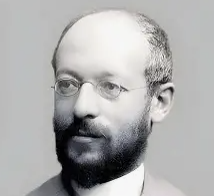
Every social occurrence as such, consists of an interaction between individuals. In other words, each individual is at the same time an active and a passive agent in a transaction. In case of superiority and inferiority, however, the relation assumes the appearance of a one-sided operation ; the one party appears to exert, while the other seems merely to receive an influence.
▼
Source
p. 169
4 months 2 weeks ago
Man is something that is to be overcome.Logically considered, this, too, presents a contradiction: he who overcomes himself is admittedly the victor, but he is also the defeated. The ego succumbs to itself, when it wins; it achieves victory, when it suffers defeat. Yet the contradiction only arises when the two aspects of this unity are hardened into opposed, mutually exclusive conceptions. It is precisely the fully unified process of the moral life which overcomes and surpasses every lower state by achieving a higher one, and again transcends this latter state through one still higher. That man overcomes himself means that he reaches out beyond the bounds that the moment sets for him. There must be something at hand to be overcome, but it is only there in order to be overcome. Thus even as an ethical agent, man is the limited being that has no limit.
▼
Source
p. 5-6 part of the first essay "Life as Transcendence"
4 months 2 weeks ago
Every relationship between two individuals or two groups will be characterized by the ratio of secrecy that is involved in it. Even when one of the parties does not notice the secret factor, yet the attitude of the concealer, and consequently the whole relationship, will be modified by it.
▼
Source
p. 462
4 months 2 weeks ago
Modern mind has become more and more calculating. The calculative exactness of practical life which the money economy has brought about corresponds to the ideal of natural science: to transform the world into an arithmetic problem, to fix every part of the world by mathematical formulas. Only money economy has filled the days of so many people with weighing, calculating, with numerical determinations, with a reduction of qualitative values to quantitative ones.
▼
Source
p. 414
4 months 2 weeks ago
The brutality of a man purely motivated by monetary considerations ... often does not appear to him at all as a moral delinquency, since he is aware only of a rigorously logical behavior, which draws the objective consequences of the situation.
▼
Source
"Domination" (1908), in On Individuality and Social Forms (1971), p. 110
4 months 2 weeks ago
In the presence of the total reality upon which our conduct is founded, our knowledge is characterized by peculiar limitations and aberrations. We cannot say in principle that "error is life and knowledge is death," because a being involved in persistent errors would continually act wide of the purpose, and would thus inevitably perish.
▼
Source
p. 444
4 months 2 weeks ago
Cities are, first of all, seats of the highest economic division of labor. They produce thereby such extreme phenomena as in Paris the remunerative occupation of the quatorzième. They are persons who identify themselves by signs on their residences and who are ready at the dinner hour in correct attire, so that they can be quickly called upon if a dinner party should consist of thirteen persons. In the measure of its expansion, the city offers more and more the decisive conditions of the division of labor. It offers a circle which through its size can absorb a highly diverse variety of services.
▼
Source
p. 420
4 months 2 weeks ago
The individual who is subordinate to an objective law feels himself determined by it, while he, in turn, in no way determines the law, and has no possibility of reacting to it in a manner which could influence it-quite in contrast to even the most miserable slave, who, in some fashion at last, can still in this sense react to his master.
▼
Source
"Domination" (1908), in On Individuality and Social Forms (1971), pp. 113-114
4 months 2 weeks ago
If wandering is the liberation from every given point in space, and thus the conceptional opposite to fixation at such a point, the sociological form of the "stranger" presents the unity, as it were, of these two characteristics.
▼
Source
p. 402; Opening line.
4 months 2 weeks ago
The most profound reason... why the metropolis conduces to the urge for the most individual personal existence... appears to me to be the following: the development of modern culture is characterized by the preponderance of what one may call the "objective spirit" over the "subjective spirit."
▼
Source
p. 421 as cited in: Kenneth Allan (2009) Explorations in Classical Sociological Theory: Seeing the Social World. p. 212
4 months 2 weeks ago
The social game has a deeper double meaning-that it is played not only in a society as its outward bearer but that with its help people actually "play" "society."
▼
Source
Sociability (1910) in On Individuality and Social Forms (1971), p. 134
4 months 2 weeks ago
Objectivity does not simply involve passivity and detachment; it is a particular structure composed of distance and nearness, indifference and involvement.
▼
Source
p. 403
4 months 2 weeks ago
The individual is reduced to a negligible quantity, perhaps less in his consciousness than in his practice and in the totality of his obscure emotional states that are derived from this practice. The individual has become a mere cog in an enormous organization of things and powers which tear from his hands all progress, spirituality, and value in order to transform them from their subjective form into the form of a purely objective life. It needs merely to be pointed out that the metropolis is the genuine arena of this culture which outgrows all personal life. Here in buildings and educational institutions, in the wonders and comforts of space-conquering technology, in the formations of community life, and in the visible institutions of the state, is offered such an overwhelming fullness of crystallized and impersonalized spirit that the personality, so to speak, cannot maintain itself under its impact.
▼
Source
p. 422
4 months 2 weeks ago
I understand the task of sociology to be description and determination of the historical-psychological origin of those forms in which interactions take place between human beings. The totality of these interactions, springing from the most diverse impulses, directed toward the most diverse objects, and aiming at the most diverse ends, constitutes "society."
▼
Source
p. 167
4 months 2 weeks ago
Objectivity may also be defined as freedom: the objective individual is bound by no commitments which could prejudice his perception, understanding, and evaluation of the given.
▼
Source
p. 403
4 months 2 weeks ago
Money expresses all qualitative differences of things in terms of "how much?" Money, with all its colorlessness and indifference, becomes the common denominator of all values; irreparably it hollows out the core of things, their individuality, their specific value, and their incomparability. All things float with equal specific gravity in the constantly moving stream of money. All things lie on the same level and differ from one another only in the size of the area which they cover.
4 months 2 weeks ago
When one says, for example, that superiority and inferiority is a formation to be found in every human association, though the proposition certainly involves very profound insight into the essence of human nature and human relationship, yet the assertion is so general that it affords little knowledge of particular societary formations. In order to reach such particular knowledge we must study separate types of superiority and inferiority, and we must master the special features of their formation, which in proportion to their definiteness of course lose generality of application.
▼
Source
p. 169
4 months 2 weeks ago
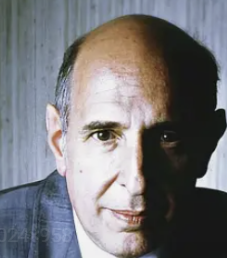
The distinction between private and public undermines the unity of spiritual strength, draining the public of the transcendent energies while trivializing them because the merely private life provides no proper stage for their action.
▼
Source
"Commerce and Culture," p. 280.
4 months 2 weeks ago
The de-eroticization of the world, a companion to its disenchantment ... seems to result from a combination of causes-our democratic regime and its tendencies toward leveling and self-protection, a reductionist-materialist science that inevitably interprets eros as sex, and the atmosphere generated by "the death of God" and of the subordinate god, Eros.
▼
Source
p. 15.
4 months 2 weeks ago
There are two threats to reason, the opinion that one knows the truth about the most important things and the opinion that there is no truth about them. Both of these opinions are fatal to philosophy; the first asserts that the quest for truth is unnecessary, while the second asserts that it is impossible. The Socratic knowledge of ignorance, which I take to be the beginning point of all philosophy, defines the sensible middle ground between two extremes.
▼
Source
"Western Civ," p. 18.
4 months 2 weeks ago
Bacon, Locke, Descartes, Hume, and all the others knew they were giving rights to vulgarity. But in so doing-in addition to caring for man's well-being-they were providing rights for themselves.
▼
Source
"Commerce and Culture," p. 289.
4 months 2 weeks ago
Intellectuals ... advertise their superiority to political practice but are absolutely in its thrall. ... It is no accident that Marxist theory and practice use the intellectuals as tools and keep them in brutal subservience.
▼
Source
"Commerce and Culture," p. 281.
4 months 2 weeks ago
A good education would be devoted to encouraging and refining the love of the beautiful, but a pathologically misguided moralism instead turns such longing into a sin against the high goal of making everyone feel good, of overcoming nature in the name of equality. ... Love of the beautiful may be the last and finest sacrifice to radical egalitarianism.
▼
Source
p. 15.
4 months 2 weeks ago
Socrates' way of life is the consequence of his recognition that we can know what it is that we do not know about the most important things and that we are by nature obliged to seek that knowledge.
▼
Source
Western Civ, p. 18.
4 months 2 weeks ago
In the new order a Locke was free-with almost no danger of being interfered with-to think his sublime thoughts, to seek the first causes of all things, to understand the nature of things. He could talk with his friends and teach the young. And there was money enough. The academies and universities satisfied Socrates' demand to be fed in the prytaneum.
▼
Source
Commerce and Culture, p. 289.
4 months 2 weeks ago
The distinction between the world of commerce and that of "culture" quickly became the distinction between infrastructure and superstructure, with the former clearly determining the latter.
▼
Source
Commerce and Culture, p. 281.
4 months 2 weeks ago
I am now even more persuaded of the urgent need to study why Socrates was accused. The dislike of philosophy is perennial, and the seeds of the condemnation of Socrates are present at all times, not in the bosoms of pleasure-seekers, who don't give a damn, but in those of high-minded and idealistic persons who do not want to submit their aspirations to examination.
▼
Source
Western Civ, p. 19.
4 months 2 weeks ago
The highest activities are always essentially lonely and private, and these men had a robust sense of their independence and the ultimate self-sufficiency of the mind. In this they were just like Socrates. The only change they operated was to bring philosophy out of the closet into the open, instead of seeking protection behind a little wall like men in a storm. Of course, in so doing they made philosophy, on the one hand, more vulnerable to the public if the hopes of controlling the public are not fulfilled, and, on the other, put at risk that inner intransigence which is the necessary condition of the quest for truth. Not only the rewards but the new responsibilities might prove irresistible temptations to compromise.
▼
Source
"Commerce and Culture," p. 290.
4 months 2 weeks ago
Life, liberty, and the pursuit of property were just what Aristotle did not talk about. They are the conditions of happiness; but the essence of happiness, according to Aristotle, is virtue. So the moderns decided to deal with the conditions and to let happiness take care of itself.
▼
Source
Commerce and Culture, p. 284.
4 months 2 weeks ago
Only the search back to the origins of one's ideas in order to see the real arguments for them, before people became so certain of them that they ceased thinking about them at all, can liberate us. Our study of history has taught us to laugh at the follies of the whole past, the monarchies, oligarchies, theocracies, and aristocracies with the fanaticism for empire or salvation, once taken so seriously. But we have very few tools for seeing ourselves in the same way, as others will see us. Each age always conspires to make its own way of thinking appear to be the only possible or just way, and our age has the least resistance to the triumph of its own way. There is less real presence of respectable alternatives and less knowledge of the titanic intellectual figures who founded our way.
▼
Source
Western Civ, p. 20.
4 months 2 weeks ago
The old view was that delicacy of language was part of the nature, the sacred nature, of eros and that to speak about it in any other way would be to misunderstand it. What has disappeared is the risk and the hope of human connectedness embedded in eros. Ours is a language that reduces the longing for an other to the need for individual, private satisfaction and safety.
▼
Source
pp. 13-14.
4 months 2 weeks ago
The first discipline modernity's originators imposed upon themselves was that of self-restraint, learning to live with vulgarity. Their high expectations for effectiveness were made possible by low expectations of what was to be.
▼
Source
Commerce and Culture, p. 285.
4 months 2 weeks ago
To recognize that some of the things our culture believes are not true imposes on us the duty of finding out which are true and which are not.
▼
Source
"Western Civ," p. 22.
4 months 2 weeks ago
Did Romeo and Juliet have a ... "relationship"? The term "relationship" ... betokens a chaste egalitarianism leveling different ranks and degrees of attachment.
▼
Source
p. 14.
4 months 2 weeks ago
There are two kinds of openness, the openness of indifference-promoted with the twin purposes of humbling our intellectual pride and letting us be whatever we want to be, just as long as we don't want to be knowers-and the openness that invites us to the quest for knowledge and certitude, for which history and the various cultures provide a brilliant array of examples for examination.
▼
Source
p. 41.
4 months 2 weeks ago
Adeimantus, in what amounts to an accusation of Socrates, asserts that the philosophers appear to be either useless or vicious. Plato, as I have suggested, teaches that ultimately this is an appearance that cannot be reversed, and this insures the philosophers' permanent marginality. They appear as useless because they are. They are neither artisans, nor statesmen, nor rhetoricians. They are idlers who contribute nothing to security or posterity. Their peculiar contemplative pleasures are not accessible to the majority of mankind, and they do not provide for the popular pleasures as do the poets.
▼
Source
Commerce and Culture, p. 285.
4 months 2 weeks ago
Only when the true ends of society have nothing to do with the sublime does "culture" become necessary as a veneer to cover over the void. Culture can at best appreciate the monuments of earlier faith; it cannot produce them.
▼
Source
"Commerce and Culture," p. 280.
4 months 2 weeks ago
We witness a strange inversion: on the one hand, the endeavor to turn the social contract into a less calculating and more feeling connection among its members; on the other hand, the endeavor to turn the erotic relationship into a contractual one.
▼
Source
p. 15.
4 months 2 weeks ago
Students have powerful images of what a perfect body is and pursue it incessantly. But deprived of literary guidance, they no longer have any image of a perfect soul, and hence do not long to have one.
▼
Source
p. 67.
4 months 2 weeks ago
As to the viciousness of the philosophers, the meaning of this complaint is succinctly expressed in the charge that the philosophers do not "hold the gods the city holds." And this accusation is most true. The quest for wisdom begins in doubt of the conventional wisdom about the highest things. The most cherished beliefs of the community, the collective hopes and fears, are centered on its gods. The unpardonable thing is to be beyond these hopes and fears, beyond the awe and shame the gods impose.
▼
Source
Commerce and Culture, p. 287.
4 months 2 weeks ago
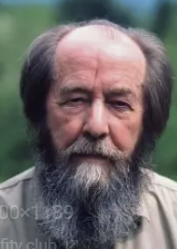
Can a man who's warm understand one who's freezing?
4 months 2 weeks ago
In recent times it has been fashionable to talk of the levelling of nations, of the disappearance of different races in the melting-pot of contemporary civilization. I do not agree with this opinion, but its discussion remains another question. Here it is merely fitting to say that the disappearance of nations would have impoverished us no less than if all men had become alike, with one personality and one face. Nations are the wealth of mankind, its collective personalities; the very least of them wears its own special colours and bears within itself a special facet of divine intention.
4 months 2 weeks ago
There is a word very commonly used these days: "anti-communism." It's a very stupid word, badly put together. It makes it appear as though communism were something original, something basic, something fundamental. Therefore, it is taken as the point of departure, and anti-communism is defined in relation to communism. Here is why I say that this word was poorly selected, that it was put together by people who do not understand etymology: the primary, the eternal concept is humanity. And communism is anti-humanity. Whoever says "anti-communism" is saying, in effect, anti-anti-humanity. A poor construction. So we should say: that which is against communism is for humanity. Not to accept, to reject this inhuman Communist ideology is simply to be a human being. It isn't being a member of a party.
▼
Source
Speech in Washington D.C. (30 June 1975), published in Solzhenitsyn: The Voice of Freedom (1975), p. 30
4 months 2 weeks ago
We, holding Art in our hands, confidently consider ourselves to be its masters; boldly we direct it, we renew, reform and manifest it; we sell it for money, use it to please those in power; turn to it at one moment for amusement - right down to popular songs and night-clubs, and at another - grabbing the nearest weapon, cork or cudgel - for the passing needs of politics and for narrow-minded social ends. But art is not defiled by our efforts, neither does it thereby depart from its true nature, but on each occasion and in each application it gives to us a part of its secret inner light.
4 months 2 weeks ago
It is almost always impossible to evaluate at the time events which you have already experienced, and to understand their meaning with the guidance of their effects. All the more unpredictable and surprising to us will be the course of future events.
▼
Source
Autobiographical sketch (1970), at Nobelprize.org
4 months 2 weeks ago
Proverbs about truth are well-loved in Russian. They give steady and sometimes striking expression to the not inconsiderable harsh national experience: ONE WORD OF TRUTH SHALL OUTWEIGH THE WHOLE WORLD. And it is here, on an imaginary fantasy, a breach of the principle of the conservation of mass and energy, that I base both my own activity and my appeal to the writers of the whole world.
4 months 2 weeks ago
Beat a dog once and you only have to show him the whip.
4 months 2 weeks ago
Woe to that nation whose literature is disturbed by the intervention of power. Because that is not just a violation against "freedom of print", it is the closing down of the heart of the nation, a slashing to pieces of its memory. The nation ceases to be mindful of itself, it is deprived of its spiritual unity, and despite a supposedly common language, compatriots suddenly cease to understand one another Woe to that nation whose literature is cut short by the intrusion of force. This is not merely interference with freedom of the press but the sealing up of a nation's heart, the excision of its memory.
▼
Source
Variant translation, as quoted in TIME
4 months 2 weeks ago
For us in Russia, communism is a dead dog, while, for many people in the West, it is still a living lion.
▼
Source
BBC Radio broadcast, Russian service, as quoted in The Listener
4 months 2 weeks ago
Archeologists have not discovered stages of human existence so early that they were without art. Right back in the early morning twilights of mankind we received it from Hands which we were too slow to discern. And we were too slow to ask: FOR WHAT PURPOSE have we been given this gift? What are we to do with it? And they were mistaken, and will always be mistaken, who prophesy that art will disintegrate, that it will outlive its forms and die. It is we who shall die - art will remain. And shall we comprehend, even on the day of our destruction, all its facets and all its possibilities?
CivilSimian.com created by AxiomaticPanic, CivilSimian, Kalokagathia