

4 months ago
Without its assiduity to the ridiculous, would the human race have lasted more than a single generation?

4 months ago
As in the presence of the Master, the Servants are equall, and without any honour at all; So are the Subjects, in the presence of the Soveraign. And though they shine some more, some lesse, when they are out of his sight; yet in his presence, they shine no more than the Starres in presence of the Sun.
▼
Source
The Second Part, Chapter 18, p. 93

4 months ago
Democracy, which means despair of finding any Heroes to govern you, and contented putting up with the want of them,—alas, thou too, mein Lieber, seest well how close it is of kin to Atheism, and other sad Isms: he who discovers no God whatever, how shall he discover Heroes, the visible Temples of God?

4 months ago
The pleasures that give most joy are the ones that most rarely come.

4 months ago
[T]here is no fundamental biological reason why the human genome can't be rewritten to allow everyone to be "in" love with everyone else - if we should so choose. But simply loving each other will be miraculous enough; and will probably suffice. An empty religious piety can be transformed into a biological reality.
▼
Source
"[https://www.huxley.net/ Brave New World? A Defence of Paradise-Engineering]", BLTC Research, 1998

4 months ago
Of all the non-European philosophers, William James probably best deserves to be an Existentialist.
▼
Source
Chapter One, The Advent of Existentialism, p. 16
4 months ago
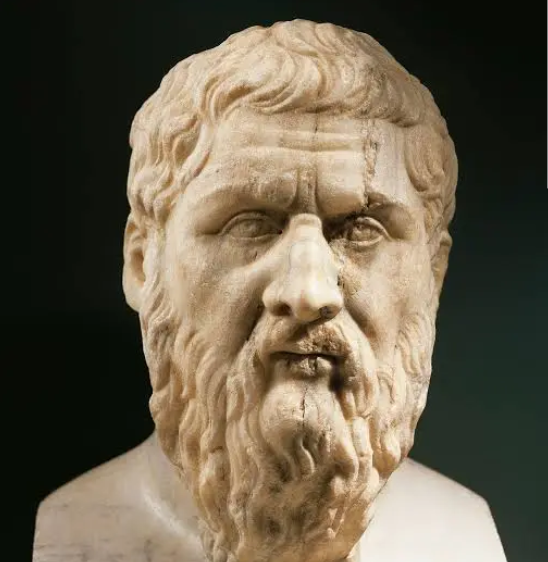
There is no one who ever acts honestly in the administration of states, nor any helper who will save any one who maintains the cause of the just.
▼
Source
496d
4 months ago
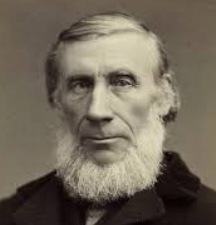
Almost every faith can point to its rejoicing martyrs.
4 months ago
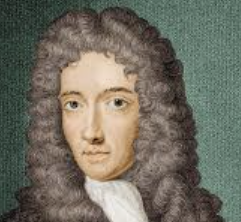
I fear that the chief Reason why Chymists have written so obscurely of their three Principles, may be, That not having Clear and Distinct Notions of them themselves, they cannot write otherwise then Confusedly of what they but Confusedly Apprehend. Not to say that divers of them, being Conscious to the Invalidity of their Doctrine, might well enough discerne that they could scarce keep themselves from being confuted, but by keeping themselves from being clearly understood.
4 months ago
Mind, even more deadly to empires than to individuals, erodes them, compromises their solidity.
4 months ago
The reasoning of Caligula agrees with that of Hobbes and Grotius.
▼
Source
Jean-Jacques Rousseau, The Social Contract, I Ch.2
4 months ago
Every colony, every agent for a matter colonial, has his tragic tale to tell you of his sad experiences in the Colonial Office; what blind obstructions, fatal indolences, pedantries, stupidities, on the right and on the left, he had to do battle with; what a world-wide jungle of red-tape, inhabited by doleful creatures, deaf or nearly so to human reason or entreaty, he had entered on; and how he paused in amazement, almost in despair; passionately appealed now to this doleful creature, now to that, and to the dead red-tape jungle, and to the living Universe itself, and to the Voices and to the Silences;—and, on the whole, found that it was an adventure, in sorrowful fact, equal to the fabulous ones by old knights-errant against dragons and wizards in enchanted wildernesses and waste howling solitudes; not achievable except by nearly superhuman exercise of all the four cardinal virtues, and unexpected favor of the special blessing of Heaven. His adventure achieved or found unachievable, he has returned with experiences new to him in the affairs of men. What this Colonial Office, inhabiting the head of Downing Street, really was, and had to do, or try doing, in God's practical Earth, he could not by any means precisely get to know; believes that it does not itself in the least precisely know. Believes that nobody knows;—that it is a mystery, a kind of Heathen myth; and stranger than any piece of the old mythological Pantheon; for it practically presides over the destinies of many millions of living men.
▼
Source
Latter Day Pamphlets, No. 3.
4 months ago
Both natural selection and the historical record offer powerful reasons for doubting the trustworthiness of our naive moral intuitions. So the possibility that human civilisation might be founded upon some monstrous evil should be taken seriously - even if the possibility seems transparently absurd at the time.
▼
Source
"[https://ieet.org/index.php/IEET2/more/pearce20130726 The Antispeciesist Revolution]", Institute for Ethics and Emerging Technologies, 26 Jul. 2013

4 months ago
The purpose of the biblical editors, in gathering together such diverse and often sharply conflicting texts, was not to construct a unitary work with an unequivocal message. It was rather to assemble a work capable of capturing and reflecting a given tradition of inquiry so readers could strive to understand the various perspectives embraced by this tradition, and in so doing build up an understanding of their own.
4 months ago
Empathy is the highest form of knowledge. (Sometimes this appears as ‘Empathy is the highest form of knowledge, for it requires us to suspend our egos and live in another's world’.)
▼
Source
Very common online pop-psychological slogan which has been traced no further than a graduation speech to students at San Francisco University High School given by Bill Bullard, who within the speech attributes it to George Eliot. [https://web.archive.org/
4 months ago
We can begin, like the Scholastic masters, with an objection: videtur quod non … "It seems not to be true that ..." And this is the objection: a time like the present [i.e., a few years after the Second World War, in Germany] seems, of all times, not to be a time to speak of leisure. That is no small objection. But there is also a good answer to it. For, when we consider the foundations of Western European culture (is it, perhaps, too rash to assume that our re-building will in fact be carried out in a "Western" spirit? Indeed, this and no other is the very assumption that is at issue today), one of these foundations is leisure. We can read it in the first chapter of Aristotle's Metaphysics. And the very history of the meaning of the word bears a similar message. The Greek word for leisure (σχολή) is the origin of Latin scola, German Schule, English school. The names for the institutions of education and learning mean "leisure."
▼
Source
pp. 3–4
4 months ago
Some of the stock illustrations of our lecture-rooms were of his contrivance. Thus he illustrated the expansive power of freezing water by bursting a plugged gun-barrel filled with water by solidifying the water by means of a mixture of snow and salt a freezing mixture which he first introduced.
4 months ago
He who has never envied the vegetable has missed the human drama.
▼
Source
p. 178, first American edition (1970)
4 months ago
In looking at this wreck of Governments in all European countries, there is one consideration that suggests itself, sadly elucidative of our modern epoch. These Governments, we may be well assured, have gone to anarchy for this one reason inclusive of every other whatsoever, That they were not wise enough; that the spiritual talent embarked in them, the virtue, heroism, intellect, or by whatever other synonyms we designate it, was not adequate,—probably had long been inadequate, and so in its dim helplessness had suffered, or perhaps invited falsity to introduce itself; had suffered injustices, and solecisms, and contradictions of the Divine Fact, to accumulate in more than tolerable measure; whereupon said Governments were overset, and declared before all creatures to be too false.
4 months ago
The functional regions of the brain which subserve physical agony, the "pain centres", and the mainly limbic substrates of emotion, appear in phylogenetic terms to be remarkably constant in the vertebrate line. The neural pathways involving serotonin, the periaquaductal grey matter, bradykinin, dynorphin, ATP receptors, the major opioid families, substance P etc all existed long before hominids walked the earth. Not merely is the biochemistry of suffering disturbingly similar where not effectively type-identical across a wide spectrum of vertebrate (and even some invertebrate) species. It is at least possible that members of any species whose members have more pain cells exhibiting greater synaptic density than humans sometimes suffer more atrociously than we do, whatever their notional "intelligence".
▼
Source
1.9 [https://www.hedweb.com/hedethic/hedon1.htm#taste The Taste of Depravity]

4 months ago
“To imitate Socrates” meant, in other words, to staunchly refuse imitation; refuse imitation of the person “Socrates”—or any other person, however worthy. The model of life Socrates selected, painstakingly composed and laboriously cultivated for himself might have perfectly suited his kind of person, but it would not necessarily suit all those who made a point of living as Socrates did. A slavish imitation of the specific mode of life that Socrates constructed on his own, and to which he remained unhesitatingly, steadfastly loyal throughout, would amount to a betrayal of his legacy, to the rejection of his message—a message calling people first and foremost to listen to their own reason, and calling thereby for individual autonomy and responsibility. Such an imitation could suit a copier or a scanner, but it will never result in an original artistic creation, which (as Socrates suggested) human life should strive to become.
▼
Source
p. 79.
4 months ago
Now this structure of hope (among other things) is also what distinguishes philosophy from the special sciences. There is a relationship with the object that is different in principle in the two cases. The question of the special sciences is in principle ultimately answerable, or, at least, it is not un-answerable. It can be said, in a final way (or some day, one will be able to say in a final way) what is the cause, say, of this particular infectious disease. It is in principle possible that one day someone will say, "It is now scientifically proven that such and such is the case, and no otherwise." But a philosophical question can never be finally, conclusively answered. The object of philosophy is given to the philosopher on the basis of a hope. This is where Dilthey's words make sense: "The demands on the philosophizing person cannot be satisfied. A physicist is an agreeable entity, useful for himself and others; a philosopher, like the saint, only exists as an ideal." It is in the nature of the special sciences to emerge from a state of wonder to the extent that they reach "results." But the philosopher does not emerge from wonder.Here is at once the limit and the measure of science, as well as the great value, and great doubtfulness, of philosophy. Certainly, in itself it is a "greater" thing to dwell "under the stars." But man is not made to live "out there" permanently! Certainly, it is a more valuable question, as such, to ask about the whole world and the ultimate nature of things. But the answer is not as easily forthcoming as for the special sciences!
▼
Source
pp. 109–111 | The Dilthey quote is from Briefwechsel zwischen Wilhelm Dilthey und dem Grafen Paul Yorck v. Wartenberg, 1877–1897 (Hall/Salle, 1923), p. 39.
4 months ago
When you know that every problem is only a false problem, you are dangerously close to salvation.
4 months ago
[B]ooks—there is a good kind of a book and a bad kind of a book. I am not to assume that you are all ill acquainted with this; but I may remind you that it is a very important consideration at present. It casts aside altogether the idea that people have that if they are reading any book—that if an ignorant man is reading any book, he is doing rather better than nothing at all.
4 months ago
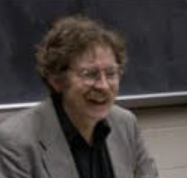
Dialogue never ends not for lack of time or opportunity but for essential reasons.
▼
Source
Chapter 7, Vigilance and Interruption, p. 121
4 months ago
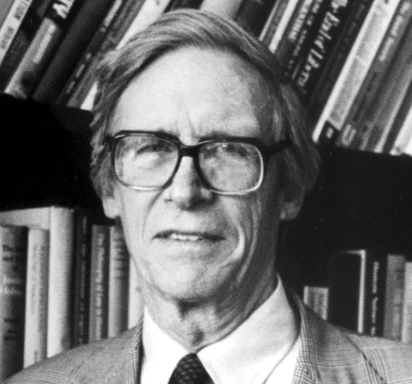
The circumstances of justice may be described as the normal conditions under which human cooperation is both possible and necessary.
▼
Source
Chapter III, Section 22, pg. 126
4 months ago
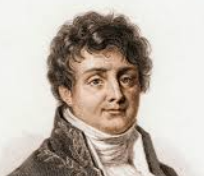
The mobility of the air, which is rapidly displaced... and... rises when heated... diminish the intensity of the effects... of a transparent and solid atmosphere, but do not entirely change their character.

4 months ago
In the army, capitalist development leads to the extension of obligatory military service to the reduction of the time of service and consequently to a material approach to a popular militia. But all of this takes place under the form of modern militarism in which the domination of the people by the militarist State and the class character of the State manifest themselves most clearly.
▼
Source
Ch.8

4 months ago
Just as ivy in search of support entwines itself around a thick prop, adjusts itself to its contours and exactly follows its shape, though it retains its own life and its particular charms, and looks most attractive, so Christian doctrine issuing from the wisdom of India has covered over the old trunk of gross Judaism, which is completely dissimilar to itself. What has been preserved of the fundamental form of the latter is something entirely different, something true and living which has been transformed by this doctrine. The trunk looks the same but is quite different. The Creator outside the world, which he has made out of nothing, is identified with the Saviour and through him with mankind; he is mankind's representative, it was redeemed by him as it had been lost in Adam, since when it has been enchained by the bonds of sin, corruption, suffering and death. For this is the attitude of Christianity as it is of Buddhism. The world can no longer be seen in the light of Jewish optimism which found that "all is well". No, rather is it the devil who now calls himself "prince of this world".... "We may hope", he wrote, "that Europe will free itself some day of all Jewish mythology. Perhaps the century is approaching when the peoples of Japhetic stock, originating in Asia, will find the sacred relics of their native land, because, after going astray for so long, they have reached sufficient maturity for this."
▼
Source
quoted in Poliakov, L. (1974). The Aryan myth : a history of racist and nationalist ideas in Europe p 247-8
4 months ago
For a long while I have lived with the notion that I was the most normal being that ever existed. This notion gave me the taste, even the passion for being unproductive: what was the use of being prized in a world inhabited by madmen, a world mired in mania and stupidity? For whom was one to bother, and to what end? It remains to be seen if I have quite freed myself from this certitude, salvation in the absolute, ruin in the immediate.
4 months ago
There is no English historian who has a right to be judged by a higher or severer test, for no one has spoken more deeply and truly on the character and dignity of history... He showed an intelligence of things which no other English historian has understood. He dwelt upon the invisible impersonal forces that act in history, and appreciated, often with rare sagacity, the true significance and sequence of events. But he was unable to follow the course he had pointed out, and failed even to maintain himself on the high ground he had reached. He could not distinguish in history what was unknown to him in religion: thus he fell to the exclusive contemplation of certain typical individuals, whose greatness appeared to supply what he wanted, an object of worship, and personified invisible elements in visible men. And now the belongings of his hero possess so great an importance that they distract his attention from him; he invests with an absurd dignity not only his relations, but their goods and chattels, and allows merely material things to eclipse the human interest of his subject. It is a history made up of eccentricities. This is the way that Mr. Dickens writes novels; for whom the spectacles of an elderly gentleman, a pair of mulberry coloured hose, or a wandering American pig, have greater attractions than any psychological problem.
▼
Source
Lord Acton, 'Literary Notices', The Rambler, Vol. X. New Series. Part LX (December 1858), p. 429 | Unsigned article attributed to Acton in Herbert Butterfield, Man on His Past: The Study of the History of Historical Scholarship (1955), p. 217, n. 3
4 months ago
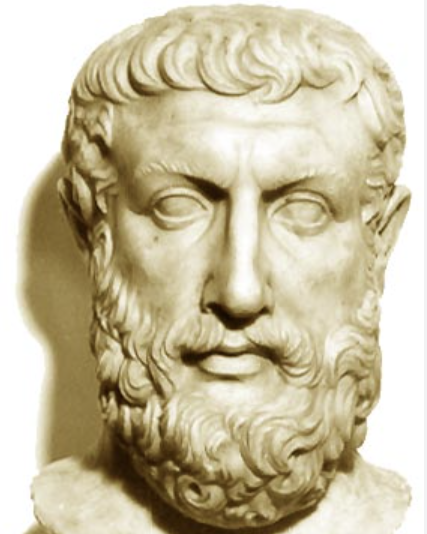
Do not let habit, born from experience, force you along this road, directing aimless eye and echoing ear and tongue; but judge by reason the much contested proof which I have spoken.
▼
Source
Frag. B 7.3-8.1, quoted by Sextus Empiricus, Against the Mathematicians, vii. 3
4 months ago
The hazards of the generalized prisoner's dilemma are removed by the match between the right and the good.
▼
Source
Chapter IX, Section 86, p. 577
4 months ago
We find upon all occasions, the early Christian writers speak of the Father as superior to the Son, and in general they give him the title of God, as distinguished from the Son; and sometimes they expressly call him, exclusively of the Son, the only true God; a phraseology which does not at all accord with the idea of the perfect equality of all the persons in the Trinity. But it might well be expected, that the advances to the present doctrine of the Trinity should be gradual and slow. It was, indeed, some centuries before it was completely formed.
▼
Source
Part I : The History of Opinions Relating to Jesus Christ, § III : The Supremacy was always ascribed to the Father before the Council Of Nice
4 months ago
I remembered at this time the brilliant critical analysis of the German Social Democracy which Rosa Luxemburg had written in gaol in 1914, after her arrest for anti-militarist activity. The pamphlet had been signed by the pseudonym "Junius" and it was a confirmation of prophecies I had heard her make at a German Congress in Hanover many years before when she had engaged in a brilliant polemical duel with the German Revisionist, Edward Bernstein. Even then she had foreseen the development of that pernicious opportunism which was to result in the tragedies of the post-war years.
▼
Source
Angelica Balabanoff My Life As a Rebel (1938)
4 months ago
Compassion for animals is intimately connected with goodness of character, and it may be confidently asserted that he, who is cruel to living creatures, cannot be a good man. Moreover, this compassion manifestly flows from the same source whence arise the virtues of justice and loving-kindness towards men.
▼
Source
Part III, Ch. VIII, 7, [https://archive.org/stream/basisofmorality00schoiala#page/223/mode/2up p. 223]
4 months ago
An aphorism? Fire without flames. Understandable that no one tries to warm himself at it.
4 months ago
He saw human life and earthly happenings against a vast background of mystic spiritualism, of eternities and immensities; he was an individualist, to whom the development of the race depends on great personal virtues, on heroic abnegation and self-sacrificing activity. His rugged independence made it difficult for his contemporaries to 'place' him; he resolutely refused to be labelled, or to be identified with any specific intellectual, literary or political creed.
▼
Source
John George Robertson, 'Carlyle', in The Cambridge History of English Literature, Volume XIII: The Nineteenth Century II, eds. A. W. Ward and A. R. Waller (1916), p. 20
4 months ago
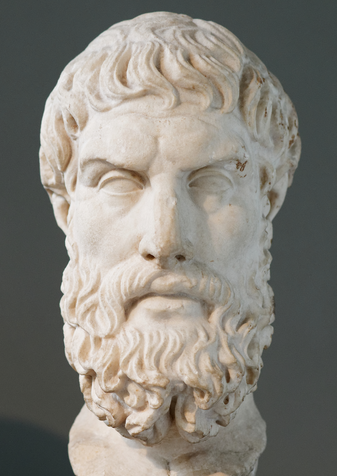
When pleasure is asserted to be the end of living, we are not then to understand that violent kind of delight or joy which arises from the gratification of the senses and passions, but merely that placid state of mind, which results from the absence of every cause of pain or uneasiness. Those pleasures, which arise from agitation, are not to be pursued as in themselves the end of living, but as means of arriving at that stable tranquility, in which true happiness consists. It is the office of reason to confine the pursuit of pleasure within the limits of nature, in order to the attainment of that happy state, in which the body is free from every kind of pain, and the mind from all perturbation. This state must not, however, be conceived to be perfect in proportion as it is inactive and torpid, but in proportion as all the functions of life are quietly and pleasantly performed. A happy life neither resembles a rapid torrent, nor a standing pool, but is like a gentle stream, that glides smoothly and silently along.
4 months ago
He goes on to develop all the consequences of the admission that it is. It must be uncreated and indestructible. It cannot have arisen out of nothing; for there is no such thing as nothing. Nor can it have arisen from something; for there is no room for anything but itself.
4 months ago
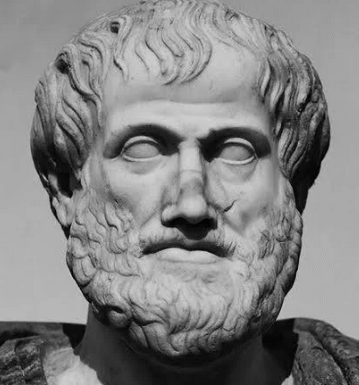
My lectures are published and not published; they will be intelligible to those who heard them, and to none beside.
▼
Source
Letter to Alexander the Great as quoted by William Whewell, History of the Inductive Sciences (1837), Ch. 2, Sect. 2
4 months ago
The whole afternoon was spent rejoicing as the demonstration spread across the city; no one walked alone for all San Juan was a single family.
▼
Source
"The Abolition of Slavery in Puerto Rico" (1893)

4 months ago
If one category had to be designated as an emblem of my thought, it would be neither Cantor's pure multiple, nor Godel's constructible, nor the void, by which being is named, nor even the event, in which the supplement of what-is-not-being-qua-being originates. It would be the generic.
▼
Source
Introduction
4 months ago
A great affliction of all Philistines is that idealities afford them no entertainment, but to escape from boredom they are always in need of realities.
▼
Source
E. Payne, trans. (1974) Vol. 1, p. 345
4 months ago
Nothing is a better proof of how far humanity has regressed than the impossibility of finding a single nation, a single tribe, among whom birth still provokes mourning and lamentations.
4 months ago
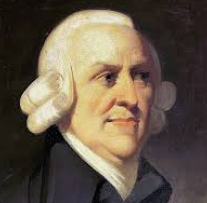
To desire you to read my book over and mark all the corrections you would wish me to make...would oblige me greatly: I know how much I shall be benefitted and I shall at the same time preserve the pretious right of private judgement for the sake of which our forefathers kicked out the Pope and the Pretender. I believe you to be much more infalliable than the Pope, but as I am a Protestant my conscience makes me scruple to submit to any unscriptural authority.
▼
Source
Letter to William Strahan (4 April 1760), quoted in Adam Smith, The Correspondence of Adam Smith, eds. E. C. Mossner and I. S. Ross (1987), pp. 67–68

4 months ago
It may be confidently asserted that no man chooses evil because it is evil; he only mistakes it for happiness, the good he seeks. And the desire of rectifying these mistakes, is the noble ambition of an enlightened understanding, the impulse of feelings that Philosophy invigorates.
▼
Source
A Vindication of the Rights of Men (1790)
4 months ago
The least initial deviation from the truth is multiplied later a thousandfold.
▼
Source
I.5. 271b8-10. This line begins the Prologue of Mortimer J. Adler’s book, Ten Philosophical Mistakes
4 months ago
When a nation is invited to join in a union with another, the ignorant, bedazzled statesman might rush into it, young people enamored of beautiful ideas and lacking good sense might celebrate it, and venal or demented politicians might welcome it as a mercy and glorify it with servile words, but he who feels in his heart the anguish of the patria, he who watches and foresees, must investigate and must say what elements constitute the character of the nation that invites and the nation that is invited, and whether they are predisposed toward a common labor by common antecedents and habits, and whether or not it is probable that the fearsome elements of the inviting nation will, in the union it aspires to, be developed to the endangerment of the invited one.

4 months ago
Cicero bent Greek ideas to his vision of the idealized Roman Republic, and his understanding of the mores—the morality and social attachments—of the gentlemanly statesmen who would hold power in a just republic. Readers familiar with Machiavelli’s Prince will hear curious echoes of that work in Cicero’s advice; curious because the pieties of Cicero’s advice to the would-be statesman were satirized by Machiavelli sixteen hundred years later. If his philosophy was Greek and eclectic, Cicero owed his constitutional theory to Polybius; he was born soon after Polybius died, and read his history. And Cicero greatly admired Polybius’s friend and employer Scipio the Younger. There are obvious differences of tone. Polybius celebrated Rome’s achievement of equipoise, while Cicero lamented the ruin of the republic. Cicero’s account of republican politics veers between a “constitutional” emphasis on the way that good institutions allow a state to function by recruiting men of good but not superhuman character, and a “heroic” emphasis on the role of truly great men in reconstituting the state when it has come to ruin. Cicero’s vanity was so notorious that everyone knew he had himself in mind as this hero—had he not saved the republic before when he quelled the conspiracy of Catiline?
CivilSimian.com created by AxiomaticPanic, CivilSimian, Kalokagathia