

4 months ago
In the old system, the body of the condemned man became the king's property, on which the sovereign left his mark and brought down the effects of his power. Now he will be rather the property of society, the object of a collective and useful appropriation.
▼
Source
Chapter Three, The Gentle Way in Punishment

4 months ago
I'm never afraid. But in my case it's nothing to be proud of.
▼
Source
Raimon to Regina. p. 23
4 months ago
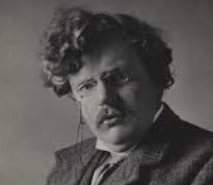
In every serious doctrine of the destiny of men, there is some trace of the doctrine of the equality of men. But the capitalist really depends on some religion of inequality. The capitalist must somehow distinguish himself from human kind; he must be obviously above it—or he would be obviously below it.
▼
Source
p. 34

4 months ago
To think that because those who wield power in society wield in the end that of government, therefore it is of no use to attempt to influence the constitution of the government by acting on opinion, is to forget that opinion is itself one of the greatest active social forces. One person with a belief is a social power equal to ninety-nine who have only interests.
▼
Source
Ch. I: To What Extent Forms of Government Are a Matter of Choice (p. 155)
4 months ago
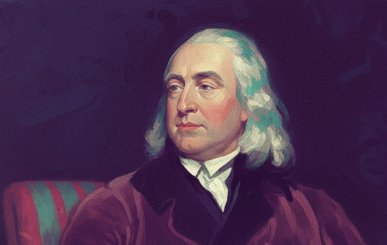
His primary concern was with neither psychology nor ethics, nor was it with "political theory", but with the reform of existing laws by means of a science of law... Bentham considered that both the Common Law and the administration that Parliament was supposed to supervise were incoherent and antiquated, and that systematic examination and comprehensive overhaul were just precisely what were required... To a considerable degree Bentham was adopting towards the legal institutions of his own country much the attitude that the rationalist Philosophes were adopting towards the whole of the social institutions of France.
▼
Source
Wilfrid Harrison, 'Introduction', Jeremy Bentham, A Fragment on Government and An Introduction to the Principles of Morals and Legislation (1948), pp. xviii, xxiii
4 months ago
Maybe the target nowadays is not to discover what we are but to refuse what we are.
▼
Source
p. 785
4 months ago
It is vain to apportion praise and blame. The truth is that if the vicious circle is so hard to break, it is because the two sexes are each the victim at once of the other and of itself. Between two adversaries confronting each other in their pure liberty, an agreement could be easily reached: the more so as the war profits neither. But the complexity of the whole affair derives from the fact that each camp is giving aid and comfort to the enemy; woman is pursuing a dream of submission, man a dream of identification. Want of authenticity does not pay: each blames the other for the unhappiness he or she has incurred in yielding to the temptations of the easy way; what man and woman loathe in each other is the shattering frustration of each one's own bad faith and baseness.
4 months ago
I've searched all the parks in all the cities — and found no statues of Committees.
▼
Source
As quoted in Trust Or Consequences: Build Trust Today Or Lose Your Market Tomorrow (2004) by Al Golin, p. 206; also in Storms of Life (2008) by Dr. Don Givens, p. 136
4 months ago
It appears... that a work similar in its object and general conception to that of Adam Smith, but adapted to the more extended knowledge and improved ideas of the present age, is the kind of contribution which Political Economy at present requires. The Wealth of Nations is in many parts obsolete, and in all, imperfect. Political Economy... has grown up almost from infancy since the time of Adam Smith; and the philosophy of society... has advanced many steps beyond the point at which he left it.
▼
Source
Preface (1848)
4 months ago
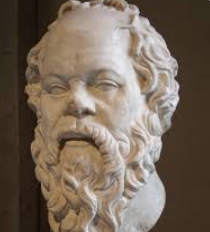
In "On the Peace"... in 355 B.C., Isocrates... argues that depraved orators "flatterers"... only say what the people desire to hear. ... The honest orator... is courageous enough, to oppose the demos. He has a critical and pedagogical role... to transform the will of the citizens so that they will serve the best interests of the city. ...Opposition between the people's will and the city's best interests is fundamental to Isocrates' criticism of the democratic institutions of Athens. ...He concludes ...it is not ...possible to be heard in Athens if one does not parrot the demos' will ...the only ...speakers left who have an audience are "reckless orators" and "comic poets" ...
4 months ago
The true disciple of philosophy is likely to be misunderstood by other men; they do not perceive that he is ever pursuing death and dying; and if this is true, why, having had the desire of death all his life long, should he repine at that which he has always been pursuing and desiring?
4 months ago
The greatest merit of the critical spirit is that it tends to cure fanaticism, and it is logical enough that in our own fanatical times the critical spirit should tend to disappear.
▼
Source
p. 143
4 months ago
The world would be astonished if it knew how great a proportion of its brightest ornaments—of those most distinguished even in popular estimation for wisdom and virtue—are complete sceptics in religion...
▼
Source
([https://archive.org/details/autobiography01mill/page/45/mode/1up p. 45])
4 months ago
Liberalism — it is well to recall this today—is the supreme form of generosity; it is the right which the majority concedes to minorities and hence it is the noblest cry that has ever resounded in this planet. It announces the determination to share existence with the enemy; more than that, with an enemy which is weak. It was incredible that the human species should have arrived at so noble an attitude, so paradoxical, so refined, so acrobatic, so anti-natural. Hence, it is not to be wondered at that this same humanity should soon appear anxious to get rid of it. It is a discipline too difficult and complex to take firm root on earth.
▼
Source
Chap. VIII: The Masses Intervene In Everything, And Why Their Intervention Is Solely By Violence
4 months ago
The soul, being a harmony, can never utter a note at variance with the tensions and relaxations and vibrations and other affections of the strings out of which she is composed; she can only follow, she cannot lead them? ...And yet do we not now discover the soul to be doing the exact opposite—leading the elements of which she is believed to be composed; almost always opposing and coercing them in all sorts of ways throughout life... threatening and reprimanding the desires, passions, fears, as if talking to a thing which is not herself...

4 months ago
Metaphors and similes are the beginning of the democratic system of envy.
4 months ago
The experiences of this period had two very marked effects on my opinions and character. In the first place, they led me to adopt a theory of life, very unlike that on which I had before acted, and having much in common with what at that time I certainly had never heard of, the anti-self-consciousness theory of Carlyle.
▼
Source
([https://archive.org/details/autobiography01mill/page/141/mode/1up pp. 141-142])
4 months ago
Man must not only make himself: the weightiest thing he has to do is to determine what he is going to be. He is causa sui to the second power.
▼
Source
As quoted in Existentialism from Dostoevsky to Sartre, p. 155

4 months ago
Yes, you can--if you do everything as if it were the last thing you were doing in your life, and stop being aimless, stop letting your emotions override what your mind tells you, stop being hypocritical, self-centered, irritable.
▼
Source
You will find rest from vain fancies if you perform every act in life as though it were your last. | II, 5 (Hayes translation)
4 months ago
Some subjects are so serious that one can only joke about them.
▼
Source
As quoted in The Genius of Science: A Portrait Gallery (2000) by Abraham Pais, p. 24 | Some things are so serious that one can only joke about them. | Variant without any citation as to author in Denial is not a river in Egypt (1998) by Sandi Bachom, p. 8
4 months ago
False words are not only evil in themselves, but they infect the soul with evil.
▼
Source
Phaedo 115e | literally: 'For know well', he said, 'o dearest Kriton, that to not speak well is not only sinful by itself, but lets evil intrude into the soul.'(εὖ γὰρ ἴσθι, ἦ δ᾽ ὅς, ὦ ἄριστε Κρίτων, τὸ μὴ καλῶς λέγειν οὐ μόνον εἰς αὐτὸ τοῦτο πλημμελές, ἀ
4 months ago
The authority of the State was not a product, but a presupposition. It could not depend on the people, in fact, the people depended on the State… The Fascist state, on the other hand, is a popular state, and, in that sense, a democratic State par excellence… Every citizen shares a relationship with the State and is so intimate that the State exists only in so far as it is made to exist by the citizen.
▼
Source
Orgini e dottrina del fascismo, Rome: Libreria del Littorio, (1929). Origins and Doctrine of Fascism, A. James Gregor, translator and editor, Transaction Publishers (2003) p. 28
4 months ago
Wisdom and contrivance are shown in overcoming difficulties, so there is no place for them in a Being for whom no difficulties exist
▼
Source
pages 176-177; Early Modern Texts page 16
4 months ago
Let no act be done at haphazard, nor otherwise than according to the finished rules that govern its kind.
▼
Source
IV, 2
4 months ago
Since ancient times, philosophers have maintained that to strive too hard for one's own happiness is self-defeating.
▼
Source
Chapter 5, Reason And Genes, p. 145
4 months ago
Neither one nor the other doth follow, for that both the assertions may be true. The Oracle adjudged Socrates the wisest of all men, whose knowledg is limited; Socrates acknowledgeth that he knew nothing in relation to absolute wisdome, which is infinite; and because of infinite, much is the same part as is little, and as is nothing (for to arrive... to the infinite number, it is all one to accumulate thousands, tens, or ciphers,) therefore Socrates well perceived his wisdom to be nothing, in comparison of the infinite knowledg which he wanted. But yet, because there is some knowledg found amongst men, and this not equally shared to all, Socrates might have a greater share thereof than others, and therefore verified the answer of the Oracle.
▼
Source
Galileo Galilei, Dialogue Concerning the Two Chief World Systems (1632) as quoted in the Salusbury translation, The Systeme of the World: in Four Dialogues (1661) p. 85
4 months ago
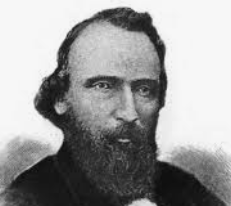
Only one thing is necessary: to possess God — All the senses, all the forces of the soul and of the spirit, all the exterior resources are so many open outlets to the Divinity; so many ways of tasting and of adoring God. We should be able to detach ourselves from all that is perishable and cling absolutely to the eternal and the absolute and enjoy the all else as a loan, as a usufruct…. To worship, to comprehend, to receive, to feel, to give, to act: this our law, our duty, our happiness, our heaven.
▼
Source
As translated in Bartlett's Familiar Quotations, 10th ed. (1919)
4 months ago
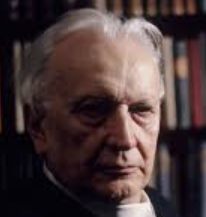
In old days the plastic arts, music, and poesy were so germane to man in his totality that his Transcendence plainly manifest in them. ... What is to-day obvious to all is a decay in the essence of art. ... the opposition to man's true nature as man.
4 months ago
Observe always that everything is the result of a change, and get used to thinking that there is nothing Nature loves so well as to change existing forms and to make new ones like them.
▼
Source
IV, 36

4 months ago
Seeing, then, that our Lord is so powerful, — as I see and know He is, — and that the evil spirits are His slaves, of which there can be no doubt, because it is of faith, — and I a servant of this our Lord and King, — what harm can Satan do unto me? Why have I not strength enough to fight against all hell? I took up the cross in my hand, — I was changed in a moment into another person, and it seemed as if God had really given me courage enough not to be afraid of encountering all the evil spirits.
▼
Source
Ch. XXV. "Divine Locutions. Discussions on That Subject" ¶ 24
4 months ago
The efficacy of religion lies precisely in what is not rational, philosophic or eternal; its efficacy lies in the unforeseen, the miraculous, the extraordinary. Thus religion attracts more devotion according as it demands more faith,—that is to say, as it becomes more incredible to the profane mind. The philosopher aspires to explain away all mysteries, to dissolve them into light. Mystery on the other hand is demanded and pursued by the religious instinct; mystery constitutes the essence of worship, the power of proselytism. When the "cross" became the "foolishness" of the cross, it took possession of the masses.
▼
Source
5 June 1870
4 months ago
The intelligence of the universe is social.
▼
Source
V, 30

4 months ago
This great maxim of Philosophy he had gathered by the teaching of nature alone: That man was created to work, not to speculate, or feel, or dream.
▼
Source
Reminiscences (1881), referring to his father, James Carlyle. | Sometimes quoted as "Man was created to work, not to speculate, or feel, or dream; Every idle moment is treason". The second of those two clauses in fact comes from Thomas Arnold The Christia
4 months ago
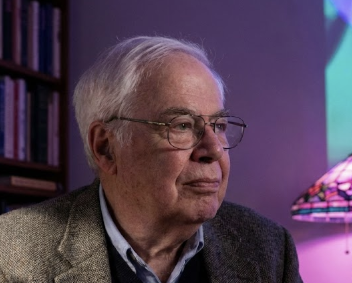
Rather, we heirs of Enlightenment think of enemies of liberal democracy like Nietzsche or Loyola as, to use Rawls’s word, “mad.” We do so because there is no way to see them as fellow citizens of our constitutional democracy, people whose life plans might, given ingenuity and good will, be fitted in with those of other citizens. They are crazy because the limits of sanity are set by what we can take seriously. This, in turn, is determined by our upbringing, our historical situation.

4 months ago
But I find in Scripture the name Lord also applied to them Both: “The Lord said unto my Lord, Sit Thou on my right hand.” And Isaiah says this: “Lord, who hath believed our report, and to whom is the arm of the Lord revealed?” Now he would most certainly have said Thine Arm, if he had not wished us to understand that the Father is Lord, and the Son also is Lord. A much more ancient testimony we have also in Genesis: “Then the Lord rained upon Sodom and upon Gomorrah brimstone and fire from the Lord out of heaven.” Now, either deny that this is Scripture; or else (let me ask) what sort of man you are, that you do not think words ought to be taken and understood in the sense in which they are written, especially when they are not expressed in allegories and parables, but in determinate and simple declarations?
▼
Source
Chapter XIII.—The Force of Sundry Passages of Scripture Illustrated in Relation to the Plurality of Persons and Unity of Substance. There is No Polytheism Here, Since the Unity is Insisted on as a Remedy Against Polytheism.
4 months ago
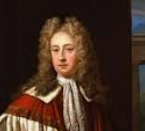
Nothing can be more absurd, in pure speculation, than an hereditary right in any mortal to govern other men: and yet, in practice, nothing can be more absurd than to have a king to choose at every vacancy of a throne. We draw at a lottery indeed in one case, where there are many chances to lose, and few to gain. But have we much more advantage of this kind in the other? I think not. Upon these, and upon most occasions, the multitude would do at least as well to trust to chance as choice, and to their fortune as to their judgment.
▼
Source
pp. 89-90
4 months ago
Nature which governs the whole will soon change all things which thou seest, and out of there substance will make other things, and again other things from the substance of them, in order that the world may ever be new.
▼
Source
VII, 25 (See also Charles Darwin)
4 months ago
No solitary miscreant, scarcely any solitary maniac, would venture on such actions and imaginations, as large communities of sane men have, in such circumstances, entertained as sound wisdom.
4 months ago
To speak plainly, if they who reproach us with harshness, or esteem heresy (to exist) in this (our) cause, foster the “infirmity of the flesh” to such a degree as to think it must have support accorded to it in frequency of marriage; why do they in another case neither accord it support nor foster it with indulgence—when, (namely), torments have reduced it to a denial (of the faith)? For, of course, that (infirmity) is more capable of excuse which has fallen in battle, than (that) which (has fallen) in the bed-chamber; (that) which has succumbed on the rack, than (that) which (has succumbed) on the bridal bed; (that) which has yielded to cruelty, than (that) which (has yielded) to appetite; that which has been overcome groaning, than (that) which (has been overcome) in heat. But the former they excommunicate, because it has not “endured unto the end:” the latter they prop up, as if withal it has “endured unto the end.”
▼
Source
Chapter 15
4 months ago
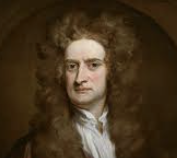
Who is a liar, saith John, but he that denyeth that Jesus is the Christ? He is Antichrist that denyeth the Father & the Son. And we are authorized also to call him God: for the name of God is in him. Exod. 23.21. And we must believe also that by his incarnation of the Virgin he came in the flesh not in appearance only but really & truly , being in all things made like unto his brethren (Heb. 2 17) for which reason he is called also the son of man.
▼
Source
Drafts on the history of the Church (Section 3). Yahuda Ms. 15.3, National Library of Israel, Jerusalem, Israel. [http://www.newtonproject.sussex.ac.uk/view/texts/normalized/THEM00220 2006 Online Version at Newton Project]
4 months ago
By contrast, Galileo, the other legendary scientific figure of the era, not only published the most compelling critique of Aristotelian scholasticism in his Dialogues on the Two Chief World Systems, but in the process turned the issue of the epistemic authority of theology versus the epistemic authority of empirical science into a hallmark of modern times. Although Newton clearly sympathized with Galileo, he wrote virtually nothing critical of the Aristotelian tradition in philosophy, and the immense effort he devoted to theology was aimed not at challenging its epistemic authority, but largely at putting it on a firmer footing. Newton made no direct contributions to philosophy of a similar magnitude. Indeed, from his extant writings alone Newton has more claim to being a major theologian than a major philosopher.
▼
Source
p. 1
4 months ago
You may break your heart, but men will still go on as before.
▼
Source
Ὅτι οὐδὲν ἧττον τὰ αὐτὰ ποιήσουσι, κἂν σὺ διαρραγῇς. | VIII, 4

4 months ago
Why don't I commit suicide? Because I am as sick of death as I am of life.
4 months ago
All work is as seed sown; it grows and spreads, and sows itself anew.
4 months ago
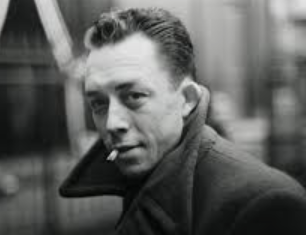
He discovered the cruel paradox by which we always deceive ourselves twice about the people we love — first to their advantage, then to their disadvantage.

4 months ago
There is something very slack about a future that will take a biting satire for a vapid dream.
▼
Source
R. A. Lafferty, depicting Thomas More commenting on the reception of his Utopia, in Past Master (1968), Ch. 2
4 months ago
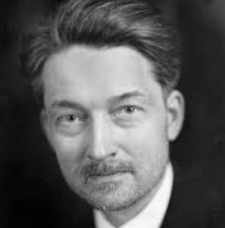
To philosophize man must put his whole soul into play, in much the same manner that to run he must use his heart and lungs.
▼
Source
p. 17.
4 months ago
The nature of the universe is the nature of things that are. Now, things that are have kinship with things that are from the beginning. Further, this nature is styled Truth; and it is the first cause of all that is true.
▼
Source
IX, 1
4 months ago
As far as I am concerned, I resign from humanity. I no longer want to be, nor can still be, a man. What should I do? Work for a social and political system, make a girl miserable? Hunt for weaknesses in philosophical systems, fight for moral and aesthetic ideals? It's all too little. I renounce my humanity even though I may find myself alone. But am I not already alone in this world from which I no longer expect anything?
4 months ago
O poor mortals, how ye make this earth bitter for each other.
▼
Source
Pt. I, Bk. V, ch. 5.
CivilSimian.com created by AxiomaticPanic, CivilSimian, Kalokagathia