
5 months 1 week ago
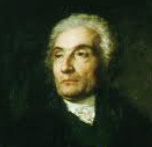
Burke said with a depth that it is impossible to admire enough that art is man’s nature: yes, undoubtedly, man with all his affections, all his knowledge, all his arts, is truly the man of nature, and the weaver’s web is as natural as the spider’s.
▼
Source
p. 52
5 months 1 week ago
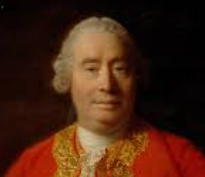
In vain, therefore, should we pretend to determine any single event, or infer any cause or effect, without the assistance of observation and experience.
▼
Source
§ 4.11
5 months 1 week ago
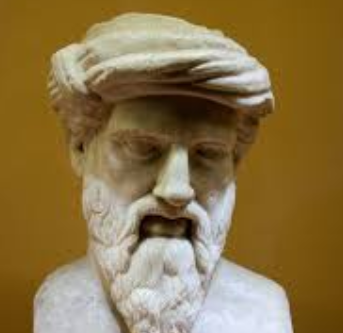
Scholastic skeptics, as well as ignorant materialists, have greatly amused themselves for the last two centuries over the absurdities attributed to Pythagoras by his biographer, Iamblichus. The Samian philosopher is said to have persuaded a she-bear to give up eating human flesh; to have forced a white eagle to descend to him from the clouds, and to have subdued him by stroking him gently with the hand, and by talking to him. On another occasion, Pythagoras actually persuaded an ox to renounce eating beans, by merely whispering in the animal's ear! (Iamblichus: "De Vita Pythag.") Oh, ignorance and superstition of our forefathers, how ridiculous they appear in the eyes of our enlightened generations! Let us, however, analyze this absurdity. Every day we see unlettered men, proprietors of strolling menageries, taming and completely subduing the most ferocious animals, merely by the power of their irresistible will... Every one has either witnessed or heard of the seemingly magical power of some mesmerizers and psychologists. They are able to subjugate their patients for any length of time. Regazzoni, the mesmerist who excited such wonder in France and London, has achieved far more extraordinary feats than what is above attributed to Pythagoras. Why, then, accuse the ancient biographers of such men as Pythagoras and Apollonius of Tyana of either wilful misrepresentation or absurd superstition?
▼
Source
p.284.

5 months 1 week ago
Reading the Socratic dialogues one has the feeling: what a frightful waste of time! What's the point of these arguments that prove nothing and clarify nothing?
▼
Source
p. 14e

5 months 1 week ago
All content of science, and also their protocol statements that are used for verification, are selected on the basis of decisions and can be altered in principle.
▼
Source
Otto Neurath (1934:102), as cited in: Cartwright (2008;199)

5 months 1 week ago
Emerson's prose is full of poetry, and his poems are light and air. ... His modes of expression, like his epithets, are imaginative.
▼
Source
Edmund Clarence Stedman, Poets of America (1885), pp. 134 & 164
5 months 1 week ago
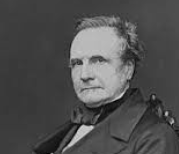
If we define a miracle as an effect of which the cause is unknown to us, then we make our ignorance the source of miracles! and the universe itself would be a standing miracle. A miracle might be perhaps defined more exactly as an effect which is not the consequence or effect of any known laws of nature.
▼
Source
"Passages from the life of a philosopher", Appendix, p. 489
5 months 1 week ago
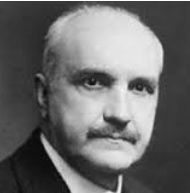
I leave you but the sound of many a wordIn mocking echoes haply overheard,I sang to heaven. My exile made me free,from world to world, from all worlds carried me.
▼
Source
[http://www.poemhunter.com/poem/the-poet-s-testament/ The Poet's Testament]
5 months 1 week ago
Why so many laws? Because there is no legislator. What have these so-called legislators done in six years? Nothing, for to destroy is not to make.
5 months 1 week ago
It is, therefore, a just political maxim, that every man must be supposed a knave: Though at the same time, it appears somewhat strange, that a maxim should be true in politics, which is false in fact. But to satisfy us on this head, we may consider, that men are generally more honest in their private than in their public capacity, and will go greater lengths to serve a party, than when their own private interest is alone concerned. Honour is a great check upon mankind: But where a considerable body of men act together, this check is, in a great measure, removed; since a man is sure to be approved of by his own party, for what promotes the common interest; and he soon learns to despise the clamours of adversaries.
▼
Source
Part I, Essay 6: Of The Independency of Parliament; first line often paraphrased as "It is a just political maxim, that every man must be supposed a knave."
5 months 1 week ago
Religion is, as it were, the calm bottom of the sea at its deepest point, which remains calm however high the waves on the surface may be.
▼
Source
p. 53e

5 months 1 week ago
And you, young engineer, you who dream of improving the lot of the workers by the application of science to industry — what a sad disappointment, what terrible disillusions await you! You devote the useful energy of your mind to working out the scheme of a railway which, running along the brink of precipices and burrowing into the very heart of mountains of granite, will bind together two countries which nature has separated. But once at work, you see whole regiments of workers decimated by privations and sickness in this dark tunnel — you see others of them returning home carrying with them, maybe, a few pence, and the undoubted seeds of consumption; you see human corpses — the results of a groveling greed — as landmarks along each yard of your road; and, when the railroad is finished, you see, lastly, that it becomes the highway for the artillery of an invading army...
5 months 1 week ago
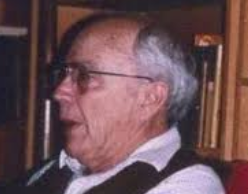
Popper's skepticism about scientific truth in The Logic of Scientific Discovery is that kind of reaction, of which the epitome is given in Aesop's fable of the fox and the grapes. The parallel would be complete if the fox, having become convinced that neither he nor anyone else could ever succeed in tasting grapes, should nevertheless write many long books on the progress of viticulture.
▼
Source
[https://www.google.com.au/books/edition/Popper_and_After/9iOoBQAAQBAJ Popper and After: Four Modern Irrationalists], Oxford: Pergamon, 1982. Page 52.
5 months 1 week ago
By means of [the microscope and the telescope] man touched, one might say, the two infinities. With the aid of glass, he could contemplate at his leisure the mite and the ring of Saturn. […] Master of glass through fire, and master of light through glass, he had lenses and mirrors of all kinds, prisms, containers, beakers, tubes, and finally barometers and thermometers. However all this originally began with the astronomical lens, which honours glass; and physics is born in some manner from astronomy, as it was written that, even in a material and gross sense, all science must descend from heaven.
▼
Source
p. 47
5 months 1 week ago
In a word, CLEANTHES, a man who follows your hypothesis is able perhaps to assert, or conjecture, that the universe, sometime, arose from something like design: but beyond that position he cannot ascertain one single circumstance; and is left afterwards to fix every point of his theology by the utmost license of fancy and hypothesis. This world, for aught he knows, is very faulty and imperfect, compared to a superior standard; and was only the first rude essay of some infant deity, who afterwards abandoned it, ashamed of his lame performance: it is the work only of some dependent, inferior deity; and is the object of derision to his superiors: it is the production of old age and dotage in some superannuated deity; and ever since his death, has run on at adventures, from the first impulse and active force which it received from him. You justly give signs of horror, DEMEA, at these strange suppositions; but these, and a thousand more of the same kind, are CLEANTHES's suppositions, not mine. From the moment the attributes of the Deity are supposed finite, all these have place. And I cannot, for my part, think that so wild and unsettled a system of theology is, in any respect, preferable to none at all.
▼
Source
Philo to Demea, Part V
5 months 1 week ago
He was like an atomic bomb, a tornado — people don't appreciate that.
▼
Source
W. A. Hijab, a student of Wittgenstein, as quoted in Autism and Creativity : Is there a link between autism in men and exceptional ability? (2004) by Michael Fitzgerald, p. 93
5 months 1 week ago
The masses have never believed in sophisms taught by economists, uttered more to confirm exploiters in their rights than to convert exploited! Peasants and workers, crushed by misery and finding no support in the well-to-do classes, have let things go, save from time to time when they have affirmed their rights by insurrection. And if workers ever thought that the day would come when personal appropriation of capital would profit all by turning it into a stock of wealth to be shared by all, this illusion is vanishing like so many others. The worker perceives that he has been disinherited, and that disinherited he will remain, unless he has recourse to strikes or revolts to tear from his masters the smallest part of riches built up by his own efforts; that is to say, in order to get that little, he already must impose on himself the pangs of hunger and face imprisonment, if not exposure to Imperial, Royal, or Republican fusillades.But a greater evil of the present system becomes more and more marked; namely, that in a system based on private appropriation, all that is necessary to life and to production — land, housing, food and tools — having once passed into the hands of a few, the production of necessities that would give well-being to all is continually hampered. The worker feels vaguely that our present technical power could give abundance to all, but he also perceives how the capitalistic system and the State hinder the conquest of this well-being in every way.Far from producing more than is needed to assure material riches, we do not produce enough.
5 months 1 week ago
Ignorance plays the chief part among men, and the multitude of words.
▼
Source
Cleobulus, 4.
5 months 1 week ago
There is not even a thought, or an invention, which is not common property, born of the past and the present. Thousands of inventors, known and unknown, who have died in poverty, have co-operated in the invention of each of these machines which embody the genius of man.
▼
Source
Ch. 1 : Our Riches
5 months 1 week ago
The road to Hades is the easiest to travel.
▼
Source
Bion, 49.
5 months 1 week ago
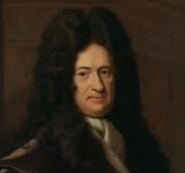
The love of God consists in an ardent desire to procure the general welfare, and reason teaches me that there is nothing which contributes more to the general welfare of mankind than the perfection of reason.
▼
Source
Closing sentence of the Preface to the general science (1677) (in P. Wiener (ed.), Leibniz Selections, Macmilland Press Ltd, 1951).

5 months 1 week ago
Whilst in speaking of human things, we say that it is necessary to know them before we can love them...the saints on the contrary say in speaking of divine things that it is necessary to love them in order to know them, and that we only enter truth through charity.
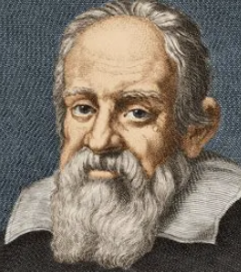
5 months 1 week ago
To apply oneself to great inventions, starting from the smallest beginnings, is no task for ordinary minds; to divine that wonderful arts lie hid behind trivial and childish things is a conception for superhuman talents.
5 months 1 week ago
If we put aside those gardeners who chiefly cultivate the... primeurs—strawberries ripened in January, and the like—if we take only those who grow crops in the open field, and resort to frames exclusively for the earlier days of the life of the plant and if we analyse their system, we see that its very essence is first, to create for the plant a nutritive and porous soil, which contains both the necessary decaying organic matter and the inorganic compounds; and then to keep that soil and the surrounding atmosphere at a temperature and moisture superior to those of the open air. The whole system is summed up in these few words. If the French maraîcher spends prodigies of labour, intelligence, and imagination in combining different kinds of manure so as to make them ferment at a given speed, he does so for no purpose but the above: a nourishing soil and a desired equal temperature of the air and the soil. All of his empirical art is devoted to the achievement of these two aims. But... the soil can be improved by hand, but it need not be made by hand. Any soil... can be made by machinery. ...We shall see manufactures of as soon as there is a demand for them.
5 months 1 week ago
One ought to seek out virtue for its own sake, without being influenced by fear or hope, or by any external influence. Moreover, that in that does happiness consist.
▼
Source
Zeno, 53.

5 months 1 week ago
Among animals, some learn to speak and sing; they remember tunes, and strike the notes as exactly as a musician. Others, for instance the ape, show more intelligence... would it be absolutely impossible to teach the ape a language? I do not think so.

5 months 1 week ago
By an object, I mean anything that we can think, i.e. anything we can talk about.
▼
Source
"Reflections on Real and Unreal Objects", Undated, MS 966
5 months 1 week ago
It is not among extraordinary and fantastic things that excellence is to be found, of whatever kind it may be. We rise to attain it and become removed from it: it is oftenest necessary to stoop for it.
5 months 1 week ago
All truths are easy to understand once they are discovered; the point is to discover them.
▼
Source
As quoted in Angels in the workplace: stories and inspirations for creating a new world of work (1999) by Melissa Giovagnoli
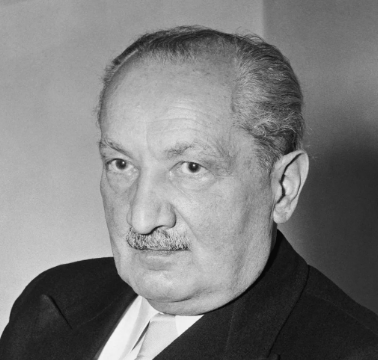
5 months 1 week ago
Kant's philosophy shifts for the first time the whole of modern thought and being (Desein) into the clarity and transparency of the foundation (Begrundung). This determines every attitude toward knowledge since then, as well as the bounds (Abgrenzungen) and appraisals of the sciences in the nineteenth century up to the present time. Therein Kant towers so far above all who precede and follow that even those who reject him or go beyond him still remain entirely dependent upon him. p. 55-56

5 months 1 week ago
He who receives a good turn should never forget it; he who does one should never remember it.
▼
Source
p. 213 (Gratitude)
5 months 1 week ago
Donald Davidson has notoriously retorted that the resources of existing natural languages seem perfectly adequate for dealing with even the most dramatic cases of purported incommensurability reported by writers like Benjamin Whorf and Thomas Kuhn. But Davidson’s argument seems questionable in itself, relying as it does on such a strict application of the verification principle in order to rule out the idea of alternative conceptual schemes. Furthermore, Davidson’s scepticism is insufficient to undermine the sense in which I am defending anything resembling a thesis of incommensurability. I am merely contending that it will always be a mistake for an historian to assume that the task of explicating an alien concept can be reduced to that of finding a counterpart in his or her own language for the term that expresses it.
▼
Source
Quentin Skinner, "Interpretation, rationality and truth", Visions of Politics (2002)
5 months 1 week ago
Now, let there be an indefinite succession of these inferential acts of comparative perception; and it is plain that the last moment will contain objectively the whole series. Let there be, not merely an indefinite succession, but a continuous flow of inference through a finite time; and the result will be a mediate objective consciousness of the whole time in the last moment. In this last moment, the whole series will be recognized, or known as known before.
5 months 1 week ago
One can forgive many Germans, but there are some Germans it is difficult to forgive. It is difficult to forgive Heidegger.
▼
Source
Emmanuel Lévinas, Heidegger's pre-WWII colleague at University of Freiburg, Nine Talmudic Readings, trans. Annette Aronowicz. Bloomington: Indiana University Press, 1994. p. 25

5 months 1 week ago
Everything is so arranged that the blind logic of mathematics executes the will of the most enlightened and free Mind.
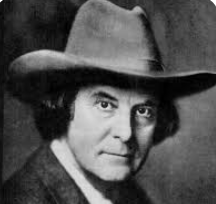
5 months 1 week ago
If men could only know each other, they would never either idolize or hate.
▼
Source
p. 13

5 months 1 week ago
The guiding question of Marx’s analysis was, How does capitalist society supply its members with the necessary use-values? And the answer disclosed a process of blind necessity, chance, anarchy and frustration. The introduction of the category of use-value was the introduction of a forgotten factor, forgotten, that is, by the classical political economy which was occupied only with the phenomenon of exchange value. In the Marxian theory, this factor becomes an instrument that cuts through the mystifying reification of the commodity world.
▼
Source
P. 304
5 months 1 week ago
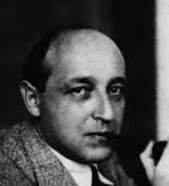
In order to be transmuted into knowledge, every perception is and must be ordered and organized into categories. The extent, however, to which we can organize and express our experience in such conceptual forms is, in turn, dependent upon the frames of reference which happen to be available at a given historical moment. The concepts which we have and the universe of discourse in which we move, together with the directions in which they tend to elaborate themselves, are dependent largely upon the historical-social situation of the intellectually active and responsible members of the group.
5 months 1 week ago
The quality of feeling is the true psychical representative of the first category of the immediate as it is in its immediacy, of the present in its direct positive presentness. Qualities of feeling show myriad-fold variety, far beyond what the psychologists admit. This variety however is in them only insofar as they are compared and gathered into collections. But as they are in their presentness, each is sole and unique; and all the others are absolute nothingness to it — or rather much less than nothingness, for not even a recognition as absent things or as fictions is accorded to them. The first category, then, is Quality of Feeling, or whatever is such as it is positively and regardless of aught else.
▼
Source
Lecture II : The Universal Categories, § 1 : Presentness, CP 5.44
5 months 1 week ago
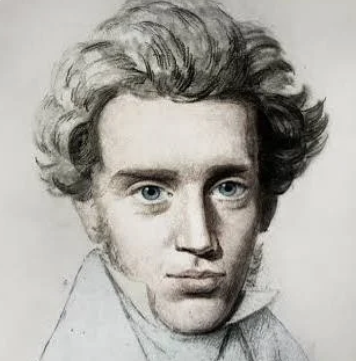
In order to learn true humility (I use this expression to describe the state of mind under discussion), it is good for a person to withdraw from the turmoil of the world (we see that Christ withdrew when the people wanted to proclaim him king as well as when he had to walk the thorny path), for in life either the depressing or the elevating impression is too dominant for a true balance to come about. Here, of course, individuality is very decisive, for just as almost every philosopher believes he has found the truth, just as almost every poet believes he has reached Mount Parnassus, just so we find on the other hand many who link their lives entirely to another, like a parasite to a plant, live in him, die in him (for example, the Frenchman in relation to Napoleon). But in the heart of nature, where a person, free from life's often nauseating air, breathes more freely, here the soul opens willingly to every noble impression. Here one comes out as nature's master, but he also feels that something higher is manifested in nature, something he must bow down before; he feels a need to surrender to this power that rules it all. (I, of course, would rather not speak of those who see nothing higher in nature than substance — people who really regard heaven as a cheese-dish cover and men as maggots who live inside it.) Here he feels himself great and small at one and the same time, and feels it without going so far as the Fichtean remark (in his Die Bestimmung des Menschen) about a grain of sand constituting the world, a statement not far removed from madness.
▼
Source
Journals 1A 68 (29 July 1835)
5 months 1 week ago
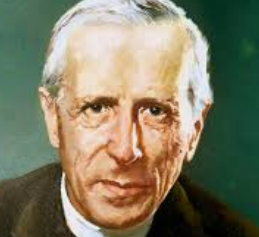
To the cosmic corpuscles we should find it natural to attribute an individual radius of action as limited as their dimensions. We find, on the contrary, that each of them can only be defined by virtue of its influence on all around it. Whatever space we suppose it to be in, each cosmic element radiates in it and entirely fills it. However narrowly the heart of an atom may be circumscribed, its realm is co-extensive, at least potentially, with that of every other atom. This strange property we will come across again, even in the human molecule.
5 months 1 week ago
Men who marry for gratification, propagation or the matter of buttons or socks, must expect to cope with and deal in a certain amount of quibble, subterfuge, concealments, and double, deep-dyed prevarication.
▼
Source
p. 159
5 months 1 week ago
In the most advanced areas of this civilization, the social controls have been introjected to the point where even individual protest is affected at its roots. The intellectual and emotional refusal “to go along” appears neurotic and impotent. This is the socio-psychological aspect of the political event that marks the contemporary period: the passing of the historical forces which, at the preceding stage of industrial society, seemed to represent the possibility of new forms of existence. But the term “introjection” perhaps no longer describes the way in which the individual by himself reproduces and perpetuates the external controls exercised by his society. Introjection suggests a variety of relatively spontaneous processes by which a Self (Ego) transposes the “outer” into the “inner.” Thus introjection implies the existence of an inner dimension distinguished from and even antagonistic to the external exigencies—an individual consciousness and an individual unconscious apart from public opinion and behavior. The idea of “inner freedom” here has its reality: it designates the private space in which man may become and remain “himself.” Today this private space has been invaded and whittled down by technological reality. Mass production and mass distribution claim the entire individual, and industrial psychology has long since ceased to be confined to the factory. The manifold processes of introjection seem to be ossified in almost mechanical reactions. The result is, not adjustment but mimesis: an immediate identification of the individual with his society and, through it, with the society as a whole. This immediate, automatic identification (which may have been characteristic of primitive forms of association) reappears in high industrial civilization; its new “immediacy,” however, is the product of a sophisticated, scientific management and organization. In this process, the “inner” dimension of the mind in which opposition to the status quo can take root is whittled down. The loss of this dimension, in which the power of negative thinking—the critical power of Reason—is at home, is the ideological counterpart to the very material process in which advanced industrial society silences and reconciles the opposition. The impact of progress turns Reason into submission to the facts of life, and to the dynamic capability of producing more and bigger facts of the same sort of life. The efficiency of the system blunts the individuals' recognition that it contains no facts which do not communicate the repressive power of the whole. If the individuals find themselves in the things which shape their life, they do so, not by giving, but by accepting the law of things—not the law of physics but the law of their society.
▼
Source
pp. 9-11
5 months 1 week ago
Pierce wrote as a logician and James as a humanist.
▼
Source
John Dewey, distinguishing the styles and focus of Peirce and William James, in The Development of American Pragmatism" in Studies in the History of Ideas (1925), Vol. II, p. 361
5 months 1 week ago
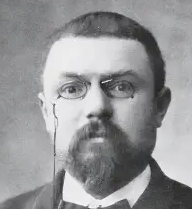
If... it be supposed that another way of measuring time is adopted... enunciation of the law would be... translated into another language... much less simple. So that the definition implicitly adopted by the astronomers may be summed up..: Time should be so defined that the equations of mechanics may be as simple as possible... [i.e.,] there is not one way of measuring time more true... only more convenient.
5 months 1 week ago
If I were to imagine a girl deeply in love and some man who wanted to use all his reasoning powers and knowledge to ridicule her passion, well, there's surely no question of the enamoured girl having to choose between keeping her wealth and being ridiculed. No, but if some extremely cool and calculating man calmly told the young girl, "I will explain to you what love is," and the girl admitted that everything he told her was quite correct, I wonder if she wouldn't choose his miserable common sense rather than her wealth?
▼
Source
1846
5 months 1 week ago
In his own poetic style, the French Jesuit Teilhard de Chardin liked to meditate on the Eucharist as the firstfruits of the new creation. In an essay called The Monstrance he describes how, kneeling in prayer, he had a sensation that the Host was beginning to grow until at last, through its mysterious expansion, "the whole world had become incandescent, had itself become like a single giant Host." Although it would probably be incorrect to imagine that the universe will eventually be transubstantiated, Teilhard correctly identified the connection between the Eucharist and the final glorification of the cosmos.
▼
Source
Cardinal Avery Dulles, in "A Eucharistic Church : The Vision of John Paul II" (10 November 2004)
5 months 1 week ago
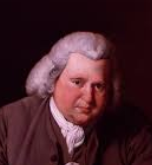
Would it be too bold to imagine that, in the great length of time since the earth began to exist, perhaps millions of ages before the commencement of the history of mankind would it be too bold to imagine that all warm-blooded animals have arisen from one living filament, which the great First Cause endued with animality, with the power of acquiring new parts, attended with new propensities, directed by irritations, sensations, volitions and associations, and thus possessing the faculty of continuing to improve by its own inherent activity, and of delivering down these improvements by generation to its posterity, world without end!
▼
Source
Zoönomia, vol. 1 (1794).
5 months 1 week ago
Technical progress and more comfortable living permit the systematic inclusion of libidinal components into the realm of commodity production and exchange. But no matter how controlled the mobilization of instinctual energy may be (it sometimes amounts to a scientific management of libido), no matter how much it may serve as a prop for the status quo—it is also gratifying to the managed individuals, just as racing the outboard motor, pushing the power lawn mower, and speeding the automobile are fun.
▼
Source
p. 75
5 months 1 week ago
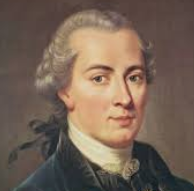
The mind intent upon resolving as well as compounding the concept of a composite demands and presumes boundaries in which it may acquiesce in the former as well as in the latter direction.
CivilSimian.com created by AxiomaticPanic, CivilSimian, Kalokagathia