
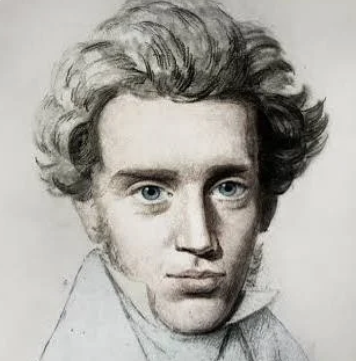
5 months 1 week ago
After all, in the poets love has its priests, and sometimes one hears a voice which knows how to defend it; but of faith one hears never a word. Who speaks in honor of this passion? Philosophy goes further. Theology sits rouged at the window and courts its favor, offering to sell her charms to philosophy. it is supposed to be difficult to understand Hegel, but to understand Abraham is a trifle. To go beyond Hegel's is a miracle, but to get beyond Abraham is the easiest thing of all.
▼
Source
Problemata: Preliminary Expectoration

5 months 1 week ago
At the point at which the concept of différance, and the chain attached to it, intervenes, all the conceptual oppositions of metaphysics (signifier/signified; sensible/intelligible; writing/speech; passivity/activity; etc.)- to the extent that they ultimately refer to the presence of something present (for example, in the form of the identity of the subject who is present for all his operations, present beneath every accident or event, self-present in its "living speech," in its enunciations, in the present objects and acts of its language, etc.)- become non pertinent. They all amount, at one moment or another, to a subordination of the movement of différance in favor of the presence of a value or a meaning supposedly antecedent to différance, more original than it, exceeding and governing it in the last analysis. This is still the presence of what we called above the "transcendental signified.
▼
Source
p. 29
5 months 1 week ago
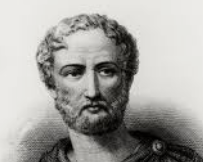
Modestus said of Regulus that he was "the biggest rascal that walks upon two legs."
▼
Source
Letter 5, 14.
5 months 1 week ago
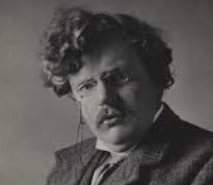
I think that if they gave me leave, Within the world to stand, I would be good through all the day I spent in fairyland. They should not hear a word from me, Of selfishness or scorn, If only I could find the door, If only I were born.
▼
Source
"By the Babe Unborn", sts. 5 and 6. The Wild Knight, &c., 2nd ed. (1906)
5 months 1 week ago
The methods of logical procedure are very different in ancient and modem logic, but behind all difference is the construction of a universally valid order of thought, neutral with respect to material content. Long before technological man and technological nature emerged as the objects of rational control and calculation, the mind was made susceptible to abstract generalization. Terms which could be organized into a coherent logical system, free from contradiction or with manageable contradiction, were separated from those which could not. Distinction was made between the universal, calculable, “objective” and the particular, incalculable, subjective dimension of thought.
▼
Source
pp. 137-138
5 months 1 week ago
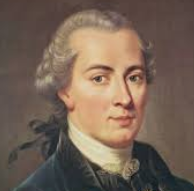
There will always be some people who think for themselves, even among the self-appointed guardians of the great mass who, after having thrown off the yoke of immaturity themselves, will spread about them the spirit of a reasonable estimate of their own value and of the need for every man to think for himself.
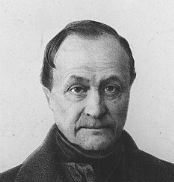
5 months 1 week ago
To understand a science it is necessary to know its history.
▼
Source
A Course of Positive Philosophy (1832 - 1842) [Six volumes]
5 months 1 week ago
Magister Adler was deeply moved by something higher, but now when he wants to express his thoughts in words, wants to communicate, he confuses the subjective with the objective, his altered subjective state with an external event, the dawning of a light upon him with the coming into existence of something new outside him, the falling of the veil from his eyes with his having had a revelation. Subjectively his emotion is carried to the extreme; he wants to select the most powerful expression to describe it and by means of a mental deception grasps the objective qualification: having had a revelation.
▼
Source
The Book of Adler, by Søren Kierkegaard, Hong 1998 p. 117

5 months 1 week ago
Understanding, however--and sometimes a very considerable depth of it--results from seeing the obstinate difficulties in views which often seem, on other grounds, quite obviously true...Let the reader be warned accordingly, that whenever he hears a philosopher proclaim any metaphysical opinion with great confidence, or hears him asset that something in metaphysics is obvious, or that some metaphysical problem turns only on confusions of concepts or upon the meanings of words, then he can be quite sure that this man is still infinitely far from philosophical understanding. His views appear to him devoid of difficulties only because he stoutly refuses to see difficulties.
▼
Source
Metaphysics, [https://babel.hathitrust.org/cgi/pt?id=uc1.b4410806&seq=22 Introduction, p. 2]

5 months 1 week ago
Proverbs are always platitudes until you have personally experienced the truth of them.
▼
Source
[http://books.google.com/books?lr=&id=iy0SkXPxsF8C&q=%22Proverbs+are+always+platitudes+until+you+have+personally+experienced+the+truth+of+them%22&pg=PA207#v=onepage Part IV: America],Jesting Pilate: The Diary of a Journey, (1926)
5 months 1 week ago
For the secular society of to-day is sceptical not merely about spiritual assumptions, but about its own secular assumptions. It has not merely broken the church window or besieged the tower of tradition; it has also kicked away the ladder of progress by which it had climbed. The Declaration of Independence, once the charter of democracy, begins by saying that certain things are self-evident. If we were to trace the history of the American mind from Thomas Jefferson to William James, we should find that fewer and fewer things were self-evident, until at last hardly anything is self-evident. So far from it being self-evident to the modern that men are created equal, it is not self-evident that men are created, or even that men are men. They are sometimes supposed to be monkeys muddling through a transition stage before the Superman. But there is not only doubt about mystical things; not even only about moral things. There is most doubt of all about rational things. I do not mean that I feel these doubts, either rational or mystical; but I mean that a sufficient number of modern people feel them to make unanimity an absurd assumption. Reason was self-evident before Pragmatism. Mathematics were self-evident before Einstein. But this scepticism is throwing thousands into a condition of doubt, not about occult but about obvious things. We shall soon be in a world in which a man may be howled down for saying that two and two make four, in which furious party cries will be raised against anybody who says that cows have horns, in which people will persecute the heresy of calling a triangle a three-sided figure, and hang a man for maddening a mob with the news that grass is green.
▼
Source
In The Illustrated London News (14 August 1926)
5 months 1 week ago
Newton... (after having remarked that geometry only requires two of the mechanical actions which it postulates, namely, to describe a straight line and a circle) says: geometry is proud of being able to achieve so much while taking so little from extraneous sources. One might say of metaphysics, on the other hand: it stands astonished, that with so much offered it by pure mathematics it can effect so little. In the meantime, this little is something which mathematics indispensably requires in its application to natural science, which, inasmuch as it must here necessarily borrow from metaphysics, need not be ashamed to allow itself to be seen in company with the latter.
▼
Source
Preface, Tr. Bax (1883) citing Isaac Newton's Principia
5 months 1 week ago
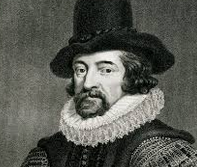
If thou shalt aspire after the glorious acts of men, thy working shall be accompanied with compunction and strife, and thy remembrance followed with distaste and upbraidings; and justly doth it come to pass towards thee, O man, that since thou, which art God's work, doest him no reason in yielding him well-pleasing service, even thine own works also should reward thee with the like fruit of bitterness.
▼
Source
Of The Works Of God and Man
5 months 1 week ago
If God stops a man on the road, and calls him with a revelation and sends him armed with divine authority among men, they say to him; from whom dost thou come? He answers: from God. But now God cannot help his messenger physically like a king, who gives him soldiers or policemen, or his ring or his signature, which is known to all; in short, God cannot help men by providing them with physical certainty that an Apostle is an Apostle-which would, moreover, be nonsense. Even miracles, if the Apostle has that gift, give no physical certainty; for the miracle is the object of faith.
▼
Source
p. 95
5 months 1 week ago
Conspiracy is just another name for coalition.
▼
Source
The Historical Illuminatus as spoken by Luigi Duccio
5 months 1 week ago
As I have already urged, the practice of that which is ethically best—what we call goodness or virtue—involves a course of conduct which in all respects is opposed to that which leads to success in the cosmic struggle for existence. In place of ruthless self-assertion, it demands self-restraint; in place of thrusting aside or treading down all competitors, it requires that the individual shall not merely respect, but shall help his fellows; its influence is directed not so much to the survival of the fittest as to the fitting of as many as possible to survive. It repudiates the gladiatorial theory of existence. It demands that each man who enters into the enjoyment of the advantages of a polity shall be mindful of his debt to those who have laboriously constructed it, and shall take heed that no act of his weakens the fabric in which he has been permitted to live. Laws and moral precepts are directed to the end of curbing the cosmic process, and reminding the individual of his duty to the community, to the protection and influence of which he owes, if not existence itself, at least the life of something better than a brutal savage. (Evolution and Ethics, pp. 81-82.)
▼
Source
Quoted by Swami Abhedananda, in [http://www.gutenberg.org/ebooks/7377 Vedanta Philosophy: Five Lectures on Reincarnation,] III. Evolution and Reincarnation. (1907)
5 months 1 week ago
The humorous look of children is perhaps the most endearing of all the bonds that hold the Cosmos together. Their top-heavy dignity is more touching than any humility; their solemnity gives us more hope for all things than a thousand carnivals of optimism; their large and lustrous eyes seem to hold all the stars in their astonishment; their fascinating absence of nose seems to give to us the most perfect hint of the humour that awaits us in the kingdom of heaven.
▼
Source
"A Defence of Baby-Worship"
5 months 1 week ago
The chief requirement of the good life... is to live without any image of oneself.
▼
Source
The Bell (1958), ch. 9; 2001, p. 119.
5 months 1 week ago
He [Jesus] claims that not the observance of outer civil or statutory churchly duties but the pure moral disposition of the heart alone can make man well-pleasing to God (Matthew V, 20-48); … that injury done one’s neighbor can be repaired only through satisfaction rendered to the neighbor himself, not through acts of divine worship (V, 24). Thus, he says, does he intend to do full justice to the Jewish law (V, 17); whence it is obvious that not scriptural scholarship but the pure religion of reason must be the law’s interpreter, for taken according to the letter, it allowed the very opposite of all this. Furthermore, he does not leave unnoticed, in his designations of the strait gate and the narrow way, the misconstruction of the law which men allow themselves in order to evade their true moral duty, holding themselves immune through having fulfilled their churchly duty (VII, 13). He further requires of these pure dispositions that they manifest themselves also in works (VII, 16) and, on the other hand, denies the insidious hope of those who imagine that, through invocation and praise of the Supreme Lawgiver in the person of His envoy, they will make up for their lack of good works and ingratiate themselves into favor (VII, 21). Regarding these works he declares that they ought to be performed publicly, as an example for imitation (V, 16), and in a cheerful mood, not as actions extorted from slaves (VI, 16); and that thus, from a small beginning in the sharing and spreading of such dispositions, religion, like a grain of seed in good soil, or a ferment of goodness, would gradually, through its inner power, grow into a kingdom of God (XIII, 31-33).
▼
Source
Book IV, Part 1, Section 1, “The Christian religion as a natural religion”
5 months 1 week ago
We are wont to call that human reasoning which we apply to Nature the anticipation of Nature (as being rash and premature) and that which is properly deduced from things the interpretation of Nature.
5 months 1 week ago
It is love that leniently and mercifully says: I forgive you everything-if you are forgiven only little, then it is because you love only little. Justice severely sets the boundary and says: No further! This is the limit. For you there is no forgiveness, and there is nothing more to be said. P. 172

5 months 1 week ago
In this context, Hans Asperger and other medics began dividing autistics up into those deemed to have potential worth to the Third Reich given their purportedly strong logical capacities, and those who were to be sterilized or killed along with countless other mad and disabled targets.
▼
Source
p. 62
5 months 1 week ago
Speed, it seems to me, provides the one genuinely modern pleasure.
▼
Source
Wanted, A New Pleasure
5 months 1 week ago
A man looking at a hippopotamus may sometimes be tempted to regard a hippopotamus as an enormous mistake; but he is also bound to confess that a fortunate inferiority prevents him personally from making such mistakes.
▼
Source
Ch. 10 "The Great Dickens Characters"
5 months 1 week ago
I see myself as Rhoda, not Mary Tyler Moore.
▼
Source
Not Iris Murdoch, but the actress and comedian Rosie O'Donnell. See George Mair Rosie O'Donnell: Her True Story (1997) p. 81.
5 months 1 week ago
Good and strong will. Mechanism must precede science (learning). Also in morals and religion? Too much discipline makes one narrow and kills proficiency. Politeness belongs, not to discipline, but to polish, and thus comes last.
▼
Source
Part III : Selection on Education from Kant's other Writings, Ch. I Pedagogical Fragments, # 9
5 months 1 week ago
Again, we should notice the force, effect, and consequences of inventions, which are nowhere more conspicuous than in those three which were unknown to the ancients; namely, printing, gunpowder, and the compass. For these three have changed the appearance and state of the whole world; first in literature, then in warfare, and lastly in navigation: and innumerable changes have been thence derived, so that no empire, sect, or star, appears to have exercised a greater power and influence on human affairs than these mechanical discoveries.
▼
Source
Aphorism 129
5 months 1 week ago
I will not by suppression, or by performing tricks, try to produce the impression that the ordinary Christianity in the land and the Christianity of the New Testament are alike.
▼
Source
"What Do I Want?"
5 months 1 week ago
Even the wisest of mankind cannot live by reason alone; pure arrogant reason, denying the claims of prejudice (which commonly are also the claims of conscience), leads to a wasteland of withered hopes and crying loneliness, empty of God and man: the wilderness in which Satan tempted Christ was not more dreadful than the arid expanse of intellectual vanity deprived of tradition and intuition, where modern man is tempted by his own pride.
5 months 1 week ago
Because machines could be made progressively more and more efficient, Western man came to believe that men and societies would automatically register a corresponding moral and spiritual improvement. Attention and allegiance came to be paid, not to Eternity, but to the Utopian future. External circumstances came to be regarded as more important than states of mind about external circumstances, and the end of human life was held to be action, with contemplation as a means to that end. These false and historically, aberrant and heretical doctrines are now systematically taught in our schools and repeated, day in, day out, by those anonymous writers of advertising copy who, more than any other teachers, provide European and American adults with their current philosophy of life. And so effective has been the propaganda that even professing Christians accept the heresy unquestioningly and are quite unconscious of its complete incompatibility with their own or anybody else's religion.
5 months 1 week ago
The academic mind reflects infinity, and is full of light by the simple process of being shallow and standing still.
▼
Source
Arthur Inglewood in Part II, ch. I
5 months 1 week ago
Einstein has not — as you sometimes hear — given the lie to Kant’s deep thoughts on the idealization of space and time; he has, on the contrary, made a large step towards its accomplishment.
▼
Source
Erwin Schrödinger, [https://archive.org/details/WhatIsLife_201708/page/n166/Mind and Matter] (1967)
5 months 1 week ago
Pithy sentences are like sharp nails which force truth upon our memory.
▼
Source
As quoted in A Dictionary of Thoughts : Being a Cyclopedia of Laconic Quotations (1908) by Tryon Edwards, p. 338
5 months 1 week ago
What is the internally free man free from? First of all - he or she is free from fear of people and life; from conventional opinion. He or she is independent from the crowd, from stereotypical thinking. He or she is able to have their own personal point of view; free from prejudices. He or she is free from envy, selfishness and from aggressive personal drives.
▼
Source
[http://parentingforeveryone.com/freedom/ Talent of Freedom. What Is Internal Freedom?]
5 months 1 week ago
To see ourselves as others see us is a most salutary gift. Hardly less important is the capacity to see others as they see themselves.
▼
Source
Page 159
5 months 1 week ago
The strangest whim has seized me. ... After all I think I will not hang myself to-day.
▼
Source
A Ballade of Suicide, st. 1
5 months 1 week ago
The pit of a theatre is the one place where the tears of virtuous and wicked men alike are mingled.

5 months 1 week ago
There is little in common between the organised parading of madness in the eighteenth century and the freedom with which madness came to the fore during the Renaissance. The earlier age had found it everywhere, an integral element of each experience, both in images and in real life dangers. During the classical period, it was also on public view, but behind bars. When it manifested itself it was at a carefully controlled distance, under the watchful eye of a reason that denied all kinship with it, and felt quite unthreatened by any hint of resemblance. Madness had become a thing to be observed, no longer the monster within, but an animal moved by strange mechanisms, more beast than man, where all humanity had long since disappeared.
▼
Source
Part One: 5. The Insane

5 months 1 week ago
There is only one good. And that is to act according to the dictates of one's conscience.
▼
Source
p. 181
5 months 1 week ago
At this point we find ourselves confronted by a very disquieting question: Do we really wish to act upon our knowledge?
▼
Source
Chapter 12 (p. 116)
5 months 1 week ago
About sex especially men are born unbalanced; we might almost say men are born mad. They scarcely reach sanity till they reach sanctity.

5 months 1 week ago
We are not so absurd as to propose that the teacher should not set forth his own opinions as the true ones and exert his utmost powers to exhibit their truth in the strongest light. To abstain from this would be to nourish the worst intellectual habit of all, that of not finding, and not looking for, certainty in any teacher. But the teacher himself should not be held to any creed; nor should the question be whether his own opinions are the true ones, but whether he is well instructed in those of other people, and, in enforcing his own, states the arguments for all conflicting opinions fairly.
▼
Source
"Civilization," London and Westminster Review (April 1836)
5 months 1 week ago
The infant runs toward it with its eyes closed, the adult is stationary, the old man approaches it with his back turned.
▼
Source
"Death"
5 months 1 week ago
This dysfunction of power was related to a central excess: what might be called the monarchical 'super-power', which identified the right to punish with the personal power of the sovereign.
▼
Source
Chapter Two, pp.80
5 months 1 week ago
What should a society be, so that in his last years a man might still be a man? The answer is simple: he would always have to have been treated as a man. By the fate that it allots to its members who can no longer work, society gives itself away — it has always looked upon them as so much material. Society confesses that as far as it is concerned, profit is the only thing that counts, and that its "humanism" is mere window-dressing. In the nineteenth century the ruling classes explicitly equated the proletariat with barbarism. The struggles of the workers succeeded in making the proletariat part of mankind once more. But only in so far as it is productive. Society turns away from the aged worker as though he belonged to another species. That is why the whole question is buried in a conspiracy of silence.
▼
Source
Conclusion, p. 542
5 months 1 week ago
There is great poetry being written now. G.K. Chesterton, for instance.
▼
Source
Robert E. Howard, in a letter to his friend Tevis Clyde Smith (6 August 1926)
5 months 1 week ago
Whatever crushes individuality is despotism, by whatever name it may be called, and whether it professes to be enforcing the will of God or the injunctions of men.
▼
Source
Ch. III: Of Individuality, As One of the Elements of Well-Being
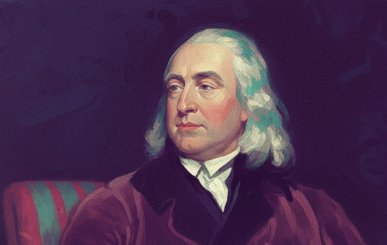
5 months 1 week ago
All poetry is misrepresentation
▼
Source
An Aphorism attributed to him according to John Stuart Mill (see Mill's essay On Bentham and Coleridge in Utilitarianism edt. by Mary Warnock p. 123).
5 months 1 week ago
The pastorate was formed against a sort of intoxication of religious behavior, examples of which are found throughout the Middle East in the second, third, and fourth centuries, and to which certain Gnostic sects in particular bear striking and indisputable testimony. In at least some of these Gnostic sects, in fact, the identification of matter with evil, and as absolute evil, obviously entailed certain consequences. This might be, for example, a kind of vertigo or enchantment provoked by a sort of unlimited asceticism that could lead to suicide: freeing oneself from matter as quickly as possible. There is also the idea, the theme, of destroying matter through the exhaustion of the evils it contains, of committing every possible sin, going to the very end of the domain of evil opened up by matter, and thus destroying matter. Let us sin, then, and sin to infinity. There is also the theme of the nullification of the world of the law, to destroy which one must first destroy the law, that is to say, break every law. One must respond to every law established by the world, or by the powers of the world, by violating it, systematically breaking the law and in effect, overthrowing the reign of the one who created the world.
▼
Source
Lecture 8 (1 March 1978), p. 195
5 months 1 week ago
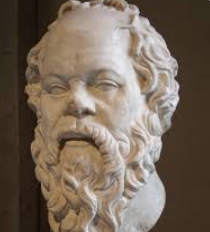
And are not the temperate exactly in the same case? They are temperate because they are intemperate—which may seem to be a contradiction, but is nevertheless the sort of thing which happens with this foolish temperance. For there are pleasures which they must have, and are afraid of losing; and therefore they abstain from one class of pleasures because they are overcome by another: and whereas intemperance is defined as "being under the domination of pleasure," they overcome only because they are overcome by pleasure.
CivilSimian.com created by AxiomaticPanic, CivilSimian, Kalokagathia