
4 months ago
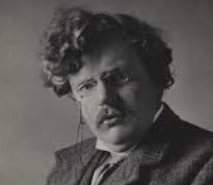
But whenever one meets modern thinkers (as one often does) progressing toward a madhouse, one always finds, on inquiry, that they have just had a splendid escape from another madhouse. Thus, hundreds of people become Socialists, not because they have tried Socialism and found it nice, but because they have tried Individualism and found it particularly nasty.
▼
Source
'The New House,' pp. 161-162

4 months ago
People praise virtue, but they hate it, they run away from it. It freezes you to death, and in this world you've got to keep your feet warm.

4 months ago
In France at least, the history of science and thought gives pride of place sciences, sciences of the necessary, all close to philosophy: one can observe in their history the almost uninterrupted emergence of truth and pure reason. The other disciplines, however - those, for example, that concern living beings, languages, or economic facts - are considered too tinged with empirical thought, too exposed to the vagaries of chance or imagery to age old traditions and external events, for it to be supposed that their history could be anything other irregular. At most, they are expected to provide evidence of a state of mind, an intellectual fashion, a mixture of archaism and bold conjecture, of intuition and blindness. But what if empirical knowledge, at a given time and in a given culture, did possess a well defined regularity.
▼
Source
Foreword to the English edition
4 months ago
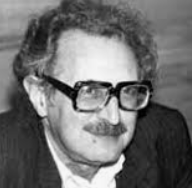
A son is not a judge of his father, but the conscience of the father is in his son.
▼
Source
Book 1, part 1, ch. 5

4 months ago
"Ye shall know the truth and the truth shall make you mad."
▼
Source
Frequently attributed to Aldous Huxley (possibly to Brave New World Revisited) but not traced to a reliable source.
4 months ago
I’ll read "Jack Redskin on the Quest" And feed my brain with better things.
▼
Source
A Ballade of a Book Reviewer

4 months ago
War is an ugly thing, but not the ugliest of things: the decayed and degraded state of moral and patriotic feeling which thinks that nothing is worth a war, is much worse. When a people are used as mere human instruments for firing cannon or thrusting bayonets, in the service and for the selfish purposes of a master, such war degrades a people. A war to protect other human beings against tyrannical injustice; a war to give victory to their own ideas of right and good, and which is their own war, carried on for an honest purpose by their free choice, — is often the means of their regeneration. A man who has nothing which he is willing to fight for, nothing which he cares more about than he does about his personal safety, is a miserable creature who has no chance of being free, unless made and kept so by the exertions of better men than himself. As long as justice and injustice have not terminated their ever-renewing fight for ascendancy in the affairs of mankind, human beings must be willing, when need is, to do battle for the one against the other.
▼
Source
"The Contest in America," Fraser’s Magazine (February 1862); later published in Dissertations and Discussions (1868), vol.1 p. 26
4 months ago
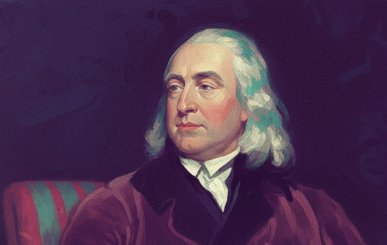
It is the principle of antipathy which leads us to speak of offences as deserving punishment. It is the corresponding principle of sympathy which leads us to speak of certain actions as meriting reward. This word merit can only lead to passion and error. It is effects good or bad which we ought alone to consider.
▼
Source
MSS 29, 32, University College Collection
4 months ago
The perfect disciplinary apparatus would make it possible for a single haze to see everything constantly. A central point would be both the source of light illuminating everything, and a locus of convergence for everything that must be known: a perfect eye that nothing would escape and a centre towards which all gazes would be turned.
▼
Source
Part Three, The Means of Correct Training

4 months ago
You're unique like all other women.
▼
Source
Raimon to Regina, p. 55
4 months ago
The truth is that prohibitions might have done far less harm as prohibitions, if a vague association had not arisen, on some dark day of human unreason, between prohibition and progress. And it was the progress that did the harm, not the prohibition. Men can enjoy life under considerable limitations, if they can be sure of their limited enjoyments; but under Progressive Puritanism we can never be sure of anything. The curse of it is not limitation; it is unlimited limitation. The evil is not in the restriction; but in the fact that nothing can ever restrict the restriction. The prohibitions are bound to progress point by point; more and more human rights and pleasures must of necessity be taken away; for it is of the nature of this futurism that the latest fad is the faith of the future, and the most fantastic fad inevitably makes the pace. Thus the worst thing in the seventeenth-century aberration was not so much Puritanism as sectarianism. It searched for truth not by synthesis but by subdivision. It not only broke religion into small pieces, but it was bound to choose the smallest piece.
▼
Source
"Fads and Public Opinion"
4 months ago
Two very different ideas are usually confounded under the name democracy. The pure idea of democracy, according to its definition, is the government of the whole people by the whole people, equally represented. Democracy, as commonly conceived and hitherto practiced, is the government of the whole people by a mere majority of the people exclusively represented. The former is synonymous with the equality of all citizens; the latter, strangely confounded with it, is a government of privilege in favor of the numerical majority, who alone possess practically any voice in the state. This is the inevitable consequence of the manner in which the votes are now taken, to the complete disfranchisement of minorities.
▼
Source
Ch. VII: Of True and False Democracy; Representation of All, and Representation of the Majority only (p. 247)
4 months ago
The commitment... in parrhesia is linked to... a difference of status between the speaker and his audience... the parrhesiastes says something which is dangerous to himself and thus involves a risk...
4 months ago
Work almost always has a double aspect: it is a bondage, a wearisome drudgery; but it is also a source of interest, a steadying element, a factor that helps to integrate the worker with society. Retirement may be looked upon either as a prolonged holiday or as a rejection, a being thrown on to the scrap-heap.
▼
Source
Pt I, Ch. 4: Old age in present-day society, p. 263
4 months ago
Q: What's wrong with the world? A: I am.
▼
Source
Purportedly a response by Chesterton to the question posed around 1910 by the Times of London (along with other luminaries), but biographer Kevin Belmonte, in 'Defiant Joy: the Remarkable Life & Impact of G.K. Chesterton', was unable to verify. Belmonte s
4 months ago
The reasons for legal intervention in favour of children, apply not less strongly to the case of those unfortunate slaves and victims of the most brutal part of mankind, the lower animals.
▼
Source
Book V, Chapter 11, Section 9
4 months ago
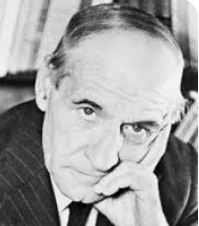
Yo soy yo y mi circumstancia, y si no la salvo a ella no me salvo yo.
▼
Source
I am I and my circumstance, and if I don't save it I don't save myself.
4 months ago
A profound shaking had happened in the seemingly smooth greensward of the classical philosophical tradition... faultlines in the ancient world that one had barely dreamed of ... A manuscript that moved me deeply.
▼
Source
Peter Brown, blurb in Michel Foucault, Fearless Speech (2001)
4 months ago
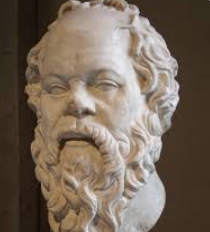
And now that the hour of departure is appointed to me, this is the hope with which I depart, and not I only, but every man that believes that he has his mind purified.
4 months ago
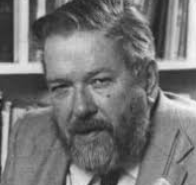
When we represent technology to ourselves through its own common sense we think of ourselves as picking and choosing in a supermarket, rather than within the analogy of the package deal. We have bought a package deal of far more fundamental novelness than simply a set of instruments under our control. It is a destiny which enfolds us in its own conceptions of instrumentality, neutrality and purposiveness.
▼
Source
p. 32
4 months ago
He blamed as severely what he thought a bad action, when the motive was a feeling of duty, as if the agents had been consciously evil doers. He would not have accepted as a plea in mitigation for inquisitors, that they sincerely believed burning heretics to be an obligation of conscience. But though he did not allow honesty of purpose to soften his disapprobation of actions, it had its full effect on his estimation of characters. No one prized conscientiousness and rectitude of intention more highly, or was more incapable of valuing any person in whom he did not feel assurance of it.
▼
Source
([https://archive.org/details/autobiography01mill/page/49/mode/1up pp. 49-50])
4 months ago
The surrealist thinks he has outstripped the whole of literary history when he has written (here a word that there is no need to write) where others have written "jasmines, swans and fauns." But what he has really done has been simply to bring to light another form of rhetoric which hitherto lay hidden in the latrines.
▼
Source
Chapter XI: The Self-Satisfied Age
4 months ago
It may be said, indeed, that without bones and muscles and the other parts of the body I cannot execute my purposes. But to say that I do as I do because of them, and that this is the way in which the mind acts, and not from the choice of the best, is a very careless and idle mode of speaking. I wonder that they cannot distinguish the cause from the condition, which the many, feeling about in the dark, are always mistaking and misnaming.
4 months ago
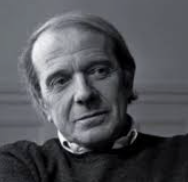
It is at work everywhere, functioning smoothly at times, at other times in fits and starts. It breathes, it heats, it eats. It shits and fucks. What a mistake to have ever said the id. Everywhere it is machines — real ones, not figurative ones: machines driving other machines, machines being driven by other machines, with all the necessary couplings and connections.
▼
Source
from Anti-oedipus: capitalism and schizophrenia, p. 1

4 months ago
New York City is the Darwinist capital of the capitalist world.
4 months ago
I needed to be made to feel that there was real, permanent happiness in tranquil contemplation. Wordsworth taught me this, not only without turning away from, but with a greatly increased interest in the common feelings and common destiny of human beings.
▼
Source
([https://archive.org/details/autobiography01mill/page/148/mode/1 p. 148])
4 months ago
No human acquisition is stable. Even what appears to us most completely won and consolidated can disappear in a few generations. This thing we call "civilization" — all these physical and moral comforts, all these conveniences, all these shelters, all these virtues and disciplines which have become habit now, on which we count, and which in effect constitute a repertory or system of securities which man made for himself like a raft in the initial shipwreck which living always is — all these securities are insecure securities which in the twinkling of an eye, at the least carelessness, escape from man's hands and vanish like phantoms.
▼
Source
p. 25

4 months ago
The longest-lived and the shortest-lived man, when they come to die, lose one and the same thing.
▼
Source
II, 14
4 months ago
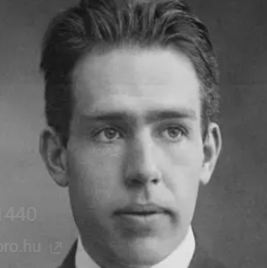
No, no, you are not thinking, you are just being logical.
▼
Source
In response to those who made purely formal or mathematical arguments, as quoted in What Little I Remember (1979) by Otto Robert Frisch, p. 95

4 months ago
Speciesism is an attitude of prejudice towards beings because they're not members of our species, so just as racism means that you're prejudiced against beings who are not members of your race and sexism means you're prejudiced against people of the other sex. So we humans tend to be speciesist in we think that any being that is a member of the species homo sapien just automatically has a higher moral status and is more important than any being that is a member of any other species, irrespective of the actual characteristics of those beings.
▼
Source
[https://www.youtube.com/watch?v=GYYNY2oKVWU Peter Singer - The Genius of Darwin: The Uncut Interviews - Richard Dawkins], 2009.
4 months ago
It is the example of the rider who wishes to become an expert horseman: "None of your soft-mouthed, docile animals for me," he says; "the horse for me to own must show some spirit" in the belief, no doubt, if he can manage such an animal, it will be easy enough to deal with every other horse besides. And that is just my case. I wish to deal with human beings, to associate with man in general; hence my choice of wife. I know full well, if I can tolerate her spirit, I can with ease attach myself to every human being else.
▼
Source
Symposium 17–19 [= 2.10]

4 months ago
Ronald Dworkin... argues that our law includes not only norms found in treaties, customs, constitutions, statutes, and cases, but also moral principles that provide the best justification for the norms found there.
▼
Source
H.L.A. Hart, The Concept of Law, 1961. p. Xviii; introduction.
4 months ago
As every reader of Representative Government soon discovers, it was Mill himself who undermined his own argument for universal inclusion by posing a counterargument based on consideration of competence. In the course of his discussion, he explicitly asserted that the criterion of competence must take priority over any principle, whether categorical or utilitarian, that makes inclusion in the demos a matter of general right among all adults subject to the laws... Mill brought into the open a problem that had been glossed over by some of his most illustrious predecessors. Yet in justifying an exclusionary demos Mill did no more than make implicit what had generally been implicit in all previous democratic theory and practice.
▼
Source
Robert A. Dahl, Democracy and Its Critics (1989), Ch. 9 : The Problem of Inclusion
4 months ago
The abyss of endless time that swallows it all. The emptiness of all those applauding hands. The people who praise us—how capricious they are, how arbitrary. And the tiny region in which it all takes place.
▼
Source
IV, 4(Hays translation)
4 months ago
We are responsible not only for what we do but also for what we could have prevented.
▼
Source
Introduction (p. xv)
4 months ago
People think the world needs a republic, and they think it needs a new social order, and a new religion, but it never occurs to anyone that what the world really needs, confused as it is by much learning, is a new Socrates.
▼
Source
Søren Kierkegaard, in The Sickness unto Death (1849), as translated by Alastair Hannay (1989), p. 124
4 months ago
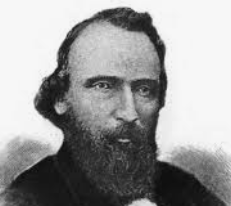
To be misunderstood even by those whom one loves is the cross and bitterness of life. It is the secret of that sad and melancholy smile on the lips of great men which so few understand; it is the cruelest trial reserved for self-devotion; it is what must have oftenest wrung the heart of the Son of man; and if God could suffer, it would be the wound we should be forever inflicting upon Him. He also — He above all — is the great misunderstood, the least comprehended.
▼
Source
27 May 1849
4 months ago
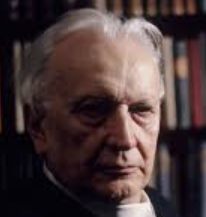
With the disintegration of all that [Nietzsche] had revered, existence, to him, had become a desert in which only one thing remained, namely that which had relentlessly forced him into this path: truthfulness that knows no limits and is not subject to any condition.
▼
Source
p. 45
4 months ago
All that happens is as usual and familiar as the rose in spring and the crop in summer.
▼
Source
IV, 44

4 months ago
Just as we cannot stop the movement of the heavens, revolving as they do with such speed, so we cannot restrain our thought. And then we send all the faculties of the soul after it, thinking we are lost, and have misused the time that we are spending in the presence of God. Yet the soul may perhaps be wholly united with Him in the Mansions very near His presence, while thought remains in the outskirts of the castle, suffering the assaults of a thousand wild and venomous creatures and from this suffering winning merit. So this must not upset us, and we must not abandon the struggle, as the devil tries to make us do. Most of these trials and times of unrest come from the fact that we do not understand ourselves.
▼
Source
Fourth Mansions, Ch. 1, trans. E. Allison Peers (1961), p. [https://books.google.com/books?id=YLkurmlG6xoC&dq=unrest&pg=PA58 58–59]

4 months ago
It is a pretty shocking observation that the Queen is to be the guarantee for a loan of this extraordinary nature made by the Dutch, and especially at a time, when under pretence of disability they directly refuse to furnish their quotas for the sea service, in spight of the obligations of all sorts, which lye upon them to do otherwise.
▼
Source
Letter to Lord Orrery (6 April 1711), quoted in 'The Letters of Henry St. John to the Earl of Orrery, 1709–1711', ed. H. T. Dickinson, Camden Miscellany, Vol. XXVI (1975), p. 164
4 months ago
The best revenge is not to be like your enemy.
▼
Source
VI, 6

4 months ago
The great law of culture is: Let each become all that he was created capable of being.
▼
Source
Richter.

4 months ago
Even when the ray is shot from the sun, it is still part of the parent mass; the sun will still be in the ray, because it is a ray of the sun—there is no division of substance, but merely an extension. Thus Christ is Spirit of Spirit, and God of God, as light of light is kindled.
▼
Source
Chapter 21
4 months ago
As soon as corruption ceases to be an expedient of government, and it will cease to be such as soon as a patriot king is raised to the throne, the panacea is applied: the spirit of the constitution revives of course; and as fast as it revives, the orders and forms of the constitution are restored to their primitive integrity, and become what they were intended to be; real barriers against arbitrary power, not blinds nor masks under which tyranny may lie concealed. Depravation of manners exposed the constitution to ruin; reformation will secure it.
▼
Source
p. 134
4 months ago
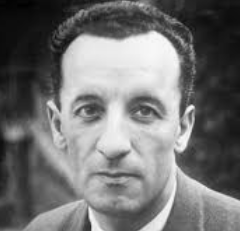
[The sensate body possesses] an art of interrogating the sensible according to its own wishes, an inspired exegesis
▼
Source
The Visible and the Invisible, trans. A. Lingis (Evanston: 1968), p. 135
4 months ago
About fame... Just as the sand-dunes, heaped one upon another, hide each the first, so in life the former deeds are quickly hidden by those that follow after.
▼
Source
VII, 34
4 months ago
Consider, for example, the state of Science generally, in Europe, at this period. It is admitted, on all sides, that the Metaphysical and Moral Sciences are falling into decay, while the Physical are engrossing, every day, more respect and attention. In most of the European nations there is now no such thing as a Science of Mind; only more or less advancement in the general science, or the special sciences, of matter.
4 months ago
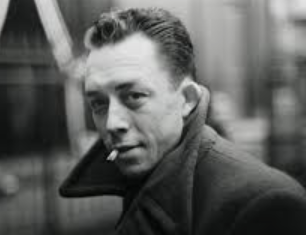
Perhaps we cannot prevent this world from being a world in which children are tortured. But we can reduce the number of tortured children. And if you don't help us, who else in the world can help us do this?
▼
Source
Said at the Dominican Monastery of Latour-Maubourg (1948); reported in Resistance, Rebellion and Death (translation by Justin O'Brien, 1961), p. 73
4 months ago
Every word almost was a sentence; every sentence a victory.
▼
Source
St. Vincent of Lerins on his esteem of Tertullian's writings.
CivilSimian.com created by AxiomaticPanic, CivilSimian, Kalokagathia