
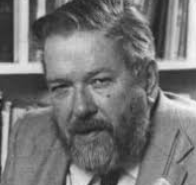
George Grant
Member for
4 months 3 weeksGeorge Grant — Lament for a Nation, Technology and Empire, and the Impossibility of Conservatism in the Modern World (1918–1988)
George Parkin Grant was a Canadian philosopher, social critic, and public intellectual — born in Toronto on 13 November 1918 into one of the most distinguished families in Canadian public life: his father was principal of Upper Canada College, his paternal grandfather had been the dynamic principal of Queen's University, his maternal grandfather was the founding secretary of the Rhodes Scholarships. He was educated in history at Queen's and theology at Oxford, taught philosophy at Dalhousie from 1947 to 1960, resigned from York University before his first day in class over a dispute about a textbook he believed unjustly disparaged Christianity and Plato, spent a year working on Mortimer Adler's Great Books program, then built and chaired McMaster University's pioneering religious studies department, before returning to Dalhousie in 1980. He died of pancreatic cancer on 27 September 1988.
He was world-famous in Canada — which was the joke frequently made at his expense, reflecting his status as a public intellectual who made frequent appearances on CBC Radio but attracted little attention south of the 49th parallel. His ideas were simultaneously too conservative for the Canadian left and too left for the Canadian right — which is typically the mark of a thinker who has identified a genuine problem that both conventional positions prefer not to face.
His central concern: that the logic of modern technology — the comprehensive will to master nature through the application of science — was not a neutral instrument available for any purpose but a destiny that shaped everything touched by it, including the political communities that believed they were directing it toward their own chosen ends.
Lament for a Nation — The Elegy That Became a Nationalist Manifesto
Grant's 1965 "Lament for a Nation: The Defeat of Canadian Nationalism" was the most influential Canadian philosophical text of the twentieth century — and its influence was built on a deep irony. The book argued that Canadian nationalism was dead, that Canada had been absorbed into the continental logic of American liberalism and technological modernity, and that traditional Canadian conservatism — the communitarian, British-rooted, socially minded conservatism that had resisted American-style individualism — was finished as a living political option. Its readers responded by launching a nationalist cultural revival.
The specific trigger was John Diefenbaker's fall from power in 1963, when Liberal MPs joined with the NDP to defeat his government after he refused to accept American nuclear weapons for Canadian territory. Grant defended Diefenbaker — not because he was a great statesman but because his resistance, however inadequate, represented the last flicker of the older Canadian conservatism: the tradition that believed a community had the right to say no to the inexorable logic of continental integration. When that resistance was swept away, Grant argued, something permanent was lost. Canada's distinct cultural nationality had been not merely threatened but defeated.
"Canada was an impossible country. It attempted to turn liberalism into a tradition and call that conservatism. Drawing from English constitutionalism, the proponents of this national project tried to transmit an alternative modernity in a continent marked by the hegemony of the United States — yet Canada's conservative liberalism and America's liberal individualism were two sides of the same coin."
Red Toryism — The Conservatism That Defied Categories
Grant became the main theoretician of "red Toryism" — a label he disliked when applied to his deeper philosophical work but which captured something real about his politics. Red Toryism was conservatism that affirmed community, equality, and justice — that drew on the collectivist and communitarian strands of older English conservatism against both the individualism of liberalism and the collectivism of socialism. It was the position that both the free market and the state bureaucracy were threats to the particular communities — local, cultural, religious, national — that gave human life its specific texture and meaning.
This made Grant uncomfortable for the Canadian left, who found his religious thought and his opposition to abortion and euthanasia incompatible with their agenda, and equally uncomfortable for the Canadian right, who found his anti-Americanism and his support for state intervention incompatible with theirs. His own position was that all of Canada's major political parties were liberal — were committed to the same underlying premises about individual rights, material progress, and technological development — and that this convergence was the measure of conservatism's defeat, not a sign that anyone had won.
"Grant was a conservative 'in an old sense that doesn't really exist in any popular form today.' His criticisms of liberalism and defences of conservatism refer to definitions that can confuse modern readers. For Grant, all of Canada's major political parties today would count as 'liberal.'"
Technology and Empire — The Destiny of the Modern West
Grant's 1969 "Technology and Empire" deepened the philosophical argument that "Lament" had raised without fully developing. His claim: technology was not a neutral set of tools that different societies could use for different purposes — it was a way of understanding the world that transformed whatever it touched, including the people who used it and the societies that organized themselves around it. The will to master nature through scientific technique was not merely a methodology but an ontology — it embedded a particular view of what reality was and what human beings were for.
Under this view, everything became a resource for human projects — raw material for transformation according to human will. Nature was not a given order to be respected but a problem to be solved. Persons were not ends in themselves but human capital to be developed. Communities were not constitutive of individual identity but associations of individuals for the pursuit of individual ends. This was not a consequence of technology in some cases — it was the logic of the technological framework applied consistently. Grant's argument was that the United States was not merely a country that had happened to become technologically powerful — it was the society that most completely embodied the technological project, and its dominance was not merely political but civilizational.
"Technology is not a neutral instrument. It is a form of knowledge that shapes the world and those who inhabit it. The fascination with technology tends to involve human beings in a pride in their own control of the world and to render them incapable of controlling their own control."
English-Speaking Justice — The Crisis of Liberalism
Grant's 1974 "English-Speaking Justice" — later reissued with an introduction by Stanley Hauerwas and Alasdair MacIntyre — turned from the question of technology to the question of justice: how English-speaking liberalism could know that it had a duty to treat human beings justly, given that the scientific framework it accepted had stripped the concept of justice of its metaphysical grounding.
The occasion was the American Supreme Court's 1973 decision in Roe v. Wade, which Grant took as a test case not primarily for abortion but for the coherence of liberal moral philosophy. The Court had declared that a fetus was not legally a person — had drawn a line in the development of a human being and said that before this line, legal protection did not apply. Grant's question: on what philosophical grounds could a tradition committed to individual rights deny those rights to any entity that was human in fact? The liberal framework that protected persons could not explain what made some beings persons and others not — and the failure of that explanation pointed to a deeper incoherence in the project of grounding justice on liberal premises alone.
"English-Speaking Justice asked the Platonic question of how we could know that we had a duty to treat other human beings justly, especially after the science of human nature had led to a society in which human beings were not fitted to live."
Time as History — Nietzsche and the Modern Predicament
Grant's 1969 Massey Lectures — "Time as History" — addressed what he considered the most penetrating diagnostician of modernity's spiritual predicament: Friedrich Nietzsche. Grant took Nietzsche seriously not as a nihilist to be rejected but as the thinker who had most clearly seen what the consequences of the modern project were: if there was no divine order, no natural teleology, no eternal form — if history was all there was — then the will to create values replaced the discovery of values, and the strongest wills would define what was good. Grant did not accept Nietzsche's conclusions but he accepted Nietzsche's diagnosis: a civilization that had abandoned the sense of an eternal order had committed itself to a history without ground, and the consequences would be felt in everything from politics to personal life.
"Grant conceived of time as the moving image of an eternal order illuminated by love. As a practising Christian and Platonist, he held that human beings could not flourish without some sense of an order beyond space and time — and that modern liberalism's rejection of this sense had set it on a path it could not sustain."
Simone Weil and the Final Meditation
The final thirty years of Grant's life were shaped by an extended meditation on the work of Simone Weil — whose combination of radical political commitment, mystical Christianity, and penetrating critique of modern civilization spoke to something in Grant that no other contemporary thinker reached. His final work, "Technology and Justice" (1986), prepared with his wife Sheila Grant, concluded that Western civilization was fundamentally flawed both morally and spiritually — destined to collapse from within — but affirmed, in a characteristically Christian key, that something nobler could eventually replace it. The lament was not the whole of his thought; the hope, however chastened, was always present alongside it.
"Grant's early epiphany that 'we are not our own' led him to reject what he took to be the core tenet of modern liberalism: 'the affirmation that our essence is our freedom.' Liberal praise of individual liberty and material progress was the only moral language that could sound a commanding note in public life — but it wasn't the language that commanded him."
Legacy — The Prophet of Technological Civilization's Limits
Grant died in 1988 having proved his own thesis in a specific way: the nationalism his book had inspired had not saved Canada from the continental integration he had predicted, and the conservatism he had defended had not survived the transformation of conservative politics into market liberalism. His reputation since his death has grown steadily — particularly his analysis of technology, which has found new relevance as digital technology has raised exactly the questions he posed about the relationship between the tools we use, the values we hold, and the kind of people we become.
"It is quite possible that the impossibility of conservatism as a theoretical stance in the technological society is what I proved in Lament for a Nation — rather than the defeat of Canadian nationalism."
— George Grant, "Revolution and Tradition" (1970)
CivilSimian.com created by AxiomaticPanic, CivilSimian, Kalokagathia