

4 months ago
But all sorts of things and weather Must be taken in together To make up a year, And a sphere.
▼
Source
Fable
4 months ago
Marriage as a community of interests unfailingly means the degradation of the interested parties, and it is the perfidy of the world's arrangements that no one, even if aware of it, can escape such degradation. The idea might therefore be entertained that marriage without ignominy is a possibility reserved for those spared the pursuit of interests, for the rich. But the possibility is purely formal, for the privileged are precisely those in whom the pursuit of interests has become second-nature—they would not otherwise uphold privilege.
▼
Source
E. Jephcott, trans. (1974), § 10

4 months ago
'Tis the hardest thing in the world to be a good Thinker, without being a strong Self-Examiner.
▼
Source
Vol. 1, p. 92; "Soliloquy: or Advice to an Author".
4 months ago
As long as the state is a political entity this requirement for internal peace compels it in critical situations to decide also upon the domestic enemy. Every state provides, therefore, some kind of formula for the declaration of an internal enemy.
4 months ago
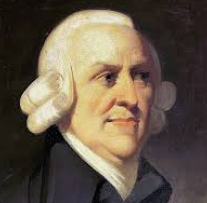
He now and then revisited London. The last time he was there, he had engaged to dine with Lord Melville, then Mr Dundas, at Wimbledon; Mr Pitt, Mr Grenville, Mr Addington, afterwards Lord Sidmouth, and some other of his lordship's friends were there. Dr Smith happened to come late, and the company had sat down to dinner. The moment, however, he came into the room, the company all rose up; he made an apology for being late, and entreated them to sit down. "No," said the gentlemen, "we will stand till you are seated, for we are all your scholars."
▼
Source
John Kay, A Series of Original Portraits and Caricature Etchings, Vol. I. Part I. (1838), pp. 74-75

4 months ago
The partisans of aesthetic theory denied that it was their own invention, and professed that it existed in the nature of things and even that it was recognized by the ancient Greeks. But... among the ancient Greeks, due to their low grade (compared to the Christian) moral ideal, their conception of the good was not yet sharply distinguished from their conception of the beautiful. That highest conception of goodness (not identical with beauty and for the most part, contrasting with it) discerned by the Jews even in the time of Isaiah and fully expressed by Christianity, was unknown to the Greeks. It is true that the Greek's foremost thinkers — Socrates, Plato, Aristotle — felt that goodness may not coincide with beauty. ...But notwithstanding all this, they could not quite dismiss the notion that beauty and goodness coincide. And consequently in the language of that period a compound word (καλο-κάγαθια, beauty-goodness) came into use to express that notion. Evidently the Greek sages began to draw close to the perception of goodness which is expressed in Buddhism and in Christianity, but they got entangled in defining the relationship between goodness and beauty. And it was just this confusion of ideas that those Europeans of a later age ... tried to elevate into law. ... On this misunderstanding the new science of aesthetics was built.

4 months ago
These conditions are simply these: viz., first, that each man shall do, towards every other, all that justice requires him to do; as, for example, that he shall pay his debts, that he shall return borrowed or stolen property to its owner, and that he shall make reparation for any injury he may have done to the person or property of another.The second condition is, that each man shall abstain from doing to another, anything which justice forbids him to do; as, for example, that he shall abstain from committing theft, robbery, arson, murder, or any other crime against the person or property of another.So long as these conditions are fulfilled, men are at peace, and ought to remain at peace, with each other.
▼
Source
Section I, p. 5–6
4 months ago
Is not marriage an open question, when it is alleged, from the beginning of the world, that such as are in the institution wish to get out, and such as are out wish to get in?
▼
Source
Montaigne; or, The Skeptic

4 months ago
Speak of the Gods as they are.
4 months ago
Jesus' own coming was by no means so introverted and other-worldly as a Pauline reinterpretation—always welcome to the ruling class—would have it. ... To Jesus, the kingdom of this world was the devil (John 8:44). This is why he never suggested allowing it to go on; he did not conclude a non-aggression pact with it.
▼
Source
p. 123
4 months ago
Smith. An Inquiry into the Nature and Causes of the Wealth of Nations. Ed. R. H. Campbell and A. S. Skinner. 2 vols. Glasgow Edition of the Works and Correspondence of Adam Smith 2. Oxford U. Press, 1976.
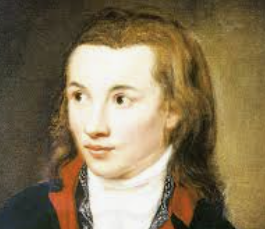
4 months ago
There are ideal series of events which run parallel with the real ones. They rarely coincide. Men and circumstances generally modify the ideal train of events, so that it seems imperfect, and its consequences are equally imperfect. Thus with the Reformation; instead of Protestantism came Lutheranism.
▼
Source
Epigraph, "The Mystery Of Marie Rogêt" (1842) by Edgar Allan Poe, adapted from Fragments from German Prose Writers (1841) by Sarah Austin
4 months ago
The recognition that love represents the highest morality was nowhere denied or contradicted, but this truth was so interwoven everywhere with all kinds of falsehoods which distorted it, that finally nothing of it remained but words. It was taught that this highest morality was only applicable to private life — for home use, as it were — but that in public life all forms of violence — such as imprisonment, executions, and wars — might be used for the protection of the majority against a minority of evildoers, though such means were diametrically opposed to any vestige of love.
▼
Source
III

4 months ago
Every Israelite has a duty to study whether he is poor or rich, whether healthy or suffering, whether young or very old and in failing strength, even if he is poor and supported by charity or begs from door to door.
▼
Source
Treatise 3: “The Study of the Torah,” Chapter 1, Section 8, H. Russell, trans. (1983), p. 51
4 months ago
I am not much an advocate for travelling, and I observe that men run away to other countries because they are not good in their own, and run back to their own because they pass for nothing in the new places. For the most part, only the light characters travel. Who are you that have no task to keep you at home? I have been quoted as saying captious things about travel; but I mean to do justice. .... He that does not fill a place at home, cannot abroad. He only goes there to hide his insignificance in a larger crowd. You do not think you will find anything there which you have not seen at home? The stuff of all countries is just the same. Do you suppose there is any country where they do not scald milk-pans, and swaddle the infants, and burn the brushwood, and broil the fish? What is true anywhere is true everywhere. And let him go where he will, he can only find so much beauty or worth as he carries.
▼
Source
Culture,
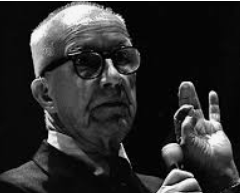
4 months ago
There will come a time when the proper education of children, by a glorified system of spontaneous education of choice, similar to the Montessori System, will be made possible. Children, as well as grown-ups, in their individual, glorified, drudgery-proof homes of Labrador, the tropics, the Orient, or where you will, to which they can pass with pleasure and expedition by means of ever-improving transportation, will be able to tune in their television and radio to the moving picture lecture of, let us say, President Lowell of Harvard; the professor of Mathematics of Oxford; of the doctor of Indian antiquities of Delhi, etc. Education by choice, with its marvelous motivating psychology of desire for truth, will make life ever cleaner and happier, more rhythmical and artistic.
4 months ago
Man is a sun and his senses are the planets.
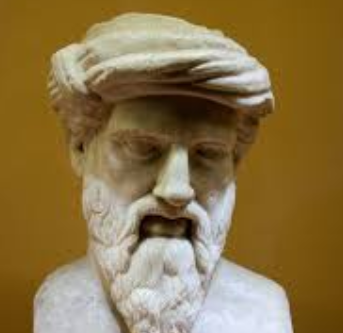
4 months ago
Reason is immortal, all else mortal.
▼
Source
As quoted in Lives and Opinions of Eminent Philosophers, Sect. 30, as translated by Robert Drew Hicks (1925); also in The Demon and the Quantum: From the Pythagorean Mystics to Maxwell's Demon (2007) by Robert J. Scully, Marlan O. Scully, p. 11
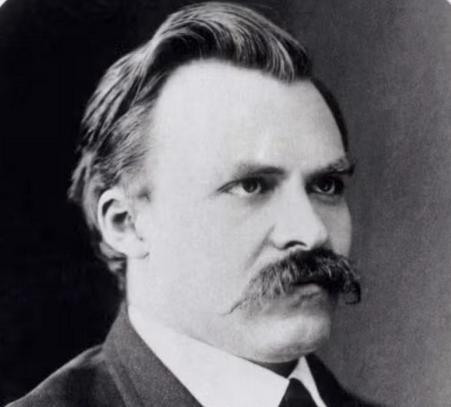
4 months ago
Dionysus: Be clever, Ariadne! ...You have little ears; you have my ears:Put a clever word in them! —Must one not first hate oneself, in order to love oneself? ...I am your labyrinth ...
4 months ago
When a person is haughty, he distances himself from other people and thereby deprives himself of one of life's biggest pleasures—open, joyful communication with everyone.
▼
Source
p. 108
4 months ago
We must consider the words, "the heavens were opened" (Ezek. i. 1); they give the key to the understanding of the whole. The figure of opening, also that of opening the gates, occurs frequently in the books of the prophets... When he commences to describe the firmament in detail, he says, "the firmament," without adding the words "the likeness of," for he says, "And I looked, and behold, in the firmament that was above the head of the cherubims there appeared over them as it were a sapphire stone, as the appearance of the likeness of a throne" (Ezek x. 1). Here the prophet speaks of "the firmament" and not of "the likeness of the firmament,"...
▼
Source
Ch.7
4 months ago
To-day unbind the captive, So only are ye unbound; Lift up a people from the dust, Trump of their rescue, sound!
▼
Source
Boston Hymn, st. 17
4 months ago
Some future directions and scenarios we touched upon were the possibilities of a world guaranteed annual income; the potential of fluidics as a source of energy; information and automation; the use of heat pollution from thermal electric plants to heat soil to improve crop output; the efficiency-gain by using gasoline or alcohol to run electric power plants and electricity to run cars; the production of alcohol from algae, farm wastes, or garbage and its substitution for gasoline in present-day combustion engines; the laser beam transmission of power and information; the amount of reinvestable time that will be available to mankind as a result of freeing him from the drudgery of having to earn a living (by bringing man to the bare maximum food and energy levels by the year 2000 we will have trillion more hours per year to reinvest into metaphysical regenerative functions); the increase of efficiency rates for power production and consumption, communication, transportation, etc., and the possible surplus and increase of efficiency through the stabilization of the population...
4 months ago
Childhood lasts all through life. It returns to animate broad sections of adult life.... Poets will help us to find this living childhood within us, this permanent, durable immobile world.
▼
Source
Introduction, sect. 6
4 months ago
The progress of civilization necessitates the giving of greater and greater attention and intelligence to public affairs. And for this reason I am convinced that we make a great mistake in depriving one sex of voice in public matters, and that we could in no way so increase the attention, the intelligence and the devotion which may be brought to the solution of social problems as by enfranchising our women.
▼
Source
Ch. 21 : Conclusion

4 months ago
I have had, for my entire life, an extraordinary esteem for the person and for the thinking of that great philosopher. But I do not believe that attitude gives me the right to say anything publically about him, for the good reason that I would have nothing to say that has not been said by others.
▼
Source
Sigmund Freud, in a letter to Siegfried Hessing. As quoted in António Damásio's Looking for Spinoza: Joy, Sorrow, and the Feeling Brain (Orlando, FL: Harcourt, 2003)
4 months ago
It depends only on the weakness of our organs and of our self-excitement (Selbstberuhrung), that we do not see ourselves in a Fairy-world. All Fabulous Tales (Mahrchen) are merely dreams of that home world, which is everywhere and nowhere. The higher powers in us, which one day as Genies, shall fulfil our will, are, for the present, Muses, which refresh us on our toilsome course with sweet remembrances.
4 months ago
Assist a man in raising a burden; but do not assist him in laying it down.
▼
Source
Symbol 11
4 months ago
He that prefers the beautiful to the useful in life will, undoubtedly, like children who prefer sweetmeats to bread, destroy his digestion and acquire a very fretful outlook on the world.
4 months ago
Even beyond their deaths, the two novelists stand in contrariety. Tolstoy, the foremost heir to the traditions of the epic; Dostoevsky, one of the major dramatic tempers after Shakespeare; Tolstoy, the mind intoxicated with reason and fact; Dostoevsky, the condemner of rationalism, the great lover of paradox; Tolstoy, the poet of the land, of the rural setting and pastoral mood; Dostoevsky, the arch-citizen, the master-builder of the modern metropolis in the province of language; Tolstoy, thirsting for the truth, destroying himself and those about him in excessive pursuit of it; Dostoevsky, rather against the truth than against Christ, suspicious of total understanding and on the side of mystery; Tolstoy, "keeping at all times," in Coleridge's phrase, "in the high road of life"; Dostoevsky, advancing into the labyrinth of the unnatural, into the cellarage and morass of the soul; Tolstoy, like a colossus bestriding the palpable earth, evoking the realness, the tangibility, the sensible entirety of concrete experience; Dostoevsky, always on the verge of the hallucinatory, of the spectral, always vulnerable to daemonic intrusions into what might prove, in the end, to have been merely a tissue of dreams; Tolstoy, the embodiment of health and Olympian vitality; Dostoevsky, the sum of energies charged with illness and possession.
▼
Source
George Steiner in Tolstoy or Dostoevsky: An Essay in the Old Criticism (1959)
4 months ago
In so far as the soul is a force residing in the body; it has therefore been said that the properties of the soul depend of the condition of the body.
▼
Source
Ch.12
4 months ago
God may forgive sins, he said, but awkwardness has no forgiveness in heaven or earth.
▼
Source
Society and Solitude
4 months ago
A pattern has an integrity independent of the medium by virtue of which you have received the information that it exists. Each of the chemical elements is a pattern integrity. Each individual is a pattern integrity. The pattern integrity of the human individual is evolutionary and not static.
▼
Source
[http://www.rwgrayprojects.com/synergetics/s05/p0400.html#505 Pattern Integrity 505.201]
4 months ago
A good Soul hath neither too great joy, nor too great sorrow: for it rejoiceth in goodness; and it sorroweth in wickedness. By the means whereof, when it beholdeth all things, and seeth the good and bad so mingled together, it can neither rejoice greatly; nor be grieved with over much sorrow.
4 months ago
We admire people to the extent that we cannot explain what they do, and the word "admire" then means "marvel at."
▼
Source
Beyond Freedom and Dignity (1971)

4 months ago
I cannot get from the nature of the proposition to the individual logical operations!!! That is, I cannot bring out how far the proposition is the picture of the situation. I am almost inclined to give up all my efforts. ——
▼
Source
Journal entries (12 March 1915 and 15 March 1915) p. 41e
4 months ago
He will punish all the evil deeds of men, although they have not been prohibited by a prophet, if common sense warns against them, as e.g., injustice and violence. ...it is distinctly added that he who does a good thing without being commanded, receives nevertheless his reward. The same principle is expressed in all the sayings of our Sages.
▼
Source
Ch.17
4 months ago
I have heard with admiring submission the experience of the lady who declared "that the sense of being perfectly well-dressed gives a feeling of inward tranquility which religion is powerless to bestow".
▼
Source
Social Aims
4 months ago
On personal integrity hangs humanity's fate. You can deceive others, you can deceive your brain-self, but you can't deceive your mind-self — for mind deals only in the discovery of truth and the interrelationship of all truths. The cosmic laws with which mind deals are noncorruptible. Cosmic evolution is omniscient God comprehensively articulate.
4 months ago
O slavish man! will you not bear with your own brother, who has God for his Father, as being a son from the same stock, and of the same high descent? But if you chance to be placed in some superior station, will you presently set yourself up for a tyrant?
▼
Source
Book I, ch. 13, § 3–4.
4 months ago
He is worst of all, that is malicious against his friends.
4 months ago
The world of the happy is quite different from the world of the unhappy. (6.43)
▼
Source
Die Welt des Glücklichen ist eine andere als die des Unglücklichen
4 months ago
When Abraham the "Pillar of the World" appeared, he became convinced that there is a spiritual Divine Being, which is not a body, nor a force residing in a body, but is the author of the spheres and the stars; and he saw the absurdity of the tales in which he had been brought up. He therefore began to attack the belief of the Sabeans, to expose the falsehood of their opinions, and to proclaim publicly in opposition to them, "the name of the Lord, the God of the Universe" (Gen. xxi. 33), which proclamation included at the same time the Existence of God, and the Creation of the Universe by God.
▼
Source
Ch.29
4 months ago
Characters and talents are complemental and suppletory. The world stands by balanced antagonisms. The more the peculiarities are pressed the better the result. The air would rot without lightning; and without the violence of direction that men have, without bigots, without men of the fixed idea, no excitement, no efficiency. The novelist should not make any character act absurdly, but only absurdly as seen by others. For it is so in life. Nonsense will not keep its unreason if you come into the humorist's point of view, but unhappily we find it is fast becoming sense, and we must flee again into the distance if we would laugh.
▼
Source
"The Natural History of Intellect", p. 45
4 months ago
The question of integrity will get finer and finer and more delicate and more beautiful.

4 months ago
Hence the Pythagoreans in their theology called it sometimes "universe," sometimes "heaven," sometimes "all," sometimes "Fate" and "eternity," "power" and "trust" and "Necessity," "Atlas" and "unwearying," and simply "God" and "Phanes" and "sun."They called it "universe," because all things are arranged by it both in general and in particular, and because it is the most perfect boundary of number, in the sense that "decad" is, as it were, "receptacle," just as heaven is the receptacle of all things, they called it "heaven" and, among the Muses, "Ourania."
▼
Source
On the Decad
4 months ago
If you would be a good reader, read; if a writer, write.
▼
Source
Book II, ch. 18, § 1.
4 months ago
But there was among them a man of prodigious knowledge who acquired the profoundest wealth of understanding and was the greatest master of skilled arts of every kind; for, whenever he willed with his whole heart, he could with ease discern each and every truth in his ten—nay, twenty—men's lives.
▼
Source
Empedocles (c. 460 BC) as quoted by Sir Thomas Little Heath, A History of Greek Mathematics, [https://books.google.com/books?id=h4JsAAAAMAAJ Vol. 1], p.65, citing Diog. L. viii. 54 and Porph. V. Pyth. 30 (Fr. 129 in Vorsokratiker i3, p. 272. 15-20).
4 months ago
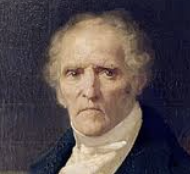
You complain that the nature withholds from you a knowledge of her laws; but if you have been unable, to to present time, to discover them, why do you hesitate to admit the insufficiency of your methods and to invoke a new science, a new guide? Either nature does not desire the happiness of man, or your methods are condemned by her, since they have been unable to west from her the secret of which you are in pursuit. Do we find her frustrating the efforts of the natural philosophers as she does yours? no, because they study her laws instead of dictating laws to her; while you only study the art of stifling the voice of nature stifling attraction which is her interpreter, and the synthesis of which leads in every sense to association. What a contrast between your blunders and the achievements of the positive sciences! Every day, philosophers, you add new errors to the errors of the past, whereas we see the physical sciences daily advancing in the path of truth, and shedding as much luster upon the present century as your baseless vision have cast opprobrium upon the eighteenth.
▼
Source
Vol. I, pp.5-11
4 months ago
Philosophers are often like little children, who first scribble random lines on a piece of paper with their pencils, and now ask an adult "What is that?"
▼
Source
Ch. 9 : Philosophy, p. 193
CivilSimian.com created by AxiomaticPanic, CivilSimian, Kalokagathia