

4 months ago
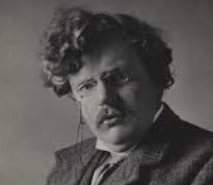
These effects of mescalin are the sort of effects you could expect to follow the administration of a drug having the power to impair the efficiency of the cerebral reducing valve. When the brain runs out of sugar, the undernourished ego grows weak, can't be bothered to undertake the necessary chores, and loses all interest in those spatial and temporal relationships which mean so much to an organism bent on getting on in the world. As Mind at Large seeps past the no longer watertight valve, all kinds of biologically useless things start to happen. ... Other persons discover a world of visionary beauty. To others again is revealed the glory, the infinite value and meaningfulness of naked existence, of the given, unconceptualized event.
▼
Source
describing his experiment with mescaline, p. 26
4 months ago
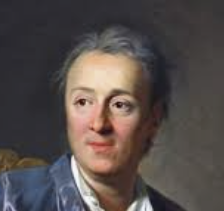
I must frankly say that Bernard Shaw always seems to me to use the word God not only without any idea of what it means, but without one moment's thought about what it could possibly mean. He said to some atheist, "Never believe in a God that you cannot improve on." The atheist (being a sound theologian) naturally replied that one should not believe in a God whom one could improve on; as that would show that he was not God.
▼
Source
"The Philosopher"
4 months ago
Are we not madder than those first inhabitants of the plain of Sennar? We know that the distance separating the earth from the sky is infinite, and yet we do not stop building our tower.
▼
Source
No. 4

4 months ago
Water and navigation had that role to play. Locked in the ship from which he could not escape, the madman was handed over to the thousand-armed river, to the sea where all paths cross, and the great uncertainty that surrounds all things. A prisoner in the midst of the ultimate freedom, on the most open road of all, chained solidly to the infinite crossroads. He is the Passenger par excellence, the prisoner of the passage. It is not known where he will land, and when he lands, he knows not whence he came. His truth and his home are the barren wasteland between two lands that can never be his own. [...] One thing is certain: the link between water and madness is deeply rooted in the dream of the Western man.
▼
Source
Part One: 1. Stultifera Navis
4 months ago
When heaven and earth have passed away, perhaps the conservative mind and the libertarian mind may be joined in synthesis, but not until then.
4 months ago
Children are nowhere taught, in any systematic way, to distinguish true from false, or meaningful from meaningless, statements. Why is this so? Because their elders, even in the democratic countries, do not want them to be given this kind of education.
▼
Source
Chapter 11 (p. 106)
4 months ago
Men that are men again: Who goes home? Tocsin and trumpeter! Who goes home? For there's blood on the grass and blood on the foam, And blood on the body, when Man comes home. And a voice valedictory: Who is for victory? Who is for liberty? Who goes home?
▼
Source
Ch. XXI: "The Road to Roundabout" ("Who Goes Home?", by Patrick Dalroy)
4 months ago
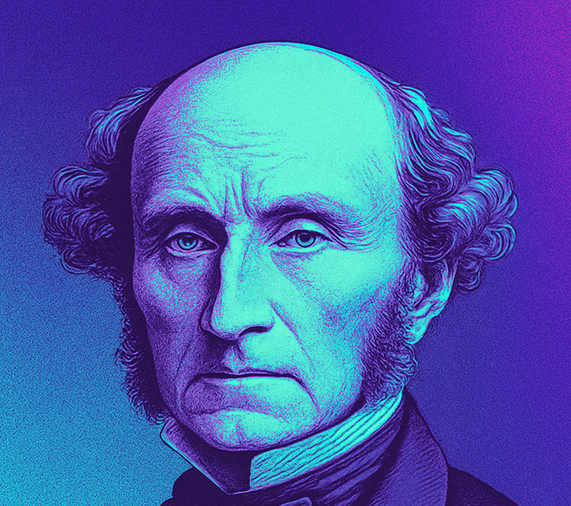
The tendency has always been strong to believe that whatever received a name must be an entity or thing, having an independent existence of its own; and if no real entity answering to the name could be found, men did not for that reason suppose that none existed, but imagined that it was something peculiarly abstruse and mysterious, too high to be an object of sense. The meaning of all general, and especially of all abstract terms, became in this way enveloped in a mystical base...
▼
Source
Note to [http://books.google.com/books?id=GxIuAAAAIAAJ&printsec=frontcover&dq=james+mill&ei=jsFoR7yAOYfQiwHEzdVv&ie=ISO-8859-1#PPA5,M1 Analysis of the Phenomena of the Human Mind] (1829) by James Mill, edited with additional notes by John Stuart Mill (186
4 months ago
How easy it is to tell tales!
4 months ago
In the ceremonies of the public execution, the main character was the people, whose real and immediate presence was required for the performance.
▼
Source
Chapter One, pp. 56

4 months ago
We were two of a kind, and our relationship would endure as long as we did: but it could not make up entirely for the fleeting riches to be had from encounters with different people.
▼
Source
On her relationship with Jean-Paul Sartre, as quoted in [http://www.theguardian.com/world/2005/jun/10/gender.politicsphilosophyandsociety "Did Simone de Beauvoir's open 'marriage' make her happy?"] by Lisa Appignanesi, in The Guardian (9 June 2005) and he
4 months ago
In a time of sceptic moths and cynic rusts, And fattened lives that of their sweetness tire In a world of flying loves and fading lusts, It is something to be sure of a desire. Lo, blessed are our ears for they have heard; Yea, blessed are our eyes for they have seen: Let the thunder break on man and beast and bird And the lightning. It is something to have been.
▼
Source
The Great Minimum
4 months ago
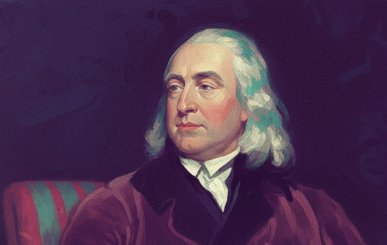
Truth gains more even by the errors of one who, with due study and preparation, thinks for himself, than by the true opinions of those who only hold them because they do not suffer themselves to think.
▼
Source
Ch. II: Of the Liberty of Thought and Discussion
4 months ago
In principle and in practice, in a right track and in a wrong one, the rarest of all human qualities is consistency.
▼
Source
Ch. 1: Of the Principle of Utility
4 months ago
The critical ontology of ourselves has to be considered not, certainly, as a theory, a doctrine, nor even as a permanent body of knowledge that is accumulating; it has to be conceived as an attitude, an ethos, a philosophical life in which the critique of what we are is at one and the same time the historical analysis of the limits that are imposed on us and an experiment with the possibility of going beyond them.
4 months ago
Sex pleasure in woman, as I have said, is a kind of magic spell; it demands complete abandon; if words or movements oppose the magic of caresses, the spell is broken.
▼
Source
Bk. 2, Pt.. 4, Ch. 3: Sexual Initiation. p. 396
4 months ago
In the days when Stevenson's ancestors the Covenanters were fighting with the Cavaliers, a fine old Cavalier of the Episcopalian persuasion made a rather interesting remark; that the change he really hated was represented by saying 'The Lord' instead of 'Our Lord.' The latter implied affection, the former only fear; indeed he described the former succinctly as the talk of devils. And this is so far true that the very eloquent language in which the name of 'The Lord' has figured has generally been the language of might and majesty and even terror. And there really was implied in it in varying degrees the idea of glorifying God for His greatness rather than His goodness. And again there occurred the natural inversion of ideas. Since the Puritan was content to cry with the Moslem: 'God is great,' so the descendant of the Puritan is always a little inclined to cry with the Nietzschean: 'Greatness is God.' In some of the really evil extremes, this sentiment shaded darkly into a sort of diabolism.
▼
Source
Ch. V: "The Scottish Stories"
4 months ago
The object of this Essay is to explain as clearly as I am able grounds of an opinion which I have held from the very earliest period when I had formed any opinions at all on social political matters, and which, instead of being weakened or modified, has been constantly growing stronger by the progress reflection and the experience of life. That the principle which regulates the existing social relations between the two sexes — the legal subordination of one sex to the other — is wrong itself, and now one of the chief hindrances to human improvement; and that it ought to be replaced by a principle of perfect equality, admitting no power or privilege on the one side, nor disability on the other.
▼
Source
Ch. 1
4 months ago
Athuroglossos is characterized by..: (1) When you have "a mouth like a running spring," you cannot distinguish those occasions when you should speak from those when you should remain silent; or that which must be said from that which must remain unsaid; or the circumstances and situations where speech is required from those where one ought to remain silent. (2) As Plutarch notes... you have no regard for the value of logos, for rational discourse as a means of gaining access to truth.
4 months ago
Anyone who holds a true opinion without understanding is like a blind man on the right road.
▼
Source
Plato, Republic, 506c
4 months ago
The dynamic element in my philosophy, taken as a whole, can be seen as an obstinate and untiring battle against the spirit of abstraction.
▼
Source
p. 1
4 months ago
In my education, as in that of everyone, the moral influences, which are so much more important than all others, are also the most complicated, and the most difficult to specify with any approach to completeness.
▼
Source
([https://archive.org/details/autobiography01mill/page/38/mode/1up p. 38])
4 months ago
Nobility is defined by the demands it makes on us — by obligations, not by rights. Noblesse oblige. "To live as one likes is plebeian; the noble man aspires to order and law" (Goethe). The privileges of nobility are not in their origin concessions or favours; on the contrary, they are conquests. And their maintenance supposes, in principle, that the privileged individual is capable of reconquering them, at any moment, if it were necessary, and anyone were to dispute them.… It is annoying to see the degeneration suffered in ordinary speech by a word so inspiring as "nobility." For, by coming to mean for many people hereditary "noble blood," it is changed into something similar to common rights, into a static, passive quality which is received and transmitted like something inert. But the strict sense, the etymon of the word nobility is essentially dynamic. Noble means the "well known," that is, known by everyone, famous, he who has made himself known by excelling the anonymous mass.… "Nobility" does not appear as a formal expression until the Roman Empire, and then precisely in opposition to the hereditary nobles, then in decadence.
▼
Source
Chap. VII: Noble Life And Common Life, Or Effort And Inertia
4 months ago
When the feeling of pleasure or pain in the soul is most intense, all of us naturally suppose that the object of this intense feeling is then plainest and truest; but this is not the case. ...because each pleasure and pain is a sort of nail which nails and rivets the soul to the body, and engrosses her and makes her believe that to be true which the body affirms to be true; and from agreeing with the body and having the same delights she is obliged to have the same habits and ways, and is not likely ever to be pure at her departure to the world below, but is always saturated with the body; so that she soon [after death] sinks into another body and there germinates and grows, and has therefore no part in the communion of the divine and pure and simple.

4 months ago
—Poets and anarchists are always the first to go. —Where. —To the frontline. Wherever it is.
4 months ago
My education, which was wholly his work, had been conducted without any regard to the possibility of its ending in this result; and I saw no use in giving him the pain of thinking that his plans had failed, when the failure was probably irremediable, and, at all events, beyond the power of his remedies. Of other friends, I had at that time none to whom I had any hope of making my condition intelligible. It was however abundantly intelligible to myself; and the more I dwelt upon it, the more hopeless it appeared.
▼
Source
([https://archive.org/details/autobiography01mill/page/135/mode/1up p. 135])
4 months ago
No one knows toward what center human things are going to gravitate in the near future, and hence the life of the world has become scandalously provisional. Everything that today is done in public and in private — even in one's inner conscience — is provisional, the only exception being certain portions of certain sciences. He will be a wise man who puts no trust in all that is proclaimed, upheld, essayed, and lauded at the present day. All that will disappear as quickly as it came. All of it, from the mania for physical sports (the mania, not the sports themselves) to political violence; from "new art" to sun-baths at idiotic fashionable watering-places. Nothing of all that has any roots; it is all pure invention, in the bad sense of the word, which makes it equivalent to fickle caprice. It is not a creation based on the solid substratum of life; it is not a genuine impulse or need. In a word, from the point of view of life it is false. We are in presence of the contradiction of a style of living which cultivates sincerity and is at the same time a fraud. There is truth only in an existence which feels its acts as irrevocably necessary. There exists today no politician who feels the inevitableness of his policy, and the more extreme his attitudes, the more frivolous, the less inspired by destiny they are. The only life with its roots fixed in earth, the only autochthonous life, is that which is made of inevitable acts. All the rest, all that it is in our power to take or to leave or to exchange for something else, is mere falsification of life. Life today is the fruit of an interregnum, of an empty space between two organizations of historical rule — that which was, that which is to be. For this reason it is essentially provisional. Men do not know what institutions to serve in truth; women do not know what type of men they in truth prefer. The European cannot live unless embarked upon some great unifying enterprise. When this is lacking, he becomes degraded, grows slack, his soul is paralyzed. We have a commencement of this before our eyes today. The groups which up to today have been known as nations arrived about a century ago at their highest point of expansion. Nothing more can be done with them except lead them to a higher evolution. They are now mere past accumulating all around Europe, weighing it down, imprisoning it. With more vital freedom than ever, we feel that we cannot breathe the air within our nations, because it is confined air. What was before a nation open to all the winds of heaven, has turned into something provincial, an enclosing space.
▼
Source
Chapter XIV: Who Rules The World?

4 months ago
Not to display anger or other emotions. To be free of passion and yet full of love.
▼
Source
I, 9 (Hays translation)
4 months ago
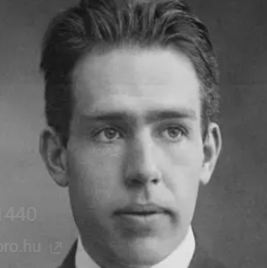
Physics is to be regarded not so much as the study of something a priori given, but rather as the development of methods of ordering and surveying human experience. In this respect our task must be to account for such experience in a manner independent of individual subjective judgement and therefore objective in the sense that it can be unambiguously communicated in ordinary human language.
▼
Source
"The Unity of Human Knowledge" (October 1960)
4 months ago
Let a man be of good cheer about his soul, who has cast away the pleasures and ornaments of the body as alien to him, and rather hurtful in their effects, and has followed after the pleasures of knowledge in this life; who has adorned the soul in her own proper jewels, which are temperance, and justice, and courage, and nobility, and truth—in these arrayed she is ready to go on her journey to the world below, when her time comes. You, Simmias and Cebes, and all other men, will depart at some time or other. Me already, as the tragic poet would say, the voice of fate calls.
4 months ago
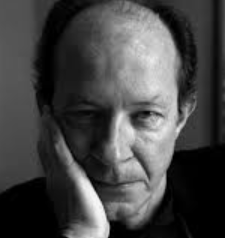
One day humanity will play with law just as children play with disused objects, not in order to restore them to their canonical use but to free them from it for good.
▼
Source
Chapter Four, p. 64.
4 months ago
It might even be questioned if the various causes of deterioration which had been at work in the meanwhile, had not more than counterbalanced the tendencies to improvement. I had learnt from experience that many false opinions may be exchanged for true ones, without in the least altering the habits of mind of which false opinions are the result. The English public, for example, are quite as raw and undiscerning on subjects of political economy since the nation has been converted to free-trade, as they were before; and are still further from having acquired better habits of thought and feeling, or being in any way better fortified against error, on subjects of a more elevated character. For, though they have thrown off certain errors, the general discipline of their minds, intellectually and morally, is not altered. I am now convinced, that no great improvements in the lot of mankind are possible, until a great change takes place in the fundamental constitution of their modes of thought.
▼
Source
([https://archive.org/details/autobiography01mill/page/238/mode/1up pp. 238-239])
4 months ago
Each of us lives only now, this brief instant.
▼
Source
III, 10 (Hays translation)
4 months ago
The core of ethics runs deep in our species and is common to human beings everywhere. It survives the most appalling hardships and the most ruthless attempts to deprive human beings of their humanity. Nevertheless, some people resist the idea that his core has a biological basis which we have inherited from our pre-human ancestors.
▼
Source
Chapter 2, The Biological Basis Of Ethics, p. 27
4 months ago
True wisdom comes to each of us when we realize how little we understand about life, ourselves, and the world around us.
▼
Source
Sometimes presented as a direct quote, this was actually Manuel J. Smith's own general description of Socrates' teachings in his 1974 book When I Say No, I Feel Guilty, on [https://books.google.com/books?id=HHmKDQAAQBAJ&pg=PA65#v=onepage&q&f=false p. 65 o
4 months ago
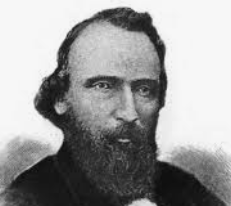
Ought I not to have been more careful to win the good opinion of others, more determined to conquer their hostility or indifference? It would have been a joy to me to be smiled upon, loved, encouraged, welcomed, and to obtain what I was so ready to give, kindness and goodwill. But to hunt down consideration and reputation — to force the esteem of others — seemed to me an effort unworthy of myself, almost a degradation. A struggle with unfavorable opinion has seemed to me beneath me, for all the while my heart has been full of sadness and disappointment, and I have known and felt that I have been systematically and deliberately isolated. Untimely despair and the deepest discouragement have been my constant portion. Incapable of taking any interest in my talents for their own sake, I let everything slip as soon as the hope of being loved for them and by them had forsaken me. A hermit against my will, I have not even found peace in solitude, because my inmost conscience has not been any better satisfied than my heart.
4 months ago
[H]e could be both severe and plain-spoken as anybody in Parliament or out, and knew how to run an adversary clean through with a sword that was no spinster's arm. Fitzjames Stephen, who led the first effective attack on Mill's pontifical authority, said he was cold as ice, a walking book. On the contrary, he was a man of extreme sensibility and vital heat in things worth waxing hot about. In truth he sometimes let sensibility carry him too far. One notable afternoon in European history, I saw him in an instant blaze into uncontrollable anger. It was July 14, 1870. He was sitting in his garden, and I brought him the news that France had declared war upon Prussia. He violently struck his chair and broke out in a passionate exclamation, "What a pity the bombs of Orsini missed their mark, and left the crime-stained usurper alive!"
▼
Source
p. 55
4 months ago
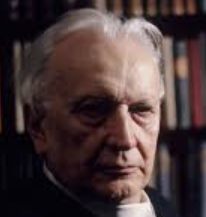
Imminent seems the collapse of that which for millennium has constituted man's universe. The new world which has arisen as an apparatus for supply of the necessaries of life compels everything and everyone to serve it. It annihilates whatever it has no place for person seems to be going undergoing absorption into that which is nothing more than a means to an end, into that which is devoid of purpose of significance.
4 months ago
"Let your occupations be few," says the sage, "if you would lead a tranquil life."
▼
Source
Ὀλίγα πρῆσσε, φησίν, εἰ μέλλεις εὐθυμήσειν | IV, 24

4 months ago
To have courage for whatever comes in life — everything lies in that.
▼
Source
As quoted in The Little Lamp (1981) by Eknath Easwaran, p. 80
4 months ago
Clever men will recognize and tolerate nothing but cleverness; every authority rouses their ridicule, every superstition amuses them, every convention moves them to contradiction. Only force finds favor in their eyes, and they have no toleration for anything that is not purely natural and spontaneous. And yet ten clever men are not worth one man of talent, nor ten men of talent worth one man of genius. And in the individual, feeling is more than cleverness, reason is worth as much as feeling, and conscience has it over reason. If, then, the clever man is not mockable, he may at least be neither loved, nor considered, nor esteemed. He may make himself feared, it is true, and force others to respect his independence; but this negative advantage, which is the result of a negative superiority, brings no happiness with it. Cleverness is serviceable for everything, sufficient for nothing.
▼
Source
16 February 1868
4 months ago
Nothing happens to anyone that he can't endure.
▼
Source
Nothing happens to anybody which he is not fitted by nature to bear. | V, 18 (Hays translation)

4 months ago
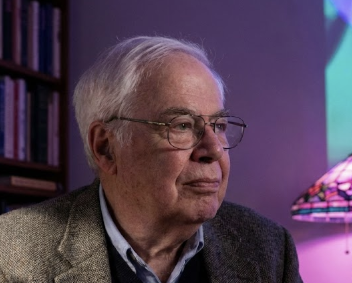
I know not whether this book is worth anything, nor what the world will do with it, or misdo, or entirely forbear to do, as is likeliest; but this I could tell the world: You have not had for a hundred years any book that comes more direct and flamingly from the heart of a living man. Do what you like with it, you—.
▼
Source
Remarks to his wife after he had finished writing The French Revolution (12 January 1837), quoted in James Anthony Froude, Thomas Carlyle: A History of His Life in London, 1834–1881, Vol. I (1884), p. 84
4 months ago
Anything can be made to look good or bad by being redescribed.
▼
Source
Contingency, Irony, and Solidarity (1989), p. 73

4 months ago
But the Christian verity has distinctly declared this principle, “God is not, if He is not one;” because we more properly believe that that has no existence which is not as it ought to be.
▼
Source
Book I, Chapter III.—The Unity of God. He is the Supreme Being, and There Cannot Be a Second Supreme.
4 months ago
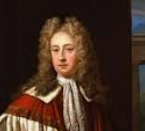
There have been periods when our government continued free, with strong appearances of becoming absolute. Let it be your glory, my Lord, and that of the new generation springing up with you, that this government do not become absolute at any future period, with the appearances of being free.
▼
Source
p. 46
4 months ago
If you are distressed by anything external, the pain is not due to the thing itself, but to your estimate of it; and this you have the power to revoke at any moment.
▼
Source
VII, 11.
4 months ago
History is the essence of innumerable biographies.
▼
Source
On History.
4 months ago
Herein also you ought to recognise the Paraclete in His character of Comforter, in that He excuses your infirmity from (the stringency of) an absolute continence.
▼
Source
Chapter 3
4 months ago
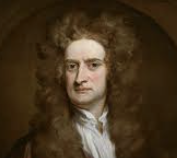
I do not know what I may appear to the world, but to myself I seem to have been only like a boy playing on the sea-shore, and diverting myself in now and then finding a smoother pebble or a prettier shell than ordinary, whilst the great ocean of truth lay all undiscovered before me.
▼
Source
Memoirs of the Life, Writings, and Discoveries of Sir Isaac Newton (1855) by Sir David Brewster (Volume II. Ch. 27). Compare: "As children gath'ring pebbles on the shore", John Milton, Paradise Regained, Book iv. Line 330
CivilSimian.com created by AxiomaticPanic, CivilSimian, Kalokagathia