

4 months ago
And so the arbitrary union of three incommensurate, mutually disconnected concepts became the basis of a bewildering theory... [by which] one of the lowest renderings of art, art for mere pleasure — against which all of the master teachers warned — was idealized as the ultimate in art.

4 months ago
If justice be not a natural principle, it is no principle at all. If it be not a natural principle, there is no such thing as justice. If it be not a natural principle, all that men have ever said or written about it, from time immemorial, has been said and written about that which had no existence. If it be not a natural principle, all the appeals for justice that have ever been heard, and all the struggles for justice that have ever been witnessed, have been appeals and struggles for a mere fantasy, a vagary of the imagination, and not for a reality.If justice be not a natural principle, then there is no such thing as injustice; and all the crimes of which the world has been the scene, have been no crimes at all; but only simple events, like the falling of the rain, or the setting of the sun; events of which the victims had no more reason to complain than they had to complain of the running of the streams, or the growth of vegetation.If justice be not a natural principle, governments (so-called) have no more right or reason to take cognizance of it, or to pretend or profess to take cognizance of it, than they have to take cognizance, or to pretend or profess to take cognizance, of any other nonentity; and all their professions of establishing justice, or of maintaining justice, or of rewarding justice, are simply the mere gibberish of fools, or the frauds of imposters.But if justice be a natural principle, then it is necessarily an immutable one; and can no more be changed—by any power inferior to that which established it—than can the law of gravitation, the laws of light, the principles of mathematics, or any other natural law or principle whatever; and all attempts or assumptions, on the part of any man or body of men—whether calling themselves governments, or by any other name—to set up their own commands, wills, pleasure, or discretion, in the place of justice, as a rule of conduct for any human being, are as much an absurdity, an usurpation, and a tyranny, as would be their attempts to set up their own commands, wills, pleasure, or discretion in the place of any and all the physical, mental, and moral laws of the universe.If there be any such principle as justice, it is, of necessity, a natural principle; and, as such, it is a matter of science, to be learned and applied like any other science. And to talk of either adding to, or taking from, it, by legislation, is just as false, absurd, and ridiculous as it would be to talk of adding to, or taking from, mathematics, chemistry, or any other science, by legislation.
▼
Source
Sections I–II, p. 11–12

4 months ago
How can he [today's writer] be honored, when he does not honor himself; when he loses himself in the crowd; when he is no longer the lawgiver, but the sycophant, ducking to the giddy opinion of a reckless public.
▼
Source
Goethe; or, The Writer

4 months ago
Great strength of body is the gift of nature; But to be able to advise whate'er Is most expedient for one's country's good, Is the peculiar work of sense and wisdom.

4 months ago
To romanticize the world is to make us aware of the magic, mystery and wonder of the world; it is to educate the senses to see the ordinary as extraordinary, the familiar as strange, the mundane as sacred, the finite as infinite.
▼
Source
As quoted in "Bildung in Early German Romanticism" by Frederick C. Beiser, in Philosophers on Education : Historical Perspectives (1998) by Amélie Rorty, p. 294
4 months ago
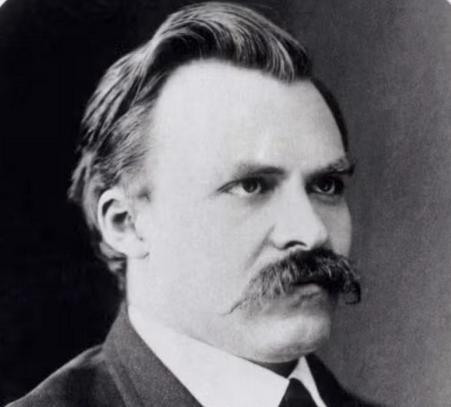
I now myself live, in every detail, striving for wisdom, while I formerly merely worshipped and idolized the wise.
▼
Source
Letter to Mathilde Mayer, July 16, 1878, cited in Karl Jaspers, Nietzsche (Baltimore: 1997), p. 46
4 months ago
When the Indians complain that the English have enslaved them it is as if drunkards complained that the spirit-dealers who have settled among them have enslaved them. You tell them that they might give up drinking, but they reply that they are so accustomed to it that they cannot abstain, and that they must have alcohol to keep up their energy. Is it not the same thing with the millions of people who submit to thousands or even to hundreds, of others — of their own or other nations? If the people of India are enslaved by violence it is only because they themselves live and have lived by violence, and do not recognize the eternal law of love inherent in humanity.
▼
Source
V

4 months ago
The fundamental imperative about idolatry was that worship was not to be paid to any created thing such as a messenger, a planet, a star, one of the four elements, or to anything produced from them.
▼
Source
Treatise 4: “Idolatry,” H. Russell, trans. (1983), p. 74
4 months ago
People seem not to see that their opinion of the world is also a confession of character.
▼
Source
Worship
4 months ago
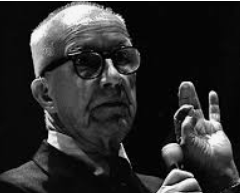
God, to me, it seems is a verb, not a noun, proper or improper.
▼
Source
No More Secondhand God (1963)
4 months ago
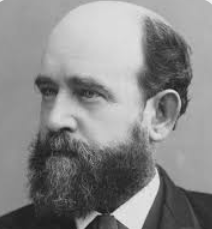
Poverty is a crime. I do not mean that it is a crime to be poor. Murder is a crime; but it is not a crime to be murdered; and a man who is in poverty, I look upon, not as a criminal in himself, so much as the victim of a crime for which others, as well perhaps as himself, are responsible.
▼
Source
The Crime of Poverty (1885)
4 months ago
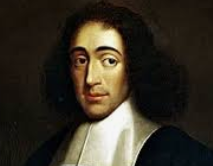
This I know, that between finite and infinite there is no comparison; so that the difference between God and the greatest and most excellent created thing is no less than the difference between God and the least created thing.
▼
Source
Letter to Hugo Boxel (October 1674) The Chief Works of Benedict de Spinoza (1891) Tr. R. H. M. Elwes, Vol. 2, Letter 58 (54).
4 months ago
What has passed with him since then he does not disclose to us. He tells us that we ourselves, led on by him and our own desire, will discover what has passed with him. Many of us have withdrawn from him. They returned to their parents, and learned trades. Some have been sent out by him, we know not whither; he selected them. Of these, some have been but a short time there, others longer. One was still a child; scarcely was he come, when our Teacher was for passing him any more instruction. This child had large dark eyes with azure ground, his skin shone like lilies, and his locks like light little clouds when it is growing evening. His voice pierced through all our hearts; willingly would we have given him our flowers, stones, pens, all we had. He smiled with an infinite earnestness; and we had a strange delight beside him. One day he will come again, said our Teacher, and then our lessons end. — Along with him he sent one, for whom we had often been sorry. Always sad he looked; he had been long years here; nothing would succeed with him; when we sought crystals or flowers, he seldom found. He saw dimly at a distance; to lay down variegated rows skilfully he had no power. He was so apt to break everything. Yet none had such eagerness, such pleasure in hearing and listening. At last, — it was before that Child came into our circle, — he all at once grew cheerful and expert. One day he had gone out sad; he did not return, and the night came on. We were very anxious for him; suddenly, as the morning dawned, we heard his voice in a neighbouring grove. He was singing a high, joyful song; we were all surprised; the Teacher looked to the East, such a look as I shall never see in him again. The singer soon came forth to us, and brought, with unspeakable blessedness on his face, a simple-looking little stone, of singular shape. The Teacher took it in his hand, and kissed him long; then looked at us with wet eyes, and laid this little stone on an empty space, which lay in the midst of other stones, just where, like radii, many rows of them met together.
4 months ago
If there be light, then there is darkness; if cold, heat; if height, depth; if solid, fluid; if hard, soft; if rough, smooth; if calm, tempest; if prosperity, adversity; if life, death.
▼
Source
As quoted in Bibliotheca Sacra and Theological Review by ? Vol. IV, No. 8 (1847) by Dallas Theological Seminary, p. 107
4 months ago
No more fiction for us: we calculate; but that we may calculate, we had to make fiction first.
▼
Source
Sec. 624, as translated by Tobias Dantzig in . Fourth edition, New York: Doubleday 1954, p 141. See discussion of this entry for details.
4 months ago
What is the Jew?...What kind of unique creature is this whom all the rulers of all the nations of the world have disgraced and crushed and expelled and destroyed; persecuted, burned and drowned, and who, despite their anger and their fury, continues to live and to flourish. What is this Jew whom they have never succeeded in enticing with all the enticements in the world, whose oppressors and persecutors only suggested that he deny (and disown) his religion and cast aside the faithfulness of his ancestors?! The Jew — is the symbol of eternity. ... He is the one who for so long had guarded the prophetic message and transmitted it to all mankind. A people such as this can never disappear. The Jew is eternal. He is the embodiment of eternity.
▼
Source
Attributed in "The Final Resolution", in Jewish World Periodical (1908), p. 189
4 months ago
Whatever form it has, it [matter] will be disposed to receive another form; it never leaves off moving and casting off the form which it has in order to receive another. ...It is therefore clear that all corruption, destruction, or defect comes from matter.
▼
Source
Ch.8
4 months ago
Whoever fights, whoever falls, Justice conquers evermore.
▼
Source
Voluntaries
4 months ago
I seek through comprehensive anticipatory design science and its reductions to physical practices to reform the environment instead of trying to reform humans, being intent thereby to accomplish prototyped capabilities of doing more with less...
▼
Source
Earth, Inc. (1973) This is just part of a very long sentence that covers the whole first page, but in this part of the quote, the intention of the entire book is stated.
4 months ago
To live life well is to express life poorly; if one expresses life too well, one is living it no longer.
▼
Source
A Retrospective Glance at the Lifework of a Master of Books
4 months ago
When we consider that labor is the producer of all wealth, is it not evident that the impoverishment and, dependence of labor are abnormal conditions resulting from restrictions and usurpations, and that instead of accepting protection, what labor should demand is freedom. That those who advocate any extension of freedom choose to go no further than suits their own special purpose is no reason why freedom itself should be distrusted.
▼
Source
Ch. 2
4 months ago
The division of Philosopher and Poet is only apparent, and to the disadvantage of both. It is a sign of disease, and of a sickly constitution.
4 months ago
Above and before all things, worship GOD!
▼
Source
As quoted in The Sayings of the Wise: Or, Food for Thought: A Book of Moral Wisdom, Gathered from the Ancient Philosophers (1555) by William Baldwin [1908 edition] | Variant translation: Honor first the immortal gods, in the manner prescribed, and respect
4 months ago
Rather than cope with the unbearable loneliness of their condition men will continue to seek their shattered God, and for His sake they will love the very serpents that dwell among His ruins.
▼
Source
As quoted by J. P. Stern in an interview conducted by Bryan Magee in The Great Philosophers : A History of Western Philosophy (1987)
4 months ago
The novel's outside world, if well enough created, does live on, when you look at the world of Jane Austen, Flaubert, Turgenev, Tolstoy, Proust! They're indelible. War and Peace is not only real to today's reader, it will outlast him too.
▼
Source
1981 interview included in Conversations with Eudora Welty Edited by Peggy Whitman Prenshaw (1993)
4 months ago
The more necessary a thing is for living beings, the more easily it is found and the cheaper it is; the less necessary it is, the rarer and dearer it is.
▼
Source
Ch.12
4 months ago
A man builds a fine house; and now he has a master, and a task for life: he is to furnish, watch, show it, and keep it in repair, the rest of his days.
▼
Source
Works and Days
4 months ago
Politicians are always realistically maneuvering for the next election. They are obsolete as fundamental problem-solvers.
▼
Source
As quoted in Synergetics Dictionary : The Mind of Buckminster Fuller (1986) by E. J. Applewhite

4 months ago
You write with great eloquence and truth on the effects of mountain scenery on the mind. Whatever exalts the imagination purifies the affections; but even our noblest and best thoughts have their archetypes in sensation. The eye is the most perfect of all the senses, and the one that most feeds the intellect. When surrounded by the grand forms of nature, we give to earth something of the indefinite character of heaven. Great objects excite great thoughts; the standard of our being rises; all our low and grovelling associations disappear; and our sympathies are more strongly awakened with regard to the moral, sublime, the excellent, the decorous, and the great in philosophy. We are more fitted to enjoy the blaze of light of Milton, to pass into the -forms of humanity with Shakespeare, and to move through the heavens with Newton. ... I am leading a truly philosophical life of activity, and the constant pursuit of an object, the elements of such a life. Such moments as I am now passing in the crowded city, prove to me how fitted our being is for independent and solitary thoughts; how much its strength depends upon its own efforts, and how little it owes to general society.Pray do not forget me, and believe me to be, very truly and affectionately, yours...
▼
Source
Letter to Mrs. Apreece [future Mrs. Davy] (26 August 1811) in John Davy (ed.) Fragmentary Remains, Literary and Scientific, of Sir Humphry Davy, ... with a Sketch of His Life and Selections from His Correspondence (1858) pp. 145-146 [https://books.google.
4 months ago
By Silence, the discretion of a man is known: and a fool, keeping Silence, seemeth to be wise.
4 months ago
It has always been the task of formal education to set up behavior which would prove useful or enjoyable later in a student's life.
▼
Source
As quoted in Performance-based Assessment for Middle and High School Physical Education (2002) by Jacalyn Lea Lund and Mary Fortman Kirk, p. 165

4 months ago
To believe in a God means to understand the question about the meaning of life. To believe in a God means to see that the facts of the world are not the end of the matter. To believe in God means to see that life has a meaning.
▼
Source
Journal entry (8 July 1916), p. 74e
4 months ago
My opinion is this: the cause of the error of all these schools is their belief that God's knowledge is like ours; each school points to something withheld from our knowledge, and either assumes that the same must be the case in God's knowledge, or at least finds some difficulty how to explain it. ...they likewise demonstrated... that our intellect and our knowledge are insufficient to comprehend the true idea of His essence. ...they came to the absurd conclusion that that which is required for our knowledge is also required for God's knowledge.
▼
Source
Ch.20
4 months ago
Great men are they who see that spiritual is stronger than any material force, that thoughts rule the world. No hope so bright but is the beginning of its own fulfillment.
▼
Source
Progress of Culture Phi Beta Kappa Address (July 18, 1867)
4 months ago
World Game finds that 60 percent of all the jobs in the U.S.A. are not producing any real wealth—i.e., real life support. They are in fear - underwriting industries or are checking-on-other-checkers, etc.
▼
Source
Pg 223. - Google Books Result https://books.google.com/books?isbn=0312174918 - 1982 - History
4 months ago
No moral system can rest solely on authority.
▼
Source
Humanist Outlook (1968), p. 4.

4 months ago
If what the philosophers say be true,—that all men's actions proceed from one source; that as they assent from a persuasion that a thing is so, and dissent from a persuasion that it is not, and suspend their judgment from a persuasion that it is uncertain,—so likewise they seek a thing from a persuasion that it is for their advantage.
▼
Source
Book I, ch. 18, § 1.
4 months ago
Concern should drive us into action and not into a depression.
▼
Source
The Collected Works of Karen Horney (1957) by Karen Horney, p. 154: "We may feel genuinely concerned about world conditions, though such a concern should drive us into action and not into a depression."
4 months ago
A proposition is completely logically analyzed if its grammar is made completely clear: no matter what idiom it may be written or expressed in...
▼
Source
Philosophical Remarks (1930), Part I (1)
4 months ago
Every one of the six hundred and thirteen precepts serves to inculcate some truth, to remove some erroneous opinion, to establish proper relations in society, to diminish evil, to train in good manners, or to warn against bad habits. All this depends on three things: opinions, morals, and social conduct. ...these three principles suffice for assigning a reason for every one of the Divine commandments.
▼
Source
Ch.31
4 months ago
Sunshine cannot bleach the snow, Nor time unmake what poets know.
▼
Source
"The Test", as quoted in Emerson As A Poet (1883) by Joel Benton, p. 40
4 months ago
Integrity of the individual is what we're being judged for and if we are not passing that examination, we don't really have the guts, we'll blow ourselves up. It will be all over. I think it's all the difference in the world.
4 months ago
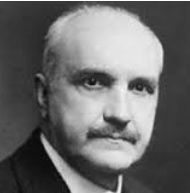
Beauty as we feel it is something indescribable: what it is or what it means can never be said.
▼
Source
Pt. IV, Expression; § 67: "Conclusion.", p. 267
4 months ago
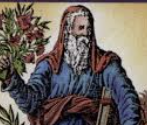
Because he practiced justice he gained an easy access to the ears of the Gods; so much so that he had a multitude of disciples, and those who desired learning flocked to him from all parts. And it is hard to decide who among them was the most distinguished, for Sopater the Syrian was of their number, a man who was most eloquent both in his speeches and writings; and Aedesius and Eustathius from Cappadocia; while from Greece came Theodorus and Euphrasius, men of superlative virtue, and a crowd of other men not inferior in their powers of oratory, so that it seemed marvelous that he could satisfy them all; and indeed in his devotion to them all he never spared himself. Occasionally, however, he did perform certain rites alone, apart from his friends and disciples, when he worshipped the Divine Being. But for the most part he conversed with his pupils and was unexacting in his mode of life and of an ancient simplicity. As they drank their wine he used to charm those present by his conversation and filled them as with nectar. And they never ceased to desire this pleasure and never could have too much of it, so that they never gave him any peace; and they appointed the most eloquent among them to represent them, and asked: "O master, most inspired, why do you thus occupy yourself in solitude, instead of sharing with us your more perfect wisdom? Nevertheless a rumor has reached us through your slaves that when you pray to the Gods you soar aloft from the earth more than ten cubits to all appearance; that your body and your garments change to a beautiful golden hue; and presently when your prayer is ended your body becomes as it was before you prayed, and then you come down to earth and associate with us." Iamblichus was not at all inclined to laughter, but he laughed at these remarks. And he answered them thus: "He who thus deluded you was a witty fellow; but the facts are otherwise. For the future however you shall be present at all that goes on."
▼
Source
Eunapius, in Lives of the Philosophers and Sophists, as translated in Philostratus and Eunapius : The Lives of the Sophists (1922) by William Cave Wright
4 months ago
Who is not tempted by attractive and wide-awake children to join their sports, and crawl on all fours with them, and talk baby talk with them?
▼
Source
Book II, ch. 24, § 18
4 months ago
Pythagoras, the son of Mnesarchus, was the most learned of all men of history; and having selected from these writings, he thus formed his own wisdom and extensive learning, and mischievous art.
▼
Source
Heraclides Ponticus (c. 360 BC) as quoted in C. D. Yonge's translation of Lives and Opinions of Eminent Philosophers, "Pythagoras", Sect.5 (1853)
4 months ago
The meaning of a question is the method of answering it: then what is the meaning of 'Do two men really mean the same by the word "white"?' Tell me how you are searching, and I will tell you what you are searching for.
▼
Source
Philosophical Remarks (1991), Part III (27), pp.66-67

4 months ago
Rationalist politics, I have said, are the politics of the felt need, the felt need not qualified by a genuine, concrete knowledge of the permanent interests and direction of movement of a society, but interpreted by 'reason' and satisfied according to the technique of an ideology: they are the politics of the book.
4 months ago
The effects of opposition are wonderful. There are men who rise refreshed on hearing of a threat, — men to whom a crisis which intimidates and paralyzes the majority — demanding, not the faculties of prudence and thrift, but comprehension, immovableness, the readiness of sacrifice — comes graceful and beloved as a bride!
▼
Source
p. 189
4 months ago
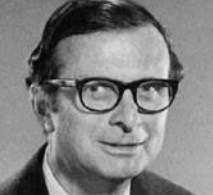
Another way of emphasizing this diversity is to argue that if one cannot forecast (predict), one does not have a theory, and that forecasting is the weakest link in the chain of the management sciences at present. Indeed, if one cannot predict one cannot measure, and if one cannot measure, then there is no "theory."
CivilSimian.com created by AxiomaticPanic, CivilSimian, Kalokagathia