
4 months ago
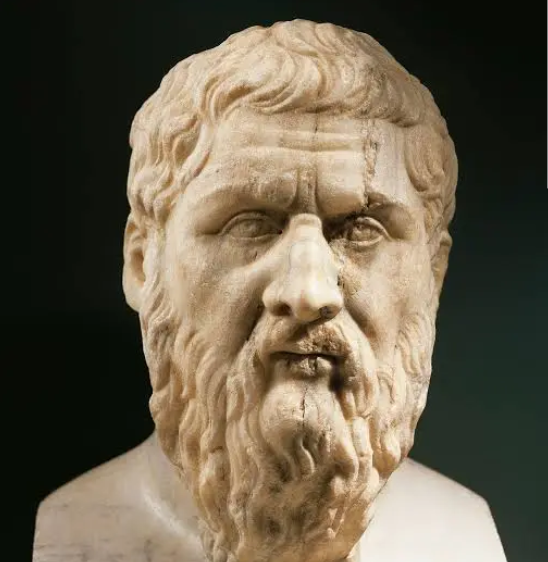
It is impossible that evils should be done away with, for there must always be something opposed to the good; and they… must inevitably hover about mortal nature and this earth. Therefore we ought to try to escape from earth to the dwelling of the gods as quickly as we can; and to escape is to become like God, so far as this is possible… God is in no wise and in no manner unrighteous, but utterly and perfectly righteous, and there is nothing so like him as that one of us who in turn becomes most nearly perfect in righteousness.
▼
Source
176a–c
4 months ago
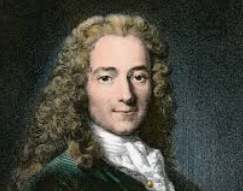
Contrary to Voltaire's sarcasm, the Creator does not resemble his creature.
▼
Source
Jean-Pierre Torrell, Inos Biffi, La teologia cattolica, Editoriale Jaca Book, 1998, 128 p. , OCLC 83129915

4 months ago
Erect I make a resolution; prone I revoke it.

4 months ago
Felicity is a continual progress of the desire from one object to another, the attaining of the former being still but the way to the latter.The cause whereof is that the object of man's desire is not to enjoy once only, and for one instant of time, but to assure forever the way of his future desire. And therefore the voluntary actions and inclinations of all men tend not only to the procuring, but also to the assuring of a contented life, and differ only in the way, which ariseth partly from the diversity of passions in diverse men, and partly from the difference of the knowledge or opinion each one has of the causes which produce the effect desired.
▼
Source
The First Part, Chapter 11, p. 47

4 months ago
Every pitifulest whipster that walks within a skin has had his head filled with the notion that he is, shall be, or by all human and divine laws ought to be, 'happy.' His wishes, the pitifulest whipster's, are to be fulfilled for him; his days, the pitifulest whipster's, are to flow on in an ever-gentle current of enjoyment, impossible even for the gods. The prophets preach to us, Thou shalt be happy; thou shalt love pleasant things, and find them. The people clamor, Why have we not found pleasant things? ...God's Laws are become a Greatest Happiness Principle. There is no religion; there is no God; man has lost his soul.
▼
Source
Bk. III, ch. 4.

4 months ago
Good means not [merely] not to do wrong, but rather not to desire to do wrong.

4 months ago
A curious paradox: people have only the narrowest private interest in mind when they act, yet they are at the same time more than ever determined in their behavior by the instincts of the mass. ... The diversity of individual goals is immaterial in face of the identity of the determining forces.
▼
Source
p. 451
4 months ago
The innovator, however, must in the first place be discontented, he must doubt the value of what he is doing or question the accepted ways of doing it. And secondly, he must be prepared to take fresh paths, to venture into fields where he is by no means expert. This is true, at least, of major forms of innovation; they make it possible for other men to be expert, but are not themselves forms of expertise. Freud was not an expert psycho-analyst; before Freud wrote there was no such thing; he created the standards by which psycho-analysts are judged expert. Neither was Marx an expert in interpreting history in economic terms nor Darwin an expert in evolutionary biology. If a man is trained, purely and simply, to be expert and contented in a particular task he will not innovate; Freud would have remained an anatomist, Marx a philosopher, Darwin a field-naturalist.
▼
Source
p. 282.
4 months ago
The orators — and the despots — have the least power in their cities … since they do nothing that they wish to do, practically speaking, though they do whatever they think to be best.
4 months ago
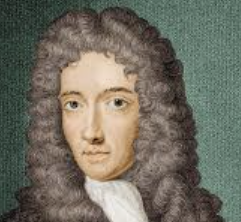
And that you may know... what kind of writings I mean, I shall name to you the learned Gassendus his little Syntagma of Epicuruss philosophy, and that most ingenious gentleman Monsieur Descartes his principles of philosophy. For though I purposely refrained, though not altogether from transiently consulting about a few particulars, yet from seriously and orderly reading over those excellent (though disagreeing) books, or so much as Sir Francis Bacon's Novum Organum, that I might not be prepossessed with any theory or principles, till I had spent some time in trying what things themselves would incline me to think; yet beginning now to allow myself to read those excellent books, I find by the little I have read in them already, that if I had read them before I began to write, I might have enriched the ensuing essays with divers truths, which they now want, and have explicated divers things much better than I fear I have done.
4 months ago
Anyone can escape into sleep, we are all geniuses when we dream, the butcher's the poet's equal there.
4 months ago
Of all passions, that which inclineth men least to break the laws is fear.
▼
Source
The Second Part, Chapter 27
4 months ago
The spoken Word, the written Poem, is said to be an epitome of the man; how much more the done Work. Whatsoever of morality and of intelligence; what of patience, perseverance, faithfulness, of method, insight, ingenuity, energy; in a word, whatsoever of Strength the man had in him will lie written in the Work he does. To work: why, it is to try himself against Nature, and her everlasting unerring Laws; these will tell a true verdict as to the man.
4 months ago
If we want eternal life, then we’ll need to rewrite our bug-ridden genetic code and become god-like. “May all that have life be delivered from suffering”, said Gautama Buddha. It’s a wonderful sentiment. Sadly, only hi-tech solutions can ever eradicate suffering from the living world. Compassion alone is not enough.
▼
Source
[https://www.hedweb.com/transhumanism/ "Interview with Nick Bostrom and David Pearce"], Dec. 2007

4 months ago
The will to power is weakness as well as strength, and the more it is cut off and isolated from the rest of the human personality, the more desperate, in its weakness, it can become.
▼
Source
Chapter Six, The Flight From Laputa, p. 121
4 months ago
Discussion, therefore, is one of the motive powers of life, and, as such, is not to be deprecated.
4 months ago
When earth meets with fire and is dissolved by the keenness of it, it would drift about, whether it were dissolved in fire itself, or in some mass of air or water, until the parts of it meeting and again being united became earth once more; for it never could pass into any other kind. But when water is divided by fire or by air, it may be formed again and become one particle of fire and two of air: and the divisions of air may become for every particle broken up two particles of fire. And again when fire is caught in air or in waters or in earth, a little in a great bulk, moving amid a rushing body, and contending with it is vanquished and broken up, two particles of fire combine into one figure of air: and when air is vanquished and broken small, from two whole and one half particle one whole figure of water will be composed. Let us also reckon it once again thus: when any of the other kinds is intercepted in fire and is divided by it through the sharpness of its angles and its sides, if it forms into the shape of fire, it at once ceases from being divided...
▼
Source
Section 57a, Tr. R. D. Archer-Hind, The Timaeus of Plato (1888) [https://books.google.com/books?id=q2YMAAAAIAAJ&pg=PA203 pp. 203-205.]
4 months ago
It is somewhat strange to me, that neither the Spagyrists themselves, nor yet their Adversaries, should have taken notice that Chymists have rather supposed than evinced, that the Analysis of bodies by fire, or even that at least some Analysis is the onely instrument of investigating what Ingredients mixt bodies are made up of, since in divers cases That may be discovered by Composition as well as by Resolution; as it may appear, that consists of metalline parts (whether Martial, or Venereal, or both) associated by Coagulation with ones, one may, I say, discover this as well by making true Vitriol with Spirit (improperly called Oil) of Sulphur, or that of Salt, as by distilling or Resolving Vitriol by the fire.
4 months ago
If, at the limit, you can rule without crime, you cannot do so without injustices.
4 months ago
I say, it is the everlasting privilege of the foolish to be governed by the wise; to be guided in the right path by those who know it better than they. This is the first "right of man;" compared with which all other rights are as nothing.
4 months ago
The reason for sketching what's technically feasible with the tools of synthetic biology is that only after human complicity in the persistence of suffering in the biosphere is acknowledged can we hope to have an informed socio-political debate on the morality of its perpetuation. No serious ethical discussion of free-living animal suffering can begin in the absence of recognition of human responsibility for nonhuman well-being.
▼
Source
"[https://www.gene-drives.com/ Compassionate Biology: How CRISPR-based "gene drives" could cheaply, rapidly and sustainably reduce suffering throughout the living world]", BLTC Research, 2016

4 months ago
Philosophers often make the mistake of supposing that a subject is worthy of study only if it is found always and everywhere. But many of the most profound and important things are not found everywhere. This is because artifice, which is the alteration of untamed nature, is itself a part of man's nature.
▼
Source
p. 189
4 months ago
Let us now pose the question again: is recourse to the "human" really enough to preserve and firmly ground the reality of leisure? I intend to show that such recourse to mere Humanism is not enough.It could be said that the heart of leisure consists in "festival." In festival, or celebration, all three conceptual elements come together as one: the relaxation, the effortlessness, the ascendancy of "being at leisure" […] over mere function.
▼
Source
p. 50
4 months ago
Fasting, meditation, chastity of thought, word, and deed; silence for certain periods of time to enable nature herself to speak to him who comes to her for information; government of the animal passions and impulses; utter unselfishness of intention, the use of certain incense and fumigations for physiological purposes, have been published as the means since the days of Plato and lamblichus in the West, and since the far earlier times of our Indian Rishis...
▼
Source
Koot Hoomi The Mahatma Letters to A. P. Sinnett, Letter No. XLLX, p. 283, (1923)
4 months ago
Always to have lived with the nostalgia to coincide with something, but not really knowing with what — it is easy to shift from unbelief to belief, or conversely. But what is there to convert to, and what is there to abjure, in a state of chronic lucidity?
4 months ago
Considered as the last finish of education, or of human culture, worth and acquirement, the art of speech is noble, and even divine; it is like the kindling of a Heaven's light to show us what a glorious world exists, and has perfected itself, in a man.
4 months ago
Social and economic inequalities, for example inequalities of wealth and authority, are just only if they result in compensating benefits for everyone, and in particular for the least advantaged members of society.
▼
Source
p. 14.
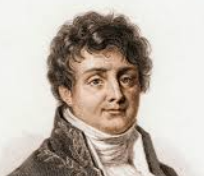
4 months ago
I regarded these events as the customary disturbances of a state in which a new usurper tends to pluck the sceptre from his predecessor. ...As the natural ideas of equality were developed it was possible to conceive the sublime hope of establishing among us a free government exempt from kings and priests and to free from this double yoke the long usurped soil of Europe. I readily became enamored of this cause... the greatest and most beautiful which any nation has ever undertaken. ...You will judge whether it is I or my adversaries who are terrorists and persecutors. ...I accuse them of having violated ...all the rules of natural justice, of being ignorant and evil, of profaning the words of humanity and justice in invoking them, just as tyranny was organized in the name of liberty. Finally, of having given themselves up to a boundless revolutionary fury which ought to cover then with disgrace and scorn.
▼
Source
Letter to Edmé Pierre Alexanre Villetard (June/July, 1795) from prison, as quoted by , Joseph Fourier—The Man and the Physicist (1975) pp. 280-285 (also see p. 27).
4 months ago
The same feeling of not belonging, of futility, wherever I go: I pretend interest in what matters nothing to me, I bestir myself mechanically or out of charity, without ever being caught up, without ever being somewhere. What attracts me is elsewhere, and I don't know where that elsewhere is.
4 months ago
Alas! such is the miseducation of these days, it is only among those that are called the uneducated classes — those educated by experience — that you can look for a Man. Even among these, such a sight is growing daily rarer. My father, in several respects, has not, that I can think of, left his fellow. Perhaps among Scottish peasants what Samuel Johnson was among English authors. I have a sacred pride in my peasant father, and would not exchange him, even now, for any king known to me. Gold and the guinea stamp — the Man and the clothes of the man. Let me thank God for that greatest of blessings, and strive to live worthily of it.
4 months ago
Ideally a just constitution would be a just procedure arranged to insure a just outcome.
▼
Source
Chapter IV, Section 31, pg. 197
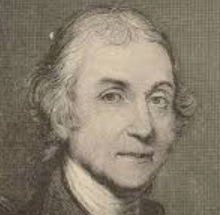
4 months ago
The history of philosophy enjoys, in some measure, the advantages both of civil and natural history, whereby it is relieved from what is most tedious and disgusting in both. Philosophy exhibits the powers of nature, discovered and directed by human art. It has, therefore, in some measure, the boundless variety with the amazing uniformity of the one, and likewise every thing that is pleasing and interesting in the other. And the idea of continual rise and improvement is conspicuous in the whole study, whether we be attentive to the part which nature, or that which men are acting in the great scene. It is here that we see the human understanding to its greatest advantage, grasping at the noblest objects, and increasing its own powers, by acquiring to itself the powers of nature, and directing them to the accomplishment of its own views; whereby the security, and happiness of mankind are daily improved. Human abilities are chiefly conspicuous in adapting means to ends, and in deducing one thing from another by the method of analogy; and where may we find instances of greater sagacity, than in philosophers diversifying the situations of things, in order to give them an opportunity of showing their mutual relations, affections, and influences; deducing one truth and one discovery from another, and applying them all to the useful purposes of human life. If the exertion of human abilities, which cannot but form a delightful spectacle for the human imagination, give us pleasure, we enjoy it here in a higher degree than while we are contemplating the schemes of warriors, and the stratagems of their bloody art.
▼
Source
Preface, pp. iv-v.
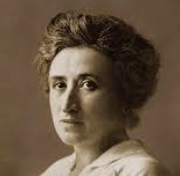
4 months ago
The times when the centre of gravity of political development and the crystallising agent of capitalist contradictions lay on the European continent, are long gone by. To-day Europe is only a link in the tangled chain of international connections and contradictions.

4 months ago
Every time a man is begotten and born, the clock of human life is wound up anew to repeat once more its same old tune that has already been played innumerable times, movement by movement and measure by measure, with insignificant variations.
▼
Source
Vol. I, Ch. 4, The World As Will: Second Aspect, as translated by Eric F. J. Payne (1958) p. 322
4 months ago
I long to be free — desperately free. Free as the stillborn are free.
4 months ago
Not less am I grateful for the Carlyle eulogium [on Emerson]. I have shed some quite delicious tears over it. This is a world worth abiding in while one man can thus venerate and love another.
▼
Source
George Eliot to Sara Hennell (December 1848), quoted in George Eliot's Life as Related in Her Letters and Journals, Vol. I, ed. J. W. Cross (1885), p. 193
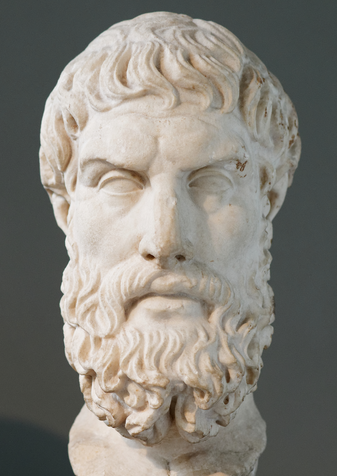
4 months ago
A happy and eternal being has no trouble himself and brings no trouble upon any other being; hence he is exempt from movements of anger and partiality, for every such movement implies weakness.
▼
Source
Variant translations: What is blessed and indestructible has no troubles itself, nor does it give trouble to anyone else, so that it is not affected by feelings of anger or gratitude. For all such things are signs of weakness. (Hutchinson)The blessed and
4 months ago
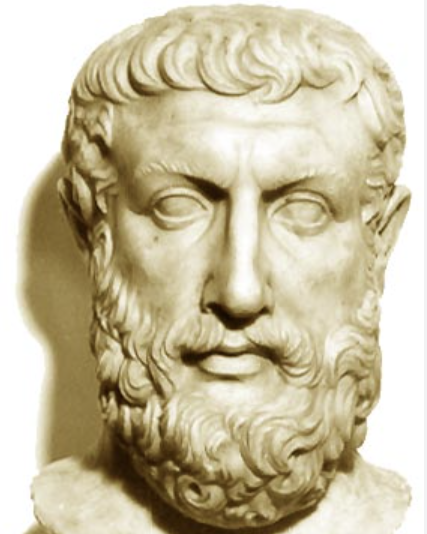
I walked on to the next corner, sat on a bench at a bus stop, and read in my new book about Heraclitus. All things flow like a river, he said; nothing abides. Parmenides, on the other hand, believed that nothing ever changed, it only seemed so. Both views appealed to me.
▼
Source
Ross MacDonald, The Chill (1963), Vintage Crime/Black Lizard edition, pp. 209-210.
4 months ago
Mr. Gibbon has much to learn concerning the gospel before he can be properly qualified to write against it. Hitherto he seems to have been acquainted with nothing but the corrupt establishments of what is very improperly called Christianity; whereas it is incumbent upon him to read and study the New Testament for himself. There he will find nothing like Platonism, but doctrines in every respect the reverse of that system of philosophy, which weak and undistinguishing christians afterwards incorporated with it. Had Mr. Gibbon lived in France, Spain, or Italy, he might with the same reason have ranked the doctrine of transubstantiation, and the worship of saints and angels among the essentials of Christianity, as the doctrines of the trinity and of the atonement.
▼
Source
General Conclusions, Part I : Containing Considerations addressed to Unbelievers and especially to Mr. Gibbon

4 months ago
Men of acute mind call me an ascetic, but they are wrong in their diagnosis. Although I disciplined my desires, I only abandoned worldly pleasures because the best of these withdrew themselves from me.
▼
Source
As quoted in Studies in Islamic Poetry (1921) by Reynold A. Nicholson
4 months ago
Every true thinker for himself is so far like a monarch; he is absolute, and recognises nobody above him. His judgments, like the decrees of a monarch, spring from his own sovereign power and proceed directly from himself. He takes as little notice of authority as a monarch does of a command; nothing is valid unless he has himself authorised it. On the other hand, those of vulgar minds, who are swayed by all kinds of current opinions, authorities, and prejudices, are like the people which in silence obey the law and commands.
▼
Source
“Thinking for Oneself,” H. Dirks, trans.
4 months ago
Self-pity is not as sterile as we suppose. Once we feel its mere onset, we assume a thinker's attitude, and come to think of it, we come to think!
4 months ago
The following is from the article on Necker:— "As an author, Necker displays much irregular force of imagination, united with considerable perspicuity and compass of thought; though his speculations are deformed by an undue attachment to certain leading ideas, which, harmonizing with his habits of mind, had acquired an excessive preponderance in the course of his long and uncontroverted meditations. He possessed extensive knowledge, and his works bespeak a philosophical spirit; but their great and characteristic excellence proceeds from that glow of fresh and youthful admiration for everything that is amiable or august in the character of man, which, in Necker's heart, survived all the blighting vicissitudes it had passed through, combining, in a singular union, the fervour of the stripling with the experience of the sage."[A] [Footnote A: "In the earliest authorship of Mr. Carlyle," says Mr. James Russell Lowell, alluding to these papers, "we find some not obscure hints of the future man.
▼
Source
With White, Andrew Dickson. [https://ia600302.us.archive.org/33/items/cu31924029541640/cu31924029541640.pdf On the Choice of Books: The Inaugural Address of Thomas Carlyle, Lord Rector of the University of Edinburgh, Reprinted From the Times, With Additio
4 months ago
Rascals are always sociable — more’s the pity! and the chief sign that a man has any nobility in his character is the little pleasure he takes in others’ company.
▼
Source
Vol. 1, Ch. 5, § 9
4 months ago
Where are my sensations? They have melted into... me, and what is this me, this self, but the sum of these evaporated sensations?
4 months ago
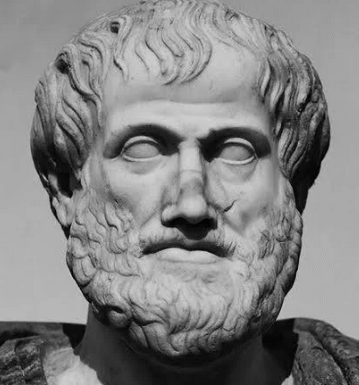
Because that which is finite is always bounded with reference to something... it is necessary that there should be no end... Number also appears to be infinite, and mathematical magnitudes, and that which is beyond the heavens. And since that which is beyond is infinite, body also appears to be infinite, and it would seem that there are infinite worlds; for why is there rather void here than there? ...If also there is a vacuum, and an infinite place, it is necessary that there should be an infinite body: for in things which have a perpetual subsistence, capacity differs nothing from being. The speculation of the infinite is, however, attended with doubt: for many impossibilities happen both to those who do not admit that it has a subsistence, and to those who do. ...It is ...especially the province of a natural philosopher to consider if there be a sensible infinite magnitude.
▼
Source
Book III, Ch. V, p. 156.
4 months ago
I come from all places and to all places I go: I am art among the arts and mountain among mountains. I know the strange names of flowers and herbs and of fatal deceptions and magnificent griefs. In night's darkness I've seen raining down on my head pure flames, flashing rays of beauty divine.
▼
Source
I (Yo soy un hombre sincero) as translated by Esther Allen in José Martí : Selected Writings (2002), p. 273

4 months ago
John Rawls says that justice is the 'first virtue' of social institutions, meaning that it is more fundamental than any other, and that we cannot expect individuals to accept social regulation, and engage in social co-operation unless the terms on which society operates are seen as reasonably just. To talk as though Plato and Aristotle saw justice as a matter of the terms of social and political co-operation may suggest a modern and individualist perspective foreign to both. Yet it is not wholly misleading.
4 months ago
The word of man is the most durable of all material.
▼
Source
Vol. 2, Ch. 25, sect. 298
4 months ago
A self-respecting man is a man without a country. A fatherland is birdlime...
CivilSimian.com created by AxiomaticPanic, CivilSimian, Kalokagathia