
3 months 4 weeks ago
Every habit and faculty is confirmed and strengthened by the corresponding actions, that of walking by walking, that of running by running.
▼
Source
Book II, ch. 18, § 1
3 months 4 weeks ago
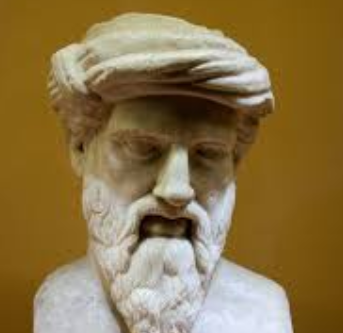
A foolish consistency is the hobgoblin of little minds, adored by little statesmen and philosophers and divines. With consistency a great soul has simply nothing to do. He may as well concern himself with his shadow on the wall. Speak what you think now in hard words, and to-morrow speak what to-morrow thinks in hard words again, though it contradict every thing you said to-day. — "Ah, so you shall be sure to be misunderstood." — Is it so bad, then, to be misunderstood? Pythagoras was misunderstood, and Socrates, and Jesus, and Luther, and Copernicus, and Galileo, and Newton, and every pure and wise spirit that ever took flesh. To be great is to be misunderstood.
▼
Source
Ralph Waldo Emerson in Self-Reliance (1841)
3 months 4 weeks ago
Woman is degraded and made to believe that nature destined her exclusively to menial domestic labors, which in the combined order will be so abridged as to be performed without oppression to either sex.
▼
Source
The Theory of Social Organization

3 months 4 weeks ago
The aim of philosophy is to erect a wall at the point where language stops anyway.
▼
Source
Ch. 9 : Philosophy, p. 187

3 months 4 weeks ago
Has not printing freed the education of the people from all political and religious shackles? It would be vain for any despotism to invade all the schools ... The instruction that every man is free to receive from books in silence and solitude can never be completely corrupted. It is enough for there to exist one corner of free earth from which the press can scatter its leaves. How with the multitude of different books, with the innumerable copies of each book, of reprints that can be made available at a moment’s notice, how could it be possible to bolt every door, to seal every crevice through which truth aspires to enter?
▼
Source
Sketch for a Historical Picture of the Progress of the Human Mind, 1794 (New York: The Noonday Press, 1955) p.102.

3 months 4 weeks ago
Every man is a divinity in disguise, a god playing the fool. It seems as if heaven had sent its insane angels into our world as to an asylum. And here they will break out into their native music, and utter at intervals the words they have heard in heaven; then the mad fit returns, and they mope and wallow like dogs!
▼
Source
p. 165
3 months 4 weeks ago
The individuation process, as the way of development and maturation of the psyche, does not follow a straight line, nor does it always lead onwards and upwards. The course it follows is rather “stadial”, consisting of progress and regress, flux and stagnation in alternating sequence. Only when we glance back over a long stretch of the way can we notice the development. If we wish to mark out the way somehow or other, it can equally well be considered a “spiral”, the same problems and motifs occurring again and again on different levels.
▼
Source
p. 216; cited by Jolande Jacobi (1983) The way of individuation. p. 34, translation of Der Weg zur Individuation. Rascher, Zürich 1965
3 months 4 weeks ago
History is nothing but assisted and recorded memory. It might almost be said to be no science at all, if memory and faith in memory were not what science necessarily rest on. In order to sift evidence we must rely on some witness, and we must trust experience before we proceed to expand it. The line between what is known scientifically and what has to be assumed in order to support knowledge is impossible to draw. Memory itself is an internal rumour; and when to this hearsay within the mind we add the falsified echoes that reach us from others, we have but a shifting and unseizable basis to build upon. The picture we frame of the past changes continually and grows every day less similar to the original experience which it purports to describe.
▼
Source
Ch. 2 "History"
3 months 4 weeks ago
This deficiency in our ideas is not, indeed, perceived in common life, nor are we sensible, that in the most usual conjunctions of cause and effect we are as ignorant of the ultimate principle, which binds them together, as in the most unusual and extraordinary. But this proceeds merely from an illusion of the imagination; and the question is, how far we ought to yield to these illusions. This question is very difficult, and reduces us to a very dangerous dilemma, whichever way we answer it. For if we assent to every trivial suggestion of the fancy; beside that these suggestions are often contrary to each other; they lead us into such errors, absurdities, and obscurities, that we must at last become asham'd of our credulity. Nothing is more dangerous to reason than the flights of the imagination, and nothing has been the occasion of more mistakes among philosophers. Men of bright fancies may in this respect be compar'd to those angels, whom the scripture represents as covering their eyes with their wings. This has already appear'd in so many instances, that we may spare ourselves the trouble of enlarging upon it any farther.
▼
Source
Part 4, Section 7
3 months 4 weeks ago
These reasonings are unconnected: "I am richer than you, therefore I am better"; "I am more eloquent than you, therefore I am better." The connection is rather this: "I am richer than you, therefore my property is greater than yours;" "I am more eloquent than you, therefore my style is better than yours." But you, after all, are neither property nor style.
▼
Source
(44).
3 months 4 weeks ago
In spite of the dominance of mechanistic thought in the contemporary world, a perplexing residue of the magical tradition still survives in the form of several issues, solutions to which do not appear possible within the context of a purely mechanical view of the world.... It is important to recognize that the materialist, scientific paradigm that dominates the late twentieth century world and provides the basis for its dominant institutions, has its basis in the life and work of Pythagoras, one of the most significant representatives of the perennial philosophy and a founder of the magical tradition. This spirit, which gave rise to our world view, is a spirit that must be recaptured if our civilization is to flourish. The choice is a clear one to many, and was summed up in a book title by the late Pythagorean and futurist Buckminster Fuller, Utopia or Oblivion.
▼
Source
John Strohmeier and Peter Westbrook, in Divine Harmony : The Life and Teachings of Pythagoras (1999).

3 months 4 weeks ago
Never has any one been less a priest than Jesus, never a greater enemy of forms, which stifle religion under the pretext of protecting it. By this we are all his disciples and his successors; by this he has laid the eternal foundation-stone of true religion; and if religion is essential to humanity, he has by this deserved the Divine rank the world has accorded him.
▼
Source
Ch. 5.
3 months 4 weeks ago
The human body is the best picture of the human soul.
▼
Source
Pt II, p. 178

3 months 4 weeks ago
True Budo is done for the sake of "building peace". Train every day so as to make peace between this spirit Budo and all things manifested on the face of the Earth.
▼
Source
(p. 26)
3 months 4 weeks ago
Once you make a decision, the universe conspires to make it happen.
▼
Source
Attributed to Emerson in The Gift of Depression: Twenty-one Inspirational Stories Sharing Experience, Strength, and Hope (2001) by John F. Brown, p. 56, no prior occurrence of this statement has been located; it seems to be derived from one which occurs i
3 months 4 weeks ago
The ultimate meaning of the systems approach . . . lies in the creation of a theory of deception and in a fuller understanding of the ways in which the human being can be deceived about (her) his world, and in the interaction between these different viewpoints.
▼
Source
p. 229; cited in Charles Smith (2007) "Deception Meets Enlightenment: From a Viable Theory of Deception to a Quirk About Humanity's Potential". In: World Futures Vol 63, p. 42
3 months 4 weeks ago
My atheism, like that of Spinoza, is true piety towards the universe and denies only gods fashioned by men in their own image, to be servants of their human interests.
▼
Source
"On My Friendly Critics"
3 months 4 weeks ago
When anyone tells me, that he saw a dead man restored to life, I immediately consider with myself, whether it be more probable, that this person should either deceive or be deceived, or that the fact, which he relates, should really have happened. I weigh the one miracle against the other; and according to the superiority, which I discover, I pronounce my decision, and always reject the greater miracle. If the falsehood of his testimony would be more miraculous, than the event which he relates; then, and not till then, can he pretend to command my belief or opinion.
▼
Source
Section 10 : Of Miracles Pt. 1
3 months 4 weeks ago
It has fallen to the lot of one people, the ancient Greeks, to endow human thought with two outlooks on the universe neither of which has blurred appreciably in more than two thousand years. ...The first was the explicit recognition that proof by deductive reasoning offers a foundation for the structure of number and form. The second was the daring conjecture that nature can be understood by human beings through mathematics, and that mathematics is the language most adequate for idealizing the complexity of nature into appreciable simplicity. Both are attributed by persistent Greek tradition to Pythagoras in the sixth century before Christ. ...there is an equally persistent tradition that it was Thales... who first proved a theorem in geometry. But there seems to be no claim that Thales... proposed the inerrant tactic of definitions, postulates, deductive proof, theorem as a universal method in mathematics. ...in attributing any specific advance to Pythagoras himself, it must be remembered that the Pythagorean brotherhood was one of the world's earliest unpriestly cooperative scientific societies, if not the first, and that its members assigned the common work of all by mutual consent to their master.
▼
Source
Eric Temple Bell, The Development of Mathematics (1940)
3 months 4 weeks ago
The dictator does not consider his power firmly established until he has reached the point where there is no man under him who is of any worth. ... This method tyrants use of stultifying their subjects cannot be more clearly observed than in what Cyrus did with the Lydians after he had taken Sardis, their chief city, and had at his mercy the captured Croesus, their fabulously rich king. When news was brought to him that the people of Sardis had rebelled, it would have been easy for him to reduce them by force; but being unwilling either to sack such a fine city or to maintain an army there to police it, he thought of an unusual expedient for reducing it. He established in it brothels, taverns, and public games, and issued the proclamation that the inhabitants were to enjoy them. He found this type of garrison so effective that he never again had to draw the sword against the Lydians. These wretched people enjoyed themselves inventing all kinds of games, so that the Latins have derived the word from them, and what we call pastimes they call ludi, as if they meant to say Lydi. Not all tyrants have manifested so clearly their intention to effeminize their victims; but in fact, what the aforementioned despot publicly proclaimed and put into effect, most of the others have pursued secretly as an end.
▼
Source
Part 2
3 months 4 weeks ago
Resting on your laurels is as dangerous as resting when you are walking in the snow. You doze off and die in your sleep.
▼
Source
p. 35e

3 months 4 weeks ago
The state gives orders and coerces, religion teaches and persuades. The state prescribes laws, religion commandments. The state has physical power and uses it when necessary; the power of religion is love and benificence. The one abandons the disobedient and expels him; the other receives him in its bosom and seeks to instruct, or at least to console him.
▼
Source
p. 45
3 months 4 weeks ago
Churchman recognized in his critical systemic thinking that the human mind is not able to know the whole. … Yet the human mind, for Churchman, may appreciate the essential quality of the whole. For Churchman, appreciation of this essential quality begins … when first you see the world through the eyes of another. The systems approach, he says, then goes on to discover that every worldview is terribly restricted. Consequently, with Churchman, a rather different kind of question about practice surfaces. … That is, who is to judge that any one bounded appreciation is most relevant or acceptable? Each judgment is based on a rationality of its own that chooses where a boundary is to be drawn, which issues and dilemmas thus get on the agenda, and who will benefit from this. For each choice it is necessary to ask, What are the consequences to be expected insofar as we can evaluate them and, on reflection, how do we feel about that? As Churchman points out, each judgment of this sort is of an ethical nature since it cannot escape the choice of who is to be the client—the beneficiary—and thus which issues and dilemmas will be central to debate and future action. In this way, the spirit of C. West Churchman becomes our moral conscience. A key principle of systemic thinking, according to Churchman, is to remain ethically alert. Boundary judgments facilitate a debate in which we are sensitized to ethical issues and dilemmas.
▼
Source
Robert L. Flood (1999, p. 252-253) as cited in: Michael H. G. Hoffmann (2007) Searching for Common Ground on Hamas Through Logical Argument Mapping. p. 5
3 months 4 weeks ago
The writer-philosopher George Santayana is credited with the phrase: “Those who cannot remember the past are condemned to repeat it.” Yet here we are, repeating that of just 52 years ago. Let us pray that come 2072, Americans then have at last heeded Santayana's warning and Dr. King’s dream is no longer words in a speech but reality being lived.
▼
Source
[https://www.joplinglobe.com/opinion/columns/geoff-caldwell-how-long-will-history-have-to-repeat-before-we-learn/article_e68d8df7-bf98-50a3-9ccc-2da8568ca8c2.html Geoff Caldwell: How long will history have to repeat before we learn?, The Joplin Globe] (Ju
3 months 4 weeks ago
If nature has been frugal in her gifts and endowments, there is the more need of art to supply her defects. If she has been generous and liberal, know that she still expects industry and application on our part, and revenges herself in proportion to our negligent ingratitude. The richest genius, like the most fertile soil, when uncultivated, shoots up into the rankest weeds; and instead of vines and olives for the pleasure and use of man, produces, to its slothful owner, the most abundant crop of poisons.
▼
Source
Part I, Essay 16: The Stoic
3 months 4 weeks ago
Animals come when their names are called. Just like human beings.
▼
Source
p. 67e

3 months 4 weeks ago
The nature is pleased to nature. The nature overcomes the nature. The Nature dominated nature.
▼
Source
Synesios in a comment about Demokritos, in K. C. Schmieder, The History of Alchemy (2005) p. 64; a translation of Geschichte der Alchemie (1832).
3 months 4 weeks ago
In the course of my inquiries, I met with the work upon the Trinity, by Dr. Samuel Clarke. This I carefully examined, and although very far from being satisfied, I ceased from further inquiry. This change arose probably from my having acquired the much more valuable work of the same author, on the Being and Attributes of God. This I studied, and felt that its doctrine was much more intelligible and satisfactory than that of the former work. I may now state, as the result of a long life spent in studying the works of the Creator, that I am satisfied they afford far more satisfactory and more convincing proofs of the existence of a supreme Being than any evidence transmitted through human testimony can possibly supply.
▼
Source
"Passages from the life of a philosopher", The Athanasian Creed , p. 403
3 months 4 weeks ago
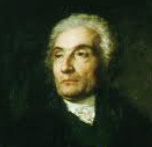
There is nothing but violence in the universe; but we are spoiled by a modern philosophy that tells us all is good, whereas evil has tainted everything, and in a very real sense, all is evil, since nothing is in its place.
▼
Source
Chapter III, p. 31
3 months 4 weeks ago
Character is the result of a system of stereotyped principles.
▼
Source
Hume never used the word "stereotype" (the term was not invented until 1798).
3 months 4 weeks ago
I got a letter from him written from Monte Cassino, saying that a few days after the Armistice, he had been taken prisoner by the Italians, but fortunately with his manuscript. It appears he had written a book in the trenches, and wished me to read it. He was the kind of man who would never have noticed such small matters as bursting shells when he was thinking about logic. ... It was the book which was subsequently published under the title Tractatus Logico-Philosophicus.
▼
Source
Bertrand Russell in The Autobiography of Bertrand Russell (1968) Ch. 9 : Russia, p. 330

3 months 4 weeks ago
I of course take a negative attitude about a great deal that is happening, and I have said so directly and frankly to many of those who stand at the head of government. They behave well towards me, and many things I asked were carried out. They even proposed that I should take part in their work, but I refused. As an anarchist, I cannot reconcile myself to any government.
▼
Source
About the Bolshevik revolution, as quoted in Peter Kropotkin : From Prince to Rebel (1990) by George Woodcock and Ivan Avakumovic, p. 428

3 months 4 weeks ago
Had Mr. Darwin written a work on the change of species, as determined by observation and experiment, without any other object but that of advancing natural science, he would have obtained a high place among philosophical naturalists. But after reading his work in which the name of the Creator is never distinctly mentioned, we can hardly believe that scientific truth was the only object the author had in view. Researches, conducted under the influence of other motives, are not likely to stand the test of a rigorous scrutiny; and some of Mr. Darwin's not unfriendly critics have produced ample evidence that the idol of speculation has been occasionally worshipped at the expense of truth.
3 months 4 weeks ago
Genius does not seem to derive any great support from syllogisms. Its carriage is free; its manner has a touch of inspiration. We see it come, but we never see it walk.
▼
Source
"Tenth Dialogue"

3 months 4 weeks ago
Do not imagine that it is less an accident by which you find yourself master of the wealth which you possess, than that by which this man found himself king.
3 months 4 weeks ago
When a physiologist speaks now of the life of a plant or of an animal, he sees rather an agglomeration, a colony of millions of separate individuals than a personality one and indivisible. He speaks of a federation of digestive, sensual, nervous organs, all very intimately connected with one another, each feeling the consequence of the well-being or indisposition of each, but each living its own life. Each organ, each part of an organ in its turn is composed of independent cellules which associate to struggle against conditions unfavorable to their existence. The individual is quite a world of federations, a whole universe in himself.
3 months 4 weeks ago
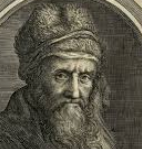
Chilo advised, "not to speak evil of the dead."
▼
Source
Chilo, 2.
3 months 4 weeks ago
[A] fierce absolutist, a furious theocrat, an intransigent legitimist, apostle of a monstrous trinity composed of pope, king and hangman, always and everywhere the champion of the hardest, narrowest and most inflexible dogmatism, a dark figure out of the Middle Ages, part learned doctor, part inquisitor, part executioner.
▼
Source
Émile Faguet, Politiques et Moralistes du Dix-neuvieme Siècle (1899)
3 months 4 weeks ago
The art of persuasion consists as much in that of pleasing as in that of convincing, so much more are men governed by caprice than by reason!
3 months 4 weeks ago
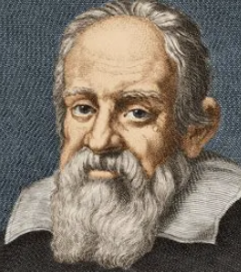
I cannot sufficiently admire the eminence of those men's wits, that have received and held it to be true, and with the sprightliness of their judgments offered such violence to their own senses, as that they have been able to prefer that which their reason dictated to them, to that which sensible experiments represented most manifestly to the contrary. ...I cannot find any bounds for my admiration, how that reason was able in Aristarchus and Copernicus, to commit such a rape on their senses, as in despite thereof to make herself mistress of their credulity.
▼
Source
Thomas Salusbury translation (1661) p. 301 as quoted by Edwin Arthur Burtt, The Metaphysical Foundations of Modern Physical Science (1925)
3 months 4 weeks ago
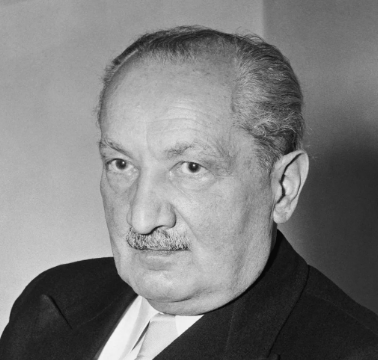
This Europe, which in its ruinous blindness is forever on the point of cutting its own throat, lies today in a great pincers, squeezed between Russia on one side and America on the other. From a metaphysical point of view, Russia and America are the same: the same dreary technological frenzy, the same unrestricted organization of the average man...
3 months 4 weeks ago
The Roman Empire was a State in the real sense of the word. To this day it remains the legist's ideal. Its organs covered a vast domain with a tight network. Everything gravitated towards Rome: economic and military life, wealth, education, nay, even religion. From Rome came the laws, the magistrates, the legions to defend the territory, the prefects and the gods, The whole life of the Empire went back to the Senate — later to the Caesar, the all powerful, omniscient, god of the Empire. Every province, every district had its Capitol in miniature, its small portion of Roman sovereignty to govern every aspect of daily life. A single law, that imposed by Rome, dominated that Empire which did not represent a confederation of fellow citizens but was simply a herd of subjects. Even now, the legist and the authoritarian still admire the unity of that Empire, the unitarian spirit of its laws and, as they put it, the beauty and harmony of that organization. But the disintegration from within, hastened by the barbarian invasion; the extinction of local life, which could no longer resist the attacks from outside on the one hand nor the canker spreading from the centre on the other; the domination by the rich who had appropriated the land to themselves and the misery of those who cultivated it — all these causes reduced the Empire to a shambles, and on these ruins a new civilization developed which is now ours.
▼
Source
I
3 months 4 weeks ago
Bion used to say that the way to the shades below was easy; he could go there with his eyes shut.
▼
Source
Bion, 3.
3 months 4 weeks ago
A pair of statements may be taken conjunctively or disjunctively; for example, "It lightens and it thunders," is conjunctive, "It lightens or it thunders" is disjunctive. Each such individual act of connecting a pair of statements is a new monad for the mathematician.
▼
Source
p. 268
3 months 4 weeks ago
There is a God-shaped vacuum in the heart of each man...
3 months 4 weeks ago
Eternity, not as a static “now,” nor as a sequence of “nows” rolling off into the infinite, but as the “now” that bends back into itself. … Thinking the most difficult thought of philosophy means thinking being as time.
▼
Source
p. 20
3 months 4 weeks ago
What chiefly attracts the gardener to the great cities is stable ; and this is not wanted so much for increasing the richness of the soil—one tenth part of the manure used by the French gardeners would do for that purpose—but for keeping the soils at a certain temperature. Early vegetables pay best, and in order to obtain early produce not only the air but the soil as well must be warmed... by putting great quantities of properly mixed manure into the soil; its heats it...
3 months 4 weeks ago
When asked what wine he liked to drink, he replied, "That which belongs to another."
▼
Source
Diogenes, 6.
3 months 4 weeks ago
As the German idealists saw it, the French Revolution not only abolished feudal absolutism, replacing it with the economic and political system of the middle class, but it completed what the German Reformation had begun, emancipating the individual as a self-reliant master of his life. p. 3

3 months 4 weeks ago
The soul follows the progress of the body, as it does the progress of education.
CivilSimian.com created by AxiomaticPanic, CivilSimian, Kalokagathia