
4 months ago
He is only a very shallow critic who cannot see an eternal rebel in the heart of the Conservative.
▼
Source
Varied Types (1903)
4 months ago
The light dove, cleaving the air in her free flight, and feeling its resistance, might imagine that its flight would be still easier in empty space.
▼
Source
B 8
4 months ago
Time, which is the author of authors.
▼
Source
Book I, iv, 12
4 months ago
I see again what I thought I saw the first time, when I sent forth the little book that was compared to and in fact could best be compared to “a humble little flower under the cover of the great forest”
▼
Source
Preface Three Discourses at Friday Communion November 14, 1849 Hong translation 1997 P. 111 (From Without Authority)

4 months ago
The intellectual ... must try never to forget the arguments of the adversary, or the uncertainty of the future, or the faults of one’s own side, or the underlying fraternity of ordinary men everywhere.
▼
Source
The Opium of Intellectuals (1955)

4 months ago
There are many kinds of gods. Therefore there are many kinds of men.
▼
Source
“One and Many,” p. 3
4 months ago
Sometime ago I went with some children to see Maeterlinck's fine and delicate fairy play about the Blue Bird that brought everybody happiness. For some reason or other it did not bring me happiness, and even the children were not quite happy. I will not go so far as to say that the Blue Bird was a Blue Devil, but it left us in something seriously like the blues. The children were party dissatisfied with it because it did not end with a Day of Judgment; because it was never revealed to the hero and heroine that the dog had been faithful and the cat faithless. For children are innocent and love justice; while most of us are wicked and naturally prefer mercy.
▼
Source
"On Household Gods and Goblins" (1922)
4 months ago
People from a planet without flowers would think we must be mad with joy the whole time to have such things about us.
▼
Source
A Fairly Honourable Defeat (1970); 2001, p. 170.
4 months ago
Human freedom is realised in the adoption of humanity as an end in itself, for the one thing that no-one can be compelled to do by another is to adopt a particular end.
▼
Source
Part Two : Metaphysical Principles of Virtue
4 months ago
There is a great difference between the Idols of the human mind and the Ideas of the divine. That is to say, between certain empty dogmas, and the true signatures and marks set upon the works of creation as they are found in nature.
▼
Source
Aphorism 23
4 months ago
I assume that Luther has risen from the grave. For several years now he has been living among us but incognito; he has been observing the lives we lead, has been scrutinizing everyone in this regard and me also. I assume that he speaks to me one day and says, “Are you a believer? Do you have faith?” Anyone who knows me as an author will see that I would perhaps be the one who might come off best of all in such and examination, for I have continually said, “I do not have faith” – I have expressed, as does a bird's alarmed flight before a storm, that there is mischief brewing here, “I do not have faith.” So I should say to Luther, “No, dear Luther, I have at least shown the respect of saying: I do not have faith.” However, I shall not press this, but, just as others call themselves Christians and believers, I, too, shall say, “I am a believer,” for otherwise what I wish to be cleared up will not be cleared up.
▼
Source
Soren Kierkegaard, For Self-Examination, Hong p. 17-18
4 months ago
Horror is the natural reaction to the last 5,000 years of history.
▼
Source
Cosmic Trigger II : Down to Earth
4 months ago
It is man's intelligence that makes him so often behave more stupidly than the beasts. ... Man is impelled to invent theories to account for what happens in the world. Unfortunately, he is not quite intelligent enough, in most cases, to find correct explanations. So that when he acts on his theories, he behaves very often like a lunatic. Thus, no animal is clever enough, when there is a drought, to imagine that the rain is being withheld by evil spirits, or as punishment for its transgressions. Therefore you never see animals going through the absurd and often horrible fooleries of magic and religion. No horse, for example would kill one of its foals to make the wind change direction. Dogs do not ritually urinate in the hope of persuading heaven to do the same and send down rain. Asses do not bray a liturgy to cloudless skies. Nor do cats attempt, by abstinence from cat's meat, to wheedle the feline spirits into benevolence. Only man behaves with such gratuitous folly. It is the price he has to pay for being intelligent but not, as yet, intelligent enough.
▼
Source
p. 270
4 months ago
All slang is metaphor, and all metaphor is poetry.
▼
Source
"A Defense of Slang"
4 months ago
In the natural state no concept of God can arise, and the false one which one makes for himself is harmful. Hence the theory of natural religion can be true only where there is no science; therefore it cannot bind all men together.
▼
Source
Part III : Selection on Education from Kant's other Writings, Ch. I Pedagogical Fragments, # 60
4 months ago
Like strawberry wives, that laid two or three great strawberries at the mouth of their pot, and all the rest were little ones.
▼
Source
No. 54
4 months ago
History has a way of reducing individuals to flat, two-dimensional portraits. it is the enemy of subjectivity, which is why Stephen Dedalus called it "a nightmare from which I am trying to awake". If we think of Kierkegaard, of Nietzsche, of Hölderlin, we see them standing alone, outside of history. They are spotlighted by their intensity, and the background is all darkness. They intersect history, but are not a part of it. There is something anti-history about such men; they are not subject to time, accident and death, but their intensity is a protest against it. I have elsewhere called such men "Outsiders" because they attempt to stand outside history. which defines humanity on terms of limitation, not of possibility.
▼
Source
Colin Wilson in Rasputin and the Fall of the Romanovs, p. 13-14 (1964)
4 months ago
You need the "is of identity" to describe conspiracy theories. Korzybski would say that proves that illusions, delusions, and "mental" illnesses require the "is" to perpetuate them. (He often said, "Isness is an illness.") Korzybski also popularized the idea that most sentences, especially the sentences that people quarrel over or even go to war over, do not rank as propositions in the logical sense, but belong to the category that Bertrand Russell called propositional functions. They do not have one meaning, as a proposition in logic should have; they have several meanings, like an algebraic function.
▼
Source
Language as Conspiracy, p. 277
4 months ago
We have been given free will, in order that we may will our self-will out of existence and so come to live continuously in a ‘state of grace.’ All our actions must be directed, in the last analysis, to making ourselves passive in relation to the activity and the being of divine reality. We are, as it were, aeolian harps, endowed with the power either to expose themselves to the wind of the Spirit or to shut themselves away from it.
4 months ago
It is the custom in our little epoch to sneer at the middle classes. Cockney artists profess to find the bourgeoisie dull; as if artists had any business to find anything dull. Decadents talk contemptuously of its conventions and its set tasks; it never occurs to them that conventions and set tasks are the very way to keep that greenness in the grass and that redness in the roses--which they have lost forever.
▼
Source
Ch 4: "The Pickwick Papers"
4 months ago
I believe in God, although I live very happily with atheists... It is very important not to mistake hemlock for parsley; but not at all so to believe or not in God.
▼
Source
As quoted in Against the Faith (1985) by Jim Herrick, p. 75 | Variant translation: It is very important not to mistake hemlock for parsley, but to believe or not believe in God is not important at all.

4 months ago
Sometimes, because my position has not been made clear enough, people think I'm a sort of radical anarchist who has an absolute hatred of power. No! What I am trying to do is to approach this extremely important and tangled phenomenon in our society, the exercise of power, with the most reflective, and I would say prudent attitude. Prudent in my analysis, in the moral and theoretical postulates I use: I try to figure out what's at stake. But to question the relations of power in the most scrupulous and attentive manner possible, looking into all the domains of its exercise, that's not the same thing as constructing a mythology of power as the beast of the apocalypse.
▼
Source
"Power, Moral Values, and the Intellectual", interview in History of the Present 4 (Spring 1988)

4 months ago
For those who want to develop or use semantical methods, the decisive question is not the alleged ontological question of the existence of abstract entities but rather the question whether the rise of abstract linguistic forms or, in technical terms, the use of variables beyond those for things (or phenomenal data), is expedient and fruitful for the purposes for which semantical analyses are made, viz. the analysis, interpretation, clarification, or construction of languages of communication, especially languages of science.
▼
Source
Ch. 5. Conclusion
4 months ago
The soul of wit may become the very body of untruth.
▼
Source
Foreward (p. vii)
4 months ago
Poets have been mysteriously silent on the subject of cheese.
▼
Source
'Cheese,' p. 70
4 months ago
Bad company is as instructive as licentiousness. One makes up for the loss of one’s innocence with the loss of one’s prejudices.
4 months ago
There is hardly a philosophy which has not invoked something like the will or desire to know, the love of truth, etcetera. But, in truth, very few philosophers—apart, perhaps, from Spinoza and Schopenhauer—have accorded it more than a marginal status; as if there was no need for philosophy to say first of all what the name that it bears actually refers to. As if placing at the head of its discourse the desire to know, which it repeats in its name, was enough to justify its own existence and show—at a stroke—that it is necessary and natural: All men desire to know. Who, then, is not a philosopher, and how could philosophy not be the most necessary thing in the world?
▼
Source
pp. 4-5

4 months ago
Of Hilary Putnam – "He’s a quantum philosopher. I can’t understand him and his position at the same time."
▼
Source
Quoted in Malcolm Thorndike Nicholson, [https://www.prospectmagazine.co.uk/arts-and-books/hilary-putnam-philosophy-in-the-age-of-science-kant-wittgenstein "A philosopher in the age of science"] (March 14, 2013).
4 months ago
"Orthodoxy is the diehard of the world of thought. It learns not, neither can it forget."
▼
Source
No reliable source makes this quote disputed.
4 months ago
But for the Virtuous Things you do,The Righteous Work, the Public Care,It shall not be forgiven you.
▼
Source
Ballade d'une Grande Dame
4 months ago
It is an uphill race, and a race against time, for if the American form of democracy overtakes us first, the majority will no more relax their despotism than a single despot would. But our only chance is to come forward as Liberals, carrying out the democratic idea, not as Conservatives, resisting it.
▼
Source
Letter to Henry Fawcett (5 February 1860), quoted in Michael St. John Packe, The Life of John Stuart Mill (1954), p. 418
4 months ago
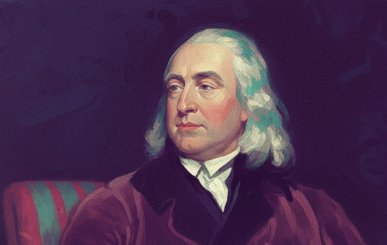
It is part of a work to which if ever it should be completed I intend to give some such title as Principles of Legal Policy; the object of it is to trace out a new model for the Laws: of my own country you may imagine, in the first place: but keeping those of other countries all along in view. To ascertain what the Laws ought to be, in form and tenor as well as in matter: and that elsewhere as well as here. All that I shall say to recommend it to you is that I have taken counsel of you much oftener than of our own Ld. Coke and Hale and Blackstone. The repose of Grotius and Puffendorf and Barbeyrac and Burlamaqui I would never wish to see disturbed. I have built solely on the foundation of utility, laid as it is by Helvetius. Becarria has been lucrative pedibus, or if you please manibus, meis.
▼
Source
Letter to Voltaire (c. November 1776), quoted in Timothy L. S. Sprigge (ed.), The Correspondence of Jeremy Bentham (2017), p. 367
4 months ago
I don't understand how a man of good sense can accept for a single moment the sentence of the philosopher Diderot. It may well be high-sounding and incisive, it is nonetheless absurd and false. An who does not see, on the contrary, that it is not possible for the wicked man to love living alone and with himself? He would feel himself in company that is too bad, he would be too ill at ease, he would not be able to bear it for very long, or else, with his dominant passion remaining idle, it would have to die out and he would become good again. Amour-propre, the principle of all wickedness, is revived and thrives in society, which cause it to be born and where one is forced to compare oneself at each instant. It languishes and dies for want of nourishment in solitude. Whoever suffices to himself does not want to harm anyone at all. This maxim is less resounding and less arrogant, but more sensible and more just than that of the philosopher Diderot, and preferable at least in that it does not tend to offend anyone.
▼
Source
Jean-Jacques Rousseau, Dialogues: Rousseau Judge of Jean-Jacques (published 1782), Second Dialogue
4 months ago
The chief function of the disciplinary power is to 'train', rather than to select and to levy; or, no doubt, to train in order to levy and select all the more. It does not link forces together in order to reduce them; it seeks to bind them together in such a way as to multiply and use them
▼
Source
Part Three, The Means of Correct Training

4 months ago
They were walking side by side, but each was alone.
▼
Source
Raimon to Regina, p. 53
4 months ago
Now there is any amount of this nonsense cropping up among American cranks. Anybody may propose to establish coercive Eugenics; or enforce psychoanalysis — that is, enforce confession without absolution.
▼
Source
"Fads and Public Opinion"
4 months ago
A bureaucracy always tends to become a pedantocracy.
▼
Source
Ch. VI: Of the Infirmities and Dangers to Which Representative Government Is Liable (p. 234)
4 months ago
In parrhesia, the speaker makes it... clear and obvious that what he says is his own opinion... by avoiding... rhetorical form which would veil what he thinks. ...The parrhesiastes uses the most direct words and... expression. Whereas rhetoric provides ...technical devices to help ...prevail upon ...minds ...(regardless of the rhetorician's... opinion...)
4 months ago
It is for man to establish the reign of liberty in the midst of the world of the given. To gain the supreme victory, it is necessary, for one thing, that by and through their natural differentiation men and women unequivocally affirm their brotherhood.
4 months ago
Don't ever take a fence down until you know the reason why it was put up.
▼
Source
According to [http://www.chesterton.org/qmeister2/19.htm The American Chesterton Society], this quotation is actually a paraphrase by [http://en.wikipedia.org/wiki/John_F._Kennedy John F. Kennedy] of a passage from The Thing (1929) in which Chesterton mad
4 months ago
Both in England and on the Continent a graduated property tax (l'impôt progressif) has been advocated, on the avowed ground that the state should use the instrument of taxation as a means of mitigating the inequalities of wealth. I am as desirous as any one that means should be taken to diminish those inequalities, but not so as to relieve the prodigal at the expense of the prudent.To tax the larger incomes at a higher percentage than the smaller is to lay a tax on industry and economy; to impose a penalty on people for having worked harder and saved more than their neighbours. It is not the fortunes which are earned, but those which are unearned, that it is for the public good to place under limitation.
▼
Source
Book V, Chapter II
4 months ago
Life is fired at us point blank.
▼
Source
More context: "To live or to be alive or, what is the same thing, to be a man, does not admit of any preparations or preliminary experiments. Life is fired at us point blank. ... Where and when we are born, or happen to find ourselves after we were born,
4 months ago
At a crucial moment in my own work, I was fortunate to have had the opportunity to take heart from the humbling serenity and unaffected craftsmanship of Michel Foucault, in what I was not to know were his last years.
▼
Source
Peter Brown, The Body and Society: Men, Women and Sexual Renunciation in Early Church (1988)
4 months ago
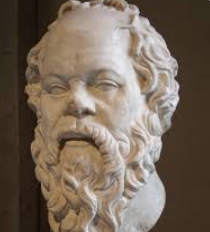
In this present life, I reckon that we make the nearest approach to knowledge when we have the least possible concern or interest in the body, and are not saturated with the bodily nature, but remain pure until the hour when God himself is pleased to release us. And then the foolishness of the body will be cleared away and we shall be pure and hold converse with other pure souls, and know of ourselves the clear light everywhere; and this is surely the light of truth. For no impure thing is allowed to approach the pure. These are the sort of words, Simmias, which the true lovers of wisdom cannot help saying to one another, and thinking.
4 months ago
Modern human beings since their beginnings have been moved by the faith that the mastery of nature would lead to the overcoming of hunger and labour, disease and war on so widespread a scale that at last we could build the world-wide society of free and equal people. One must never think about technological destiny without looking squarely at the justice in those hopes. Let none of us who live in the well-cushioned west speak with an aesthetic tiredness about our 'worldliness'.
▼
Source
p. 15
4 months ago
For passionate emotions of all sorts, and for everything which has been said or written in exaltation of them, he professed the greatest contempt. He regarded them as a form of madness. "The intense" was with him a bye-word of scornful disapprobation. He regarded as an aberration of the moral standard of modern times, compared with that of the ancients, the great stress laid upon feeling.
▼
Source
([https://archive.org/details/autobiography01mill/page/49/mode/1up p. 49])
4 months ago
It is not that one ought not to do just what one pleases; it is simply that one cannot do other than what each of us has to do, has to be. The only way out is to refuse to do what has to be done, but this does not set us free to do something else just because it pleases us. In this matter we only possess a negative freedom of will, a noluntas. We can quite well turn away from our true destiny, but only to fall a prisoner in the deeper dungeons of our destiny. … Theoretic truths not only are disputable, but their whole meaning and force lie in their being disputed, they spring from discussion. They live as long as they are discussed, and they are made exclusively for discussion. But destiny — what from a vital point of view one has to be or has not to be — is not discussed, it is either accepted or rejected. If we accept it, we are genuine; if not, we are the negation, the falsification of ourselves. Destiny does not consist in what we feel we should like to do; rather is it recognised in its clear features in the consciousness that we must do what we do not feel like doing.
▼
Source
Chapter XI: The Self-Satisfied Age
4 months ago
How grievously I was disappointed! ...I found my philosopher altogether forsaking mind and any other principle of order, but having recourse to air, and ether, and water, and other eccentricities. I might compare him to a person that began by maintaining generally that mind is the cause of the actions of Socrates, but who, when endeavored to explain the causes of my several actions in detail, went on to show that I sit here because my body is made up of bones and muscles; and the bones he would say, are hard and have ligaments which divide them, and the muscles are elastic, and they cover the bones, which also have a covering or environment of flesh and skin which contains them; and as the bones are lifted at their joints by the contraction or relaxation of the muscles, I am able to bend my limbs, and this is why I am sitting here in a curved posture... and he would have a similar explanation of my talking to you, which he would attribute to sound, and air, and hearing, and he would assign ten thousand other causes of the same sort, forgetting to mention the true cause, which is that Athenians have thought fit to condemn me, and accordingly I have thought it better and more right to remain here and undergo my sentence; for I am inclined to think that these muscles and bones of mine would have gone off to Megara or Boeotia... if they had been guided only by their idea of what was best, and if I had not chosen as the better and nobler part... to undergo any punishment that the State inflicts.
4 months ago
A book is a small cog in a much more complex, external machinery. Writing is a flow among others; it enjoys no special privilege and enters into relationships of current and counter-current, of back-wash with other flows — the flows of shit, sperm, speech, action, eroticism, money, politics, etc. Like Bloom, writing on the sand with one hand and masturbating with the other — two flows in what relationship?
▼
Source
from I have Nothing to Admit

4 months ago
I fear freedom. I, above all, fear the freedom that is above all feardom.
CivilSimian.com created by AxiomaticPanic, CivilSimian, Kalokagathia