


9 months 1 week ago
Before we as individuals are even conscious of our existence we have been profoundly influenced for a considerable time (since before birth) by our relationship to other individuals who have complicated histories, and are members of a society which has an infinitely more complicated and longer history than they do (and are members of it at a particular time and place in that history); and by the time we are able to make conscious choices we are already making use of categories in a language which has reached a particular degree of development through the lives of countless generations of human beings before us. . . . We are social creatures to the inmost centre of our being. The notion that one can begin anything at all from scratch, free from the past, or unindebted to others, could not conceivably be more wrong.
▼
Source
source
As quoted in Popper (1973) by Bryan Magee

9 months 1 week ago
Whatever is known to us by consciousness, is known beyond possibility of question. What one sees or feels, whether bodily or mentally, one cannot but be sure that one sees or feels. No science is required for the purpose of establishing such truths; no rules of art can render our knowledge of them more certain than it is in itself. There is no logic for this portion of our knowledge.
▼
Source
source
p. 4

7 months 3 weeks ago
During the last quarter of a century all the authority associated with the function of spiritual guidance ... has seeped down into the lowest publications. ... Between a poem by Valéry and an advertisement for a beauty cream promising a rich marriage to anyone who used it there was at no point a breach of continuity. So as a result of literature's spiritual usurpation a beauty cream advertisement possessed, in the eyes of little village girls, the authority that was formerly attached to the words of priests.
▼
Source
source
"Morality and literature," p. 164
9 months 1 week ago
Character means that the person derives his rules of conduct from himself and from the dignity of humanity. Character is the common ruling principle in man in the use of his talents and attributes. Thus it is the nature of his will, and is good or bad. A man who acts without settled principles, with no uniformity, has no character. A man may have a good heart and yet no character, because he is dependent upon impulses and does not act according to maxims. Firmness and unity of principle are essential to character.
▼
Source
source
Part III : Selection on Education from Kant's other Writings, Ch. I Pedagogical Fragments, # 14
8 months 5 days ago
It is a universal revolution and will, accordingly, have a universal range.


8 months 1 week ago
The Revolution and Hanover succession had been objects of the highest veneration to the old Whigs. They thought them not only proofs of the sober and steady spirit of liberty which guided their ancestors; but of their wisdom and provident care of posterity.-The modern Whigs have quite other notions of these events and actions. They do not deny that Mr. Burke has given truly the words of the acts of parliament which secured the succession, and the just sense of them. They attack not him but the law.
▼
Source
source
p. 436
7 months 3 weeks ago
By incestuous symbiosis is meant the tendency to stay tied to the mother and to her equivalents - blood, family, tribe - to fly from the unbearable weight of responsibility, of freedom, of awareness, and to be protected and loved in a state of certainty dependence that the individual pays for with the ceasing of his own human development.

6 months ago
There is no heroic poem in the world but is at bottom a biography, the life of a man; also, it may be said, there is no life of a man, faithfully recorded, but is a heroic poem of its sort, rhymed or unrhymed.
7 months 3 weeks ago
The prospects of revolution seem therefore quite restricted. For can a revolution avoid war? It is, however, on this feeble chance that we must stake everything or abandon all hope. An advanced country will not encounter, in the case of revolution, the difficulties which in backward Russia served as a base for the barbarous regime of Stalin. But a war of any scope will give rise to others as formidable.
▼
Source
source
Reflections on War (1933); also in Formative Writings
5 months 2 weeks ago
To gaze up from the ruins of the oppressive present towards the stars is to recognise the indestructible world of laws, to strengthen faith in reason, to realise the "harmonia mundi" that transfuses all phenomena, and that never has been, nor will be, disturbed.
▼
Source
source
From the Author's Preface to Third Edition
8 months 3 weeks ago
By Silence, the discretion of a man is known: and a fool, keeping Silence, seemeth to be wise.

8 months 6 days ago
Why is psychology the youngest of the empirical sciences? Why have we not long since discovered the unconscious and raised up its treasure-house of eternal images? Simply because we had a religious formula for everything psychic - and one that is far more beautiful and comprehensive than immediate experience. Though the Christian view of the world has paled for many people, the symbolic treasure-rooms of the East are still full of marvels that can nourish for a long time to come the passion for show and new clothes. What is more, these images - be they Christian or Buddhist or what you will - are lovely, mysterious, richly intuitive.
▼
Source
source
p. 7-8

5 months 6 days ago
The controlling Intelligence understands its own nature, and what it does, and whereon it works.
▼
Source
source
VI, 5
10 months 1 week ago
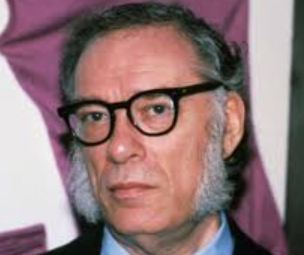
Economics is on the side of humanity now.
7 months 1 week ago
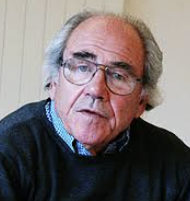
Those who used to sacrifice animals did not take them for beasts. And even the Middle Ages, which condemned and punished them in due form, was in this way much closer to them than we are, we who are filled with horror at this practice. They held them to be guilty: which was a way of honoring them. We take them for nothing, and it is on this basis that we are "human" with them. We no longer sacrifice them, we no longer punish them, and we are proud of it, but it is simply that we have domesticated them, worse: that we have made of them a racially inferior world, no longer even worthy of our justice, but only of our affection and social charity, no longer worthy of punishment and of death, but only of experimentation and extermination like meat from the butchery.
▼
Source
source
"The Animals: Territory and Metamorphoses," pp. 134-135
9 months 1 week ago
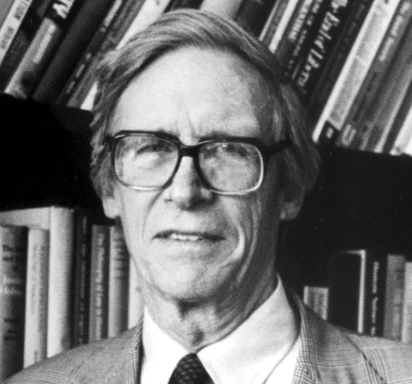
Our concern is solely with the basic structure of society and its major institutions and therefore with the standard cases of social justice.
▼
Source
source
Chapter II, Section 10, pg. 58

9 months 4 days ago
When I was a student in the 1950s, I read Husserl, Sartre, Merleau-Ponty. When you feel an overwhelming influence, you try to open a window. Paradoxically enough, Heidegger is not very difficult for a Frenchman to understand. When every word is an enigma, you are in a not-too-bad position to understand Heidegger. Being and Time is difficult, but the more recent works are clearer. Nietzsche was a revelation to me. I felt that there was someone quite different from what I had been taught. I read him with a great passion and broke with my life, left my job in the asylum, left France: I had the feeling I had been trapped. Through Nietzsche, I had become a stranger to all that.
▼
Source
source
Truth, Power, Self : An Interview with Michel Foucault

7 months 6 days ago
There is no spirit-driven life force, no throbbing, heaving, pullulating, protoplasmic, mystic jelly. Life is just bytes and bytes and bytes of digital information.
10 months 1 week ago
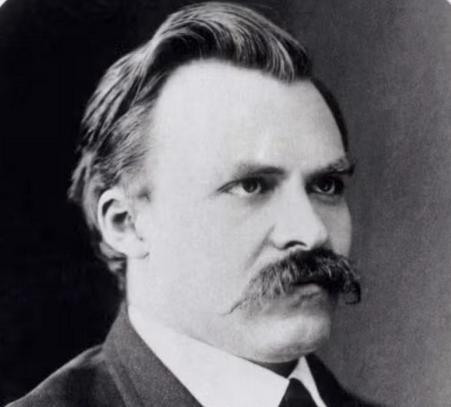
It is mere illusion and pretty sentiment to expect much from mankind if he forgets how to make war. And yet no means are known which call so much into action as a great war, that rough energy born of the camp, that deep impersonality born of hatred, that conscience born of murder and cold-bloodedness, that fervor born of effort of the annihilation of the enemy, that proud indifference to loss, to one's own existence, to that of one's fellows, to that earthquake-like soul-shaking that a people needs when it is losing its vitality.
8 months ago
In the ancient notion of love, on the other hand, there is an element of anxiety. The noble fears the descent to the less noble, is afraid of being infected and pulled down. The "sage" of antiquity does not have the same firmness, the same inner certainty of himself and his own value, as the genius and hero of Christian love.
▼
Source
source
L. Coser, trans. (1961), p. 92

9 months 2 weeks ago
The most disadvantageous peace is better than the most just war.
▼
Source
source
Adagia, 1508

8 months 5 days ago
I feel effective, competent, likely to do something positive only when I lie down and abandon myself to an interrogation without object or end.
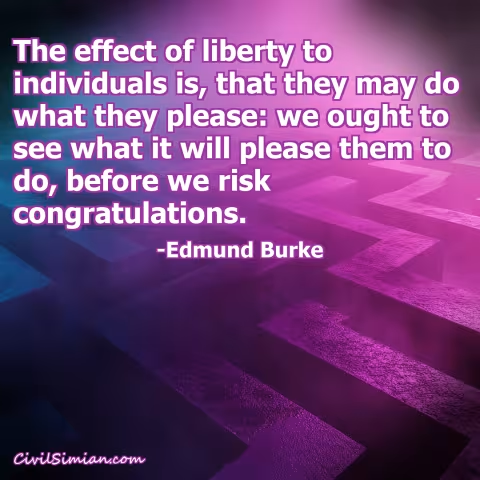


9 months 1 week ago
As for the commercial business, I can no longer make head or tail of it. At one moment crisis seems imminent and the City prostrated, the next everything is set fair. I know that none of this will have any impact on the catastrophe.
▼
Source
source
Letter to Friedrich Engels (4 February 1852), quoted in The Collected Works of Karl Marx and Friedrich Engels: Volume 39. Letters 1852-55 (2010), p. 32

9 months 1 week ago
For wherever violence is used, and injury done, though by hands appointed to administer Justice, it is still violence and injury, however colour'd with the Name, Pretences, or Forms of Law, the end whereof being to protect and redress the innocent, by an unbiassed application of it, to all who are under it; wherever that is not bona fide done, War is made upon the Sufferers, who having no appeal on Earth to right them, they are left to the only remedy in such Cases, an appeal to Heaven.
▼
Source
source
Two Treatises of Government. The Second Treatise. Chapter 3: The State of War, §20 p. 281 books.google
9 months 3 weeks ago
The first duty of a man is the seeking after and the investigation of truth.
▼
Source
source
As quoted in A Crowd of One: The Future of Individual Identity (2007) by John Clippinger, p. 130 Compare: "The distinguishing property of man is to search for and to follow after truth." – De Officiis, Book I, 13
8 months 5 days ago
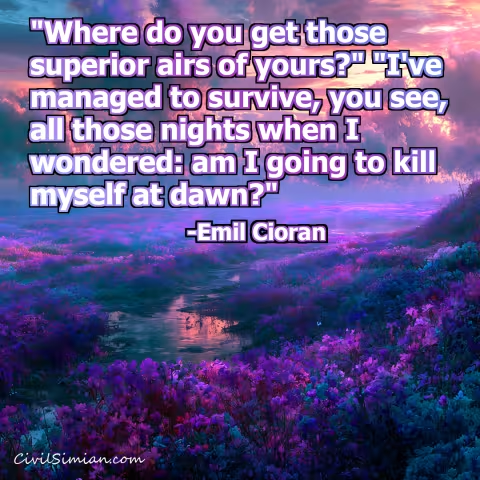
"Where do you get those superior airs of yours?" "I've managed to survive, you see, all those nights when I wondered: am I going to kill myself at dawn?"
8 months 1 week ago
Blood will stream over Europe until the nations become aware of the frightful madness which drives them in circles. And then, struck by celestial music and made gentle, they approach their former altars all together, hear about the works of peace, and hold a great celebration of peace with fervent tears before the smoking altars.
▼
Source
source
As quoted in the Fourth Leaflet of the White Rose

9 months 1 week ago
The New Testament is an invaluable book, though I confess to having been slightly prejudiced against it in my very early days by the church and the Sabbath school, so that it seemed, before I read it, to be the yellowest book in the catalogue. Yet I early escaped from their meshes. It was hard to get the commentaries out of one's head and taste its true flavor. - I think that Pilgrim's Progress is the best sermon which has been preached from this text; almost all other sermons that I have heard, or heard of, have been but poor imitations of this. - It would be a poor story to be prejudiced against the Life of Christ because the book has been edited by Christians.

8 months 2 days ago
From the same it proceedeth,that men gives different names, to one and the same thing, from the difference of their own passions: As they that approve a private opinion, call it Opinion; but they that mislike it, Haeresie: and yet haeresie signifies no more than private opinion; but has only agreater tincture of choler.
▼
Source
source
The First Part, Chapter 11, p. 50
8 months 5 days ago
They ask you for facts, proofs, works, and all you can show them are transformed tears.
10 months 1 week ago
Ideas are cheap. It's only what you do with them that counts.
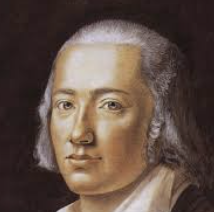
8 months 1 week ago
I call on Fate to give me back my soul.

5 months 1 week ago
I have ever deemed it more honorable and profitable, too, to set a good example than to follow a bad one.
▼
Source
source
As quoted in The Life and Writings of Thomas Jefferson : Including All of His Important Utterances on Public Questions (1900) by Samuel E. Forman, p. 429
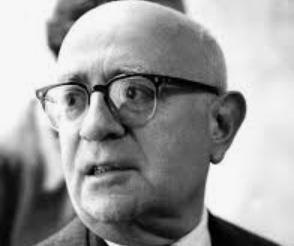
7 months 3 weeks ago
It suffices to remember how many sorrows he is spared who no longer thinks too many thoughts, how much more "in accordance with reality" a person behaves when he affirms that the real is the right, how much more capacity to use the machinery falls to the person who integrates himself with it uncomplainingly.
▼
Source
source
p. 286
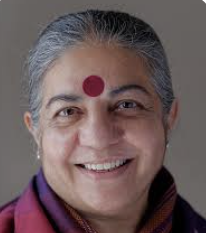
6 months 3 weeks ago
The way out of this violent cycle is to deepen democracy-to bring decisions that directly affect people's lives as close as possible to where people are and to where they can take responsibility.
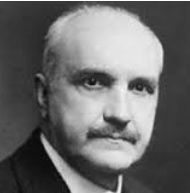
8 months 2 days ago
Art like life should be free, since both are experimental.
▼
Source
source
Ch. IX.: Justification of Art
9 months 3 weeks ago
If the room is smoky, if only moderately, I will stay; if there is too much smoke I will go. Remember this, keep a firm hold on it, the door is always open.
▼
Source
source
Book I, ch. 25, 18.

7 months 1 week ago
A noble spirit finds a cure for injustice in forgetting it.
▼
Source
source
Maxim 441
8 months 5 days ago
To act is to anchor in the imminent future.

8 months 2 days ago
Suppose ye that I am come to give peace on earth? I tell you, Nay; but rather division: For from henceforth there shall be five in one house divided, three against two, and two against three. The father shall be divided against the son, and the son against the father; the mother against the daughter, and the daughter against the mother; the mother in law against her daughter in law, and the daughter in law against her mother in law. And he said also to the people, When ye see a cloud rise out of the west, straightway ye say, There cometh a shower; and so it is. And when ye see the south wind blow, ye say, There will be heat; and it cometh to pass. Ye hypocrites, ye can discern the face of the sky and of the earth; but how is it that ye do not discern this time? Yea, and why even of yourselves judge ye not what is right?
▼
Source
source
12:51-57 (KJV) Variant translation of 12:57: Why do you not judge for yourselves what is right?
5 months 2 weeks ago
Blow the dust off the clock. Your watches are behind the times. Throw open the heavy curtains which are so dear to you - you do not even suspect that the day has already dawned outside.
▼
Source
source
Letter to the Secretariat of the Soviet Writers' Union (12 November 1969) as translated in Solzhenitsyn: A Documentary Record (1970) edited by Leopold Labedz, "Expulsion"
10 months 1 week ago
We certainly must contend by every argument against him who does away with knowledge or reason or mind and then makes any dogmatic assertion about anything. The philosopher, who pays the highest honor to these things, must necessarily, as it seems, because of them refuse to accept the theory of those who say the universe is at rest, whether as a unity or in many forms, and must also refuse utterly to listen to those who say that being is universal motion; he must say that being and the universe consist of both.

9 months 1 week ago
What we call Man's power over Nature turns out to be a power exercised by some men over other men with Nature as its instrument.
CivilSimian.com created by AxiomaticPanic, CivilSimian, Kalokagathia