


7 months 3 weeks ago
The vitality of thought is in adventure. Ideas won't keep. Something must be done about them. When the idea is new, its custodians have fervor, live for it, and, if need be, die for it.
▼
Source
source
p. 100; Ch. 12, April 28, 1938.
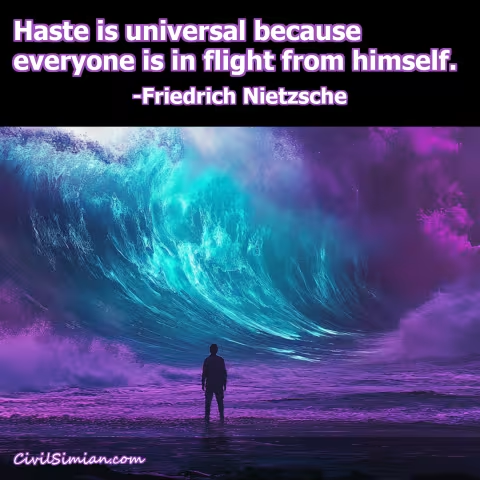

6 months ago
Music is well said to be the speech of angels.
▼
Source
source
The Opera (1852).

7 months 3 weeks ago
Eros and depression are opposites.

9 months 1 week ago
When communist workmen associate with one another, theory, propaganda, etc., is their first end. But at the same time, as a result of this association, they acquire a new need - the need for society - and what appears as a means becomes an end. You can observe this practical processing its most splendid results whenever you see French socialist workers together. Such things as smoking, drinking, eating, etc., are no longer means of contact or means that bring together. Company, association, and conversation, which again has society as its end, are enough for them; the brotherhood of man is on mere phase with them, but a fact of life, and the nobility of man shines upon us from their work-hardened bodies.
▼
Source
source
"The Meaning of Human Requirements" p.99-100,The Marx-Engels Reader

7 months 2 weeks ago
My own view is that philosophy at its best has always, in every period, included some philosophers who brilliantly represent the moral face of the subject and some philosophers who brilliantly represent the theoretical face, as well as some geniuses whose insights span and unite both sides of the subject. To renounce either the moral ambitions of philosophy or its theoretical ambitions is not just to kill the subject of philosophy; it is to commit intellectual and spiritual suicide.
▼
Source
source
Science and Philosophy
8 months 2 days ago
Happiness is the only sanction of life; where happiness fails, existence remains a mad and lamentable experiment.

6 months 2 weeks ago
With new technologies of surveillance, economies of scale overcome problems of cost. Since all their electronic communications can be accessed, it is no longer necessary to segregate the inmates from one another. As there is no outside world, escape becomes unimaginable. Technological progress has brought into being a system of surveillance more far-reaching than any Bentham could have conceived. Enclosing the entire population in a virtual Panopticon might seem the ultimate invasion of freedom. But universal confinement need not be experienced as a privation. If they know nothing else, most are likely to accept it as normal. If the technology through which surveillance operates also provides continuous entertainment, they may soon find any other way of living intolerable.
▼
Source
source
In the Puppet Theatre: A Universal Panopticon (p. 125)

9 months 5 days ago
Don't get involved in partial problems, but always take flight to where there is a free view over the whole single great problem, even if this view is still not a clear one.
▼
Source
source
Journal entry

5 months 3 weeks ago
A trifling debt makes a man your debtor; a large one makes him an enemy.
▼
Source
source
Line 11.

7 months 2 weeks ago
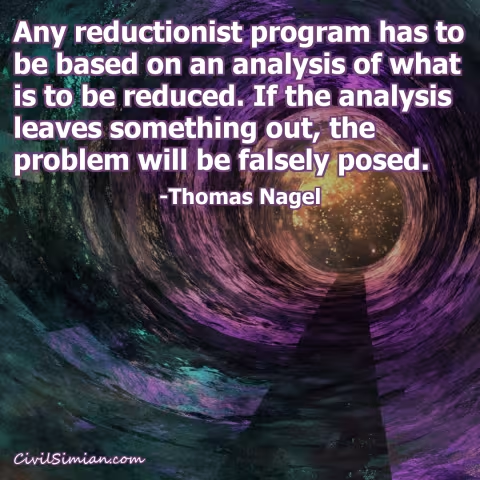
One cannot demand of a scholar that he show himself a scholar everywhere in society, but the whole tenor of his behavior must none the less betray the thinker, he must always be instructive, his way of judging a thing must even in the smallest matters be such that people can see what it will amount to when, quietly and self-collected, he puts this power to scholarly use.
▼
Source
source
J 85
5 months 3 weeks ago
The characteristic mark of this age of dictators, wars and revolutions is its anti-capitalistic bias. Most governments and political parties are eager to restrict the sphere of private initiative and free enterprise. It is an almost unchallenged dogma that capitalism is done for and that the coming of all-round regimentation of economic activities is both inescapable and highly desirable.

7 months 3 weeks ago
Is there not therefore rational necessity, but vital anguish that impels us to believe in God. And to believe in God - I must reiterate it yet again - is, before all and above all, to feel a hunger for God, a hunger for divinity, to be sensible to his lack and absence, to wish that God may exist. And it is the wish to save the human finality of the Universe. For one might even come to resign oneself to being absorbed by God, if it be that our consciousness is based upon Consciousness, if consciousness is the end of the Universe.

5 months 6 days ago
Remember this, then, that this little compound, thyself, must either be dissolved, or thy poor breath must be extinguished, or be removed and placed elsewhere.
▼
Source
source
VIII, 25

7 months 1 week ago
I'm prepared to teach acceptance of religion, but, religion has to agree to the social contract. If we have to do it church by church, I'm ready.

8 months 2 days ago
Judge not, that ye be not judged. For with what judgment ye judge, ye shall be judged: and with what measure ye mete, it shall be measured to you again.
▼
Source
source
(Matthew 7:1-2) (KJV)

5 months 1 week ago
Tried myself in the school of affliction, by the loss of every form of connection which can rive the human heart, I know well, and feel what you have lost, what you have suffered, are suffering, and have yet to endure. The same trials have taught me that for ills so immeasurable, time and silence are the only medicines. I will not, therefore, by useless condolences, open afresh the sluices of your grief, nor, although mingling sincerely my tears with yours, will I say a word more where words are vain.
▼
Source
source
Letter to John Adams (13 November 1818) regarding the death of Abigail Adams

8 months 5 days ago
There is no one whose death I have not longed for, at one moment or another.
8 months 5 days ago
Late at night. I feel like falling into a frenzy, doing some unprecedented thing to release myself, but I don't see against whom, against what...
5 months 3 weeks ago
That man, I declare, is happy whom nothing makes less strong than he is; he keeps to the heights, leaning upon none but himself; for one who sustains himself by any prop may fall.
10 months 1 week ago
Without the interplay of human against human, the chief interest in life is gone; most of the intellectual values are gone; most of the reason for living is gone.


9 months 1 week ago
There cannot any one moral Rule be propos'd, whereof a Man may not justly demand a Reason.
▼
Source
source
Book I, Ch. 3, sec. 4

9 months 1 week ago
For the moment, the jazz is playing; there is no melody, just notes, a myriad of tiny tremors. The notes know no rest, an inflexible order gives birth to them then destroys them, without ever leaving them the chance to recuperate and exist for themselves.... I would like to hold them back, but I know that, if I succeeded in stopping one, there would only remain in my hand a corrupt and languishing sound. I must accept their death; I must even want that death: I know of few more bitter or intense impressions.
9 months 1 week ago
Each piece of money is a mere coin, or means of circulation, only so long as it actually circulates.
▼
Source
source
Vol. I, Ch. 3, Section 2(c), pg. 145.
6 months 1 week ago
The most obvious failure of organized religions is surely that almost all of them have made a mockery of what their founders taught.
▼
Source
source
p. 267
10 months 1 week ago
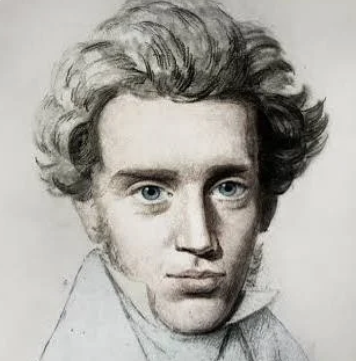
This fact, that the opposite of sin is by no means virtue, has been overlooked. The latter is partly a pagan view, which is content with a merely human standard, and which for that very reason does not know what sin is, that all sin is before God. No, the opposite of sin is faith.
7 months 5 days ago
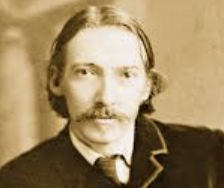
The old land is still the true love, the others are but pleasant infidelities.
▼
Source
source
Pt. I, ch. IV
5 months 1 week ago
Among the sayings and discourses imputed to him [Jesus] by his biographers, I find many passages of fine imagination, correct morality, and of the most lovely benevolence; and others again of so much ignorance, so much absurdity, so much untruth, charlatanism, and imposture, as to pronounce it impossible that such contradictions should have proceeded from the same being. I separate, therefore, the gold from the dross; restore to Him the former, and leave the latter to the stupidity of some, and roguery of others of His disciples. Of this band of dupes and impostors, Paul was the great Coryphaeus, and first corruptor of the doctrines of Jesus. These palpable interpolations and falsifications of His doctrines, led me to try to sift them apart.
▼
Source
source
Letter to William Short
9 months 1 week ago
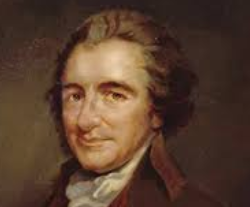
A man who is so exceedingly civil that for the sake of quietude and a peaceable name will silently see the community imposed upon, or their rights invaded, may, in his principles, be a good man, but cannot be stiled a useful one, neither does he come up to the full mark of his duty; for silence becomes a kind of crime when it operates as a cover or an encouragement to the guilty.
▼
Source
source
"To the People of America", Pennsylvania Packet, January 23, 1779
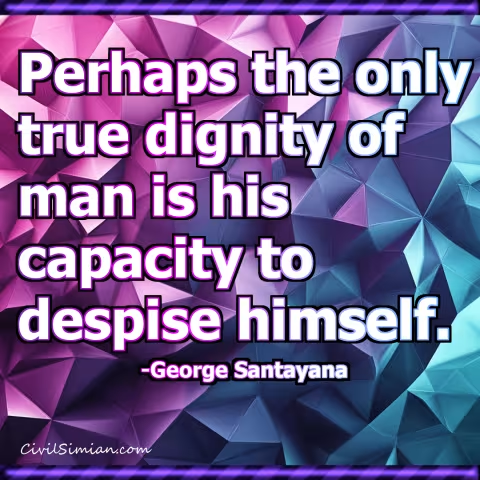
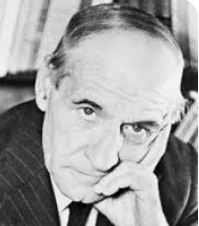
8 months ago
I often asked myself the following question. There is no doubt that at all times for many men one of the greatest tortures of their lives has been the contact, the collision with the folly of their neighbours. And yet how is it that there has never been attempted - I think this is so - a study on this matter, an Essay on Folly? For the pages of Erasmus do not treat of this aspect of the matter.
▼
Source
source
Chap. VIII: The Masses Intervene In Everything, And Why Their Intervention Is Solely By Violence

9 months 1 week ago
One of the ideas I had discussed in The Poverty of Historicism was the influence of a prediction upon the event predicted. I had called this the "Oedipus effect", because the oracle played a most important role in the sequence of events which led to the fulfilment of its prophecy. ... For a time I thought that the existence of the Oedipus effect distinguished the social from the natural sciences. But in biology, too-even in molecular biology-expectations often play a role in bringing about what has been expected.
▼
Source
source
Page 29
7 months 1 week ago
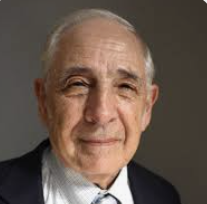
Whatever is referred to must exist. Let us call this the axiom of existence.
▼
Source
source
P. 77.

8 months 2 days ago
Whatsoever therefore is consequent to a time of Warre, where every man is Enemy to every man; the same is consequent to the time, wherein men live without other security, than what their own strength, and their own invention shall furnish them withall. In such condition, there is no place for Industry; because the fruit thereof is uncertain: and consequently no Culture of the Earth; no Navigation, nor use of the commodities that may be imported by Sea; no commodious Building; no Instruments of moving, and removing things as require much force; no Knowledge of the face of the Earth; no account of Time; no Arts; no Letters; no Society; and which is worst of all, continuall feare, and danger of violent death; And the life of man solitary, poore, nasty, brutish, and short.
▼
Source
source
The First Part, Chapter 13, p. 62

9 months 1 week ago
The hopes which inspire communism are, in the main, as admirable as those instilled by the Sermon on the Mount, but they are held as fanatically and are as likely to do as much harm.
▼
Source
source
Part I, The Present Condition of Russia, Ch. 1: What Is Hoped From Bolshevism
6 months ago
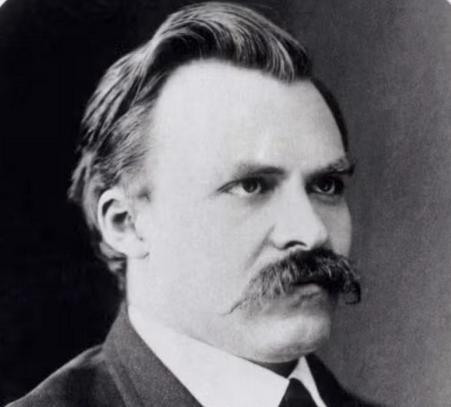
If we read History with any degree of thoughtfulness, we shall find that checks and balances of Profit and Loss have never been the grand agents with men, that they have never been roused into deep, thorough, all-pervading efforts by any computable prospect of Profit and Loss, for any visible, finite object; but always for some invisible and infinite one.
10 months 1 week ago
One common false conclusion is that because someone is truthful and upright towards us he is spreading the truth. Thus the child believes his parents' judgements, the Christian believes the claims of the church's founders. Likewise, people do not want to admit that all those things which men defended with the sacrifice of their lives and happiness in earlier centuries were nothing but errors.

8 months 1 week ago
The power of perpetuating our property in our families is one of the most valuable and interesting circumstances belonging to it, and that which tends most to the perpetuation of society itself. It makes our weakness subservient to our virtue; it grafts benevolence even upon avarice. The possession of family wealth and of the distinction which attends hereditary possessions (as most concerned in it,) are the natural securities for this transmission.
5 months 1 week ago
I never will, by any word or act, bow to the shrine of intolerance, or admit a right of inquiry into the religious opinions of others.
▼
Source
source
Letter to Edward Dowse
9 months 1 week ago
Philosophy seems to me on the whole a rather hopeless business.
▼
Source
source
Letter to Gilbert Murray, December 28, 1902
8 months 5 days ago
If someone incessantly drops the word "life," you know he's a sick man.

7 months 1 week ago
The young today cannot follow narrative but they are alert to drama. They cannot bear description but they love landscape and action.
▼
Source
source
Letter to Harold Adam Innis (14 March 1951), published in Essential McLuhan (1995), edited by Eric McLuhan and Frank Zingrone, p. 74

7 months 1 week ago
"He who exalts himself shall be humbled; and he who humbles himself shall be exalted." (Matthew 23:12) The person who exalts himself ... will be humbled, because a person who considers himself to be good, intelligent, and kind will not even try to become better, smarter, kinder. The humble person will be exalted, because he considers himself bad and will try to become better, kinder, and more reasonable.
▼
Source
source
p. 110
9 months 1 week ago
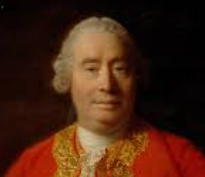
The heroes in paganism correspond exactly to the saints in popery, and holy dervises in MAHOMETANISM. The place of, HERCULES, THESEUS, HECTOR, ROMULUS, is now supplied by DOMINIC, FRANCIS, ANTHONY, and BENEDICT. Instead of the destruction of monsters, the subduing of tyrants, the defence of our native country; whippings and fastings, cowardice and humility, abject submission and slavish obedience, are become the means of obtaining celestial honours among mankind.
▼
Source
source
Part X - With regard to courage or abasement

9 months 1 week ago
When I lay these questions before God I get no answer. But a rather special sort of 'No answer.' It is not the locked door. It is more like a silent, certainly not uncompassionate, gaze. As though He shook His head not in refusal but waiving the question. Like, 'Peace, child; you don't understand.'
CivilSimian.com created by AxiomaticPanic, CivilSimian, Kalokagathia