


5 months 3 weeks ago
No man can have a peaceful life who thinks too much about lengthening it.
▼
Source
source
Line 4.
8 months 5 days ago
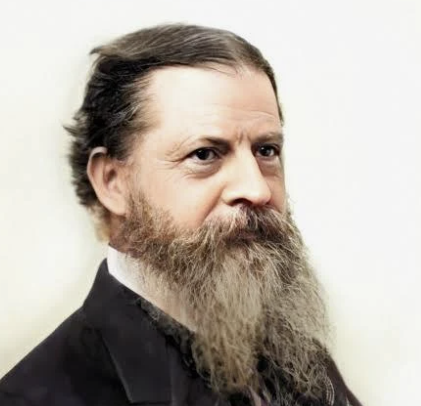
Second, in the presence of this continuity of feeling, nominalistic maxims appear futile. There is no doubt about one idea affecting another, when we can directly perceive the one generally modified and shaping itself into the other. Nor can there any longer be any difficulty about one idea resembling another, when we can pass along the continuous field of quality from one to the other and back again to the point which we had marked.

8 months 5 days ago
In every man sleeps a prophet, and when he wakes there is a little more evil in the world.

9 months 1 week ago
It appears then, that capitalist production comprises conditions independent of good or bad will, conditions which permit the working-class to enjoy that relative prosperity only momentarily, and at that always only as the harbinger of a coming crisis.
▼
Source
source
Vol. II, Ch. XX, p. 415.
5 months 4 weeks ago
Childhood may be defined as the age of play; therefore some children are never young, and some adults are never old.
▼
Source
source
Ch. 1 : Our life begins
7 months 2 days ago
For the first time in history, the human species as a whole has gone into politics. Everyone is in the act, and there is no telling what may come of it.
▼
Source
source
To Jerusalem and Back: A Personal Account (1976), p. 38
8 months 5 days ago
So it is that after each night, facing a new day, the impossible necessity of dealing with it fills us with dread; exiled in light as if the world had just started, inventing the sun, we flee from tears-just one of which would be enough to wash us out of time.
5 months 3 weeks ago
Now why, if freedom is striven after for love of the I after all - why not choose the I himself as beginning, middle, and end?
▼
Source
source
Dover 2005, p. 163

9 months 1 week ago
Dostoevsky once wrote: "If God did not exist, everything would be permitted"; and that, for existentialism, is the starting point. Everything is indeed permitted if God does not exist, and man is in consequence forlorn, for he cannot find anything to depend upon either within or outside himself. He discovers forthwith, that he is without excuse.
▼
Source
source
pp. 33-34

9 months 1 week ago
The reader is nowhere raised into and sustained in a bigger, purer or rarer region of thought than in the Bhagavad Gita. The Gita's sanity and sublimity have impressed the minds of even soldiers and merchants.
▼
Source
source
A Tribute to Hinduism, 2008
8 months 2 days ago
To understand oneself is the classic form of consolation; to elude oneself is the romantic.
▼
Source
source
p. 51
10 months 1 week ago
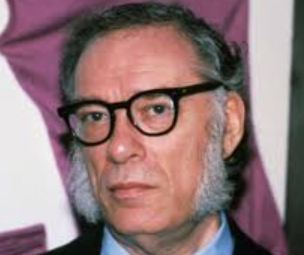
Of all the cultural aspects of humanity, the only one which is not broken up into national or regional splinters is science. Different nations have different languages, they may have different religions, may have different dietaries, may have different holidays, different ways of thinking, but here's only one science.
▼
Source
source
Interview by Richard Heffner on The Open Mind (19 June 1988); video (25:31)
9 months 2 weeks ago
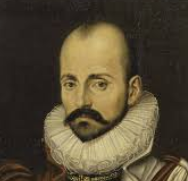
For my own part, I cannot without grief see so much as an innocent beast pursued and killed that has no defence, and from which we have received no offence at all.
▼
Source
source
Ch. 11, tr. Cotton, 1685

7 months 3 weeks ago
The contention that a standing army and navy is the best security of peace is about as logical as the claim that the most peaceful citizen is he who goes about heavily armed. The experience of every-day life fully proves that the armed individual is invariably anxious to try his strength. The same is historically true of governments. Really peaceful countries do not waste life and energy in war preparations, with the result that peace is maintained.

6 months 5 days ago
Contemporary capitalist production is characterized by a series of passages that name different faces of the same shift: from the hegemony of industrial labor to that of immaterial labor, from Fordism to post-Fordism, and from the modern to the postmodern.

9 months 3 weeks ago
O slavish man! will you not bear with your own brother, who has God for his Father, as being a son from the same stock, and of the same high descent? But if you chance to be placed in some superior station, will you presently set yourself up for a tyrant?
▼
Source
source
Book I, ch. 13, 3, 4.
10 months 1 week ago
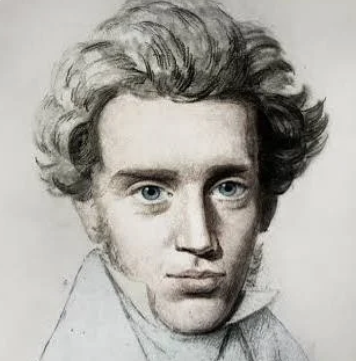
I was brought up in the Christian religion, and although I can scarcely sanction all the improper attempts to gain the emancipation of woman, all paganlike reminiscences also seem foolish to me. My brief and simple opinion is that woman is certainly as good as man-period. Any more discursive elaboration of the difference between the sexes or deliberation on which sex is superior is an idle intellectual occupation for loafers and bachelors.

6 months 3 weeks ago
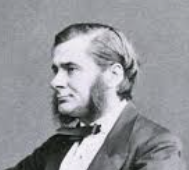
Try to learn something about everything and everything about something.
▼
Source
source
A favourite comment, inscribed on his memorial at Ealing, quoted in Nature Vol. XLVI (30 October 1902), p. 658

5 months 6 days ago
Thou sufferest justly: for thou choosest rather to become good to-morrow than to be good to-day.
▼
Source
source
VIII, 22
5 months 2 weeks ago
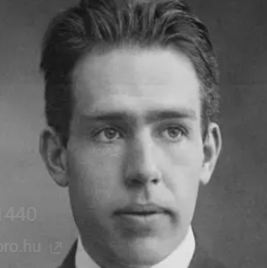
No, no, you are not thinking, you are just being logical.
▼
Source
source
In response to those who made purely formal or mathematical arguments, as quoted in What Little I Remember (1979) by Otto Robert Frisch, p. 95
4 months 4 weeks ago
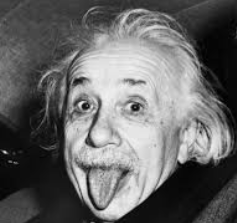
The scientific organization and comprehensive exposition in accessible form of the Talmud has a twofold importance for us Jews. It is important in the first place that the high cultural values of the Talmud should not be lost to modern minds among the Jewish people nor to science, but should operate further as a living force. In the second place, The Talmud must be made an open book to the world, in order to cut the ground from under certain malevolent attacks, of anti-Semitic origin, which borrow countenance from the obscurity and inaccessibility of certain passages in the Talmud. To support this cultural work would thus mean an important achievement for the Jewish people.
▼
Source
source
From a letter by Albert Einstein to Professor Chaim Tchernowitz (31 December 1930) of the Jewish Institute of Religion in New York (Hebrew Union College). Jewish Telegraphic Agency (Jewish Daily Bulletin)
9 months ago
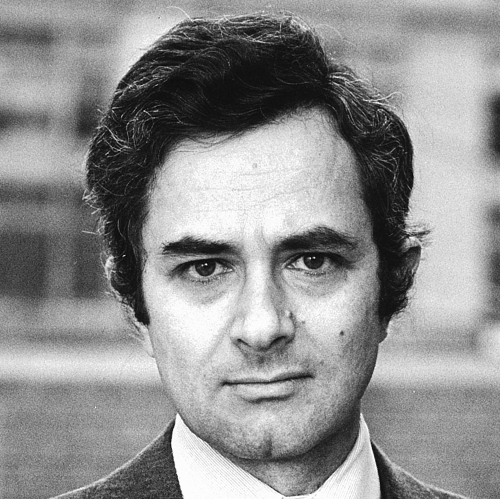
The ethical commonplaces of any period include ideas that may have been radical discoveries in a previous age. This is true of modern conceptions of liberty, equality, and democracy, and we are in the midst of ethical debates which will probably result two hundred years hence in a disseminated moral sensibility that people of our time would find very unfamiliar.
▼
Source
source
"Ethics without Biology" (1978), p. 143.

8 months 2 days ago
Foxes have their dens and birds have their nests, but human beings have no place to lay down and rest.

6 months 2 days ago
The social contract between all people around the world only has one requirement: Don't kill. From there it's those who don't agree, those that agree but have some reactive justification, and those that agree and don't kill.
9 months 1 week ago
Existentialism is nothing else but an attempt to draw the full conclusions from a consistently atheistic position. Its intention is not in the least that of plunging men into despair. And if by despair one means as the Christians do - any attitude of unbelief, the despair of the existentialists is something different. Existentialism is not atheist in the sense that it would exhaust itself in demonstrations of the non-existence of God. It declares, rather, that even if God existed that would make no difference from its point of view. Not that we believe God does exist, but we think that the real problem is not that of His existence; what man needs is to find himself again and to understand that nothing can save him from himself, not even a valid proof of the existence of God. In this sense existentialism is optimistic. It is a doctrine of action, and it is only by self-deception, by confining their own despair with ours that Christians can describe us as without hope.
▼
Source
source
p. 56

9 months 1 week ago
The difference between the first- and second-best things in art absolutely seems to escape verbal definition - it is a matter of a hair, a shade, an inward quiver of some kind - yet what miles away in the point of preciousness!
▼
Source
source
To Henry Rutgers Marshall, 7 February 1899

9 months 2 weeks ago
I care not so much what I am to others as what I am to myself. I will be rich by myself, and not by borrowing.
▼
Source
source
Book II, Ch. 16
7 months 3 weeks ago
However, the disappearance of domination does not entail freedom. Instead, it makes freedom and constraint coincide. Thus, the achievement-subject gives itself over to compulsive freedom--that is, to the free constraint of maximizing achievement. Excess work and performance escalate into auto-exploitation.
▼
Source
source
Source: Page 11
10 months 6 days ago
Yes, there was an element of abstraction and unreality in misfortune. But when an abstraction starts to kill you, you have to get to work on it.
9 months 4 weeks ago
Man has three ways of acting wisely. First, on meditation; that is the noblest. Secondly, on imitation; that is the easiest. Thirdly, on experience; that is the bitterest.
5 months 6 days ago
The only thing that isn't worthless: to live this life out truthfully and rightly. And be patient with those who don't.
▼
Source
source
(Hays translation) VI, 47
8 months 5 days ago
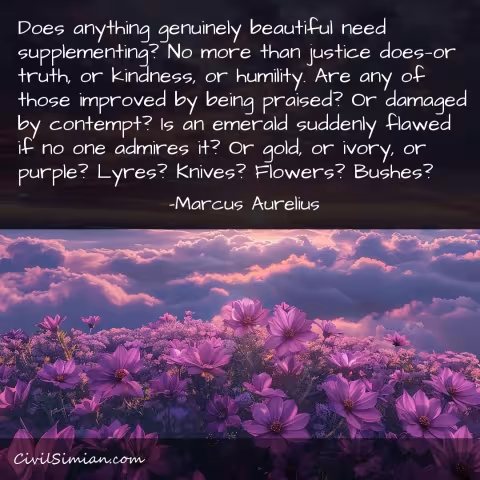
The universal view melts things into a blur.
7 months 5 days ago
Sanity itself is a kind of convention.
▼
Source
source
The Hunter's Family
5 months 2 weeks ago
Cities are, first of all, seats of the highest economic division of labor. They produce thereby such extreme phenomena as in Paris the remunerative occupation of the quatorzième. They are persons who identify themselves by signs on their residences and who are ready at the dinner hour in correct attire, so that they can be quickly called upon if a dinner party should consist of thirteen persons. In the measure of its expansion, the city offers more and more the decisive conditions of the division of labor. It offers a circle which through its size can absorb a highly diverse variety of services.
▼
Source
source
p. 420

9 months 1 week ago
How very paltry and limited the normal human intellect is, and how little lucidity there is in the human consciousness, may be judged from the fact that, despite the ephemeral brevity of human life, the uncertainty of our existence and the countless enigmas which press upon us from all sides, everyone does not continually and ceaselessly philosophize, but that only the rarest of exceptions do.
▼
Source
source
Vol. 2, Ch. 3, § 39
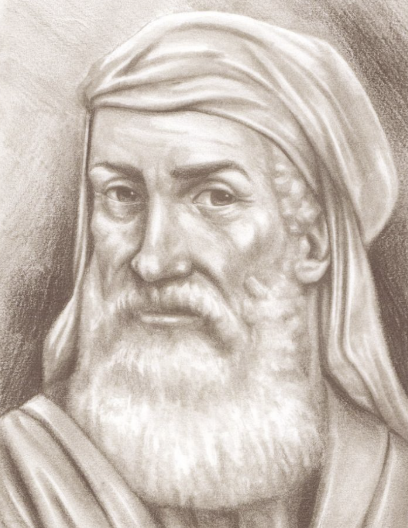
8 months 4 weeks ago
Fortunate is he who has acquired a wealth of divine understanding, but wretched the one whose interest lies in shadowy conjectures about divinities.
▼
Source
source
fr. 132
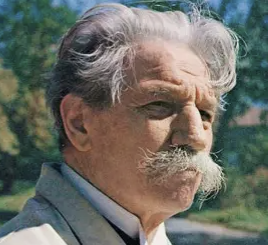
5 months 2 weeks ago
Never for a moment do we lay aside our mistrust of the ideals established by society, and of the convictions which are kept by it in circulation. We always know that society is full of folly and will deceive us in the matter of humanity. ... humanity meaning consideration for the existence and the happiness of individual human beings.
▼
Source
source
Chapter 26
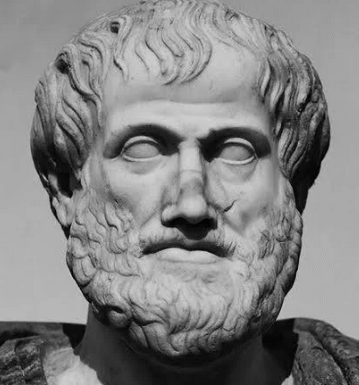
10 months 1 week ago
How will one part of the infinite be above, and another below? Or how will it have extremes or a middle? Further still, every sensible body is in place; but the species and differences of place are upward and downward, before and behind, to the right hand and to the left: and these things not only thus subsist with relation to us, and by position, but have a definite subsistence in the universe itself. But it is impossible that these things should be in the infinite: and... that there should be an infinite place. But every body is in place; and therefore it is also impossible that there should be an infinite body. ...Therefore ...there is not an infinite body in energy.
8 months 1 day ago
Form may then be defined as the operation of forces that carry the experience of an event, object, scene, and situation to its own integral fulfillment.
8 months 5 days ago
If we could sleep twenty-four hours a day, we would soon return to the primordial slime, the beatitude of that perfect torpor before Genesis-the dream of every consciousness sick of itself.
7 months 1 week ago
To challenge and to cope with this paradoxical state of things, we need a paradoxical way of thinking; since the world drifts into delirium, we must adopt a delirious point of view. We must no longer assume any principle of truth, of causality, or any discursive norm. Instead, we must grant both the poetic singularity of events and the radical uncertainty of events. It is not easy. We usually think that holding to the protocols of experimentation and verification is the most difficult thing. But in fact the most difficult thing is to renounce the truth and the possibility of verification, to remain as long as possible on the enigmatic, ambivalent, and reversible side of thought.
▼
Source
source
The Vital Illusion (2000) "The Murder of the Real". Wellek Library Lectures given May 1999 at the University of California, Irvine
CivilSimian.com created by AxiomaticPanic, CivilSimian, Kalokagathia