

9 months 3 weeks ago
Know, first, who you are, and then adorn yourself accordingly.
▼
Source
source
Book III, ch. 1, 25.
10 months 4 days ago
The fact is that I've never called myself a genius, and I think the term has been cheapened by overuse into meaninglessness. If other people want to call me that, that's their problem.

9 months 3 weeks ago
O saving Victim, opening wideThe gate of heaven to man below,Our foes press on from every side,Thine aid supply, Thy strength bestow.
▼
Source
source
Verbum Supernum Prodiens (hymn for Lauds on Corpus Christi), stanza 5 (O Salutaris Hostia)
7 months 3 weeks ago
I have always noticed that deeply and truly religious persons are fond of a joke, and I am suspicious of those who aren't.
▼
Source
source
As quoted in Church and Home, Vol. 1 (1964) by United Methodist Church, and Evangelical United Brethren Church, p. 21.
9 months 1 week ago
Wherever there is great property, there is great inequality.
▼
Source
source
Chapter I, Part II, p. 770.
7 months 3 weeks ago
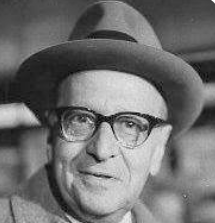
The French symbolists had a special term to express their love for things that had lost their objective significance, namely, 'spleen.' The conscious, challenging arbitrariness in the choice of objects, its 'absurdity' and 'perverseness,' as if by a silent gesture discloses the irrationality of utilitarian logic, which it then slaps in the face in order to demonstrate its inadequacy with regard to human experience. And while making it conscious, by this shock, of the fact that it forgets the subject, the gesture simultaneously expresses the subject's sorrow over his inability to achieve an objective order. Twentieth-century society is not troubled by such inconsistencies. For it, meaning can be achieved in only one way-service for a purpose.
▼
Source
source
p. 38.
7 months 3 weeks ago
Pragmatism, in trying to turn experimental physics into a prototype of all science and to model all spheres of intellectual life after the techniques of the laboratory, is the counterpart of modern industrialism, for which the factory is the prototype of human existence, and which models all branches of culture after production on the conveyor belt.
▼
Source
source
p. 50.
7 months 4 weeks ago
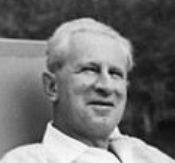
All liberation depends on the consciousness of servitude, and the emergence of this consciousness is always hampered by the predominance of needs and satisfactions which, to a great extent, have become the individual's own.
▼
Source
source
p. 7

8 months 3 weeks ago
The resolute one who moved by the principles of Thy FaithExtends the prosperity of order to his neighbors And works the land the evil now hold desolate, Earns through Righteousness, the Blessed Recompense Thy Good Mind has promised in Thy Kingdom of Heaven.
▼
Source
source
Spenta Mainyu Gatha; Yasna 50, 3.

8 months 3 days ago
This morning I thought, hence lost my bearings, for a good quarter of an hour.

9 months 2 weeks ago
Even opinion is of force enough to make itself to be espoused at the expense of life.
▼
Source
source
Book I, Ch. 40. Of Good and Evil, tr. Cotton, rev. W. Hazlitt, 1842

6 months 2 days ago
In a liberal society you're not going to agree on the deepest... moral frameworks, but you are going to agree on factual information, and... if you can't agree on factual information it's very hard to deliberate in common... on what needs to be done in the future, and that's the situation we now face.
▼
Source
source
23:00

9 months 1 week ago
While it is true that science cannot decide questions of value, that is because they cannot be intellectually decided at all, and lie outside the realm of truth and falsehood. Whatever knowledge is attainable, must be attained by scientific methods; and what science cannot discover, mankind cannot know.
▼
Source
source
Religion and Science (1935), Ch. IX: Science of Ethics.
7 months ago
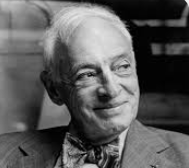
I discovered that rejections are not altogether a bad thing. They teach a writer to rely on his own judgment and to say in his heart of hearts, "To hell with you."
▼
Source
source
Quoted in "Feeling Rejected? Join Updike, Mailer, Oates..." by Barbara Bauer and Robert F. Moss, New York Times (21 July 1985), section 7, page 1, column 1


9 months 1 week ago
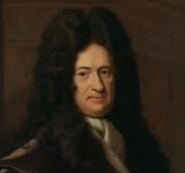
My philosophical views approach somewhat closely those of the late Countess of Conway, and hold a middle position between Plato and Democritus, because I hold that all things take place mechanically as Democritus and Descartes contend against the views of Henry More and his followers, and hold too, nevertheless, that everything takes place according to a living principle and according to final causes - all things are full of life and consciousness, contrary to the views of the Atomists.
▼
Source
source
Letter to Thomas Burnet (1697), as quoted in Platonism, Aristotelianism and Cabalism in the Philosophy of Leibniz (1938) by Joseph Politella, p. 18
7 months 3 weeks ago
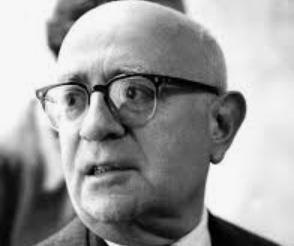
Philosophy ... should not imagine that specialized work in epistemological theory, or whatever else prides itself on being research, is actually philosophy. Yet a philosophy forswearing all of that must in the end be irreconcilably at odds with the dominant consciousness. Nothing else raises it above the suspicion of apologetics. Philosophy that satisfies its own intention, and does not childishly skip behind its own history and the real one, has its lifeblood in the resistance against the common practices of today and what they serve, against the justification of what happens to be the case.
▼
Source
source
p. 6

9 months 1 week ago
The bitterest tragic element in life to be derived from an intellectual source is the belief in a brute Fate or Destiny.
▼
Source
source
"The Tragic", p. 217. From The Dial (April 1844) p. 515
9 months 2 weeks ago
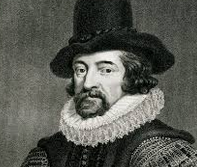
The Idols of the Cave are the idols of the individual man. For everyone (besides the errors common to human nature in general) has a cave or den of his own, which refracts and discolors the light of nature, owing either to his own proper and peculiar nature; or to his education and conversation with others; or to the reading of books, and the authority of those whom he esteems and admires; or to the differences of impressions, accordingly as they take place in a mind preoccupied and predisposed or in a mind indifferent and settled; or the like. So that the spirit of man (according as it is meted out to different individuals) is in fact a thing variable and full of perturbation, and governed as it were by chance. Whence it was well observed by Heraclitus that men look for sciences in their own lesser worlds, and not in the greater or common world.
▼
Source
source
Aphorism 42
8 months 3 days ago
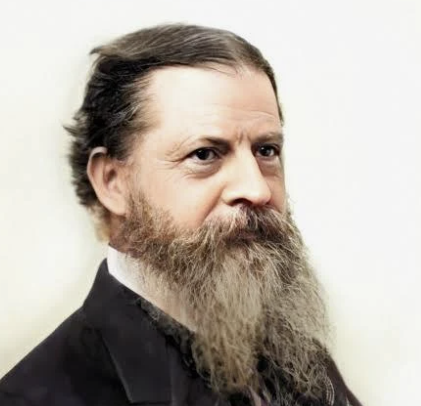
I think that I have succeeded in making it clear that this doctrine gives room for explanations of many facts which without it are absolutely and hopelessly inexplicable; and further that it carries along with it the following doctrines: first, a logical realism of the most pronounced type; second, objective idealism; third, tychism, with its consequent thoroughgoing evolutionism. We also notice that the doctrine presents no hindrences to spiritual influences, such as some philosophies are felt to do.

7 months 2 weeks ago
You ask me why I do not write something... I think one's feelings waste themselves in words; they ought all to be distilled into actions and into actions which bring results.
▼
Source
source
Letter to a friend, quoted in The Life of Florence Nightingale (1913) by Edward Tyas Cook, p. 94


8 months 1 week ago
No protracted war can fail to endanger the freedom of a democratic country.
▼
Source
source
Book Three, Chapter XXII.
6 months 2 weeks ago
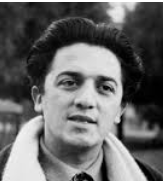
A created thing is never invented and it is never true: it is always and ever itself.
▼
Source
source
Creation
5 months 3 weeks ago
If one awakens in men the idea of freedom then the free men will incessantly go on to free themselves; if on the contrary, one only educates them, then they will at all times accommodate themselves to circumstance in the most highly educated and elegant manner and degenerate into subservient cringing souls.
▼
Source
source
p. 23

5 months 3 weeks ago
Don't ask for what you'll wish you hadn't got.
▼
Source
source
Line 1 Seneca himself states that he is quoting a 'common saying' here.
9 months 1 week ago
It is not to be supposed that she was, or that any one, at the age at which I first saw her, could be, all that she afterwards became. Least of all could this be true of her, with whom self-improvement, progress in the highest and in all senses, was a law of her nature; a necessity equally from the ardour with which she sought it, and from the spontaneous tendency of faculties which could not receive an impression or an experience without making it the source or the occasion of an accession of wisdom. Up to the time when I first saw her, her rich and powerful nature had chiefly unfolded itself according to the received type of feminine genius. To her outer circle she was a beauty and a wit, with an air of natural distinction, felt by all who approached her: to the inner, a woman of deep and strong feeling, of penetrating and intuitive intelligence, and of an eminently meditative and poetic nature.
▼
Source
source
(p. 185)

8 months 1 week ago
In all persuasions the bigots are persecutors; the men of a cool and reasonable piety are favourers of toleration; because the former sort of men not taking the pains to be acquainted with the grounds of their adversaries tenets, conceive them to be so absurd and monstrous, that no man of sense can give into them in good earnest. For which reason they are convinced that some oblique bad motive induces them to pretend to the belief of such doctrines, and to the maintaining of them with obstinacy. This is a very general principle in all religious differences, and it is the corner stone of all persecution.
▼
Source
source
Volume II, p. 148

9 months 3 weeks ago
The superior man, while there is anything he has not studied, or while in what he has studied there is anything he cannot understand, Will not intermit his labor. While there is anything he has not inquired about, or anything in what he has inquired about which he does not know, he will not intermit his labor. While there is anything which he has not reflected on, or anything in what he has reflected on which he does not apprehend, he will not intermit his labor. While there is anything which he has not discriminated or his discrimination is not clear, he will not intermit his labor. If there be anything which he has not practiced, or his practice fails in earnestness, he will not intermit his labor. If another man succeed by one effort, he will use a hundred efforts. If another man succeed by ten efforts, he will use a thousand. Let a man proceed in this way, and, though dull, he will surely become intelligent; though weak, he will surely become strong.
7 months 2 weeks ago
Psychoanalysis is essentially a theory of unconscious strivings, of resistance, of falsification of reality according to one's subjective needs and expectations.
▼
Source
source
p. 109
7 months 2 weeks ago
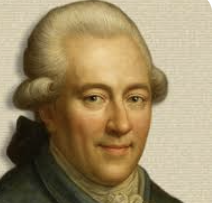
If it is permissible to write plays that are not intended to be seen, I should like to see who can prevent me from writing a book no one can read.
▼
Source
source
F 1

9 months 6 days ago
The most dangerous thing you can do is to take any one impulse of your own nature and set it up as the thing you ought to follow at all costs. There is not one of them which will not make us into devils if we set it up as an absolute guide. You might think love of humanity in general was safe, but it is not. If you leave out justice you will find yourself breaking agreements and faking evidence in trials "for the sake of humanity", and become in the end a cruel and treacherous man.
▼
Source
source
Book I, Chapter 2, "Some Objections"

9 months 1 week ago
A very few, as heroes, patriots, martyrs, reformers in the great sense, and men, serve the State with their consciences also, and so necessarily resist it for the most part; and they are commonly treated by it as enemies.

5 months 1 week ago
In a democratic republic, where the mass of the people of all parties have the same interest at stake, some respect must be had to the feelings and wishes of the minority, especially when that minority is large and clamorous; otherwise, it will be impossible to avoid discord, and discord weakens the bonds of union.
▼
Source
source
Account of a conversation with Col. Richard M. Johnson in 1809, as recounted in A Biographical Sketch of Col. Richard M. Johnson of Kentucky, p.12

9 months 3 weeks ago
We are all sprung from a heavenly seed.
▼
Source
source
Book II, line 991 (tr. Munro)

8 months 4 days ago
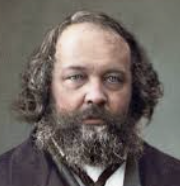
A jealous lover of human liberty, deeming it the absolute condition of all that we admire and respect in humanity, I reverse the phrase of Voltaire, and say that, if God really existed, it would be necessary to abolish him. Ch. II; Variants or variant translations of this statement have also been attributed to Bakunin: The first revolt is against the supreme tyranny of theology, of the phantom of God. As long as we have a master in heaven, we will be slaves on earth. A boss in Heaven is the best excuse for a boss on earth, therefore If God did exist, he would have to be abolished.

6 months 2 weeks ago
Properties perceived in nature will depend on how one looks and how one looks depends on the economic interest one has in the resources of nature. The value of profit maximization is thus linked to reductionist systems, while the value of life and the maintenance of life is linked to holistic and ecological systems.
▼
Source
source
Staying Alive: Women, Ecology, and Development

7 months 2 weeks ago
The freedom of the 'everyday mind' consists rather in not kneeling down in awe. Its mental attitude is better expressed as sitting unmoveable like an object.
7 months 2 days ago
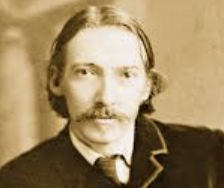
To know what you prefer, instead of humbly saying Amen to what the world tells you you ought to prefer, is to have kept your soul alive.
▼
Source
source
An Inland Voyage (1878), Ch. III, "The Royal Sport Nautique".

8 months 1 week ago
Man grows used to everything, the scoundrel.
9 months 1 week ago
Where there is a lull of truth, an institution springs up. But the truth blows right on over it, nevertheless, and at length blows it down.
▼
Source
source
p. 494

7 months 3 weeks ago
A Pharisee is someone who is virtuous out of obedience to the Great Beast.
▼
Source
source
p. 125
9 months 1 week ago
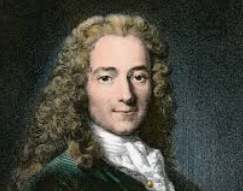
Thought depends largely on the stomach. In spite of this, those with the best stomachs are not always the best thinkers.
▼
Source
source
Letter to Jean le Rond d'Alembert, 20 August 1770


5 months 4 weeks ago
It is the very joy of man's heart to admire, where he can; nothing so lifts him from all his mean imprisonments, were it but for moments, as true admiration.

9 months 1 day ago
In the tragedies of the early seventeenth century, madness too provided the dénouement, but it did so in liberating the truth. It still opened onto language, to a renewed form of speech, that of explanation and of the real regained. The most it could ever be was the penultimate moment of tragedy. Not the closing moment, as in Andromaque, where no truth appears, other than, in Delirium, the truth of a passion that finds its fullest, most perfect expression in madness.
▼
Source
source
Part Two: 2. The Transcendence of Delirium
5 months 3 weeks ago
"It is nothing-a trifling matter at most; keep a stout heart and it will soon cease"; then in thinking it slight, you will make it slight. Everything depends on opinion; ambition, luxury, greed, hark back to opinion. It is according to opinion that we suffer.

CivilSimian.com created by AxiomaticPanic, CivilSimian, Kalokagathia