


8 months 6 days ago
We have unmistakable proof that throughout all past time, there has been a ceaseless devouring of the weak by the strong.
▼
Source
source
Vol. I, Part III, Ch. 2 General Aspects of the Special-Creation-Hypothesis

7 months 6 days ago
The attitude of the ruling classes to the laborers is that of a man who has felled his adversary to the earth and holds him down, not so much because he wants to hold him down, as because he knows that if he let him go, even for a second, he would himself be stabbed, for his adversary is infuriated and has a knife in his hand. And therefore, whether their conscience is tender or the reverse, our rich men cannot enjoy the wealth they have filched from the poor as the ancients did who believed in their right to it. Their whole life and all their enjoyments are embittered either by the stings of conscience or by terror.
▼
Source
source
Chapter V, Contradiction Between our Life and our Christian Conscience

8 months 1 week ago
For nature is not merely present, but is implanted within things, distant from none; naught is distant from her except the false, and that which existed never and nowhere-nullity. And while the outer face of things changeth so greatly, there flourisheth the origin of being more intimately within all things than they themselves. The fount of all kinds, Mind, God, Being, One, Truth, Destiny, Reason, Order.
▼
Source
source
VIII 10 as translated by Dorothea Waley Singer

8 months 2 days ago
I think of so many people who are no more, and I pity them. Yet they are not so much to be pitied, for they have solved every problem, beginning with the problem of death.
9 months 2 days ago
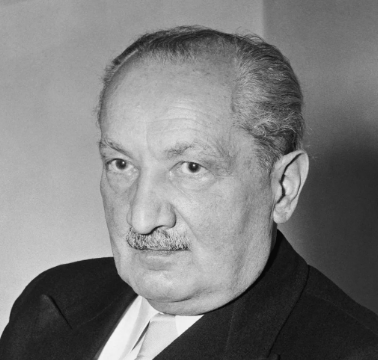
From our human experience and history, at least as far as I am informed, I know that everything essential and great has only emerged when human beings had a home and were rooted in a tradition. Today's literature is, for instance, largely destructive.


8 months 2 days ago
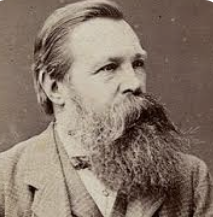
Some propose mere welfare measures - while others come forward with grandiose systems of reform which, under the pretense of re-organizing society, are in fact intended to preserve the foundations, and hence the life, of existing society. Communists must unremittingly struggle against these bourgeois socialists because they work for the enemies of communists and protect the society which communists aim to overthrow.

7 months 1 week ago
Where questions of style and exposition are concerned I try to follow a simple maxim: if you can't say it clearly you don't understand it yourself.
▼
Source
source
P. x.
8 months 2 days ago
Far from diminishing the appetite for power, suffering exasperates it; hence the mind feels more comfortable in the society of a braggart than in that of a martyr; and nothing is more repugnant to it than the spectacle of dying for an idea.
9 months 5 days ago
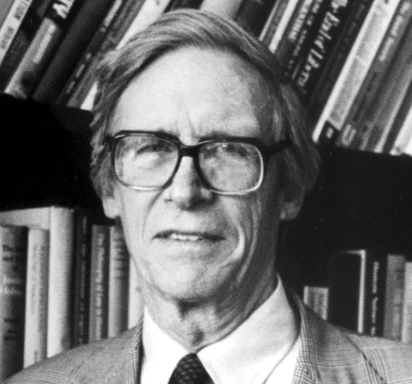
Properly understood, then, the desire to act justly derives in part from the desire to express most fully what we are or can be, namely free and equal rational beings with the liberty to choose.
▼
Source
source
Chapter IV, Section 40, p. 256

9 months 1 day ago
It is also the becoming-space of the spoken chain - which has been called temporal or linear; a becoming-space which makes possible both writing and every correspondence between speech and writing, every passage from one to the other.The activity or productivity connoted by the a of différance refers to the generative movement in the play of differences. The latter are neither fallen from the sky nor inscribed once and for all in a closed system, a static structure that a synchronic and taxonomic operation could exhaust. Differences are the effects of transformations, and from this vantage the theme of différance is incompatible with the static, synchronic, taxonomic, ahistoric motifs in the concept of structure.
▼
Source
source
p. 28
10 months 1 week ago
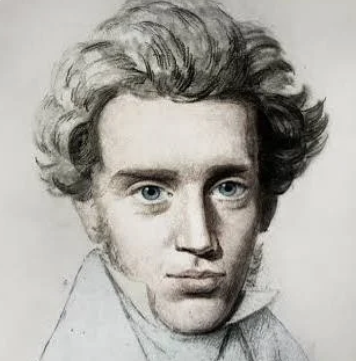
I have never definitely broken with Christianity nor renounced it. To attack it has never been my thought. No, from the time when there could be any question of the employment of my powers, I was firmly determined to employ them all to defend Christianity, or in any case to present it in its true form.

9 months 5 days ago
If anyone would like to acquire humility, I can, I think, tell him the first step. The first step is to realise that one is proud. And a biggish step, too. At least, nothing whatever can be done before it. If you think you are not conceited, it means you are very conceited indeed.
▼
Source
source
Book III, Chapter 8, "The Great Sin"

5 months 6 days ago
I like well your idea of issuing treasury notes bearing interest, because I am persuaded they would soon be withdrawn from circulation and locked up in vaults & private hoards. It would put it in the power of every man to lend his 100. or 1000 d. tho' not able to go forward on the great scale, and be the most advantageous way of obtaining a loan. The other idea of creating a National bank, I do not concur in, because it seems now decided that Congress has not that power, (altho' I sincerely wish they had it exclusively) and because I think there is already a vast redundancy, rather than a scarcity of paper medium.
▼
Source
source
Letter to Thomas Law (6 November 1813) FE 9:433 : The Writings of Thomas Jefferson (10 Vols., 1892-99) edited by Paul Leicester Ford

8 months 1 week ago
France had for some time been guilty of a continued series of hostile acts against this country, both external and internal: first, she directed her pursuits to universal empire, under the name of fraternity, in order to overturn the fabric of our laws and government.
▼
Source
source
Speech in the House of Commons (12 February 1793)
8 months 1 week ago
We find that everything that makes up difference and number is pure accident, pure show, pure constitution. Every production, of whatever kind, is an alteration, but the substance remains always the same, because it is only one, one divine immortal being.

10 months 4 days ago
The military mind remains unparalleled as a vehicle of creative stupidity.
9 months 3 weeks ago
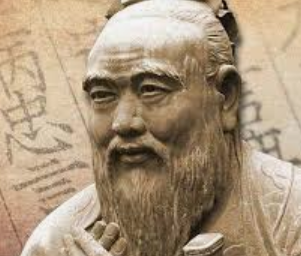
The Master said, "Hard is it to deal with him, who will stuff himself with food the whole day, without applying his mind to anything good! Are there not gamesters and chess players? To be one of these would still be better than doing nothing at all.

5 months 3 weeks ago
But no wall can be erected against Fortune which she cannot take by storm; let us strengthen our inner defences. If the inner part be safe, man can be attacked, but never captured.
9 months 5 days ago
I think that if God forgives us we must forgive ourselves. Otherwise it is almost like setting up ourselves as a higher tribunal than Him.
▼
Source
source
Letter (19 April 1951); published in Letters of C. S. Lewis (1966), p. 230
8 months 2 days ago
Life is too full of death for death to be able to add anything to it.

7 months 4 days ago
Applied knowledge in the Renaissance had to take the form of translation of the auditory into visual terms, of the plastic into retinal form.
▼
Source
source
(p. 180)
7 months 3 weeks ago
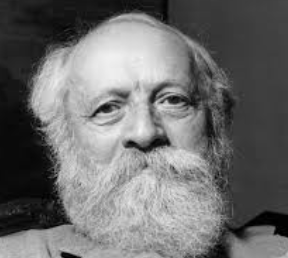
When we desire to lead men to God, we must not simply overthrow their idols. In each of these images we must seek to discover what divine quality he who carved it sought.
▼
Source
source
p. 117

5 months 3 weeks ago
No one is able to rule unless he is also able to be ruled.
▼
Source
source
De Ira (On Anger): Book 2, cap. 15, line 4
5 months 6 days ago
The mother principle is that governments are republican only in proportion as they embody the will of their people, and execute it.

9 months 1 week ago
The Indian...stands free and unconstrained in Nature, is her inhabitant and not her guest, and wears her easily and gracefully. But the civilized man has the habits of the house. His house is a prison.
▼
Source
source
April 26, 1841

6 months 1 day ago
The election... on November 3 ... illustrates a lot of these clashing forces. ..That election was the most important political fight ...in my lifetime. It's important not just for the United States but... for the rest of the world, given the role that the United States has historically played in maintaining that broader liberal international order.
▼
Source
source
20:56
10 months 4 days ago
The newsmen were writing down sentences busily as Hoskins spoke to them. They did not understand and they were sure their readers would not, but it sounded scientific and that was what counted.
9 months 1 week ago
When anyone tells me, that he saw a dead man restored to life, I immediately consider with myself, whether it be more probable, that this person should either deceive or be deceived, or that the fact, which he relates, should really have happened. I weigh the one miracle against the other; and according to the superiority, which I discover, I pronounce my decision, and always reject the greater miracle. If the falsehood of his testimony would be more miraculous, than the event which he relates; then, and not till then, can he pretend to command my belief or opinion.
▼
Source
source
Section 10 : Of Miracles Pt. 1

9 months 1 week ago
Everyone who knows anything of history also knows that great social revolutions are impossible without the feminine ferment. Social progress may be measured precisely by the social position of the fair sex (plain ones included).
▼
Source
source
Letter to Ludwig Kugelmann, dated 12 December 1868.

7 months 4 weeks ago
As in the presence of the Master, the Servants are equall, and without any honour at all; So are the Subjects, in the presence of the Soveraign. And though they shine some more, some lesse, when they are out of his sight; yet in his presence, they shine no more than the Starres in presence of the Sun.
▼
Source
source
The Second Part, Chapter 18, p. 93

9 months 2 weeks ago
But the exceedingly foul deed of Onan, the basest of wretches, follows. Onan must have been a malicious and incorrigible scoundrel. This is a most disgraceful sin. It is far more atrocious than incest and adultery. We call it unchastity, yes a Sodomitic sin. For Onan goes in to her; that is, he lies with her and copulates, and when it comes to the point of insemination, spills the semen, lest the woman conceive. Surely at such a time the order of nature established by God in procreation should be followed. Accordingly, it was a most disgraceful crime to produce semen and excite the woman, and to frustrate her at that very moment.
▼
Source
source
Luther's works Vol. 7 (1965), Lectures on Genesis, Chapters 38-44
7 months 4 weeks ago
I know not how the world will receive it, nor how it may reflect on those that shall seem to favor it. For in a way beset with those that contend, on one side for too great Liberty, and on the other side for too much Authority, 'tis hard to passe between the points of both unwounded.
▼
Source
source
The Epistle Dedicatory, Paris, April 15-25, 1651

5 months 3 weeks ago
Who would govern that can get along without governing? He that is fittest for it, is of all men the unwillingest unless constrained.

7 months 1 week ago
I am much more open about categories of gender, and my feminism has been about women's safety from violence, increased literacy, decreased poverty and more equality. I was never against the category of men. "As a Jew, I was taught it was ethically imperative to speak up" in Haaretz.
▼
Source
source
24-Feb-10
8 months 3 weeks ago
If I knew that it was fated for me to be sick, I would even wish for it; for the foot also, if it had intelligence, would volunteer to get muddy.
▼
Source
source
As quoted by Epictetus, Discourses, ii. 6. 10.

7 months 4 days ago
He doubly benefits the needy who gives quickly.
▼
Source
source
Maxim 6

9 months 2 weeks ago
The public weal requires that men should betray and lie and massacre.
▼
Source
source
Book III, Ch. 1. Of Profit and Honesty

7 months 3 days ago
Human vanity cherishes the absurd notion that our species is the final goal of evolution.
▼
Source
source
Chapter 3 "Accumulating Small Change" (p. 50)
5 months 6 days ago
To sum up: it is wrong always, everywhere, and for anyone, to believe anything upon insufficient evidence. If a man, holding a belief which he was taught in childhood or persuaded of afterwards, keeps down and pushes away any doubts which arise about it in his mind, purposely avoids the reading of books and the company of men that call into question or discuss it, and regards as impious those questions which cannot easily be asked without disturbing it--the life of that man is one long sin against mankind.
4 months 3 weeks ago
We are inclined to overemphasize the material influences in history. The Russians especially make this mistake. Intellectual values and ethnic influences, tradition and emotional factors are equally important. If this were not the case, Europe would today be a federated state, not a madhouse of nationalism.

9 months 1 week ago
The heights of popularity and patriotism are still the beaten road to power and tyranny ; flattery to treachery ; standing armies to arbitrary government ; and the glory of God to the temporal interest of the clergy.
▼
Source
source
Part I, Essay 8: Of Public Credit (This appears as a footnote in editions H to P. Other editions include it in the body of the text, and some number it Essay 9.)

9 months 2 days ago
Ambition is the death of thought.
▼
Source
source
p. 77e

6 months 2 weeks ago
All urgent calls he shall hear at once, but never put off; for when postponed, they will prove too hard or impossible to accomplish.
▼
Source
source
Book I : "Concerning Discipline" Chapter 19
5 months 3 weeks ago
Before I became old I tried to live well; now that I am old, I shall try to die well; but dying well means dying gladly.
▼
Source
source
Line 2.
7 months 4 days ago
It is experience, rather than understanding, that influences behaviour.
CivilSimian.com created by AxiomaticPanic, CivilSimian, Kalokagathia