



7 months 4 weeks ago
Men looke not at the greatnesse of the evill past, but the greatnesse of the good to follow.
▼
Source
source
The First Part, Chapter 15, p. 76 (Italics as per text)
7 months 4 weeks ago
Prosperity, both for individuals and for states, means possessions; and possessions mean burdens and harness and slavery; and slavery for the mind, too, because it is not only the rich man's time that is pre-empted, but his affections, his judgement, and the range of his thoughts.
▼
Source
source
"The Irony of Liberalism"
9 months 1 week ago
How many people ruin themselves by laying out money on trinkets of frivolous utility? What pleases these lovers of toys is not so much the utility, as the aptness of the machines which are fitted to promote it. All their pockets are stuffed with little conveniences. They contrive new pockets, unknown in the clothes of other people, in order to carry a greater number. They walk about loaded with a multitude of baubles, in weight and sometimes in value not inferior to an ordinary Jew's-box, some of which may sometimes be of some little use, but all of which might at all times be very well spared, and of which the whole utility is certainly not worth the fatigue of bearing the burden.
▼
Source
source
Chap. I.

8 months 2 days ago
Scaffolds, dungeons, jails flourish only in the shadow of a faith - of that need to believe which has infested the mind forever. The devil pales beside the man who owns a truth, his truth. We are unfair to a Nero, a Tiberius: it was not they who invented the concept heretic: they were only degenerate dreamers who happened to be entertained by massacres. The real criminals are men who establish an orthodoxy on the religious or political level, men who distinguish between the faithful and the schismatic.

5 months 4 days ago
Men gather the clouds, and then they complain of the tempests that follow.
▼
Source
source
Chapter III, p. 30
9 months 1 week ago
All happiness or unhappiness solely depends upon the quality of the object to which we are attached by love.
▼
Source
source
I, 9; translation by W. Hale White (Revised by Amelia Hutchison Stirling)

9 months 6 days ago
Instinct leads, intelligence does but follow.
▼
Source
source
Statement of 1902 quoted in The William James Reader (2007), Vol I, p. 264

5 months 3 weeks ago
Battles, in these ages, are transacted by mechanism; with the slightest possible development of human individuality or spontaneity: men now even die, and kill one another, in an artificial manner.
▼
Source
source
Pt. I, Bk. VII, ch. 4.

6 months 1 week ago
The core of the belief in progress is that human values and goals converge in parallel with our increasing knowledge. The twentieth century shows the contrary. Human beings use the power of scientific knowledge to assert and defend the values and goals they already have. New technologies can be used to alleviate suffering and enhance freedom. They can, and will, also be used to wage war and strengthen tyranny. Science made possible the technologies that powered the industrial revolution. In the twentieth century, these technologies were used to implement state terror and genocide on an unprecedented scale. Ethics and politics do not advance in line with the growth of knowledge - not even in the long run.
▼
Source
source
"Joseph Conrad, Our Contemporary," from Heresies: Against Progress and Other Illusions

9 months 1 day ago
Recalling all the erroneous things that doctors have been able to say about sex or madness does us a fat lot of good. I think that what is currently politically important is to determine the regime of verediction established at a given moment ... on the basis of which you can now recognize, for example, that doctors in the nineteenth century said so many stupid things about sex. ... It is not so much the history of the true or the history of the false as the history of verediction which has a political significance.
▼
Source
source
Lecture 2, January 17, 1979, p. 36
8 months 2 days ago
To make more plans than an explorer or a crook, yet to be infected at the will's very root.

5 months 3 weeks ago
How does the poet speak to men with power, but by being still more a man than they?
▼
Source
source
Burns.
9 months 3 weeks ago
The superior man, when resting in safety, does not forget that danger may come. When in a state of security he does not forget the possibility of ruin. When all is orderly, he does not forget that disorder may come. Thus his person is not endangered, and his States and all their clans are preserved.
4 months 3 weeks ago
In Lenin I honor a man, who in total sacrifice of his own person has committed his entire energy to realizing social justice. I do not find his methods advisable. One thing is certain, however: men like him are the guardians and renewers [Erneuerer] of mankind's conscience.

9 months 1 week ago
Government by majorities can be made less oppressive by devolution, by placing the decision of questions primarily affecting only a section of the community in the hands of that section, rather than of a Central Chamber. In this way, men are no longer forced to submit to decisions made in a hurry by people mostly ignorant of the matter in hand and not personally interested.
▼
Source
source
Ch VIII: The World As It Could Be Made
5 months 3 weeks ago
Enjoying things which are pleasant; that is not the evil: it is the reducing of our moral self to slavery by them that is.

7 months 4 days ago
Radical changes of identity, happening suddenly and in very brief intervals of time, have proved more deadly and destructive of human values than wars fought with hardware weapons.
▼
Source
source
p. 97

6 months 2 days ago
Empire is a very stimulating account of globalisation, but it is hopelessly wrong on two central issues. The state has not withered away. Strong states still exist-USA, China, Germany, etc-but the difference with the past is that there is now only one Empire and this is not the nebulous entity imagined by Cultural Studies, but a real, living organism and it has a name; the United States of America.
▼
Source
source
Tariq Ali, How Bush Used 9/11 to Remap the World. CounterPunch, 8 July 2002.

5 months 6 days ago
I had always hoped that the younger generation receiving their early impressions after the flame of liberty had been kindled in every breast, & had become as it were the vital spirit of every American, that the generous temperament of youth, analogous to the motion of their blood, and above the suggestions of avarice, would have sympathized with oppression wherever found, and proved their love of liberty beyond their own share of it.

9 months 1 week ago
A man who has no mental needs, because his intellect is of the narrow and normal amount, is, in the strict sense of the word, what is called a philistine.
▼
Source
source
Personality; or, What a Man Is
4 months 3 weeks ago
As a child, I received instruction both in the Bible and in the Talmud. I am a Jew, but I am enthralled by the luminous figure of the Nazarene.

9 months 1 day ago
Monsters cannot be announced. One cannot say: 'here are our monsters', without immediately turning the monsters into pets.
▼
Source
source
Some Statements and Truisms about Neologisms, Newisms, Postisms, Parasitisms, and other small Seismisms, The States of Theory, ed. David Carroll, New York: Columbia University Press, 1989.

7 months 2 weeks ago
It is hardly to be believed how spiritual reflections when mixed with a little physics can hold people's attention and give them a livelier idea of God than do the often ill-applied examples of his wrath.
▼
Source
source
A 11
7 months 4 days ago
There is but a step between a proud man's glory and his disgrace.
▼
Source
source
Maxim 138
5 months 2 weeks ago
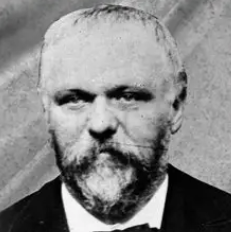
In ignoring the important fundamental contribution of the followers of Marx, and by insisting exclusively on the phenomenon of superficial adaptation and variation, Sorel passed in silence over all that was healthy, live and fruitful in the Marxist doctrine.
▼
Source
source
Lucien Laurat, Marxism and Democracy, 1940, published by the Left Book Club, Victor Gollancz Ltd, London; translated by Edward Fitzgerald. Text online at the Marxists Internet Archive.
8 months 2 days ago
It is a great force, and a great fortune, to be able to live without any ambition whatever. I aspire to it, but the very fact of so aspiring still participates in ambition.
5 months 2 weeks ago
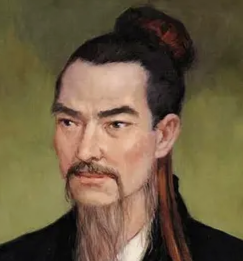
If we should classify one by one all those who hate others and injure others, should we find them to be universal in love or partial? Of course we should say they are partial. Now, since partiality against one another is the cause of the major calamities in the empire, then partiality is wrong.
▼
Source
source
Book 4; Universal Love III
7 months 3 weeks ago
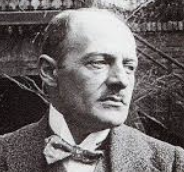
Instead of defining the word, let us briefly characterize or describe the phenomenon. Ressentiment is a self-poisoning of the mind which has quite definite causes and consequences. It is a lasting mental attitude, caused by the systematic repression of certain emotions and affects which, as such, are normal components of human nature. Their repression leads to the constant tendency to indulge in certain kinds of value delusions and corresponding value judgments. The emotions and affects primarily concerned are revenge, hatred, malice, envy, the impulse to detract, and spite.

6 months 3 weeks ago
The student of development finds, not only that the chick commences its existence as an egg, primarily identical, in all essential respects, with that of the Dog, but that the yelk of this egg undergoes division-that the primitive groove arises, and that the contiguous parts of the germ are fashioned, by precisely similar methods into a young chick, which, at one stage of its existence, is so like the nascent Dog, that ordinary inspection would hardly distinguish the two.
▼
Source
source
The history of the development of any other vertebrate animal, Lizard, Snake, Frog, or Fish, tells the same story. Ch.2, p. 79
9 months 1 week ago
How selfish soever man may be supposed, there are evidently some principles in his nature, which interest him in the fortune of others, and render their happiness necessary to him, though he derives nothing from it except the pleasure of seeing it.
▼
Source
source
Section I, Chap. I
9 months 1 week ago
Between the Shaman of the Tungus, the European prelate who rules church and state, the Voguls, and the Puritans, on the one hand, and the man who listens to his own command of duty, on the other, the difference is not that the former make themselves slaves, while the latter is free, but that the former have their lord outside themselves, while the latter carries his lord in himself, yet at the same time is his own slave.

6 months 1 day ago
You may take great comfort from the fact that suffering inwardly for the sake of truth proves abundantly that one loves it and marks one out as being of the elect.
▼
Source
source
Saint Sulpice and the Hidden God.
5 months 6 days ago
The Construction of the Conception very often includes, in a great measure, the Determination of the Magnitudes. The true construction of the conception is frequently suggested by some hypothesis; and in these cases, the hypothesis may be useful, though containing superfluous parts.
5 months 3 weeks ago
Who would govern that can get along without governing? He that is fittest for it, is of all men the unwillingest unless constrained.

7 months 2 weeks ago
God is nothingness: He is 'beyond all speech.'
8 months 1 week ago
And now I have explained the series of social and intellectual conditions by which the discovery of sociological laws, and consequently the foundation of Positivism, was fixed for the precise date at which I began my philosophical career: that is to say, one generation after the progressive dictatorship of the Convention, and almost immediately after the fall of the retrograde tyranny of Bonaparte.
▼
Source
source
p. 71
5 months 2 weeks ago
Zen does not confuse spirituality with thinking about God while one is peeling potatoes. Zen spirituality is just to peel the potatoes. Paraphrase of original text which reads "It does not confuse spirituality with thinking about God while one is peeling potatoes. Zen spirituality is just to peel the potatoes.
▼
Source
source
The Way of Zen, Pt. 2, Ch. 2
9 months 1 week ago
The place of the father in the modern suburban family is a very small one - particularly if he plays golf, which he usually does.
▼
Source
source
Introduction to The New Generation, 1930


9 months 2 weeks ago
The source of the errors of these two sects, is in not having known that the state of man at the present time differs from that of his creation; so that the one, remarking some traces of his first greatness and being ignorant of his corruption, has treated nature as sound and without need of redemption, which leads him to the height of pride; whilst the other, feeling the present wretchedness and being ignorant of the original dignity, treats nature as necessarily infirm and irreparable, which precipitates it into despair of arriving at real good, and thence into extreme laxity.

7 months 1 week ago
For consequentialists, of course, the imperative to imagine the consequences of living in a world in which everyone would act as you choose to act leads to the conclusion that some practices are utterly untenable, not because they are irrational, but because they inflict consequential damage that is unwanted. In both cases, I would suggest, a potential action is figured as hypothetically reciprocal: one's own act comes back in the imagined form of another's act; another might act on me as I would act on the other, and the consequences are unacceptable because of those damaging consequences.
▼
Source
source
p. 78

7 months 2 days ago
It's almost impossible to say anything against Islam in this country, because you are accused of being racist or Islamophobic.
▼
Source
source
2008 comment quoted in "Fury over Richard Dawkins's burka jibe as atheist tells of his 'visceral revulsion' at Muslim dress", Daily Mail

9 months 1 week ago
We need not suppose that when po+B40wer resides in an exclusive class, that class will knowingly and deliberately sacrifice the other classes to themselves: it suffices that, in the absence of its natural defenders, the interest of the excluded is always in danger of being overlooked: and, when looked at, is seen with very different eyes from those of the persons whom it directly concerns.
▼
Source
source
Ch. III: The Ideally Best Polity
10 months 1 week ago
The modern scientific counterpart to belief in God is the belief in the universe as an organism: this disgusts me. This is to make what is quite rare and extremely derivative, the organic, which we perceive only on the surface of the earth, into something essential, universal, and eternal! This is still an anthropomorphizing of nature!
9 months 1 day ago
It has no sense and cannot just unless it comes to terms with death. Mine as (well as) that of the other. Between life and death, then, this is indeed the place of a sententious injunction that always feigns to speak the just.
▼
Source
source
Exordium
9 months 3 weeks ago
For what is a child? Ignorance. What is a child? Want of instruction. For where a child has knowledge, he is no worse than we are.
▼
Source
source
Book II, ch. 1, 16
CivilSimian.com created by AxiomaticPanic, CivilSimian, Kalokagathia