


9 months 2 weeks ago
Women . . . have . . . small and narrow chests, and broad hips, to the end they should remain at home, sit still, keep house, and bear and bring up children. . . . A woman is, or at least should be, a friendly, courteous, and a merry companion in life . . . the honor and ornament of the house, and inclined to tenderness, for thereunto are they chiefly created, to bear children, and to be the pleasure, joy and solace of their husbands.
▼
Source
source
-- Table Talk, quoted in Luther On "Woman"
8 months 3 weeks ago
Mediocrity in poets has never been tolerated by either men, or gods, or booksellers.
▼
Source
source
Lines 372-373

5 months 3 weeks ago
Is not every true Reformer, by the nature of him, a Priest first of all? He appeals to Heaven's invisible justice against Earth's visible force; knows that it, the invisible, is strong and alone strong. He is a believer in the divine truth of things; a seer, seeing through the shows of things; a worshipper, in one way or the other, of the divine truth of things; a Priest, that is. If he be not first a Priest, he will never be good for much as a Reformer.


5 months 6 days ago
One day our Sodom and Gomorrah would be trampled by some all-powerful foot, and this world which laughed, reveled, and forgot God would be transformed, in its turn, into a Dead Sea. At the end of every period God's foot comes along in this way and tramples the cities of the overindulged belly, the overdeveloped mind. I felt afraid (Sometimes it seems to me that this world is another Sodom and Gomorrah just before God's passage above it. I think the terrible foot can already be heard approaching).
▼
Source
source
Jerusalem, Ch. 20, p. 249

6 months 3 weeks ago
People crushed by law have no hopes but from power. If laws are their enemies, they will be enemies to laws.
▼
Source
source
According to Kenneth Owen Morgan (The Illustrated History of Britain (1984) p. 421) this was said by Macaulay in 1832. If so, he was quoting a letter written by Edmund Burke in 1777.

9 months 5 days ago
When you live alone you no longer know what it is to tell a story: the plausible disappears at the same time as the friends. You let events flow by too: you suddenly see people appear who speak and then go away; you plunge into stories of which you can't make head or tail: you'd make a terrible witness.
▼
Source
source
Diary entry of Tuesday, 30 January

7 months 3 weeks ago
If people were told: what makes carnal desire imperious in you is not its pure carnal element. It is the fact that you put into it the essential part of yourself-the need for Unity, the need for God - they wouldn't believe it. To them it seems obvious that the quality of imperious need belongs to the carnal desire as such. In the same way it seems obvious to the miser that the quality of desirability belongs to gold as such, and not to its exchange value.
5 months 3 weeks ago
Democracy is, by the nature of it, a self-canceling business; and it gives in the long run a net result of zero.
▼
Source
source
Ch. 6, Laissez-Faire.
9 months 1 week ago
Not being able to govern events, I govern myself.
▼
Source
source
Book II, Ch. 17

9 months 1 week ago
It is not altogether true that persuasion is one thing and force is another. Many forms of persuasion - even many of which everybody approves - are really a kind of force. Consider what we do to our children. We do not say to them: "Some people think the earth is round, and others think it is flat; when you grow up, you can, if you like, examine the evidence and form your own conclusion." Instead of this we say: "The earth is round." By the time our children are old enough to examine the evidence, our propaganda has closed their minds.
▼
Source
source
Ch. 17: The Ethics of Power
8 months 1 week ago
Do you see this egg? With this you can topple every theological theory, every church or temple in the world. What is it, this egg, before the seed is introduced into it? An insentient mass. And after the seed has been introduced to into it? What is it then? An insentient mass. For what is the seed itself other than a crude and inanimate fluid? How is this mass to make a transition to a different structure, to sentience, to life? Through heat. And what will produce that heat in it? Motion. "Conversation Between D'Alembert and Diderot", as quoted in Selected Writings (1966) edited by Lester G. Crocker, and The Enlightenment and the Intellectual Foundations of Modern Culture (2004) by Louis K Dupré, p. 30 Variant translation: See this egg. It is with this that all the schools of theology and all the temples of the earth are to be overturned.
▼
Source
source
As quoted in Diderot, Reason and Resonance (1982) by Élisabeth de Fontenay, p. 217
6 months 4 weeks ago
To teach virtue we must educate the emotions, and this means learning "what to feel" in the various circumstances that prompt them.
▼
Source
source
"Knowledge and Feeling" (p. 37)

8 months 2 days ago
If someone incessantly drops the word "life," you know he's a sick man.
9 months 5 days ago
Metaphysical fallacies contain the only clues we have to what thinking means to those who engage in it.
▼
Source
source
p. 12
6 months 3 weeks ago
The sceptics end in the infidelity which asserts the problem to be insoluble, or in the atheism which denies the existence of any orderly progress and governance of things: the men of genius propound solutions which grow into systems of Theology or of Philosophy, or veiled in musical language which suggests more than it asserts, take the shape of the Poetry of an epoch.
▼
Source
source
Ch.2, p. 72
10 months 3 days ago
Scientific theories can always be improved and are improved. That is one of the glories of science. It is the authoritarian view of the Universe that is frozen in stone and cannot be changed, so that once it is wrong, it is wrong forever.
7 months 1 week ago
God created everything by number, weight and measure.
▼
Source
source
As quoted in Symmetry in Plants (1998) by Roger V. Jean and Denis Barabé, p. xxxvii
9 months 3 weeks ago
It is not truth that makes man great, but man that makes truth great.

7 months 4 weeks ago
For such is the nature of men, that howsoever they may acknowledge many others to be more witty, or more eloquent, or more learned; Yet they will hardly believe there be many so wise as themselves: For they see their own wit at hand, and other men's at a distance.
▼
Source
source
The First Part, Chapter 13, p. 61

8 months 6 days ago
It is better to be unhappy and know the worst, than to be happy in a fool's paradise!
▼
Source
source
Part 4, Chapter 5
7 months 3 weeks ago
The more ideas have become automatic, instrumentalized, the less does anybody see in them thoughts with a meaning of their own. They are considered things, machines. Language has been reduced to just another tool in the gigantic apparatus of production in modern society.
▼
Source
source
pp. 21-22.
5 months 2 weeks ago
From my youth onwards, I have felt sure that all thought which thinks itself out to an issue ends in mysticism. In the stillness of the African jungle I have been able to work out this thought and give it expression.
10 months 3 days ago
I make no secret about being Jewish ... I just think it's more important to be human and to have a human heritage; and I think it is wrong for anyone to feel that there is anything special about any one heritage of whatever kind. It is delightful to have the human heritage exist in a thousand varieties, for it makes for greater interest, but as soon as one variety is thought to be more important than another, the groundwork is laid for destroying them all.
8 months 6 days ago
In dreams you sometimes fall from a height, or are stabbed, or beaten, but you never feel pain unless, perhaps, you really bruise yourself against the bedstead, then you feel pain and almost always wake up from it. It was the same in my dream. I did not feel any pain, but it seemed as though with my shot everything within me was shaken and everything was suddenly dimmed, and it grew horribly black around me. I seemed to be blinded, and it benumbed, and I was lying on something hard, stretched on my back; I saw nothing, and could not make the slightest movement.

7 months 2 weeks ago
Witness the tragic condition of Russia. The methods of State centralization have paralysed individual initiative and effort; the tyranny of the dictatorship has cowed the people into slavish submission and all but extinguished the fires of liberty; organized terrorism has depraved and brutalized the masses and stifled every idealistic aspiration; institutionalized murder has cheapened human life, and all sense of the dignity of man and the value of life has been eliminated; coercion at every step has made effort bitter, labour a punishment, has turned the whole of existence into a scheme of mutual deceit, and has revived the lowest and most brutal instincts of man. A sorry heritage to begin a new life of freedom and brotherhood.

6 months 1 day ago
Neoconservatives believed that history can be pushed along with the right application of power and will. Leninism was a tragedy in its Bolshevik version, and it has returned as farce when practiced by the United States. Neoconservatism, as both a political symbol and a body of thought, has evolved into something I can no longer support. ..."War" is the wrong metaphor for the broader struggle, since wars are fought at full intensity and have clear beginnings and endings. Meeting the jihadist challenge is more of a "long, twilight struggle" whose core is not a military campaign but a political contest for the hearts and minds of ordinary Muslims around the world.
▼
Source
source
From the essay "After Neoconservatism" in the New York Times Magazine


9 months 6 days ago
The soul active sees absolute truth; and utters truth, or creates.
▼
Source
source
par. 17
5 months 2 weeks ago
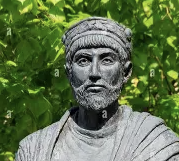
They are irreverent to the gods and disobedient to our edicts, lenient as they are. For we allow none of them to be dragged to the altars unwillingly...It is therefore my pleasure to announce and publish to all the people by this edict, that they must not abet the seditions of the clergy...They may hold their meetings, if they wish, and offer prayers according to their established use...and for the future, let all people live in harmony...Men should be taught and won over by reason, not by blows, insults, and corporal punishments. I therefore most earnestly admonish the adherents of the true religion not to injure or insult the Galilaeans in any way...Those who are in the wrong in matters of supreme importance are objects of pity rather than of hate...
▼
Source
source
Edict to the people of Bostra, reported in Henry Bettenson, Documents of the Christian Church

7 months 1 week ago
Descartes may have made a lot of mistakes, but he was right about this: you cannot doubt the existence of your own consciousness. That's the first feature of consciousness, it's real and irreducible. You cannot get rid of it by showing that it's an illusion in a way that you can with other standard illusions.
5 months 2 weeks ago
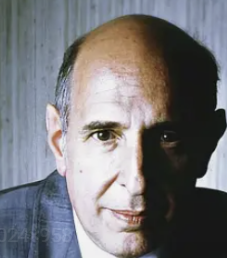
The first discipline modernity's originators imposed upon themselves was that of self-restraint, learning to live with vulgarity. Their high expectations for effectiveness were made possible by low expectations of what was to be.
▼
Source
source
Commerce and Culture, p. 285.
5 months 2 weeks ago
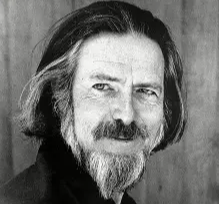
I am amazed that Congressmen can pass a bill imposing severe penalties on anyone who burns the American flag, whereas they are responsible for burning that for which the flag stands: the United States as a territory, as a people, and as a biological manifestation. That is an example of our perennial confusion of symbols with realities.
▼
Source
source
Audio lecture "Individual and Society"
8 months 3 weeks ago
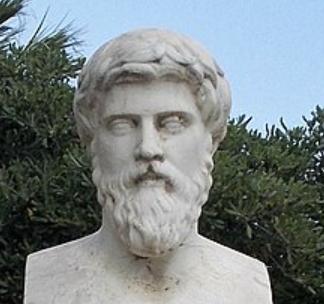
As Athenodorus was taking his leave of Cæsar, "Remember," said he, "Cæsar, whenever you are angry, to say or do nothing before you have repeated the four-and-twenty letters to yourself."
▼
Source
source
Cæsar Augustus

9 months 6 days ago
The only purpose for which power can be rightfully exercised over any member of a civilized community, against his will, is to prevent harm to others. His own good, either physical or moral, is not a sufficient warrant.
▼
Source
source
Ch. 1: Introductory

7 months 4 days ago
The artist is the person who invents the means to bridge biological inheritance and the environments created by technological innovation.
▼
Source
source
p. 98

5 months 3 days ago
Where any work can be done conformably to the reason which is common to gods and men, there we have nothing to fear; for where we are able to get profit by means of the activity which is successful and proceeds according to our constitution, there no harm is to be suspected.
▼
Source
source
VII, 53
5 months 5 days ago
The name philosopher, which meant originally 'lover of wisdom,' has come in some strange way to mean a man who thinks it is his business to explain everything in a certain number of large books. It will be found, I think, that in proportion to his colossal ignorance is the perfection and symmetry of the system which he sets up; because it is so much easier to put an empty room tidy than a full one.
▼
Source
source
As quoted by A. D'Abro, The Evolution of Scientific Thought from Newton to Einstein

5 months 3 weeks ago
The subject of a gestalt demonstration knows that his perception has shifted because he can make it shift back and forth repeatedly while he holds the same book or piece of paper in his hands. Aware that nothing in his environment has changed, he directs his attention increasingly not to the figure (duck or rabbit) but to the lines of the paper he is looking at. Ultimately he may even learn to see those lines without seeing either of the figures, and he may then say (what he could not legitimately have said earlier) that it is these lines that he really sees but that he sees them alternately as a duck and as a rabbit. ...As in all similar psychological experiments, the effectiveness of the demonstration depends upon its being analyzable in this way. Unless there were an external standard with respect to which a switch of vision could be demonstrated, no conclusion about alternate perceptual possibilities could be drawn.
▼
Source
source
p. 114 (3rd edn.)
5 months 3 weeks ago
In the lowest broad strata of the population, equally as in the highest and narrowest, are produced men of every kind of genius; man for man, your chance of genius is as good among the millions as among the units;-and class for class, what must it be! From all classes, not from certain hundreds now but from several millions, whatsoever man the gods had gifted with intellect and nobleness, and power to help his country, could be chosen: O Heavens, could,-if not by Tenpound Constituencies and the force of beer, then by a Reforming Premier with eyes in his head, who I think might do it quite infinitely better. Infinitely better. For ignobleness cannot, by the nature of it, choose the noble: no, there needs a seeing man who is himself noble, cognizant by internal experience of the symptoms of nobleness.

CivilSimian.com created by AxiomaticPanic, CivilSimian, Kalokagathia