


7 months 5 days ago
People usually think that progress consists in the increase of knowledge, in the improvement of life, but that isn't so. Progress consists only in the greater clarification of answers to the basic questions of life. The truth is always accessible to a man. It can't be otherwise, because a man's soul is a divine spark, the truth itself. It's only a matter of removing from this divine spark (the truth) everything that obscures it. Progress consists, not in the increase of truth, but in freeing it from its wrappings. The truth is obtained like gold, not by letting it grow bigger, but by washing off from it everything that isn't gold.
▼
Source
source
Tolstoy's Diaries (1985) edited and translated by R. F. Christian. London: Athlone Press, Vol 2, p. 512
8 months 3 days ago
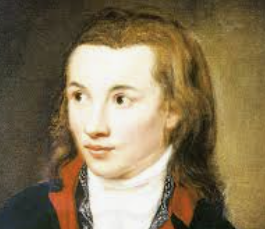
To become properly acquainted with a truth, we must first have disbelieved it, and disputed against it.
6 months 3 weeks ago
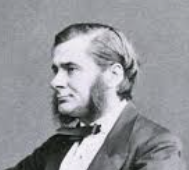
In a well worn metaphor, a parallel is drawn between the life of man and the metamorphosis of the caterpillar into the butterfly; but the comparison may be more just as well as more novel, if for its former term we take the mental progress of the race. History shows that the human mind, fed by constant accessions of knowledge, periodically grows too large for its theoretical coverings, and bursts them asunder to appear in new habiliments, as the feeding and growing grub, at intervals, casts its too narrow skin and assumes another, itself but temporary. Truly the imago state of Man seems to be terribly distant, but every moult is a step gained, and of such there have been many.
▼
Source
source
Ch.2, p. 72

9 months 6 days ago
The pivot round which the religious life... revolves, is the interest of the individual in his private personal destiny. Religion, in short, is a monumental chapter in the history of human egotism. The gods believed in-whether by crude savages or by men disciplined intellectually-agree with each other in recognizing personal calls. Religious thought is carried on in terms of personality, this being, in the world of religion, the one fundamental fact. To-day, quite as much as at any previous age, the religious individual tells you that the divine meets him on the basis of his personal concerns.
▼
Source
source
Lecture XX, "Conclusions"

7 months 2 days ago
Evolution is a fact. Beyond reasonable doubt, beyond serious doubt, beyond sane, informed, intelligent doubt, beyond doubt evolution is a fact. The evidence for evolution is at least as strong as the evidence for the Holocaust, even allowing for eye witnesses to the Holocaust. It is the plain truth that we are cousins of chimpanzees, somewhat more distant cousins of monkeys, more distant cousins still of aardvarks and manatees, yet more distant cousins of bananas and turnips... continue the list as long as desired.
▼
Source
source
The Greatest Show on Earth: The Evidence for Evolution (2009) (p. 8)
5 months 2 weeks ago
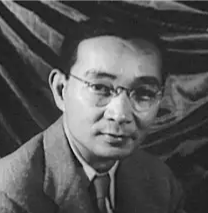
All women's dresses, in every age and country, are merely variations on the eternal struggle between the admitted desire to dress and the unadmitted desire to undress.
▼
Source
source
In Vogue, as quoted by The Reader's Digest, Vols. 30-31 (1937), p. 69
8 months 3 weeks ago
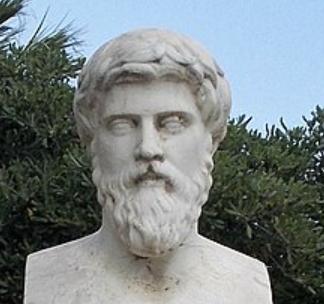
Be ruled by time, the wisest counsellor of all.
▼
Source
source
Pericles (Tr. Dryden and Clough)

9 months 1 week ago
Modern physics... reduces matter to a set of events which proceed outward from a centre. If there is something further in the centre itself, we cannot know about it, and it is irrelevant to physics.
▼
Source
source
An Outline of Philosophy Ch.15 The Nature of our Knowledge of Physics, 1927

9 months 1 week ago
Man is free at the instant he wants to be.
▼
Source
source
Source Brutus, act II, scene I, 1730

5 months 3 days ago
Do not think that what is hard for you to master is humanly impossible; but if a thing is humanly possible, consider it to be within your reach.
▼
Source
source
VI, 19
8 months 2 weeks ago
Wind indeed increases fire, but custom love.
▼
Source
source
Pythagorean Ethical Sentences From Stobæus

5 months 3 weeks ago
And we cannot change this order of things; but what we can do is to acquire stout hearts, worthy of good men, thereby courageously enduring chance and placing ourselves in harmony with Nature.

8 months 3 weeks ago
To protest about bullfighting in Spain, the eating of dogs in South Korea, or the slaughter of baby seals in Canada while continuing to eat eggs from hens who have spent their lives crammed into cages, or veal from calves who have been deprived of their mothers, their proper diet, and the freedom to lie down with their legs extended, is like denouncing apartheid in South Africa while asking your neighbors not to sell their houses to blacks.
▼
Source
source
Ch. 4: Becoming a Vegetarian
9 months 1 week ago
Good nature is, of all moral qualities, the one that the world needs most, and good nature is the result of ease and security, not of a life of arduous struggle. Modern methods of production have given us the possibility of ease and security for all; we have chosen, instead, to have overwork for some and starvation for the others. Hitherto we have continued to be as energetic as we were before there were machines; in this we have been foolish, but there is no reason to go on being foolish for ever.
▼
Source
source
Ch. 1: In Praise of Idleness

8 months 2 days ago
Ambition is a drug that makes its addicts potential madmen.
8 months 2 days ago
Never unreal, Pain is a challenge to the universal fiction. What luck to be the only sensation granted a content, if not a meaning!
6 months 2 days ago
A person who has been punished is not thereby simply less inclined to behave in a given way; at best, he learns how to avoid punishment.
▼
Source
source
Beyond Freedom and Dignity
10 months 1 week ago
We produce these representations in and from ourselves with the same necessity with which the spider spins. If we are forced to comprehend all things only under these forms, then it ceases to be amazing that in all things we actually comprehend nothing but these forms. For they must all bear within themselves the laws of number, and it is precisely number which is most astonishing in things. All that conformity to law, which impresses us so much in the movement of the stars and in chemical processes, coincides at bottom with those properties which we bring to things. Thus it is we who impress ourselves in this way

9 months 5 days ago
"Ah, Psyche," I said, "have I made you so little happy as that?"
▼
Source
source
Orual

5 months 3 weeks ago
There are depths in man which go down the length of the lowest Hell, as there are heights which reach the highest Heaven; - for are not both Heaven and Hell made out of him, everlasting Miracle and Mystery that he is?
▼
Source
source
Pt. III, Bk. I, ch. 4. This was slightly paraphrased in A Dictionary of Thoughts : Being a Cyclopedia of Laconic Quotations from the Best Authors, Both Ancient and Modern (1891) edited by Tryon Edwards. p. 327.

7 months 4 days ago
The young are really the heirs to a generation of incompetence.
5 months 3 weeks ago
The stupendous Fourth Estate, whose wide world-embracing influences what eye can take in?

9 months 1 week ago
Ambition is not a vice of little people.
▼
Source
source
Book III, Ch. 10
7 months 3 weeks ago
Socrates reminds us that it is not the same thing, but almost the opposite, to understand religion and to accept it.
▼
Source
source
p. 45

9 months ago
The condemned man found himself transformed into a hero by the sheer extend of his widely advertised crimes, and sometimes the affirmation of his belated repentance. Against the law, against the rich, the powerful, the magistrates, the constabulary or the watch, against taxes and their collectors, he appeared to have waged a struggle with which one all too easily identified. The proclamation of these crimes blew up to epic proportions the tiny struggle that passed unperceived in everyday life. If the condemned man was shown to be repentant, accepting the verdict, asking both God and man for forgiveness for his crimes, it was as if he had come through some process of purification: he died, in his own way, like a saint.
▼
Source
source
Chapter One: The Spectacle of the scaffold, pp. 67
5 months 6 days ago
The centuries are thick, dark waves that rise and fall, steeped in blood. Every moment is a gaping abyss. Gaze on the dark sea without staggering, confront the abyss every moment without illusion or impudence or fear. ... But this is not enough; take a further step: battle to give meaning to the confused struggles of man.
6 months 3 weeks ago
If it is the moral right we are to look at, I say, that on every principle of moral obligation, I hold that the Jew has a right to political power.
▼
Source
source
Speech in the House of Commons (5 April 1830) in favour of Robert Grant's Jewish Disabilities Bill

9 months 5 days ago
His business is here, it is here that he is despised and vilified, it is here that he must carry out his undertaking.
▼
Source
source
p. 67
8 months 3 days ago
The liberty of man consists solely in this: that he obeys natural laws because he has himself recognized them as such, and not because they have been externally imposed upon him by any extrinsic will whatever, divine or human, collective or individual.
9 months ago
There is nothing outside the text," which Derrida opponents have characterized to mean that nothing exists but language.
▼
Source
source
Il n'y a pas de hors-texte. Of Grammatology (1967). G. Spivak translated this as "
5 months 2 weeks ago
The three great American vices seem to be efficiency, punctuality, and the desire for achievement and success. They are the things that make the Americans so unhappy and so nervous.
▼
Source
source
p. 162

8 months 1 week ago
I thanke God for my happy Dreams|dreames, as I doe for my good rest, for there is a satisfaction in them unto reasonable desires, and such as can be content with a fit of happinesse; and surely it is not a melancholy conceite to thinke we are all asleepe in this world, and that the conceits of this life are as meare dreames to those of the next, as the Phantasmes of the night, to the conceit of the day. There is an equall delusion in both, and the one doth but seeme to bee the embleme or picture of the other;
▼
Source
source
Section 12
7 months 5 days ago
To say that the activity of science and art helps humanity's progress, if by that activity we mean the activity which now calls itself by those names, is as though one said that the clumsy, obstructive splashing of oars in a boat moving down stream assists the boat's progress. It only hinders it... The proof of this is seen in the confession made by men of science that the achievements of the arts and sciences are inaccessible to the labouring masses on account of the unequal distribution of wealth.

9 months 1 week ago
No doubt you know that Galileo had been convicted not long ago by the Inquisition, and that his opinion on the movement of the Earth had been condemned as heresy. Now I will tell you that all things I explain in my treatise, among which is also that same opinion about the movement of the Earth, all depend on one another, and are based upon certain evident truths. Nevertheless, I will not for the world stand up against the authority of the Church. ...I have the desire to live in peace and to continue on the road on which I have started.
▼
Source
source
Letter to Marin Mersenne (end of Feb., 1634) as quoted by Amir Aczel, Pendulum: Leon Foucault and the Triumph of Science

9 months 3 weeks ago
Christ is not valued at all unless He be valued above all.
▼
Source
source
p. 395

9 months 2 weeks ago
Regarding the plan to collect my writings in volumes, I am quite cool and not at all eager about it because, roused by a Saturnian hunger, I would rather see them all devoured. For I acknowledge none of them to be really a book of mine, except perhaps the one On the Bound Will and the Catechism.
▼
Source
source
Letter to Wolfgang Capito

9 months 1 day ago
The world and life are one.
▼
Source
source
(5.621) Original German: Die Welt und das Leben sind Eins.
10 months 1 week ago
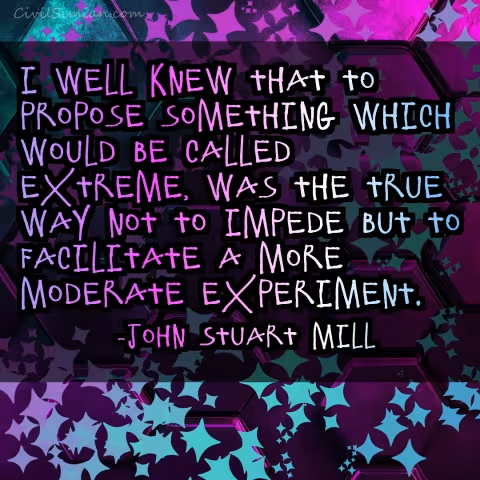
All that exists that can be denied deserves to be denied; and being truthful means: to believe in an existence that can in no way be denied and which is itself true and without falsehood.
5 months 3 days ago
In your actions, don't procrastinate. In your conversations, don't confuse. In your thoughts, don't wander. In your soul, don't be passive or aggressive. In your life, don't be all about business.
▼
Source
source
VIII. 51:209
8 months 2 days ago
I do not forgive myself for being born. It is as if, creeping into this world, I had profaned a mystery, betrayed some momentous pledge, committed a fault of nameless gravity. Yet in a less assured mood, birth seems a calamity I would be miserable not having known.
9 months ago
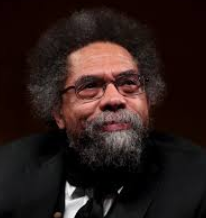
Harvard now, I think, suffers from a kind of self-idolatry, that it needs to be critical of itself in order to grow. And again, if you can be in contact with the best of its past, then it's got a chance. But if it just remains well adjusted to the status quo, generating careerist and opportunist students rather than critically oriented students who have a heart and soul, concerned about suffering here and around the world - then Harvard has a chance. I'm not giving up on Harvard, but I am making my way to New York.
▼
Source
source
Speaking in Too Radical for Harvard? Cornel West on Failed Fight for Tenure, Biden's First 50 Days & More, Democracy Now!

9 months 6 days ago
Nothing is rich but the inexhaustible wealth of Nature. She shows us only surfaces, but she is million fathoms deep.
▼
Source
source
p. 183
7 months 4 weeks ago
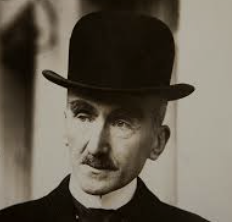
I cannot escape the objection that there is no state of mind, however simple, that does not change every moment.
▼
Source
source
An Introduction to Metaphysics (1903), translated by T. E. Hulme. New York: G. P. Putnam's Sons, 1912, p. 44
5 months 6 days ago
It should be remembered, as an axiom of eternal truth in politics, that whatever power in any government is independent, is absolute also; in theory only, at first, while the spirit of the people is up, but in practice, as fast as that relaxes. Independence can be trusted nowhere but with the people in mass. They are inherently independent of all but moral law.
▼
Source
source
Letter to Judge Spencer Roane
CivilSimian.com created by AxiomaticPanic, CivilSimian, Kalokagathia