


8 months 2 days ago
A minimum of unconsciousness is necessary if one wants to stay inside history. To act is one thing; to know one is acting is another. When lucidity invests the action, insinuates itself into it, action is undone, and with it, prejudice, whose function consists, precisely, in subordinating, in enslaving consciousness to action. The man who unmasks his fictions renounces his own resources and, in a sense, himself. Consequently, he will accept other fictions which will deny him, since they will not have cropped up from his own depths. No man concerned with his equilibrium may exceed a certain degree of lucidity and analysis.

9 months 6 days ago
Never self-possessed, or prudent, love is all abandonment.
▼
Source
source
p. 158

10 months 3 days ago
There's something about a pious man such as he. He will cheerfully cut your throat if it suits him, but he will hesitate to endanger the welfare of your immaterial and problematical soul.


7 months 3 weeks ago
The pathfinders of modern thought did not derive what is good from the law. ... Their role in history was not that of adapting their words and actions to the text of old documents or generally accepted doctrines: they themselves created the documents and brought about the acceptance of their doctrines.
▼
Source
source
p. 33.
7 months 2 weeks ago
Human beings, viewed as behaving systems, are quite simple. The apparent complexity of our behavior over time is largely a reflection of the complexity of the environment in which we find ourselves.
▼
Source
source
p. 53.

9 months 6 days ago
The product of mental labor - science - always stands far below its value, because the labor-time necessary to reproduce it has no relation at all to the labor-time required for its original production.
▼
Source
source
Addenda, "Relative and Absolute Surplus Value" in Economic Manuscripts, 1861-63
8 months 3 weeks ago
Valour, however unfortunate, commands great respect even from enemies: but the Romans despise cowardice, even though it be prosperous.
▼
Source
source
Aemilius Paulus 26 (Tr. Stewart and Long)

9 months 2 weeks ago
Thus the sum of things is ever being renewed, and mortal creatures live dependent one upon another. Some species increase, others diminish, and in a short space the generations of living creatures are changed and, like runners, pass on the torch of life.
▼
Source
source
Book II, line 75 (tr. Rouse)


5 months 6 days ago
No one has a natural right to the trade of a money lender, but he who has the money to lend. Let those then among us who have a moneyed capital and who prefer employing it in loans rather than otherwise, set up banks and give cash or national bills for the notes they discount. Perhaps, to encourage them, a larger interest than is legal in the other cases might be allowed them, on the condition of their lending for short periods only.
▼
Source
source
ME 13:277

7 months 4 weeks ago
Ideas are invented only as correctives to the past. Through repeated rectifications of this kind one may hope to disengage an idea that is valid.
▼
Source
source
A Retrospective Glance at the Lifework of a Master of Books
9 months 1 week ago
All wars are accordingly so many attempts (not in the intention of man, but in the intention of Nature) to establish new relations among states, and through the destruction or at least the dismemberment of all of them to create new political bodies, which, again, either internally or externally, cannot maintain themselves and which must thus suffer like revolutions; until finally, through the best possible civic constitution and common agreement and legislation in external affairs, a state is created which, like a civic commonwealth, can maintain itself automatically.
▼
Source
source
Seventh Thesis
7 months 1 week ago
Those who used to sacrifice animals did not take them for beasts. And even the Middle Ages, which condemned and punished them in due form, was in this way much closer to them than we are, we who are filled with horror at this practice. They held them to be guilty: which was a way of honoring them. We take them for nothing, and it is on this basis that we are "human" with them. We no longer sacrifice them, we no longer punish them, and we are proud of it, but it is simply that we have domesticated them, worse: that we have made of them a racially inferior world, no longer even worthy of our justice, but only of our affection and social charity, no longer worthy of punishment and of death, but only of experimentation and extermination like meat from the butchery.
▼
Source
source
"The Animals: Territory and Metamorphoses," pp. 134-135
7 months 3 weeks ago
No criticism can be brought against a branch of technical science from outside; no thought fitted out with the knowledge of a period and setting its course by definite historical aims could have anything to say to the specialist. Such thought and the critical, dialectical element it communicates to the process of cognition, thereby maintaining conscious connection between that process and historical life, do not exist for empiricism; nor do the associated categories, such as the distinction between essence and appearance, identity in change, and rationality of ends, indeed, the concept of man, of personality, even of society and class taken in the sense that presupposes specific viewpoints and directions of interest.
▼
Source
source
p. 145.

8 months 1 week ago
The blood of Jesus Christ can cover a multitude of sins, it seems to me.

7 months 2 weeks ago
What is necessary at this stage in our evolution is not a 'return' to the psychic powers of our ancestors, but an expansion of our own potential powers, based upon the certain knowledge that such powers exist.
▼
Source
source
p. 290

9 months 1 week ago
Thus mathematics may be defined as the subject in which we never know what we are talking about, nor whether what we are saying is true.
▼
Source
source
Ch. 5: Mathematics and the Metaphysicians
5 months 6 days ago
I have the consolation to reflect that during the period of my administration not a drop of the blood of a single fellow citizen was shed by the sword of war or of the law.
▼
Source
source
Letter to papal nuncio Count Dugnani

8 months 6 days ago
Strong as it looks at the outset, State-agency perpetually disappoints every one. Puny as are its first stages, private efforts daily achieve results that astound the world.
▼
Source
source
Vol. 3, Ch. VII, Over-Legislation

6 months 1 week ago
Near-ubiquitous technological monitoring is a consequence of the decline of cohesive societies that has occurred alongside the rising demand for individual freedom.
▼
Source
source
In the Puppet Theatre: An Iron Mountain and a Shifting Spectacle (p. 121)

7 months 1 week ago
My theory is that all women have hydrofluoric acid bottled up inside.
▼
Source
source
On difficulties with women, as quoted in "Kurt Vonnegut, Writer of Classics of the American Counterculture, Dies at 84" by Dinitia Smith in The New York Times

9 months 5 days ago
In any case, if you ever leave me with a handsome man, do not tell me that you trust me because, let me warn you: that is not what will prevent me from deceiving you, if I want to. On the contrary.
▼
Source
source
Jessica to her husband Hugo, Act 3, sc. 5
7 months 3 weeks ago
Even to-day, in spite of some signs which are making a tiny breach in that sturdy faith, even to-day, there are few men who doubt that motorcars will in five years' time be more comfortable and cheaper than to-day. They believe in this as they believe that the sun will rise in the morning. The metaphor is an exact one. For, in fact, the common man, finding himself in a world so excellent, technically and socially, believes that it has been produced by nature, and never thinks of the personal efforts of highly-endowed individuals which the creation of this new world presupposed. Still less will he admit the notion that all these facilities still require the support of certain difficult human virtues, the least failure of which would cause the rapid disappearance of the whole magnificent edifice.... These traits together make up the well-known psychology of the spoilt child. Chap.
▼
Source
source
VI: The Dissection Of The Mass-Man Begins
5 months 6 days ago
We were laboring under a dropsical fulness of circulating medium. Nearly all of it is now called in by the banks, who have the regulation of the safety-valves of our fortunes, and who condense and explode them at their will. Lands in this State cannot now be sold for a year's rent; and unless our Legislature have wisdom enough to effect a remedy by a gradual diminution only of the medium, there will be a general revolution of property in this state.
▼
Source
source
Letter to John Adams (7 November 1819) ME 15:224 : The Writings of Thomas Jefferson "Memorial Edition" (20 Vols., 1903-04) edited by Andrew A. Lipscomb and Albert Ellery Bergh, Vol. 15, p. 224
7 months 2 weeks ago
The chief impression left by a study of Crowley's life and works is that he wasted an immense amount of time and energy trying to shock everyone he came into contact with, and his dislike of orthodoxy turned him into an unconsciously comic figure, like Don Quixote.
▼
Source
source
pp. 153-154
5 months 3 weeks ago
There were nowhere more docile disciples of Lenin, Trotsky and Stalin than the Nazis were.
7 months 3 weeks ago
Life, individual or collective, personal or historic, is the one entity in the universe whose substance is compact of danger, of adventure. It is, in the strict sense of the word, drama. ... The primary, radical meaning of life appears when it is employed in the sense not of biology, but of biography. For the very strong reason that the whole of biology is quite definitely only a chapter in certain biographies, it is what biologists do in the portion of their lives open to biography.
▼
Source
source
Chap.IX: The Primitive and the Technical

7 months 3 weeks ago
When I read the catechism of the Council of Trent, it seems as though I had nothing in common with the religion there set forth.
6 months 4 weeks ago
Liberty is not the same thing as equality, and that those who call themselves liberals are far more interested in equalizing than in liberating their fellows.
▼
Source
source
The Limits of Liberty, The American Spectator

7 months 2 weeks ago
The ideas of Freud were popularized by people who only imperfectly understood them, who were incapable of the great effort required to grasp them in their relationship to larger truths, and who therefore assigned to them a prominence out of all proportion to their true importance.
▼
Source
source
Ch. 28, June 3, 1943.

9 months 6 days ago
Assembled in a crowd, people lose their powers of reasoning and their capacity for moral choice.
▼
Source
source
Chapter 5 (p. 42)

5 months 3 weeks ago
It is now almost my sole rule of life to clear myself of cants and formulas, as of poisonous Nessus shirts.
▼
Source
source
Letter to His Wife (1835).
9 months 6 days ago
I fancy I need more than another to speak (rather than write), with such a formidable tendency to the lapidary style. I build my house of boulders.
▼
Source
source
Letter to Thomas Carlyle, 30 October 1841
7 months 2 weeks ago
Religion is the vision of something which stands beyond, behind and within the passing flux of immediate things; something which is real, and yet waiting to be realized; something which is a remote possibility, and yet the greatest of present facts; something that gives meaning to all that passes, and yet eludes apprehension; something whose possession is the final good, and yet is beyond all reach; something which is the ultimate ideal, and the hopeless quest.
▼
Source
source
Ch. 12: "Religion and Science", pp. 267-268

7 months 4 weeks ago
The distinction between true and false consciousness, real and immediate interest still is meaningful. But this distinction itself must be validated. Men must come to see it and to find their way from false to true consciousness, from their immediate to their real interest. They can do so only if they live in need of changing their way of life, of denying the positive, of refusing. It is precisely this need which the established society manages to repress to the degree to which it is capable of "delivering the goods" on an increasingly large scale, and using the scientific conquest of nature for the scientific conquest of man.
▼
Source
source
pp. xlv-xlvi


9 months 2 weeks ago
Women . . . have . . . small and narrow chests, and broad hips, to the end they should remain at home, sit still, keep house, and bear and bring up children. . . . A woman is, or at least should be, a friendly, courteous, and a merry companion in life . . . the honor and ornament of the house, and inclined to tenderness, for thereunto are they chiefly created, to bear children, and to be the pleasure, joy and solace of their husbands.
▼
Source
source
-- Table Talk, quoted in Luther On "Woman"

7 months 2 weeks ago
Feminism in the United States has never emerged from the women who are most victimized by sexist oppression; women who are daily beaten down, mentally, physically, and spiritually-women who are powerless to change their condition in life. They are a silent majority. A mark of their victimization is that they accept their lot in life without visible question, without organized protest, without collective anger or rage.
▼
Source
source
p. 1.
7 months 4 weeks ago
Ever since the first World War, when the system of liberalism began to shape into the system of authoritarianism, a widespread opinion has blames Hegelianism for the ideological of the new system.
▼
Source
source
P. 390
7 months 1 week ago
What froze me was the fact that I had absolutely no reason to move in any direction. What had made me move through so many dead and pointless years was curiosity. Now even that flickered out.
5 months 5 days ago
A Natural Group is steadily fixed, though not precisely limited; it is given in position, though not circumscribed; it is determined, not by a boundary without, but by a central point within; -not by what it strictly excludes, but by what it eminently includes; - by a Type, not by a Definition.
5 months 5 days ago
We perceive by 'means' of a medium and 'by means' of impressions on the nerves: but we do not (by our senses,) perceive either the medium or the impressions on the nerves.
7 months 2 weeks ago
Rational free spirits are the light brigade who go on ahead and reconnoitre the ground which the heavy brigade of the orthodox will eventually occupy.
▼
Source
source
H 36

9 months 1 week ago
The Theophilanthropists do not call themselves the disciples of such or such a man. They avail themselves of the wise precepts that have been transmitted by writers of all countries and in all ages.
▼
Source
source
Introduction
5 months 6 days ago
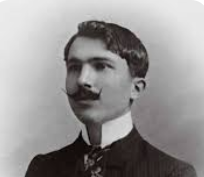
Our profound human duty is not to interpret or to cast light on the rhythm of God's arch, but to adjust, as much as we can, the rhythm of our small and fleeting life to his. Only thus may we mortals succeed in achieving something immortal, because then we collaborate with One who is Deathless. Only thus may we conquer mortal sin, the concentration on details, the narrowness of our brains; only thus may we transubstantiate into freedom the slavery of earthen matter given us to mold.
5 months 2 weeks ago
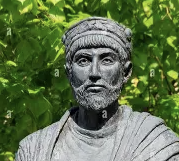
On the same subject you will obtain more complete and more abstruse information by consulting the works upon it composed by the divine Iamblichus: you will find there the extreme limit of human wisdom attained. May the mighty Sun grant me to attain to no less knowledge of himself, and to teach it publicly to all, and privately to such as are worthy to receive it: and as long as the god grants this to us, let us consult in common his well-beloved Iamblichus; out of whose abundance a few things, that have come into my mind, I have here set down. That no other person will treat of this subject more perfectly than he has done, I am well aware; not even though he should expend much additional labour in making new discoveries in the research; for in all probability he will go astray from the most correct conception of the nature of the god.
9 months 6 days ago
Far or forgot to me is near; Shadow and sunlight are the same; The vanished gods to me appear; And one to me are shame and fame.
▼
Source
source
Brahma, st. 2
CivilSimian.com created by AxiomaticPanic, CivilSimian, Kalokagathia