

7 months 3 weeks ago
Every morning I shall concern myself anew about the boundary Between the love-deed-Yes and the power-deed-No And pressing forward honor reality. We cannot avoid Using power, Cannot escape the compulsion To afflict the world, So let us, cautious in diction And mighty in contradiction, Love powerfully.
▼
Source
source
"Power and Love"
5 months 2 weeks ago
So long as you are a slave to the opinions of the many you have not yet approached freedom or tasted its nectar...But I do not mean by this that we ought to be shameless before all men and to do what we ought not; but all that we refrain from and all that we do, let us not do or refrain from merely because it seems to the multitude somehow honorable or base, but because it is forbidden by reason and the god within us.
▼
Source
source
Oration to the Uneducated Cynics
9 months 1 week ago
Percepts and phenomena which precedes the logical use of the intellect is called appearance, while the reflex knowledge originating from several appearances compared by the intellect is called experience.

9 months 2 weeks ago
Do not be guilty of possessing a library of learned books while lacking learning yourself.
▼
Source
source
Letter to Christian Northoff (1497), as translated in Collected Works of Erasmus (1974), p. 115
9 months 6 days ago
Truth happens to an idea. It becomes true, is made true by events. Its verity is in fact an event, a process: the process namely of its verifying itself, its veri-fication. Its validity is the process of its valid-ation.
▼
Source
source
Lecture VI, Pragmatism's Conception of Truth



8 months 1 week ago
Among these widely differing families of men, the first that attracts attention, the superior in intelligence, in power, and in enjoyment, is the white, or European, the MAN pre-eminently so called, below him appear the Negro and the Indian.
▼
Source
source
Chapter XVIII.

9 months 6 days ago
The measure of a master is his success in bringing all men round to his opinion twenty years later.
▼
Source
source
Culture

9 months 1 day ago
Man has to awaken to wonder - and so perhaps do peoples. Science is a way of sending him to sleep again.
▼
Source
source
p. 5e

9 months ago
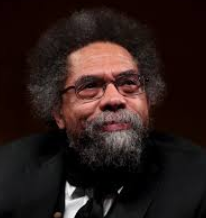
The paradox of race in America is that our common destiny is more pronounced and imperiled precisely when our divisions are deeper.
▼
Source
source
(p4)
7 months 1 week ago
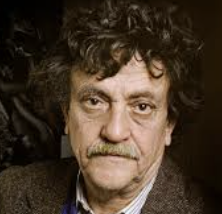
The public health authorities never mention the main reason many Americans have for smoking heavily, which is that smoking is a fairly sure, fairly honorable form of suicide.
▼
Source
source
Preface (p. xi)
10 months 6 days ago
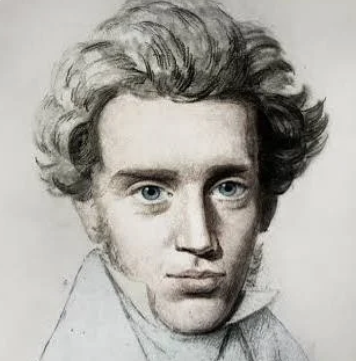
Confession should be only in secret before God, who knows everything anyway, and thus it could remain hidden in one's innermost being. But at a dinner and a woman! A dinner-it is not some hidden, remote place, nor is the lighting dim, nor is the mood like that among graves, nor are the listeners silent or invisibly present.

9 months 4 days ago
I am responsible for everything ... except for my very responsibility, for I am not the foundation of my being. Therefore everything takes place as if I were compelled to be responsible. I am abandoned in the world ... in the sense that I find myself suddenly alone and without help, engaged in a world for which I bear the whole responsibility without being able, whatever I do, to tear myself away from this responsibility for an instant.
▼
Source
source
Part 4, Chapter 1, III
5 months 2 weeks ago
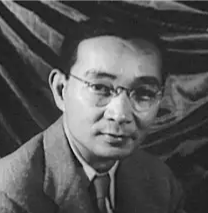
If compelled to indicate my religion on an immigration blank, I might be tempted to put down the word "Taoist," to the amazement of the customs officer who probably never heard of it.
▼
Source
source
The Wisdom of Laotse (1948), Introduction, p. 15

9 months 1 week ago
There is no need to worry about mere size. We do not necessarily respect a fat man more than a thin man. Sir Isaac Newton was very much smaller than a hippopotamus, but we do not on that account value him less.
▼
Source
source
"The Expanding Mental Universe", Saturday Evening Post, 7/1/1959
7 months 1 day ago
Sanity itself is a kind of convention.
▼
Source
source
The Hunter's Family

9 months 1 week ago
My basis is supported by the authority of the greatest moralist of modern times; for such, undoubtedly, J. J. Rousseau is,-that profound reader of the human heart, who drew his wisdom not from books, but from life, and intended his doctrine not for the professorial chair, but for humanity; he, the foe of all prejudice, the foster-child of nature, whom alone she endowed with the gift of being able to moralise without tediousness, because he hit the truth and stirred the heart.
▼
Source
source
Part III, Ch. VIII, 9, p. 230

8 months 6 days ago
The march of the human mind is slow.
9 months 6 days ago
The measure of action is the sentiment from which it proceeds. The greatest action may easily be one of the most private circumstance.
▼
Source
source
Goethe; or, The Writer

7 months 3 days ago
Marx shared with economists then and since the inability to make his concepts include innovational processes. It is one thing to spot a new product but quite another to observe the invisible new environments generated by the action of the product on a variety of pre-existing social grounds.
▼
Source
source
(p. 63)
9 months 3 weeks ago
To those whose talents are above mediocrity, the highest subjects may be announced. To those who are below mediocrity, the highest subjects may not be announced.
9 months 1 week ago
Those who have been inspired to action by the doctrine of the class war will have acquired the habit of hatred, and will instinctively seek new enemies when the old ones have been vanquished. But in actual fact the psychology of the working man in any of the Western democracies is totally unlike that which is assumed in the Communist Manifesto. He does not by any means feel that he has nothing to lose but his chains, nor indeed is this true. The chains which bind Asia and Africa in subjection to Europe are partly riveted by him. He is himself part of a great system of tyranny and exploitation. Universal freedom would remove, not only his own chains, which are comparatively light, but the far heavier chains which he has helped to fasten upon the subject races of the world.
▼
Source
source
Ch. VI: International Relations
6 months ago
I was obliged to retract, like a good Catholic, this opinion of mine; and as a punishment my dialogue was prohibited; and after five months being dismissed from Rome (at the time that the city of Florence was infected with plague), the habitation which with generous pity was assigned to me, was that of the dearest friend I had in Siena, Monsignor the Archbishop Piccolomini, whose most agreeable conversation I enjoyed with such quite and satisfaction of mind, that having there resumed my studies, I discovered and demonstrated a great number on the mechanical conclusions on the resistance of solids ... after about five months, the pestilence having ceased, the confinement of that house was changed by His Holiness for the freedom of the country so agreeable to me, whence I returned to the villa of Bellosguardo, and afterwards to Arcetri, where I still breathe salubrious air near my dear native-country Florence.
▼
Source
source
Stay sane. p. 251-253

8 months 6 days ago
Every man has some reminiscences which he would not tell to everyone, but only to his friends. He has others which he would not reveal even to his friends, but only to himself, and that in secret. But finally there are still others which a man is even afraid to tell himself, and every decent man has a considerable number of such things stored away. That is, one can even say that the more decent he is, the greater the number of such things in his mind.
▼
Source
source
Part 1, Chapter 11
9 months 1 week ago
Thus the labour of a manufacture adds, generally, to the value of the materials which he works upon, that of his own maintenance, and of his masters profits. The labour of a menial servant, on the contrary, adds to the value of nothing.
▼
Source
source
Chapter III, p. 364 (see Proverbs 14-23 KJV).
9 months 6 days ago
All the higher, more penetrating ideals are revolutionary. They present themselves far less in the guise of effects of past experience than in that of probable causes of future experience.
▼
Source
source
"The Moral Philosopher and the Moral Life" in address to the Yale Philosophical Club, published in the International Journal of Ethics, April 1891

7 months 1 week ago
It is the perfection of God's works that they are all done with the greatest simplicity. He is the God of order and not of confusion. And therefore as they would understand the frame of the world must endeavor to reduce their knowledge to all possible simplicity, so must it be in seeking to understand these visions.
▼
Source
source
Cited in Rules for methodizing the Apocalypse, Rule 9, from a manuscript published in The Religion of Isaac Newton (1974) by Frank E. Manuel

9 months 5 days ago
If there is equality, it is in His love, not in us.
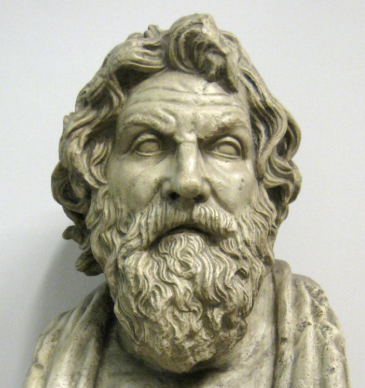
8 months 3 weeks ago
To all my friends without distinction I am ready to display my opulence: come one, come all; and whosoever likes to take a share is welcome to the wealth that lies within my soul.
▼
Source
source
iv. 35


8 months 6 days ago
Influences of various kinds conspire to increase corporate action and decrease individual action. And the change is being on all sides aided by schemers, each of whom thinks only of his pet plan and not at all of the general reorganization which his plan, joined with others such, are working out. It is said that the French Revolution devoured its own children. Here, an analogous catastrophe seems not unlikely. The numerous socialistic changes made by Act of Parliament, joined with the numerous others presently to be made, will by-and-by be all merged in State-socialism-swallowed in the vast wave which they have little by little raised."But why is this change described as 'the coming slavery'?," is a question which many will still ask. The reply is simple. All socialism involves slavery.
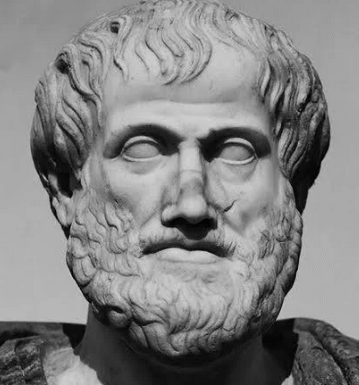
10 months 6 days ago
That body is heavier than another which, in an equal bulk, moves downward quicker.
9 months 1 week ago
He is happy, whose circumstances suit his temper; but he is more excellent, who can suit his temper to any circumstances.
▼
Source
source
§ 6.9 : Of Qualities Useful to Ourselves, Pt. 1
9 months ago
In these downbeat times, we need as much hope and courage as we do vision and analysis; we must accent the best of each other even as we point out the vicious effects of our racial divide and pernicious consequences of our maldistribution of wealth and power. We simply cannot enter the twenty-first century at each other's throats, even as we acknowledge the weighty forces of racism, patriarchy, economic inequality, homophobia, and ecological abuse on our necks. We are at a crucial crossroad in the history of this nation--and we either hang together by combating these forces that divide and degrade us or we hang separately. Do we have the intelligence, humor, imagination, courage, tolerance, love, respect, and will to meet the challenge? Time will tell. None of us alone can save the nation or world. But each of us can make a positive difference if we commit ourselves to do so.
▼
Source
source
(p 109)
8 months 6 days ago
Faith is not in power but in truth.

9 months 3 weeks ago
When the Head and members are despised, then the whole Christ is despised, for the whole Christ, Head and body, is that just man against whom deceitful lips speak iniquity (Ps. 30:19).
▼
Source
source
p.425
5 months 4 weeks ago
The history of utopias is no less fascinating than the history of metallurgy or of chemical engineering.
▼
Source
source
New Preface, p. vi
9 months 1 week ago
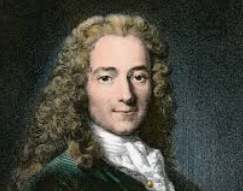
May we not return to those scoundrels of old, the illustrious founders of superstition and fanaticism, who first took the knife from the altar to make victims of those who refused to be their disciples?
▼
Source
source
Letter to Frederick II of Prussia (December 1740), published in Oeuvres complètes de Voltaire, Vol. 7 (1869), edited by Georges Avenel, p. 105; as translated by Richard Aldington
9 months 1 week ago
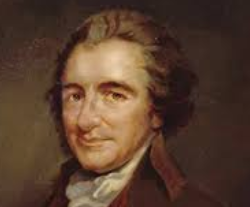
But the chief design of this paper is not to disprove it, which many have sufficiently done; but to entreat Americans to consider.
7 months 2 weeks ago
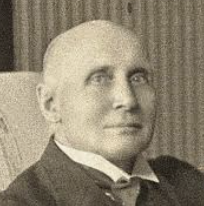
Men can be provincial in time, as well as in place.
▼
Source
source
Preface, p. ix
5 months 6 days ago
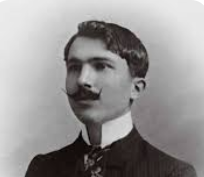
Only now, as we feel the onslaught behind us, do we begin dimly to apprehend why the animals fought, begot, and died; and behind them the plants; and behind these the huge reserve of inorganic forces. We are moved by pity, gratitude, and esteem for our old comrades-in-arms. They toiled, loved, and died to open a road for our coming. We also toil with the same delight, agony, and exaltation for the sake of Someone Else who with every courageous deed of ours proceeds one step farther. All our struggle once more will have a purpose much greater than we, wherein our toils, our miseries, and our crimes will have become useful and holy.

9 months 1 week ago
Faith ever says, "If Thou wilt," not "If Thou canst."
▼
Source
source
p. 241
9 months 6 days ago
An unlearned carpenter of my acquaintance once said in my hearing: "There is very little difference between one man and another; but what little there is, is very important." This distinction seems to me to go to the root of the matter.
▼
Source
source
"The Importance of Individuals"

5 months 2 days ago
The intelligence of the universe is social.
▼
Source
source
V, 30
9 months 1 week ago
If throughout your life you abstain from murder, theft, fornication, perjury, blasphemy, and disrespect toward your parents, your church, and your king, you are conventionally held to deserve moral admiration even if you have never done a single kind or generous or useful action. This very inadequate notion of virtue is an outcome of taboo morality, and has done untold harm.
▼
Source
source
p. 32
8 months 3 weeks ago
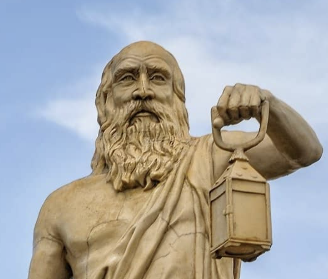
When people laughed at him because he walked backward beneath the portico, he said to them: "Aren't you ashamed, you who walk backward along the whole path of existence, and blame me for walking backward along the path of the promenade?"
▼
Source
source
Stobaeus, iii. 4. 83
CivilSimian.com created by AxiomaticPanic, CivilSimian, Kalokagathia