Taking some time to think about this....



I do not think the resemblance between the Christian and the merely imaginative experience is accidental. I think that all things, in their own way, reflect heavenly truth, the imagination not least. "Reflect" is the important word. This lower life of the imagination is not a beginning of, nor a step toward, the higher life of the spirit, merely an image.

You may take great comfort from the fact that suffering inwardly for the sake of truth proves abundantly that one loves it and marks one out as being of the elect.

Truth is a shining goddess, always veiled, always distant, never wholly approachable, but worthy of all the devotion of which the human spirit is capable.
Philosophy is said to have taken the 'linguistic turn' in this century. One hundred years ago, a philosopher would think in terms of mind, spirit, experience, consciousness; now the by-word is language.
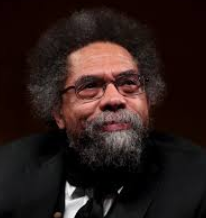
With a few glorious and glaring exceptions, the shadow of Jim Crow was cast in its new glittering form expressed in the language of superficial diversity... The disarray of a scattered curriculum, the disenchantment of talented yet deferential faculty, and the disorientation of precious students loom large... To witness a faculty enthusiastically support a candidate for tenure then timidly defer to a rejection based on the Harvard administration's hostility to the Palestinian cause was disgusting... We all know the mendacious reasons given had nothing to do with academic standards... This kind of narcissistic academic professionalism, cowardly deference to the anti-Palestinian prejudices of the Harvard administration, and indifference to my Mother's death constitutes an intellectual and spiritual bankruptcy of deep deaths...
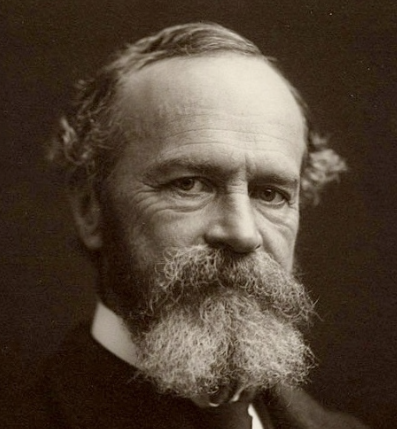
Freedom is only necessity understood.

The Whigs of this day have before them, in this Appeal, their constitutional ancestors: They have the doctors of the modern school. They will choose for themselves. The author of the Reflections has chosen for himself. If a new order is coming on, and all the political opinions must pass away as dreams, which our ancestors have worshipped as revelations, I say for him, that he would rather be the last (as certainly he is the least) of that race of men, than the first and greatest of those who have coined to themselves Whig principles from a French die, unknown to the impress of our fathers in the constitution.
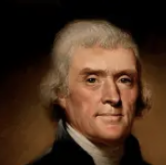
I know no safe depository of the ultimate powers of the society but the people themselves; and if we think them not enlightened enough to exercise their control with wholesome discretion, the remedy is not to take it from them, but to inform their discretion by education. This is the true corrective of abuses of constitutional power.

Can the man say, Fiat lux, Let there be light; and out of chaos make a world? Precisely as there is light in himself, will he accomplish this.
Darwinist thinkers such as Richard Dawkins and Daniel Dennett are militant opponents of Christianity. Yet their atheism and humanism are versions of Christian concepts. As a defender of Darwinism, Dawkins is committed to the view that humans are like other animal species in being 'gene machines' ruled by the laws of natural selection. He asserts nevertheless that humans, uniquely, can defy these natural laws: 'We, alone on earth, can rebel against the tyranny of the selfish replicators.' In affirming human uniqueness in this way, Dawkins relies on a Christian world-view.

One of the biggest paradoxes of our world: memories vanish when we want to remember, but fix themselves permanently in the mind when we want to forget.
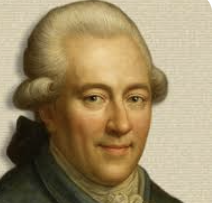
Just as the performance of the vilest and most wicked deeds requires spirit and talent, so even the greatest demand a certain insensitivity which under other circumstances we would call stupidity.
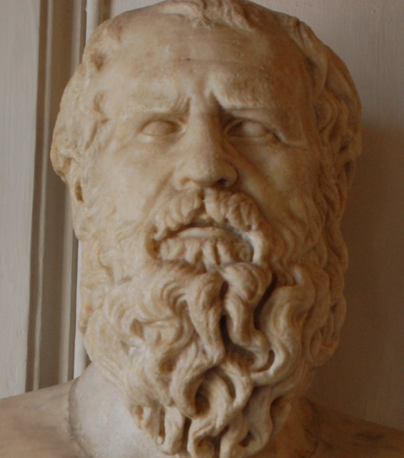
Ten thousand do not turn the scale against a single man of worth.

All things are in the Universe, and the universe is in all things: we in it, and it in us; in this way everything concurs in a perfect unity.
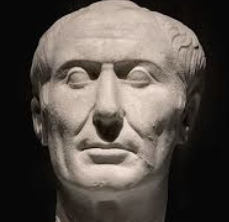
What is left when honor is lost?
Beauty is a pledge of the possible conformity between the soul and nature, and consequently a ground of faith in the supremacy of the good.
Blessed is the healthy nature; it is the coherent, sweetly co-operative, not incoherent, self-distracting, self-destructive one!
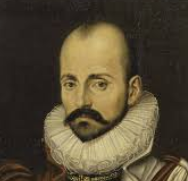
Age imprints more wrinkles in the mind than it does on the face.

Talents differ; all is well and wisely put; If I cannot carry forests on my back, Neither can you crack a nut.
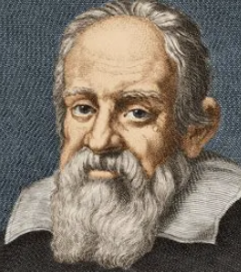
I am quite convinced; and, believe me, if I were again beginning my studies, I should follow the advice of Plato and start with mathematics, a science which proceeds very cautiously and admits nothing as established until it has been rigidly demonstrated.

Once ... I was offered a lift by some carters ... It was the Thursday before Easter. I was seated in the first cart, with a strong, red, coarse carman, who evidently drank. On entering a village we saw a well-fed, naked, pink pig being dragged out of the first yard to be slaughtered. It squealed in a dreadful voice, resembling the shriek of a man. Just as we were passing they began to kill it. A man gashed its throat with a knife. The pig squealed still more loudly and piercingly, broke away from the men, and ran off covered with blood. Being near-sighted I did not see all the details. I saw only the human-looking pink body of the pig and heard its desperate squeal; but the carter saw all the details and watched closely. They caught the pig, knocked it down, and finished cutting: its throat. When its squeals ceased the carter sighed heavily. 'Do men really not have to answer for such things?' he said.
The great majority of men and women, in ordinary times, pass through life without ever contemplating or criticising, as a whole, either their own conditions or those of the world at large. They find themselves born into a certain place in society, and they accept what each day brings forth, without any effort of thought beyond what the immediate present requires. Almost as instinctively as the beasts of the field, they seek the satisfaction of the needs of the moment, without much forethought, and without considering that by sufficient effort the whole conditions of their lives could be changed.
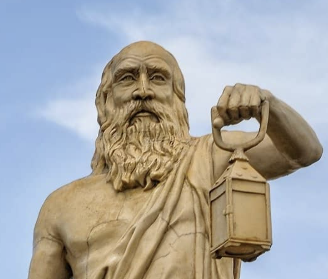
One day, observing a child drinking out of his hands, he cast away the cup from his wallet with the words, "A child has beaten me in plainness of living."
It's hard for writers to get on with their work if they are convinced that they owe a concrete debt to experience and cannot allow themselves the privilege of ranging freely through social classes and professional specialties. A certain pride in their own experience, perhaps a sense of the property rights of others in their experience, holds them back.
[on Epicurus] His starting point is a conviction that apathy is impossible, and that pleasure - though not necessarily sensual pleasure - is the only conceivable, and quite legitimate, end of life and action. "Nature leads every organism to prefer its own good to every other good" - even the stoic finds a subtle pleasure in renunciation. "We must not avoid pleasures, but we must select them". Epicurus, then, is no epicurean, he exalts the joys of intellect rather than those of sense; he warns against pleasures that excite and disturb the soul which they should rather quite and appease. In the end he proposes to seek not pleasure in its usual sense, but ataraxia - tranquility, equaninimity, repose of mind; all of which trembles on the verge of Zeno's "Apathy"

The Son of man shall be betrayed into the hands of men: And they shall kill him, and the third day he shall be raised again.
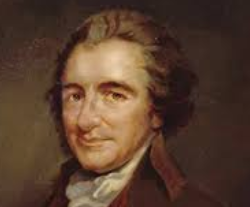
Why has the Revolution of France been stained with crimes, which the Revolution of the United States of America was not? Men are physically the same in all countries; it is education that makes them different. Accustom a people to believe that priests or any other class of men can forgive sins, and you will have sins in abundance.
If the red slayer think he slays, Or if the slain think he is slain, They know not well the subtle ways I keep, and pass, and turn again. Brahma, st. 1 Composed in July 1856 this poem is derived from a major passage of the Bhagavad Gita, one of the most popular of Hindu scriptures, and portions of it were likely a paraphrase of an existing translation. Though titled "Brahma" its expressions are actually more indicative of the Hindu concept "Brahman"
And all the time - such is the tragi-comedy of our situation - we continue to clamor for those very qualities we are rendering impossible. You can hardly open a periodical without coming across the statement that what our civilization needs is more "drive", or dynamism, or self-sacrifice, or "creativity". In a sort of ghastly simplicity we remove the organ and demand the function. We make men without chests and expect of them virtue and enterprise. We laugh at honour and are shocked to find traitors in our midst. We castrate and bid the geldings be fruitful.
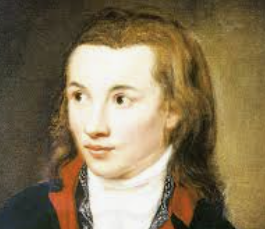
Not wise does it seem to attempt comprehending and understanding a Human World without full perfected Humanity. No talent must sleep; and if all are not alike active, all must be alert, and not oppressed and enervated. As we see a future Painter in the boy who fills every wall with sketches and variedly adds colour to figure; so we see a future Philosopher in him who restlessly traces and questions all natural things, pays heed to all, brings together whatever is remarkable, and rejoices when he has become master and possessor of a new phenomenon, of a new power and piece of knowledge.

More and more it is becoming evident that what the West can most readily give to the East is its science and its scientific outlook. This is transferable from country to country, and from race to race, wherever there is a rational society.
I am sorry to say that at the moment I am so busy as to be convinced that life has no meaning whatever... I do not see that we can judge what would be the result of the discovery of truth, since none has hitherto been discovered.

You could attach prices to ideas. Some cost a lot some little. ... And how do you pay for ideas? I believe: with courage.

Would you really know what philosophy offers to humanity? Philosophy offers counsel.
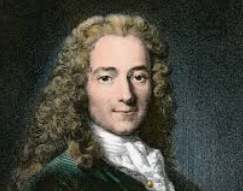
The necessity of speaking, the predicament of having nothing to say, and the desire for tact are three things that can turn the greatest man into a laughingstock.
Prejudice is an opinion without judgement.
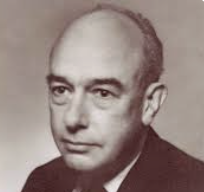
Necessity resides in the way we talk about things, not in the things we talk about.
The middle sort of historians (of which the most part are) spoil all; they will chew our meat for us.

Pain is the opposite of strength, and so is anger.
In thinking of history in this [progressive & eschatological] way Islam shares common ground with Christianity and with the secular creeds of the modern West. It is misleading to represent Islam and 'the West' as forming civilisations that have nothing in common. Christianity and Islam are integral parts of western monotheism, and as such they share a view of history that marks them off from the rest of the world. Both are militant faiths that seek to convert all humankind. Other religions have been implicated in twentieth-century violence-the state cult of Shintō in Japan during the militarist period and Hindu nationalism in contemporary India, for example. But only Christianity and Islam have engendered movements that are committed to the systematic use of force to achieve universal goals.
Courage, not cleverness; not even inspiration, is the grain of mustard that grows up to be a great tree.
Happy the people whose annals are blank in history books!
Human rights are not just cultural or legal constructions, as fashionable western relativists are fond of claiming. They are universal values. To deny the benefits of the new regime of rights to other cultures is to patronise them in a way that is reminiscent of the colonial era. If the new regime on torture is good enough for the US, who can say that it is not good for everyone?
The chief danger to philosophy is narrowness in the selection of evidence.
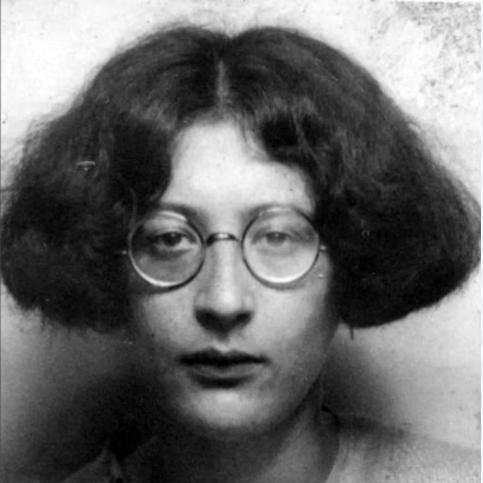
There are necessities and impossibilities in reality which do not obtain in fiction, any more than the law of gravity to which we are subject controls what is represented in a picture. ... It is the same with pure good; for a necessity as strong as gravity condemns man to evil and forbids him any good, or only within the narrowest limits and laboriously obtained and soiled and adulterated with evil. ... The simplicity which makes the fictional good something insipid and unable to hold the attention becomes, in the real good, an unfathomable marvel.
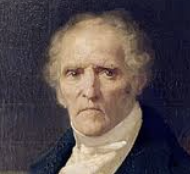
Agricultural association, which in all ages has been deemed impossible, would produce results of unbounded magnificence the rigorous demonstrations, the mathematical calculations by which these results will be verified, will not, however, prevent the picture of the future harmony and happiness which they present from repelling minds habituated to the miseries and wretchedness of our present civilization. The Theory of Social Organization.
The most dangerous untruths are truths moderately distorted.
CivilSimian.com created by AxiomaticPanic, CivilSimian, Kalokagathia