

8 months 2 weeks ago
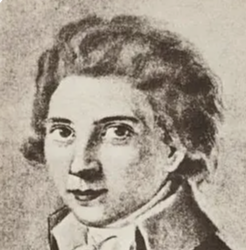
The romantic poetry is a progressive universal poetry.
▼
Source
source
Progressive Universalpoesie (1798)
9 months 2 weeks ago
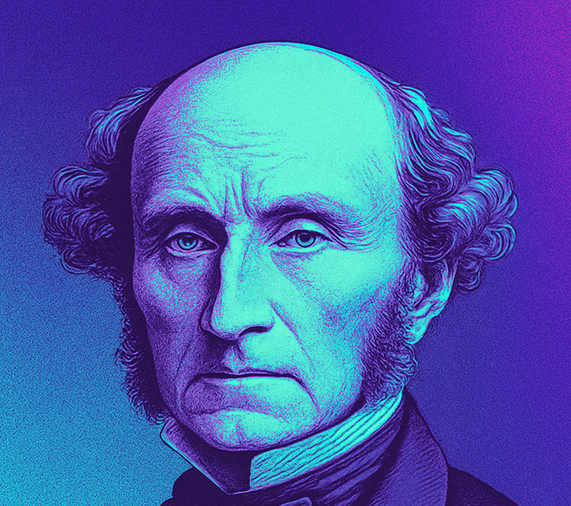
Those only are happy (I thought) who have their minds fixed on some object other than their own happiness; on the happiness of others, on the improvement of mankind, even on some art or pursuit, followed not as a means, but as itself an ideal end. Aiming thus at something else, they find happiness by the way.
▼
Source
source
(p. 142)
5 months 1 week ago
I am endeavouring in a general way to explain the laws of double refraction on this hypothesis, but have not yet arrived at any results sufficiently decisive to be communicated.
6 months 1 week ago
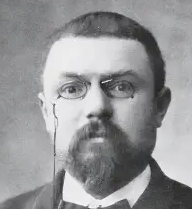
Now what is science? ...it is before all a classification, a manner of bringing together facts which appearances separate, though they are bound together by some natural and hidden kinship. Science, in other words, is a system of relations. ...it is in relations alone that objectivity must be sought. ...it is relations alone which can be regarded as objective.External objects... are really objects and not fleeting and fugitive appearances, because they are not only groups of sensations, but groups cemented by a constant bond. It is this bond, and this bond alone, which is the object in itself, and this bond is a relation.

7 months 3 weeks ago
We will likely also find that the nature of the problem to be solved will be a principal determinant of the mix. With our growing understanding of the organization of judgmental and intuitive processes, of the specific knowledge that of the specific knowledge that is required to perform particular judgmental tasks, and of the cues that evoke such knowledge in situations in which it is relevant, we have a powerful new tool for improving expert judgment. We can specify the knowledge and the recognition capabilities that experts in a domain need to acquire, and use these specifications for designing appropriate learning procedures.
▼
Source
source
p. 137.
8 months 6 days ago
Hegel's theological discussion repeatedly asks what the true relation is between the individual man and a state that no longer satisfies his capacities but exists rather as an 'estranged' institution from which the active political interest of the citizens has disappeared. Hegel defined this state with almost the same categories as those of eighteenth century liberalism: the state rests on the consent of the individuals, it circumscribes their rights and duties and protects its members from those internal and external dangers that might threaten the perpetuation of the whole.
▼
Source
source
P. 32

7 months 1 week ago
The mask, like the side-show freak, is mainly participatory rather than pictorial in its sensory appeal.
▼
Source
source
(p. 352)
10 months 1 week ago
Man cannot do without beauty, and this is what our era pretends to want to disregard. It steels itself to attain the absolute and authority; it wants to transfigure the world before having exhausted it, to set it to rights before having understood it. Whatever it may say, our era is deserting this world.

10 months 2 days ago
To become like God is the ultimate end of all.
8 months 2 weeks ago
Government must be a transparent garment which tightly clings to the people's body.
▼
Source
source
Act I.
5 months 1 week ago
A mind that has confronted ruin for years Is half or more a ruined mind.

5 months 1 week ago
That which makes the man no worse than he was makes his life no worse: it has no power to harm, without or within.
▼
Source
source
IV, 8

8 months 1 week ago
If I used to ask myself, over a coffin, "what good did it do the occupant to be born?" I now put the same question about anyone alive.

8 months 6 days ago
Verily I say unto thee, That this night, before the cock crow, thou shalt deny me thrice.
▼
Source
source
26:34 (KJV) Said to Peter.

7 months 4 weeks ago
In order to obey God, one must receive his commands. How did it happen that I received them in adolescence, while I was professing atheism? To believe that the desire for good is always fulfilled - that is faith, and whoever has it is not an atheist.
▼
Source
source
Last Notebook (1942) p. 137

8 months 1 week ago
The great decisions of human life have as a rule far more to do with the instincts and other mysterious unconscious factors than with conscious will and well-meaning reasonableness. The shoe that fits one person pinches another; there is no recipe for living that suits all cases. Each of us carries his own life-form-an indeterminable form which cannot be superseded by any other.
▼
Source
source
p. 69

9 months 3 weeks ago
Man is by nature unable to want God to be God. Indeed, he himself wants to be God, and does not want God to be God.
▼
Source
source
Thesis 17

7 months 3 weeks ago
For this is our central human problem: that we are almost constantly the victims of our emotions, always being swept up and down on a kind of inner-switchback. We possess a certain control over them; we can 'direct our thoughts' -- or feelings -- in such a way as to intensify them. This is certainly our most remarkable human characteristic: imagination. Animals require actual physical stimuli to trigger their experience. A man can retreat into a book -- or a daydream -- and live through certain experiences quite independent of the physical world. He can even, for example, imagine a sexual encounter, and not only experience all the appropriate physical responses, but even the sexual climax. Such a curious ability is far beyond the power of any animal.
▼
Source
source
p. 23

9 months 4 weeks ago
As the soul is the life of the body, so God is the life of the soul. As therefore the body perishes when the soul leaves it, so the soul dies when God departs from it.
▼
Source
source
p. 277
8 months 1 week ago
Great joys, why do they bring us sadness? Because there remains from these excesses only a feeling of irrevocable loss and desertion which reaches a high degree of negative intensity. At such moments, instead of a gain, one keenly feels loss. sadness accompanies all those events in which life expends itself. its intensity is equal to its loss. Thus death causes the greatest sadness.


9 months 2 weeks ago
Money appears as measure (in Homer, e.g. oxen) earlier than as medium of exchange,because in barter each commodity is still its own medium of exchange. But it cannot be its own or its own standard of comparison.
▼
Source
source
Notebook I, The Chapter on Money, p. 93.
9 months 2 weeks ago
Every man is rich or poor according to the degree in which he can afford to enjoy the necessaries, conveniences, and amusements of human life. But after the division of labour has once thoroughly taken place, it is but a very small part of these with which a man's own labour can supply him. The far greater part of them he must derive from the labour of other people, and he must be rich or poor according to the quantity of that labour which he can command, or which he can afford to purchase. The value of any commodity, therefore, to the person who possesses it, and who means not to use or consume it himself, but to exchange it for other commodities, is equal to the quantity of labour which it enables him to purchase or command. Labour, therefore, is the real measure of the exchangeable value of all commodities.
▼
Source
source
Chapter V.


8 months ago
The work of charity, of the love of God, is to endeavor to to liberate God from brute matter, to endeavor to give consciousness to everything, to spiritualize or universalize everything; it is to dream that the very rocks may find a voice and work in accordance with the spirit of this dream; it is to dream that everything that exists may become conscious, that the Word may become life.

9 months 1 week ago
The sins of the flesh are bad, but they are the least bad of all sins. All the worst pleasures are purely spiritual: the pleasure of putting other people in the wrong, of bossing and patronising and spoiling sport, and back-biting; the pleasures of power, of hatred. For there are two things inside me, competing with the human self which I must try to become. They are the Animal self, and the Diabolical self. The Diabolical self is the worse of the two. That is why a cold, self-righteous prig who goes regularly to church may be far nearer to hell than a prostitute. But, of course, it is better to be neither.
▼
Source
source
Book III, Chapter 5, "Sexual Morality"

7 months 1 week ago
Genes do indirectly control the manufacture of bodies, and the influence is strictly one way: acquired characteristics are not inherited. No matter how much knowledge and wisdom you acquire during your life, not one jot will be passed on to your children by genetic means. Each new generation starts from scratch.
▼
Source
source
Ch. 3. Immortal Coils

9 months 2 weeks ago
Fine manners need the support of fine manners in others.
▼
Source
source
Behavior
5 months 4 weeks ago
Avoid shame, but do not seek glory: nothing so expensive as glory.
▼
Source
source
Vol. I, ch. 4, pp. 134-135
10 months 3 days ago
Guide the people by law, subdue them by punishment; they may shun crime, but will be void of shame. Guide them by example, subdue them by courtesy; they will learn shame, and come to be good.

5 months 4 weeks ago
If any one is angry with you, meet his anger by returning benefits for it: a quarrel which is only taken up on one side falls to the ground: it takes two men to fight.
▼
Source
source
De Ira (On Anger): Book 2, cap. 34, line 5.
5 months 4 weeks ago
A comfortable house is a great source of happiness. It ranks immediately after health and a good conscience.
▼
Source
source
Vol. II, letter to Lord Murray (29 September 1843), p. 501
9 months 4 days ago
The pleasure is only for a little moment, and it [passes] like a dream, and a man at the end thereof finds death through knowing it.
▼
Source
source
Maxim no. 18. Translated by Sir E. A. Wallis Budge, Teaching Of Amenem Apt Son Of Kanekht (London: Martin Hopkinson and Company Ltd, 1924) p. 58

9 months 2 weeks ago
How you produce volume after volume the way you do is more than I can conceive. ...But you haven't to forge every sentence in the teeth of irreducible and stubborn facts as I do. It is like walking through the densest brush wood.
▼
Source
source
Letter to Henry James (ca. 1890) as quoted by Robert D. Richardson, William James: In the Maelstrom of American Modernism (2007) p. 297.

5 months 2 weeks ago
I see too many proofs of the imperfection of human reason, to entertain wonder or intolerance at any difference of opinion on any subject; and acquiesce in that difference as easily as on a difference of feature or form; experience having long taught me the reasonableness of mutual sacrifices of opinion among those who are to act together for any common object, and the expediency of doing what good we can, when we cannot do all we would wish.
▼
Source
source
Letter to John Randolph (1 December 1803), published in The Works of Thomas Jefferson in Twelve Volumes, Federal Edition, Paul Leicester Ford, ed., New York: G. P. Putnam's Sons, 1904, Vol. 109, pp. 54

9 months 3 weeks ago
I am a lover of liberty. I will not and I cannot serve a party.
▼
Source
source
Spongia adversus aspergines Hutteni (1523), § 176, As quoted in Desiderius Erasmus of Rotterdam (1900) by Ephraim Emerton, p. 377
6 months 4 weeks ago
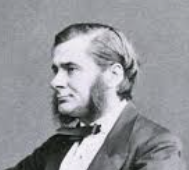
Science ... commits suicide when it adopts a creed.
▼
Source
source
"The Darwin Memorial"

9 months 2 weeks ago
They who know of no purer sources of truth, who have traced up its stream no higher, stand, and wisely stand, by the Bible and the Constitution, and drink at it there with reverence and humility; but they who behold where it comes trickling into this lake or that pool, gird up their loins once more, and continue their pilgrimage toward its fountain-head.
5 months 2 weeks ago
The two principles on which our conduct towards the Indians should be founded, are justice and fear. After the injuries we have done them, they cannot love us....
▼
Source
source
Letter to Benjamin Hawkins (13 August 1786) Lipscomb & Bergh ed. 5:390

10 months 2 weeks ago
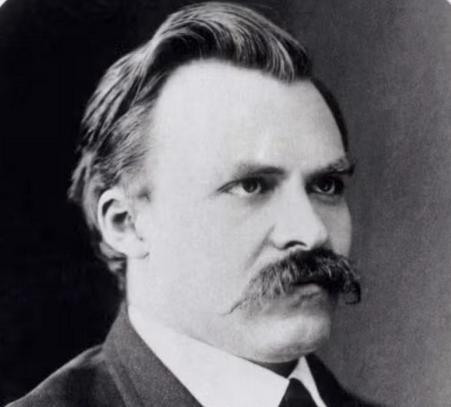
Not one of these nobly equipped young men has escaped the restless, exhausting, confusing, debilitating crisis of education. ... He feels that he cannot guide himself, cannot help himself, and then he dives hopelessly into the world of everyday life and daily routine, he is immersed in the most trivial activity possible, and his limbs grow weak and weary.
8 months 1 week ago
What can be said, lacks reality. Only what fails to make its way into words exists and counts.
8 months 4 days ago
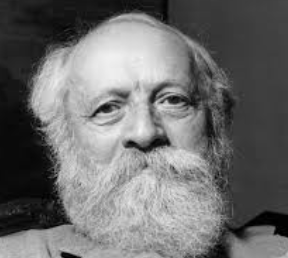
Whoever abhors the name and fancies that he is godless - when he addresses with his whole devoted being the Thou of his life that cannot be restricted by any other, he addresses God.

9 months 2 weeks ago
A physicist looks for causes; that does not necessarily imply that there are causes everywhere. A man may look for gold without assuming that there is gold everywhere; if he finds gold, well and good, if he doesn't he's had bad luck. The same is true when the physicists look for causes.
▼
Source
source
BBC Radio Debate on the Existence of God, Russell vs. Copleston, 1948
5 months 1 week ago
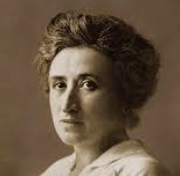
The leadership has failed. Even so, the leadership can and must be recreated from the masses and out of the masses. The masses are the decisive element, they are the rock on which the final victory of the revolution will be built. The masses were on the heights; they have developed this 'defeat' into one of the historical defeats which are the pride and strength of international socialism. And that is why the future victory will bloom from this 'defeat'. 'Order reigns in Berlin!' You stupid henchmen! Your 'order' is built on sand. Tomorrow the revolution will already 'raise itself with a rattle' and announce with fanfare, to your terror: I was, I am, I will be!
▼
Source
source
"Order reigns in Berlin", Last written words. Collected Works 4
CivilSimian.com created by AxiomaticPanic, CivilSimian, Kalokagathia