

9 months 4 days ago
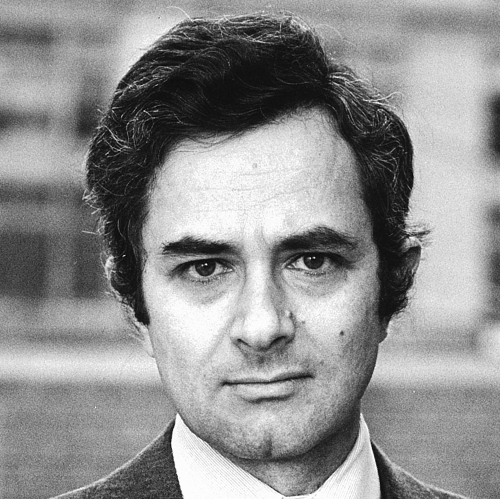
The idealist tradition, including contemporary phenomenology, has of course admitted subjective points of view as basic and has gone to the opposite length of denying an irreducible objective reality. ... I find the idealist solution unacceptable ...: objective reality cannot be analyzed or shut out of existence any more than subjective reality can. Even if not everything is something from no point of view, some things are.The deep source of both idealism and its objectifying opposite is the same: a conviction that a single world cannot contain both irreducible points of view and irreducible objective reality - that one of them must be what there really is and the other somehow reducible or dependent on it. This is a very powerful idea. To deny it is in a sense to deny that there is a single world.
▼
Source
source
"Subjective and Objective" (1979), p. 212.
9 months 2 weeks ago
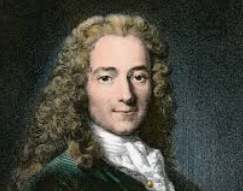
Nothing is so common as to imitate one's enemies, and to use their weapons.
▼
Source
source
"Oracles", 1770
9 months 3 days ago
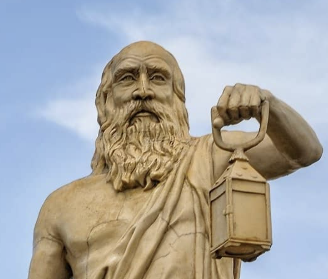
Boasting, like gilded armour, is very different inside from outside.
▼
Source
source
Stobaeus, iii. 22. 40

9 months 1 week ago
Why in the world shouldn't they have regarded with awe and reverence that act by which the human race is perpetuated. Not every religion has to have St. Augustine's attitude to sex. Why even in our culture marriages are celebrated in a church, everyone present knows what is going to happen that night, but that doesn't prevent it being a religious ceremony.
▼
Source
source
Intentionality, and Romanticism (1997) by Richard Thomas Eldridge, p. 130

9 months 3 weeks ago
In this present that God has made us, there is nothing unworthy our care; we stand accountable for it even to a hair; and is it not a commission to man, to conduct man according to his condition; 'tis express, plain, and the very principal one, and the Creator has seriously and strictly prescribed it to us. Authority has power only to work in regard to matters of common judgment, and is of more weight in a foreign language; therefore let us again charge at it in this place.
▼
Source
source
Ch. 13

5 months 1 week ago
Always take the short cut; and that is the rational one. Therefore say and do everything according to soundest reason.
▼
Source
source
IV, 51
7 months 1 week ago
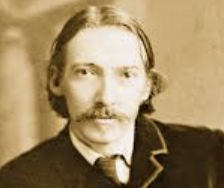
It is better to lose health like a spendthrift than to waste it like a miser. It is better to live and be done with it, than to die daily in the sick-room.
▼
Source
source
315
8 months 6 days ago
Friendship is almost always the union of a part of one mind with the part of another; people are friends in spots.
▼
Source
source
"Friendships"
7 months 4 weeks ago
To wish to escape from solitude is cowardice. Friendship is not to be sought, not to be dreamed, not to be desired; it is to be exercised (it is a virtue).
▼
Source
source
p. 274

9 months 2 weeks ago
These considerations did not make us overlook the folly of premature attempts to dispense with the inducements of private interest in social affairs, while no substitute for them has been or can be provided: but we regarded all existing institutions and social arrangements as being (in a phrase I once heard from Austin) "merely provisional," and we welcomed with the greatest pleasure and interest all socialistic experiments by select individuals (such as the Co-operative Societies), which, whether they succeeded or failed, could not but operate as a most useful education of those who took part in them, by cultivating their capacity of acting upon motives pointing directly to the general good, or making them aware of the defects which render them and others incapable of doing so.
▼
Source
source
(pp. 233-234)
5 months 3 weeks ago
Physics is to be regarded not so much as the study of something a priori given, but rather as the development of methods of ordering and surveying human experience. In this respect our task must be to account for such experience in a manner independent of individual subjective judgement and therefore objective in the sense that it can be unambiguously communicated in ordinary human language.
▼
Source
source
The Unity of Human Knowledge
5 months 1 week ago
Let opinion be taken away, and no man will think himself wronged. If no man shall think himself wronged, then is there no more any such thing as wrong.
▼
Source
source
IV. 7, trans. Méric Casaubon
9 months 1 day ago
As Cæsar was at supper the discourse was of death,-which sort was the best. "That," said he, "which is unexpected."
▼
Source
source
Cæsar

8 months 1 week ago
Why don't I kill myself? If I knew exactly what keeps me from doing so, I should have no more questions to ask myself since I should have answered them all.

9 months 1 week ago
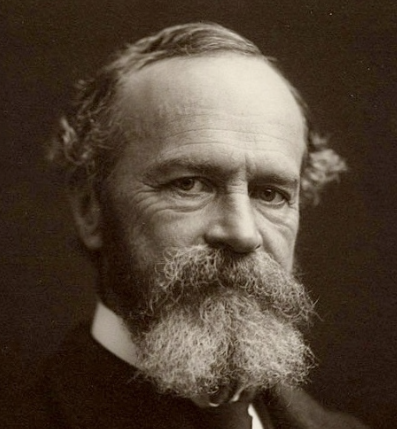
We must frankly confess, then, using our empirical common sense and ordinary practical prejudices, that in the world that actually is, the virtues of sympathy, charity, and non-resistance may be, and often have been, manifested in excess. ... You will agree to this in general, for in spite of the Gospel, in spite of Quakerism, in spite of Tolstoi, you believe in fighting fire with fire, in shooting down usurpers, locking up thieves, and freezing out vagabonds and swindlers.
▼
Source
source
Lectures XIV and XV, "The Value of Saintliness"

7 months 3 weeks ago
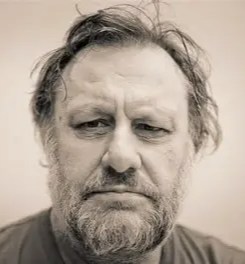
In its mad passion for power, the Communist State even sought to strengthen and deepen the very ideas and conceptions which the Revolution had come to destroy. It supported and encouraged all the worst antisocial qualities and systematically destroyed the already awakened conception of the new revolutionary values.The sense of justice and equality, the love of liberty and of human brotherhood - these fundamentals of the real regeneration of society - the Communist State suppressed to the point of extermination. Man's instinctive sense of equity was branded as weak sentimentality; human dignity and liberty became a bourgeois superstition; the sanctity of life, which is the very essence of social reconstruction, was condemned as unrevolutionary, almost counter-revolutionary. This fearful perversion of fundamental values bore within itself the seed of destruction.
1 year 1 month ago
The wreck of the Titanic functions as a sublime object: a positive, material object elevated to the status of the impossible Thing. And perhaps all the effort to articulate the metaphysical meaning of the Titanic is nothing but an attempt to escape this terrifying impact of the Thing, an attempt to domesticate the Thing by reducing it to its symbolic status, by providing it with a meaning. We usually say that the fascinating presence of a Thing obscures its meaning; here, the opposite is true: the meaning obscures the terrifying impact of its presence.

7 months 1 week ago
The appreciation of the merits of art (of the emotions it conveys) depends upon an understanding of the meaning of life, what is seen as good and evil. Good and evil are defined by religions.

8 months 2 weeks ago
Those who have been once intoxicated with power, and have derived any kind of emolument from it, even though but for one year, never can willingly abandon it. They may be distressed in the midst of all their power; but they will never look to any thing but power for their relief.

9 months 1 week ago
The Spirit of the Age wishes to allow argument and not to allow argument. ... If anyone argues with them they say that he is rationalizing his own desires, and therefore need not be answered. But if anyone listens to them they will then argue themselves to show that their own doctrines are true. ... You must ask them whether any reasoning is valid or not. If they say no, then their own doctrines, being reached by reasoning, fall to the ground. If they say yes, then they will have to examine your arguments and refute them on their merits: for if some reasoning is valid, for all they know, your bit of reasoning may be one of the valid bits.'
▼
Source
source
Pilgrim's Regress 63
6 months 6 days ago
Culture, when it loses its sacred sense, loses all sense. With the disappearance of the sacred, which imposed limits to the perfection which could be attained by the profane, arises one of the most dangerous illusions of our civilization-the illusion that there are no limits to the changes that human life can undergo, that society is 'in principle' an endlessly flexible thing, and that to deny this flexibility and this perfectibility is to deny man's total autonomy and thus to deny man himself.
▼
Source
source
The Revenge of the Sacred in Secular Culture


8 months ago
Uncertainty, doubt, perpetual wrestling with the mystery of our final destiny, mental despair, and the lack of any solid and stable foundation, may be the basis of an ethic.
8 months 1 week ago
The meeting of two personalities is like the contact of two chemical substances: if there is any reaction, both are transformed.
▼
Source
source
p. 49

7 months 4 weeks ago
By relieving the brain of all unnecessary work, a good notation sets it free to concentrate on more advanced problems, and in effect increases the mental power of the race..
▼
Source
source
ch. 5
9 months 2 weeks ago
England and France, the two most civilized nations on earth, who are in contrast to each other because of their different characters, are, perhaps chiefly for that reason, in constant feud with one another. Also, England and France, because of their inborn characters, of which the acquired and artificial character is only the result, are probably the only nations who can be assumed to have a particular and, as long as both national characters are not blended by the force of war, unalterable characteristics. That French has become the universal language of conversation, especially in the feminine world, and that English is the most widely used language of commerce among tradesmen, probably reflects the difference in their continental and insular geographic situation.
▼
Source
source
Kant, Immanuel (1996), page 226
8 months 1 week ago
The dynamic principle of fantasy is play, a characteristic also of the child, and as such it appears inconsistent with the principle of serious work. But without this playing with fantasy no creative work has ever yet come to birth. The debt we owe to the play of imagination is incalculable. It is therefore short-sighted to treat fantasy, on account of its risky or unacceptable nature, as a thing of little worth.
▼
Source
source
Ch. 1, p. 82

10 months 2 weeks ago
The venerability, reliability, and utility of truth is something which a person demonstrates for himself from the contrast with the liar, whom no one trusts and everyone excludes. As a "rational" being, he now places his behavior under the control of abstractions. He will no longer tolerate being carried away by sudden impressions, by intuitions.
7 months 3 weeks ago
God is nothingness: He is 'beyond all speech.'
8 months 2 weeks ago
That is a long word: forever!
▼
Source
source
Act I.

5 months 1 week ago
What was man before the invention of words and the knowledge of language? An animal..
9 months 2 weeks ago
Persons of genius, it is true, are, and are always likely to be, a small minority; but in order to have them, it is necessary to preserve the soil in which they grow. Genius can only breathe freely in an atmosphere of freedom.
▼
Source
source
Ch. III: Of Individuality, As One of the Elements of Well-Being

5 months 4 weeks ago
Tis the first art of kings, the power to suffer hate.
9 months 2 weeks ago
Don't think money does everything or you are going to end up doing everything for money.

8 months 2 weeks ago
If there is to be any philosophy at all, this contradiction must be resolved - and the solution of this problem, or answer to the question: how can we think both of Presentations as conforming to objects, and objects as conforming to presentations? is, not the first, but the highest task of transcendental philosophy.

9 months 1 week ago
Today, criminal justice functions and justifies itself only by this perpetual reference to something other than itself, by this unceasing reinscription in non-juridical systems.

8 months 1 week ago
Ethical ideas and sentiments have to be considered as parts of the phenomena of life at large. We have to deal with man as a product of evolution, with society as a product of evolution, and with moral phenomena as products of evolution.
▼
Source
source
Ch. 1, Introductory
8 months 1 week ago
When we have no further desire to show ourselves, we take refuge in music, the Providence of the abulic.
9 months 1 week ago
I cannot get from the nature of the proposition to the individual logical operations!!! That is, I cannot bring out how far the proposition is the picture of the situation. I am almost inclined to give up all my efforts.
▼
Source
source
Journal entries (12 March 1915 and 15 March 1915) p. 41
8 months 1 week ago
We must suffer to the end, to the moment when we stop believing in suffering.

6 months 1 week ago
The End of History was never linked to a specifically American model of social or political organisation. Following Alexandre Kojève, the Russian-French philosopher who inspired my original argument, I believe that the European Union more accurately reflects what the world will look like at the end of history than the contemporary United States. The EU's attempt to transcend sovereignty and traditional power politics by establishing a transnational rule of law is much more in line with a "post-historical" world than the Americans' continuing belief in God, national sovereignty, and their military.
▼
Source
source
In "The history at the end of history", The Guardian
8 months 2 weeks ago
Whenever our neighbour's house is on fire, it cannot be amiss for the engines to play a little on our own.
5 months 4 weeks ago
"They are slaves," people declare. Nay, rather they are men. "Slaves!" No, comrades. "Slaves!" No, they are unpretentious friends. "Slaves!" No, they are our fellow-slaves, if one reflects that Fortune has equal rights over slaves and free men alike.

6 months 4 days ago
Books-there is a good kind of a book and a bad kind of a book. I am not to assume that you are all ill acquainted with this; but I may remind you that it is a very important consideration at present. It casts aside altogether the idea that people have that if they are reading any book-that if an ignorant man is reading any book, he is doing rather better than nothing at all.
CivilSimian.com created by AxiomaticPanic, CivilSimian, Kalokagathia