

6 months 5 days ago
Tyrants would distribute largess, a bushel of wheat, a gallon of wine, and a sesterce: and then everybody would shamelessly cry, "Long live the King!" The fools did not realize that they were merely recovering a portion of their own property, and that their ruler could not have given them what they were receiving without having first taken it from them.
▼
Source
source
Part 2

8 months 1 week ago
...they who would make peace without a previous knowledge of the terms, make a surrender. They are conquered. They do not treat; they receive the law. Is this the disposition of the people of England? Then the people of England are contented to seek in the kindness of a foreign systematick enemy combined with a dangerous faction at home, a security which they cannot find in their own patriotism and their own courage. They are willing to trust to the sympathy of Regicides the guarantee of the British Monarchy. They are content to rest their religion on the piety of atheists by establishment. They are satisfied to seek in the clemency of practised murderers the security of their lives. They are pleased to confide their property to the safeguard of those who are robbers by inclination, interest, habit, and system. If this be our deliberate mind, truly we deserve to lose, what it is impossible we should long retain, the name of a nation.
▼
Source
source
p. 48
7 months 1 week ago
The end of history is, alas, also the end of the dustbins of history. There are no longer any dustbins for disposing of old ideologies, old regimes, old values. Where are we going to throw Marxism, which actually invented the dustbins of history? (Yet there is some justice here since the very people who invented them have fallen in.) Conclusion: if there are no more dustbins of history, this is because History itself has become a dustbin. It has become its own dustbin, just as the planet itself is becoming its own dustbin.
▼
Source
source
The Illusion of the End (1992) (L'Illision de la Fin) Tr. Chris Turner, 1994, Stanford University Press, ISBN 0804725012, p. 26, "The Event Strike"

7 months 3 weeks ago
Feminism is the struggle to end sexist oppression. Therefore, it is necessarily a struggle to eradicate the ideology of domination that permeates Western culture on various levels, as well as a commitment to reorganizing society so that the self-development of people can take precedence over imperialism, economic expansion, and material desires.

9 months 1 week ago
Preference of vice to virtue, a manifest wrong judgment.
▼
Source
source
Book II, Ch. 21, sec. 70

8 months 6 days ago
The entire universe is perfused with signs, if it is not composed exclusively of signs.
▼
Source
source
Quoted in Essays in Zoosemiotics (1990) by Thomas A. Sebeok
8 months 6 days ago
It has never been in my power to study anything, - mathematics, ethics, metaphysics, gravitation, thermodynamics, optics, chemistry, comparative anatomy, astronomy, psychology, phonetics, economics, the history of science, whist, men and women, wine, metrology, except as a study of semeiotic.
▼
Source
source
Letter to Victoria

7 months 3 weeks ago
In fact, for a voluntarist like Schopenhauer, a theory so sanely and cautiously empirical and rational as that of Darwin, left out of account the inward force, the essential motive, of evolution. For what is, in effect, the hidden force, the ultimate agent, which impels organisms to perpetuate themselves and to fight for their persistence and propagation? Selection, adaptation, heredity, these are only external conditions. This inner, essential force has been called will on the supposition that there exists also in other beings that which we feel in ourselves as a feeling of will, the impulse to be everything, to be others as well as ourselves yet without ceasing to be what we are.

6 months 2 weeks ago
There will not be one kind of community existing and one kind of life led in utopia. Utopia will consist of utopias, of many different and divergent communities in which people lead different kinds of lives under different institutions. Some kinds of communities will be more attractive to most than others; communities will wax and wane. People will leave some for others or spend their whole lives in one. Utopia is a framework for utopias, a place where people are at liberty to join together voluntarily to pursue and attempt to realize their own vision of the good life in the ideal community but where no one can impose his own utopian vision upon others.
▼
Source
source
Ch. 10 : A Framework for Utopia; The Framework, p. 311

9 months 1 week ago
The imitator dooms himself to hopeless mediocrity. The inventor did it because it was natural to him, and so in him it has a charm. In the imitator something else is natural, and he bereaves himself of his own beauty, to come short of another man's.
▼
Source
source
p. 26
8 months 3 days ago
The free will, the actual motor of reason in society, necessarily creates wrong. The individual must clash with the social order that claims to represent his own will in its objective form. But the wrong and the 'avenging justice' that remedies it not only expresses a 'higher logical necessity,' but also prepare the transition to a higher social form of freedom, the transition from abstract right to morality. For, in committing a wrong, and in accepting punishment for his deed, the individual becomes conscious of the 'infinite subjectivity' of his freedom. He learns that he is free only as a private person.
▼
Source
source
P. 198

8 months 2 weeks ago
Obstinacy in a bad cause, is but constancy in a good.
▼
Source
source
Section 25

10 months 1 week ago
Manhattan. Sometimes from beyond the skyscrapers, across of thousands of high walls, the cry of a tugboat finds you in your insomnia in the middle of the night, and you remember that this desert of iron and cement is an island.


9 months 1 week ago
If the single man plant himself indomitably on his instincts, and there abide, the huge world will come round to him. 6. Nature, Addresses and Lectures.
▼
Source
source
The American Scholar


9 months 1 day ago
If evolution is a struggle for survival, why hasn't it ruthlessly eliminated altruists, who seem to increase another's prospects of survival at the cost of their own?
▼
Source
source
Chapter 1, The Origins Of Altruism, p. 5
9 months 1 week ago
This is that which I think great readers are apt to be mistaken in; those who have read of everything, are thought to understand everything too; but it is not always so. Reading furnishes the mind only with materials of knowledge; it is thinking that makes what we read ours. We are of the ruminating kind, and it is not enough to cram ourselves with a great load of collections ; unless we chew them over again, they will not give us strength and nourishment.
▼
Source
source
As quoted in "Hand Book : Caution and Counsels" in The Common School Journal Vol. 5, No. 24 (15 December 1843) by Horace Mann, p. 371
5 months ago
Why does this magnificent applied science which saves work and makes life easier bring us so little happiness? The simple answer runs: Because we have not yet learned to make sensible use of it. In war it serves that we may poison and mutilate each other. In peace it has made our lives hurried and uncertain. Instead of freeing us in great measure from spiritually exhausting labor, it has made men into slaves of machinery, who for the most part complete their monotonous long day's work with disgust and must continually tremble for their poor rations. ... It is not enough that you should understand about applied science in order that your work may increase man's blessings. Concern for the man himself and his fate must always form the chief interest of all technical endeavours; concern for the great unsolved problems of the organization of labor and the distribution of goods in order that the creations of our mind shall be a blessing and not a curse to mankind. Never forget this in the midst of your diagrams and equations.
▼
Source
source
Speech to students at the California Institute of Technology, in [http://select.nytimes.com/gst/abstract.html?res=F50A1FFF3F5E1B7A93C5A81789D85F458385F9&scp=4&sq=&st=p "Einstein Sees Lack in Applying Science"], The New York Times (16 February 1931)

8 months 3 weeks ago
I think that when friendship and perception of kinship ruled everything, no one killed any creature, because people thought the other animals were related to them.
▼
Source
source
2, 22, 1

9 months 1 week ago
You must picture me alone in that room in Magdalen, night after night, feeling, whenever my mind lifted even for a second from my work, the steady, unrelenting approach of Him whom I so earnestly desired not to meet. That which I greatly feared had at last come upon me. In the Trinity Term of 1929 I gave in, and admitted that God was God, and knelt and prayed: perhaps, that night, the most dejected and reluctant convert in all England.
8 months 1 week ago
"Can any good come out of Nazareth?" This is always the question of the wiseacres and the knowing ones. But the good, the new, comes from exactly that quarter whence it is not looked for, and is always something different from what is expected. Everything new is received with contempt, for it begins in obscurity. It becomes a power unobserved.
▼
Source
source
As quoted in "Voices of the New Time" as translated by C. C. Shackford in The Radical Vol. 7 (1870), p. 329

8 months 6 days ago
What place do we occupy in the "universe"? A point, if that! Why reproach ourselves when we are evidently so insignificant? Once we make this observation, we grow calm at once: henceforth, no more bother, no more frenzy, metaphysical or otherwise. And then that point dilates, swells, substitutes itself for space. And everything begins all over again.

8 months 2 weeks ago
When superstition is allowed to perform the task of old age in dulling the human temperament, we can say goodbye to all excellence in poetry, in painting, and in music.
▼
Source
source
Ch. 3, as quoted in Selected Writings (1966) edited by Lester G. Crocker

8 months 1 week ago
A dream! What is a dream? And is not our life a dream? I will say more. Suppose that this paradise will never come to pass (that I understand), yet I shall go on preaching it. And yet how simple it is: in one day, in one hour everything could be arranged at once! The chief thing is to love others like yourself, that's the chief thing, and that's everything; nothing else is wanted - you will find out at once how to arrange it all. And yet it's an old truth which has been told and retold a billion times - but it has not formed part of our lives! The consciousness of life is higher than life, the knowledge of the laws of happiness is higher than happiness - that is what one must contend against. And I shall. If only everyone wants it, it can be arranged at once.

5 months 3 weeks ago
The cause of anger is the belief that we are injured; this belief, therefore, should not be lightly entertained. We ought not to fly into a rage even when the injury appears to be open and distinct: for some false things bear the semblance of truth. We should always allow some time to elapse, for time discloses the truth.
▼
Source
source
De Ira (On Anger): Book 2, cap. 22, line 2 Alternate translation: Time discovers truth. (translator unknown).
8 months 1 day ago
Scientific truth is characterized by its exactness and the certainty of its predictions. But these admirable qualities are contrived by science at the cost of remaining on a plane of secondary problems. leaving intact the ultimate and decisive questions. ... Yet science is but a small part of the human mind and organism. Where it stops, man does not stop.
▼
Source
source
p. 13
5 months 3 weeks ago
Macbeth's self-justifications were feeble - and his conscience devoured him. Yes, even Iago was a little lamb too. The imagination and the spiritual strength of Shakespeare's evildoers stopped short at a dozen corpses. Because they had no ideology.
▼
Source
source
The Gulag Archipelago
9 months 1 week ago
Children have as much mind to shew that they are free, that their own good actions come from themselves, that they are absolute and independent, as any of the proudest of you grown men, think of them as you please.
▼
Source
source
Sec. 73

9 months 1 week ago
And as to you, Sir, treacherous in private friendship (for so you have been to me, and that in the day of danger) and a hypocrite in public life, the world will be puzzled to decide whether you are an apostate or an impostor; whether you have abandoned good principles, or whether you ever had any.
▼
Source
source
Letter to George Washington, 30 July 1796
8 months 6 days ago
In order to conceive, and to steep ourselves in, unreality, we must have it constantly present to our minds. The day we feel it, see it, everything becomes unreal, except that unreality which alone makes existence tolerable.

8 months 3 days ago
If you have money, don't lend it at interest. Rather, give it to someone from whom you won't get it back.

9 months 1 week ago
The great thing, then, in all education, is to make our nervous system our ally instead of our enemy.
▼
Source
source
Ch. 4
9 months 1 week ago
The hazards of the generalized prisoner's dilemma are removed by the match between the right and the good.
▼
Source
source
Chapter IX, Section 86, p. 577
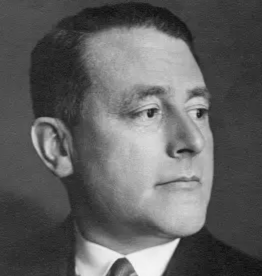
5 months 1 week ago
Whoever asserts a value, must bring its influence to bear. Whoever maintains that it has value regardless of the influence brought to bear by any individual human being who endorses it, is simply cheating.

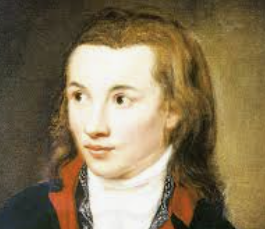
8 months 1 week ago
Man is a Sun; his Senses are the Planets.
5 months ago
We Jews have been too adaptable. We have been too eager to sacrifice our idiosyncrasies for the sake of social conformity. ... Even in modern civilization, the Jew is most happy if he remains a Jew.
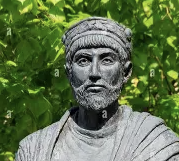
5 months 2 weeks ago
If the immediate creator of the universe be he who is proclaimed by Moses, then we hold nobler beliefs concerning him, inasmuch as we consider him to be the master of all things in general, but that there are besides national gods who are subordinate to him and are like viceroys of a king, each administering separately his own province; and, moreover, we do not make him the sectional rival of the gods whose station is subordinate to his. But if Moses first pays honour to a sectional god, and then makes the lordship of the whole universe contrast with his power, then it is better to believe as we do, and to recognise the God of the All, though not without apprehending also the God of Moses; this is better, I say, than to honour one who has been assigned the lordship over a very small portion, instead of the creator of all things.
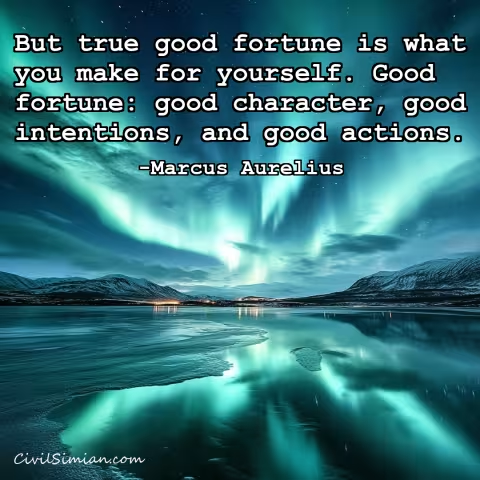

8 months 1 week ago
Allow me, Gentlemen, to pose this question in a more serious manner. Do I need to tell you that it is not a question at first of the natural, physiological, ethnographic difference that exists between individuals, but of the social difference, that is produced by the economic organization of society? Give to all the children, from their birth, the same means of maintenance, education, and instruction; give then to all the men thus raised the same social milieu, the same means of earning their living by their own labor, and you will see then that many of these differences, that we believe to be natural differences, will disappear because they are nothing but the effect of an unequal division of the conditions of intellectual and physical development - of the conditions of life.
9 months 1 week ago
I have always thought the actions of men the best interpreters of their thoughts.
▼
Source
source
Book 1, Ch. 3, sec. 3 Variant: The actions of men are the best interpreters of their thoughts.

7 months 3 weeks ago
Yet it must be acknowledged that there is a fundamental difference between the sexual impulse in men and women. Her need is for a lover, a protector, a father for her children. His desire is for mastery, conquest, to be allowed to use her body for his own satisfaction. He feels like a bee, burying itself in a flower, apparently doing nothing for the flower but taking its sweetness. If he loves her, then his desire is mixed with a kind of pity.
9 months 1 week ago
Fools have a habit of believing that everything written by a famous author is admirable. For my part I read only to please myself and like only what suits my taste.

9 months 6 days ago
In philosophy the race is to the one who can run slowest-the one who crosses the finish line last.
▼
Source
source
p. 40e

8 months 3 days ago
Perhaps the only true dignity of man is his capacity to despise himself.
9 months 6 days ago
Being is only Being for Dasein.
▼
Source
source
Macquarrie & Robinson translation
CivilSimian.com created by AxiomaticPanic, CivilSimian, Kalokagathia