


6 months 5 days ago
The more progress that has been made toward eradicating social injustices, the more intolerable the remaining injustices seem, and thus the moral imperative to mobilizing to correct them.

8 months 6 days ago
Nothing surpasses the pleasures of idleness: even if the end of the world were to come, I would not leave my bed at an ungodly hour.
9 months 1 week ago
Have patience awhile; slanders are not long-lived. Truth is the child of time; erelong she shall appear to vindicate thee.
▼
Source
source
As quoted in Gems of Thought (1888) edited by Charles Northend


7 months 1 week ago
Adversity shows whether we have friends, or only the shadows of friends.
▼
Source
source
Maxim 35

5 months 2 weeks ago
To accomplish anything whatsoever one must have standards. None have yet accomplished anything without them.
▼
Source
source
Book 1; On the necessity of standards

9 months 1 week ago
After silence that which comes nearest to expressing the inexpressible is music.
▼
Source
source
"The Rest is Silence"

7 months 1 week ago
Try not to have Emily exposed to hours and hours of TV. It is a vile drug which permeates the nervous system, especially in the young.
▼
Source
source
Letter to son Eric McLuhan, regarding one of Eric's daughters, 1976
8 months 1 week ago
True anarchy is the generative element of religion. Out of the annihilation of all existing institutions she raises her glorious head, as the new foundress of the world.
▼
Source
source
English translation as quoted in The Dublin Review Vol. III (July-October 1837)

9 months 1 week ago
Thoughts without content are empty, intuitions without concepts are blind. The understanding can intuit nothing, the senses can think nothing. Only through their unison can knowledge arise.
▼
Source
source
A 51, B 75

5 months 1 week ago
Nothing can come out of nothing, any more than a thing can go back to nothing.
▼
Source
source
IV, 4

5 months 3 weeks ago
No man ought to glory except in that which is his own.
10 months ago
When I walk along with two others, they may serve me as my teachers. I will select their good qualities and follow them, their bad qualities and avoid them.
8 months 6 days ago
Without the faculty of forgetting, our past would weigh so heavily on our present that we should not have the strength to confront another moment, still less to live through it. Life would be bearable only to frivolous natures, those in fact who do not remember.
8 months 6 days ago
We understand God by everything in ourselves that is fragmentary, incomplete, and inopportune.

8 months 2 days ago
The role of philosophy might be said to be to extend and deepen the self-awareness of mankind.
▼
Source
source
Ch. 9, p. 137
6 months 3 days ago
There is no idea so obscure that someone could not come to regard it as self-evident.
▼
Source
source
Chapter Seven, Pragmatism and Positivism, p. 156
10 months 1 week ago
No power can maintain itself if only hypocrites represent it.
5 months 1 week ago
Gather your strength and listen; the whole heart of man is a single outcry. Lean against your breast to hear it; someone is struggling and shouting within you. It is your duty every moment, day and night, in joy or in sorrow, amid all daily necessities, to discern this Cry with vehemence or restraint, according to your nature, with laughter or with weeping, in action or in thought, striving to find out who is imperiled and cries out. And how we may all be mobilized together to free him.

8 months 3 days ago
And though this may seem to subtile a deduction of the Lawes of Nature, to be taken notice of by all men;whereof the most part are too busie in getting food, and the rest too negligent to understand; yet to leave all men unexcusable, they have been contracted into one easie sum, intelligble, even to the meanest capacity; and that is, Do not that to another, which thou wouldest not have done to thyselfe; which sheweth him, that he has no more to do in learning the Lawes of Nature, but, when weighing the actions of other men with his own, they seem too heavy, to put them into the other part of the balance, and his own into their place, that his own passions, and selfe love, may adde nothing to the weight; and then there is none of these Laws of Nature that will not appear unto him very reasonable.
▼
Source
source
The First Part, Chapter 15, p. 79
8 months 2 weeks ago
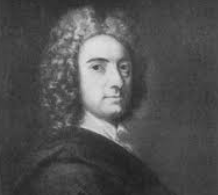
That neither our Thoughts, nor Passions, nor Ideas formed by the Imagination, exist without the Mind, is what every Body will allow. And it seems no less evident that the various Sensations or Ideas imprinted on the Sense... cannot exist otherwise than in a Mind perceiving them... For as to what is said of the absolute Existence of unthinking Things without any relation to their being perceived, that seems perfectly unintelligible. Their Esse is Percipi, nor is it possible they should have any Existence, out of the Minds or thinking Things which perceive them.
5 months ago
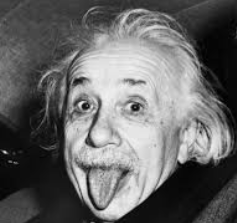
In the temple of science are many mansions, and various indeed are they that dwell therein and the motives that have led them thither. Many take to science out of a joyful sense of superior intellectual power; science is their own special sport to which they look for vivid experience and the satisfaction of ambition; many others are to be found in the temple who have offered the products of their brains on this altar for purely utilitarian purposes. Were an angel of the Lord to come and drive all the people belonging to these two categories out of the temple, the assemblage would be seriously depleted, but there would still be some men, of both present and past times, left inside. Our Planck is one of them, and that is why we love him. I am quite aware that we have just now lightheartedly expelled in imagination many excellent men who are largely, perhaps chiefly, responsible for the buildings of the temple of science; and in many cases, our angel would find it a pretty ticklish job to decide. But of one thing I feel sure: if the types we have just expelled were the only types there were, the temple would never have come to be, any more than a forest can grow which consists of nothing but creepers. For these people any sphere of human activity will do if it comes to a point; whether they become engineers, officers, tradesmen, or scientists depends on circumstances.Now let us have another look at those who have found favor with the angel. Most of them are somewhat odd, uncommunicative, solitary fellows, really less like each other, in spite of these common characteristics, than the hosts of the rejected. What has brought them to the temple? That is a difficult question and no single answer will cover it.

9 months 2 weeks ago
There is no more lovely, friendly and charming relationship, communion or company than a good marriage.
▼
Source
source
292

7 months 2 weeks ago
The alteration of motion is ever proportional to the motive force impressed; and is made in the direction of the right line in which that force is impressed.
▼
Source
source
Laws of Motion, II
9 months 2 weeks ago
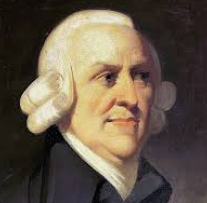
The value of money is in proportion to the quantity of the necessaries of life which it will purchase.
▼
Source
source
Chapter II, Part II, Article IV.

8 months 3 days ago
Get thee hence, Satan: for it is written, Thou shalt worship the Lord thy God, and him only shalt thou serve.
▼
Source
source
4:10 (KJV) Said to Satan.
9 months 2 weeks ago
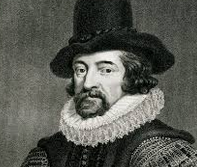
Cosmus, Duke of Florence, was wont to say of perfidious friends, that "We read that we ought to forgive our enemies; but we do not read that we ought to forgive our friends."
▼
Source
source
No. 206
9 months 2 weeks ago
By the removal of the unnecessary mouths, and by extracting from the farmer the full value of the farm, a greater surplus, or what is the same thing, the price of a greater surplus, was obtained for the proprietor...
▼
Source
source
Chapter IV, p. 450 (On Highland Clearances).


8 months 1 week ago
To the Deity must be left the task of infinite perfection, while to us poor, weak, incapable mortals, there was no rule of conduct so safe as experience.
▼
Source
source
Speech in the House of Commons (6 May 1791), quoted in The Parliamentary History of England, From the Earliest Period to the Year 1803, Vol. XXIX (1817), column 388


9 months 1 week ago
Yes, I am so free. And what a superb absence is my soul.
▼
Source
source
Orestes, Act 1
9 months 1 week ago
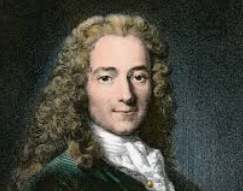
The public is a ferocious beast: one must chain it up or flee from it.
▼
Source
source
Letter to Mademoiselle Quinault, quoted in Charles Sainte-Beuve, "Lettres inédites de Voltaire," Causeries de Lundi (20 October 1856) ; an English translation can be found on this page:

7 months 6 days ago
There is no spirit-driven life force, no throbbing, heaving, pullulating, protoplasmic, mystic jelly. Life is just bytes and bytes and bytes of digital information.
5 months 3 weeks ago
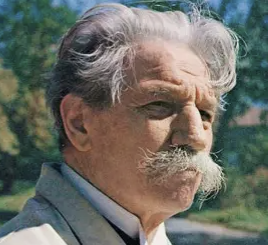
As a rule there are in everyone all sorts of good ideas, ready like tinder. But much of this tinder catches fire, or catches it successfully, only when it meets some flame or spark from outside, i.e. from some other person. Often, too, our own light goes out, and is rekindled by some experience we go through with a fellow-man. Thus we have each of us cause to think with deep gratitude of those who have lighted the flames within us.
7 months 3 weeks ago
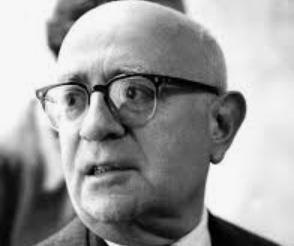
When I made my theoretical model, I could not have guessed that people would try to realise it with Molotov cocktails.
▼
Source
source
As quoted in The Dialectical Imagination : A History of the Frankfurt School and the Institute of Social Research (1973) by M Jay, p. 279.

9 months 3 weeks ago
They men have corrupted this order by making profane things what they should make of holy things, because in fact, we believe scarcely any thing except which pleases us.

9 months 1 week ago
Dissimulation is innate in woman, and almost as much a quality of the stupid as of the clever.
▼
Source
source
"Of Women"

9 months 1 week ago
Since sounds have no natural connection with our ideas ... the doubtfulness and uncertainty of their signification ... has its cause more in the ideas they stand for than in any incapacity there is in one sound more than another to signify any idea.
▼
Source
source
Book III, Ch. 9, sec. 4
8 months 1 day ago
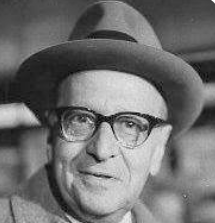
When even the dictators of today appeal to reason, they mean that they possess the most tanks. They were rational enough to build them; others should be rational enough to yield to them.
▼
Source
source
p. 28.

8 months 1 week ago
Man needs difficulties; they are necessary for health.
▼
Source
source
The Transcendent Function ("Die Transzendente Funktion") (1916) Volume 8: Structure & Dynamics of the Psyche, The Collected Works of C. G. Jung

9 months 1 week ago
The harm that is done by a religion is of two sorts, the one depending on the kind of belief which it is thought ought to be given to it, and the other upon the particular tenets believed. As regards the kind of belief: it is thought virtuous to have faith-that is to say, to have a conviction which cannot be shaken by contrary evidence. Or, if contrary evidence might induce doubt, it is held that contrary evidence must be suppressed.
▼
Source
source
preface xxiii
5 months 1 week ago
Let your occupations be few, says the sage, "if you would lead a tranquil life."
▼
Source
source
IV, 24
9 months 2 weeks ago
Thus the labour of a manufacture adds, generally, to the value of the materials which he works upon, that of his own maintenance, and of his masters profits. The labour of a menial servant, on the contrary, adds to the value of nothing.
▼
Source
source
Chapter III, p. 364 (see Proverbs 14-23 KJV).
9 months 2 weeks ago
If thou shalt aspire after the glorious acts of men, thy working shall be accompanied with compunction and strife, and thy remembrance followed with distaste and upbraidings; and justly doth it come to pass towards thee, O man, that since thou, which art God's work, doest him no reason in yielding him well-pleasing service, even thine own works also should reward thee with the like fruit of bitterness.
▼
Source
source
Of The Works Of God and Man
10 months 1 week ago
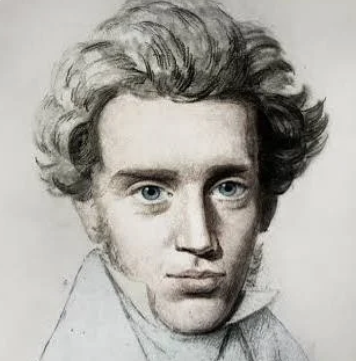
Is there anything we cannot contrive to call the demands of the times, and is there anything that does not acquire a certain prestige by being the demand of the times? But for decisive religious categories to become the demand for the times is eo ipso a contradiction. “The times” is too abstract a category to be able as claimant to demand the decisive religious categories that belong specifically to individuality and particularity; loud collective demands en mass for what can be shared only by the single individual in particularity, in solitariness, in silence, cannot be made.
▼
Source
source
Two Ages: The Age of Revolution and the Present Age. A Literary Review.
CivilSimian.com created by AxiomaticPanic, CivilSimian, Kalokagathia