



9 months 2 weeks ago
We must remove the Decalogue out of sight and heart.
▼
Source
source
Wilhelm Martin Leberecht De Wette, 4, 188. As cited by Jonathan Ramachandran (January 1, 2019), Lake of Fire - Hope for the Wicked One Day? - Essays in First Christianity, 5 Loaf 2 Fish Publications, p. 1264.

7 months 3 weeks ago
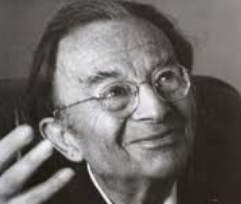
Immature love says: "I love you because I need you." Mature love says: "I need you because I love you."
▼
Source
source
Ch. 2

8 months 2 days ago
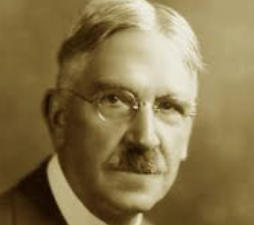
Art expresses, it does not state; it is concerned with existences in their perceived qualities, not with conceptions symbolized in terms.
▼
Source
source
p. 139

8 months 1 week ago
In the interval between his campaigns Agricola was employed in the great labours of peace. He knew that the general must be perfected by the legislator; and that the conquest is neither permanent nor honourable, which is only an introduction to tyranny... In short, he subdued the Britons by civilizing them; and made them exchange a savage liberty for a polite and easy subjection. His conduct is the most perfect model for those employed in the unhappy, but sometimes necessary, task of subduing a rude and free people.
▼
Source
source
An Essay towards an Abridgment of English History (1757-c. 1763)
9 months 2 weeks ago
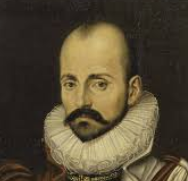
Labour not after riches first, and think thou afterwards wilt enjoy them. He who neglecteth the present moment, throweth away all that he hath. As the arrow passeth through the heart, while the warrior knew not that it was coming; so shall his life be taken away before he knoweth that he hath it.

7 months 3 weeks ago
Capitalism lacks narrativity.
9 months 1 week ago
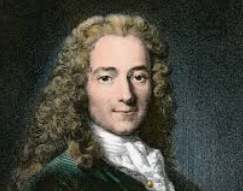
It is a serious question among them whether they [Africans] are descended from monkeys or whether the monkeys come from them. Our wise men have said that man was created in the image of God. Now here is a lovely image of the Divine Maker: a flat and black nose with little or hardly any intelligence. A time will doubtless come when these animals will know how to cultivate the land well, beautify their houses and gardens, and know the paths of the stars: one needs time for everything.
▼
Source
source
Les Lettres d'Amabed (1769): Septième Lettre d'Amabed
8 months 2 weeks ago
The object of all true Philosophy is to frame a system which shall comprehend human life under every aspect, social as well as individual. It embraces, therefore, the three kinds of phenomena of which our life consists, Thoughts, Feelings, and Actions.
▼
Source
source
p. 9
7 months 6 days ago
Old and young, we are all on our last cruise.
▼
Source
source
Crabbed Age and Youth.
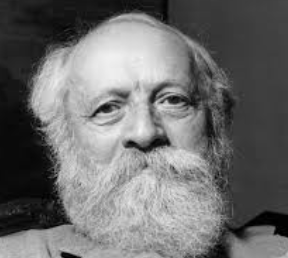
8 months 1 day ago
You do not attain to knowledge by remaining on the shore and watching the foaming waves, you must make the venture and cast yourself in, you must swim, alert and with all your force, even if a moment comes when you think you are losing consciousness; in this way, and in no other, do you reach anthropological insight.
▼
Source
source
p. 148
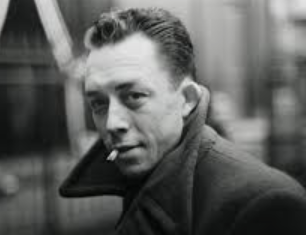
10 months 1 week ago
He marveled at the strange blindness by which men, though they are so alert to what changes in themselves, impose on their friends an image chosen for them once and for all. He was being judged by what he had been. Just as dogs don't change character, men are dogs to one another.
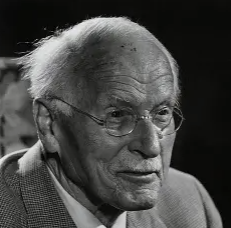
8 months 1 week ago
For his the artist's life is, of necessity, full of conflicts, since two forces fight in him: the ordinary man with his justified claim for happiness, contentment, and guarantees for living on the one hand, and the ruthless creative passion on the other, which under certain conditions crushes all personal desires into the dust.
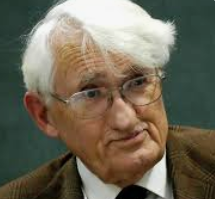
9 months 5 days ago
All affected can accept the consequences and the side effects that [the norm's] general observance can be anticipated to have for the satisfaction of everyone's interests, and the consequences are preferred to those of known alternative possibilities for regulation.
▼
Source
source
p. 65

9 months 1 week ago
Take the happiest man, the one most envied by the world, and in nine cases out of ten his inmost consciousness is one of failure. Either his ideals in the line of his achievements are pitched far higher than the achievements themselves, or else he has secret ideals of which the world knows nothing, and in regard to which he inwardly knows himself to be found wanting.
▼
Source
source
Lectures VI and VII, "The Sick Soul"

8 months 6 days ago
Beware of thinkers whose minds function only when they are fueled by a quotation.

7 months 1 week ago
Prose is private drama; poetry is corporate drama.
▼
Source
source
(p. 275)
8 months 1 day ago
When we rise out of [the night] into the new life and there begin to receive the signs, what can we know of that which - of him who gives them to us? Only what we experience from time to time from the signs themselves. If we name the speaker of this speech God, then it is always the God of a moment, a moment God.
▼
Source
source
Between Man and Man (1965), p. 15
9 months 1 week ago
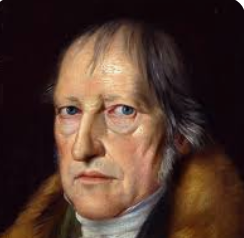
It is because the method of physics does not satisfy the comprehension that we have to go on further.

5 months 1 week ago
Hasten to examine thy own ruling faculty and that of the universe and that of thy neighbor: thy own, that thy may make it just; and that of the universe, that thou mayst remember of what thou art a part; and that of thy neighbor, that thy mayst know whether he has acted ignorantly or with knowledge, and that thou mayst also consider that his ruling faculty is akin to thine.
▼
Source
source
IX, 22

9 months 1 week ago
"Say what you like," we shall be told, "the apocalyptic beliefs of the first Christians have been proved to be false. It is clear from the New Testament that they all expected the Second Coming in their own lifetime. And, worse still, they had a reason, and one which you will find very embarrassing. Their Master had told them so. He shared, and indeed created, their delusion. He said in so many words, 'this generation shall not pass till all these things be done.' And he was wrong. He clearly knew no more about the end of the world than anyone else." It is certainly the most embarrassing verse in the Bible.

9 months 1 week ago
This is that which I think great readers are apt to be mistaken in; those who have read of everything, are thought to understand everything too; but it is not always so. Reading furnishes the mind only with materials of knowledge; it is thinking that makes what we read ours. We are of the ruminating kind, and it is not enough to cram ourselves with a great load of collections ; unless we chew them over again, they will not give us strength and nourishment.
▼
Source
source
As quoted in "Hand Book : Caution and Counsels" in The Common School Journal Vol. 5, No. 24 (15 December 1843) by Horace Mann, p. 371
9 months ago
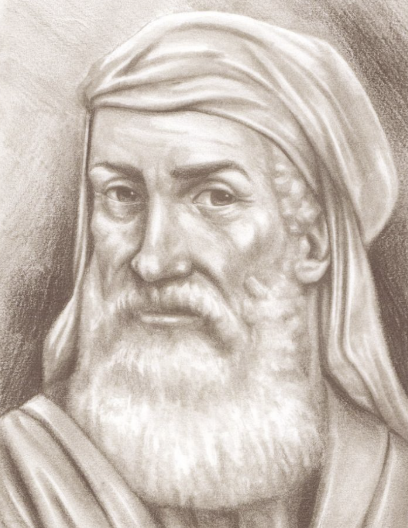
Hear first the four roots of all things: shining Zeus, life-bringing Hera, Aidoneus, and Nestis, who wets with tears the mortal wellspring.
▼
Source
source
fr. 6

7 months 3 weeks ago
The spirit of militarism has already permeated all walks of life. Indeed, I am convinced that militarism is a greater danger here than anywhere else, because of the many bribes capitalism holds out to those whom it wishes to destroy.

9 months 3 weeks ago
In order to enter into a real knowledge of your condition, consider it in this image: A man was cast by a tempest upon an unknown island, the inhabitants of which were in trouble to find their king, who was lost; and having a strong resemblance both in form and face to this king, he was taken for him, and acknowledged in this capacity by all the people.
5 months 1 week ago
Learn to ask of all actions, "Why are they doing that?" Starting with your own.
▼
Source
source
(Hays translation) X, 37

8 months 3 days ago
To understand this for sense it is not required that a man should be a geometrician or a logician, but that he should be mad. On the proposition that the volume generated by revolving the region under 1/x from 1 to infinity has finite volume.
▼
Source
source
Quoted in Mathematical Maxims and Minims by N. Rose
8 months 6 days ago
My mission is to suffer for all those who suffer without knowing it. I must pay for them, expiate their unconsciousness, their luck to be ignorant of how unhappy they are.

8 months 2 weeks ago
The Indian knew how to live without wants, to suffer without complaint, and to die singing.
▼
Source
source
Chapter I.
10 months 1 week ago
An intellectual is someone whose mind watches itself.
9 months 2 weeks ago
Age imprints more wrinkles in the mind than it does on the face.
▼
Source
source
Book III, Ch. 2
8 months 6 days ago
If someone incessantly drops the word "life," you know he's a sick man.
10 months 1 week ago
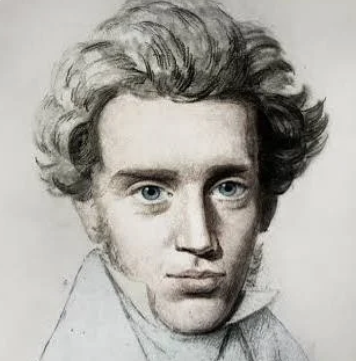
My dear reader, read aloud, if possible! If you do so, allow me to thank you for it: if you not only do it yourself, if you also influence others to do it, allow me to thank each one of them, and you again and again!
9 months 2 weeks ago
There are some defeats more triumphant than victories.
▼
Source
source
Ch. 30. Of Cannibals, tr. Cotton, rev. W. Hazlitt, 1842
10 months 1 week ago
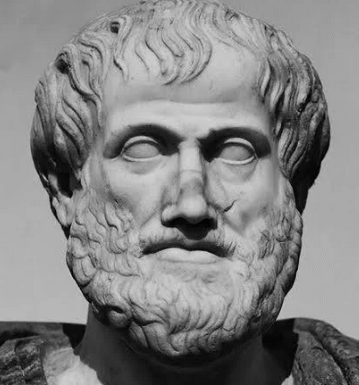
A whole is that which has beginning, middle, and end.

5 months 1 week ago
When, in the Course of human events, it becomes necessary for one people to dissolve the political bands which have connected them with another, and to assume among the powers of the earth, the separate and equal station to which the Laws of Nature and of Nature's God entitle them, a decent respect to the opinions of mankind requires that they should declare the causes which impel them to the separation.

9 months 1 week ago
I strongly suspect that most of the great knowers of Suchness paid very little attention to art.... (To a person whose transfigured and transfiguring mind can see the All in every this, the first-rateness or tenth-rateness of even a religious painting will be a matter of the most sovereign indifference.) Art, I suppose, is only for beginners, or else for those resolute dead-enders, who have made up their minds to be content with the ersatz of Suchness, with symbols rather than with what they signify, with the elegantly composed recipe in lieu of actual dinner.

6 months 1 day ago
All great peoples are conservative; slow to believe in novelties; patient of much error in actualities; deeply and forever certain of the greatness that is in law, in custom once solemnly established, and now long recognized as just and final.

8 months 1 week ago
Whoever finishes a revolution only halfway, digs his own grave.
▼
Source
source
Act I.

8 months 2 weeks ago
Your god is too small.
▼
Source
source
Attributed to Bruno in episode 1 of Cosmos: A Spacetime Odyssey (2014). Earliest use of this phrase appears to be in Your God is Too Small (1961) by English priest John Bertram Phillips.
6 months 1 day ago
On the dust of our heroic ancestors we too sit ballot-boxing, saying to one another, It is well, it is well! By inheritance of their noble struggles, we have been permitted to sit slothful so long. By noble toil, not by shallow laughter and vain talk, they made this English Existence from a savage forest into an arable inhabitable field for us; and we, idly dreaming it would grow spontaneous crops forever,-find it now in too questionable a state.
8 months 1 week ago
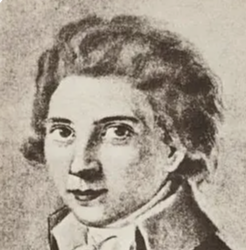
Where there is politics or economics, there is no morality.
▼
Source
source
"Selected Ideas (1799-1800)", Dialogue on Poetry and Literary Aphorisms, Ernst Behler and Roman Struc, trans. (1968) #101
8 months 6 days ago
Bach: a scale of tears upon which our desires for God ascend.
9 months 6 days ago
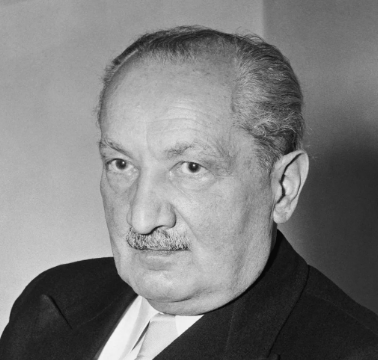
This Europe, which in its ruinous blindness is forever on the point of cutting its own throat, lies today in a great pincers, squeezed between Russia on one side and America on the other. From a metaphysical point of view, Russia and America are the same: the same dreary technological frenzy, the same unrestricted organization of the average man...
10 months 1 week ago
Let us be understood. If the Japanese surrender after the destruction of Hiroshima, having been intimidated, we will rejoice. But we refuse to see anything in such grave news other than the need to argue more energetically in favor of a true international society, in which the great powers will not have superior rights over small and middle-sized nations, where such an ultimate weapon will be controlled by human intelligence rather than by the appetites and doctrines of various states. Before the terrifying prospects now available to humanity, we see even more clearly that peace is the only goal worth struggling for. This is no longer a prayer but a demand to be made by all peoples to their governments a demand to choose definitively between hell and reason.

9 months 1 week ago
The entire history of social improvement has been a series of transitions, by which one custom or institution after another, from being a supposed primary necessity of social existence, has passed into the rank of an universally stigmatized injustice and tyranny. So it has been with the distinctions of slaves and freemen, nobles and serfs, patricians and plebeians; and so it will be, and in part already is, with the aristocracies of colour, race, and sex.
▼
Source
source
Ch. 5
CivilSimian.com created by AxiomaticPanic, CivilSimian, Kalokagathia