
6 months 2 weeks ago
Bacon's philosophy resembles this religion, which protests continually: it is entirely negative and thinks only to contradict. In indulging himself without measure in this natural inclination, he ends by contradicting himself without perceiving it, and by insulting in others his own most characteristic traits. Thus he blames abstractions without respite, and he makes only abstractions, in always coming back to his middle, general, and most general axioms, and in maintaining that individual instances do not merit the philosopher's attention. He never ceases to shower abuse on the science of words, and he only makes words. He upsets all the received nomenclature to substitute for them new terms, baroque or poetic, or both. With Bacon, neologism is a real disease, and always he believes he has acquired an idea when he has invented a word. He looks with pity at the alchemy that was fully operative in his time, and all his physics is only another alchemy quite babbling and wholly similar to children who talk a lot and produce nothing, as he said very well and very badly with respect to the ancient Greeks.
▼
Source
p. 317
6 months 2 weeks ago
Look round this universe. What an immense profusion of beings, animated and organised, sensible and active! You admire this prodigious variety and fecundity. But inspect a little more narrowly these living existences, the only beings worth regarding. How hostile and destructive to each other! How insufficient all of them for their own happiness! How contemptible or odious to the spectator! The whole presents nothing but the idea of a blind Nature, impregnated by a great vivifying principle, and pouring forth from her lap, without discernment or parental care, her maimed and abortive children!
▼
Source
Philo to Cleanthes, Part XI

6 months 2 weeks ago
I began by asking whether Wittgenstein was a spiritual genius. That question really has two parts: was he the spiritually sublime individual – the ‘saint’ – people often said he was? And did he know how to be such an individual, whether or not he was one himself? I think the answer must be no to both questions. His vanity, emotional solipsism and coldness put him well outside the category of the saint; and his engineering (or surgical) approach to his spiritual condition seems to me wrongly conceived, embodying as it does a deep mistake of ethical attention. But a better question might be this: given his nature, did he live a noble and ethically distinguished life? (He clearly lived an impressive and remarkable one.) Here I think we must do him the courtesy of taking him at his word and not allow our natural sentimentality about great men to get in the way of hearing what he actually says about himself. Of Moore's reputation for saintly childlike innocence, Wittgenstein remarked: ‘I can’t understand that, unless it’s also to a child’s credit. For you aren’t talking of the innocence a man has fought for, but of an innocence which comes from a natural absence of temptation.’ If we take seriously Wittgenstein's own repeated assessment of himself as ‘rotten’ and ‘indecent’, as having a ‘wicked heart’ – in whatever way these epithets were meant – then it becomes clear why he regarded his life as a mighty struggle with himself, and what he had to overcome to achieve the moral standing he did. His peculiar greatness comes from that agonising battle between his natural hubris and the humility he craved, between his compulsive devotion to himself and his willed concern for others. The singularity of his spiritual achievement consists in this strained amalgamation of aggressive megalomania and abject self-mortification. Somehow this battle brought something spiritually valuable into the world that had not been there before: an ability, we might say, to attend religiously to the face of another human being – but to do so as if this were the strangest and most impossible thing in the world to achieve.
▼
Source
Colin McGinn, "My Wicked Heart", London Review of Books (22 November 1990)

6 months 2 weeks ago
Has not experience demonstrated quite recently that Jack the Ripper performed his exploits under the eye of the London police — a most active force — and that he only left off killing when the population of Whitechapel itself began to give chase to him?And in our every-day relations with our fellow-citizens, do you think that it is really judges, gaolers, and police that hinder anti-social acts from multiplying? The judge, ever ferocious, because he is a maniac of law, the accuser, the informer, the police spy, all those interlopers that live from hand to mouth around the Law Courts, do they not scatter demoralization far and wide into society? Read the trials, glance behind the scenes, push your analysis further than the exterior facade of law courts, and you will come out sickened.
▼
Source
6 months 2 weeks ago
He used to say that it was better to have one friend of great value than many friends who were good for nothing.
▼
Source
Anarcharsis, 5.

6 months 2 weeks ago
In order to enter into a real knowledge of your condition, consider it in this image: A man was cast by a tempest upon an unknown island, the inhabitants of which were in trouble to find their king, who was lost; and having a strong resemblance both in form and face to this king, he was taken for him, and acknowledged in this capacity by all the people.
▼
Source
6 months 2 weeks ago
We are beginning to see that government by majorities means abandoning all the affairs of the country to the tide-waiters who make up the majorities in the House and in election committees; to those, in a word, who have no pinion of their own.
▼
Source
Ch. 3 : Anarchist Communism, p. 81
6 months 2 weeks ago
Another of his sayings was, that education was the best viaticum of old age.
▼
Source
Aristotle, 9.

6 months 2 weeks ago
If we demonstrate this moving principle, if we show that matter, far from being as indifferent as it is supposed to be, to movement and to rest, ought to be regarded as an active, as well as a passive substance, what resource can be left to those who have made its essence consist in extension?
▼
Source
Ch. V Concerning the Moving Force of Matter
6 months 2 weeks ago
A doubtful balance is made between truth and pleasure, and... the knowledge of one and the feeling of the other stir up a combat the success of which is very uncertain, since, in order to judge of it, it would be necessary to know all that passes in the innermost spirit of the man, of which man himself is scarcely ever conscious.
▼
Source
6 months 2 weeks ago
I am certainly interested in a tribunal in which, for having used my reason, I was deemed little less than a heretic. Who knows but men will reduce me from the profession of a philosopher to that of historian of the Inquisition! But they behave to me in order that I may become the ignoramus and the fool of Italy...
▼
Source
p. 244
6 months 2 weeks ago
Transcendence constitutes selfhood.
▼
Source
Essence of Ground (1929)
6 months 2 weeks ago
As to the poorer classes—who always feel the influence of ideas circulating at a given time amid the wealthier classes—it deprived them of the very hope of improvement; it made them skeptical as to the promises of the social reformers; and to this day the most advanced reformers entertain doubts as to the possibility of satisfying the needs of all; in case there should be a claim for their satisfaction, and a temporary welfare of the labourers resulted in a sudden increase in population.
▼
Source
6 months 2 weeks ago
Xenophanes was the first person who asserted... that the soul is a spirit.
▼
Source
Xenophanes, 3.
6 months 2 weeks ago
Man's preeminent advantage is his organism. ...Only through nature do we have any good qualities; to her we owe all that we are.
▼
Source
6 months 2 weeks ago
To suppose universal laws of nature capable of being apprehended by the mind and yet having no reason for their special forms, but standing inexplicable and irrational, is hardly a justifiable position. Uniformities are precisely the sort of facts that need to be accounted for. That a pitched coin should sometimes turn up heads and sometimes tails calls for no particular explanation; but if it shows heads every time, we wish to know how this result has been brought about. Law is par excellence the thing that wants a reason.
▼
Source
6 months 2 weeks ago
Man infinitely surpasses man.
▼
Source
Pope Paul VI, [http://www.vatican.va/content/paul-vi/en/encyclicals/documents/hf_p-vi_enc_26031967_populorum.html
6 months 2 weeks ago
For anyone who at the end of Western philosophy can and must still question philosophically, the decisive question is no longer merely “What basic character do beings manifest?” or “How may the being of beings be characterized?” but “What is this ‘being’ itself?” The decisive question is that of “the meaning of being,” not merely that of the being of beings.
▼
Source
p. 18

6 months 2 weeks ago
Every time people cite a principle of theoretical physics in support of a metaphysical doctrine or physical dogma, they commit a mistake, for they attribute to this principle a meaning not its own, an import not belonging to it.
▼
Source
6 months 2 weeks ago
Anyone who idolizes you is going to hate you when he discovers that you are fallible. He never forgives. He has deceived himself, and he blames you for it.
▼
Source
An American Bible (1918) edited by Alice Hubbard

6 months 2 weeks ago
Man alone has the power of self-realization, the power to be a self-determining subject in all processes of becoming, for he alone has an understanding of potentialities and a knowledge of ‘notions.’ His very existence is the process of actualizing his potentialities, of molding his life according to the notions of reason.
▼
Source
P. 9
6 months 2 weeks ago
The first character of a general idea so resulting is that it is living feeling. A continuum of this feeling, infinitesimal in duration, but still embracing innumerable parts, and also, though infinitesimal, entirely unlimited, is immediately present. And in its absence of boundedness a vague possibility of more than is present is directly felt.
▼
Source
6 months 2 weeks ago
Science will, in all probability, be increasingly impregnated by mysticism.
▼
Source
My Universe (1924)
6 months 2 weeks ago
Life is a compromise between fate and free will.
▼
Source
p. 36
6 months 2 weeks ago
An integral part of totalitarian control is the attack on critical and independent thought. The appeal to facts is substituted for the appeal to reason. No reason can sanction a regime that uses the greatest productive apparatus man has ever created in the interest of an increasing restriction on human satisfactions—no reason except the fact that the economic system can be retained in no other way. Just as the Fascist emphasis on action and change prevents the insight into necessity of rational courses of action and change, [[Giovanni Gentile|[Giovanni] Gentile]]’s deification of thinking prevents the liberation of thought from the shackles of ‘the given.’ P. 405
▼
Source
6 months 2 weeks ago
Some words shall herein be capitalised when used, not as vernacular, but as terms defined. Thus an "idea" is the substance of an actual unitary thought or fancy; but "Idea," nearer Plato's idea of ἰδέα, denotes anything whose Being consists in its mere capacity for getting fully represented, regardless of any person's faculty or impotence to represent it.
▼
Source
I
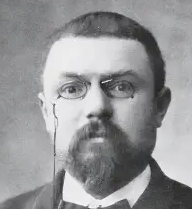
6 months 2 weeks ago
Thought is only a flash between two long nights, but this flash is everything.
▼
Source
Quoted in H. L. Mencken, A New Dictionary of Quotations (Alfred A. Knopf, Inc., 1942)
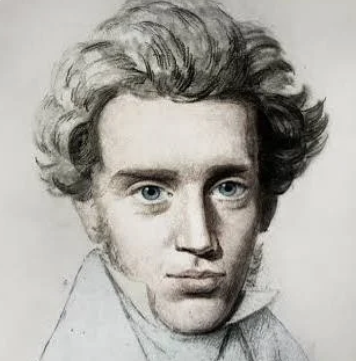
6 months 2 weeks ago
In vain do individual great men seek to mint new concepts and to set them in circulation — it is pointless. They are used for only a moment, and not by many, either, and they merely contribute to making the confusion even worse, for one idea seems to have become the fixed idea of the age: to get the better of one's superior. If the past may be charged with a certain indolent self-satisfaction in rejoicing over what it had, it would indeed be a shame to make the same charge against the present age (the minuet of the past and the gallop of the present). Under a curious delusion, the one cries out incessantly that he has surpassed the other, just as the Copenhageners, with philosophic visage, go out to Dyrehausen "in order to see and observe," without remembering that they themselves become objects for the others, who have also gone out simply to see and observe. Thus there is the continuous leap-frogging of one over the other — "on the basis of the immanent negativity of the concept", as I heard a Hegelian say recently, when he pressed my hand and made a run preliminary to jumping. — When I see someone energetically walking along the street, I am certain that his joyous shout, "I am coming over," is to me — but unfortunately I did not hear who was called (this actually happened); I will leave a blank for the name, so everyone can fill in an appropriate name.
▼
Source
Journals IA 328, 1835
6 months 2 weeks ago
The radical defect in all forms of belief in progress, as they are expressed in positivist credos, is that they do not definitely eliminate death. What is the use of detecting a focus of any sort in the van of evolution if that focus can and must one day disintegrate? To satisfy the ultimate requirements of our action, Omega must be independent of the collapse of the forces with which evolution is woven.
▼
Source
6 months 2 weeks ago
Respectability is the dickey on the bosom of civilization.
▼
Source
6 months 2 weeks ago
Man today can do more than the culture heros and half-gods; he has solved many insoluble problems. But he has also betrayed the hope and destroyed the truth which were preserved in the sublimations of higher culture. To be sure, the higher culture was always in contradiction with social reality, and only a privileged minority enjoyed its blessings and represented its ideals. The two antagonistic spheres of society have always coexisted; the higher culture has always been accommodating, while the reality was rarely disturbed by its ideals and its truth. Today's novel feature is the flattening out of the antagonism between culture and social reality through the obliteration of the oppositional, alien, and transcendent elements in the higher culture by virtue of which it constituted another dimension of reality. This liquidation of two-dimensional culture takes place not through the denial and rejection of the “cultural values,” but through their wholesale incorporation into the established order, through their reproduction and display on a massive scale.
▼
Source
pp. 56-57
6 months 2 weeks ago
Professor Klein then speaks of "that artistic finish that we admire in Euclid's Elements," and mentions Allman's important historical work. I heartily concur in this estimate of Euclid, and desire to contrast it with the error of Charles S. Peirce, in the Nation, where he speaks of "Euclid's proof (Elements Bk. I., props. 16 and 17)" as "really quite fallacious, because it uses no premises not as true in the case of spherics." Our bright American seems to have forgotten Euclid's Postulate 6 (Axiom 12 in Gregory, Axiom 9 in Heiberg), "Two straight lines cannot enclose a space;" that is, two straights having crossed never recur.
▼
Source
George Bruce Halstead, "Klein's Evanston Lectures," [http://books.google.com/books?id=XAsPAAAAIAAJ&pg=PA101 Annals of Mathematics Vol.8] (1894)
6 months 2 weeks ago
Or... they observe an astronomic phenomenon... an eclipse of the moon, and... suppose... this... is perceived simultaneously from all points of the earth. That is not altogether true, since the propagation of light is not instantaneous; if absolute exactitude were desired, there would be a correction... according to a complicated rule.
▼
Source
6 months 2 weeks ago
The tyrant dies and his rule is over; the martyr dies and his rule begins.
▼
Source
1848
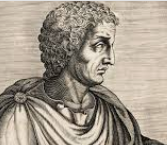
6 months 2 weeks ago
Everything is soothed by oil, and this is the reason why divers send out small quantities of it from their mouths, because it smooths every part which is rough.
▼
Source
Book II, sec. 234.
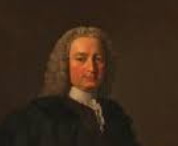
6 months 2 weeks ago
A good man deliberating which of several actions proposed he shall choose, regards and compares the material goodness of them, and then is determined by his moral sense invariably preferring that which appears most conducive to the happiness and virtue of mankind.
▼
Source
Book II, Ch. III, § I
6 months 2 weeks ago
If the progressing rationality of advanced industrial society tends to liquidate, as an “irrational rest,” the disturbing elements of Time and Memory, it also tends to liquidate the disturbing rationality contained in this irrational rest. Recognition and relation to the past as present counteracts the functionalization of thought by and in the established reality. It militates against the closing of the universe of discourse and behavior it renders possible the development of concepts which destabilize and transcend the closed universe by comprehending it as historical universe. Confronted with the given society as object of its reflection, critical thought becomes historical consciousness as such, it is essentially judgment. Far from necessitating an indifferent relativism, it searches in the real history of man for the criteria of truth and falsehood, progress and regression. The mediation of the past with the present discovers the factors which made the facts, which determined the war of life, which established the masters and the servants; it projects the limits and the alternatives. When this critical consciousness speaks, it speaks “le langage de la connaissance” (Roland Barthes) which breaks open a closed universe of discourse and its petrified structure. The key terms of this language are not hypnotic nouns which evoke endlessly the same frozen predicates. They rather allow of an open development; they even unfold their content in contradictory predicates. The Communist Manifesto provides a classical example. Here the two key terms, Bourgeoisie and Proletariat, each “govern” contrary predicates. The “bourgeoisie” is the subject of technical progress, liberation, conquest of nature, creation of social wealth, and of the perversion and destruction of these achievements. Similarly, the "proletariat” carries the attributes of total oppression and of the total defeat of oppression. Such dialectical relation of opposites in and by the proposition is rendered possible by the recognition of the subject as an historical agent whose identity constitutes itself in and against its historical practice, in and against its social reality. The discourse develops and states the conflict between the thing and its function, and this conflict finds linguistic expression in sentences which join contradictory predicates in a logical unit—conceptual counterpart of the objective reality. In contrast to all Orwellian language, the contradiction is demonstrated, made explicit, explained, and denounced.
▼
Source
p. 99-100
6 months 2 weeks ago
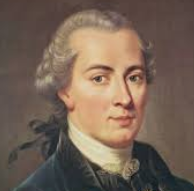
Phenomena of the external sense are examined and set forth in physics; those of the internal sense in empirical psychology. Pure mathematics considers space in geometry and time in pure mechanics. To these is to be added a certain concept, intellectual to be sure in itself, but whose becoming actual in the concrete requires the auxiliary notions of time and space in the successive addition and simultaneous juxtaposition of separate units, which is the concept of number treated in arithmetic.
▼
Source
6 months 2 weeks ago
The question is asked in ignorance, by one who does not even know what can have led him to ask it.
▼
Source
Preface
6 months 2 weeks ago
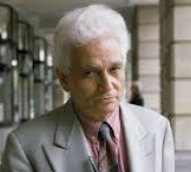
Nevertheless, among all the temptations I will have to resist today. There would be the temptation of memory: to recount what was for me, and for those of my generation who shared it during a whole lifetime. The experience of Marxism. The quasi-paternal figure of Marx, the way it fought in us with other filiations, the reading of texts and the interpretation of a world in which the Marxist inheritance was-and still remains, and so it will remain-absolutely and thoroughly determinate. One need not be a Marxist or a communist in order to accept this obvious fact. We all live in a world, some would say a culture, that still bears, at an incalculable depth, the mark of this inheritance, whether in a directly visible fashion or not.
▼
Source
Injunctions of Marx
6 months 2 weeks ago
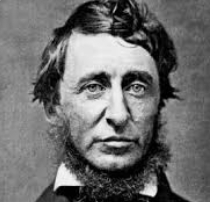
In reviewing the several levels of life which morality defines, we may observe two types of universal value. The lower values m relation to the higher are indispensable. There is no health without satisfaction, no achievement without health, no rational intercourse without achievement, and no true religion except as the perfecting and completing of a rational society. The higher values, on the other hand, are more universal than the lower in that they surpass these in validity, and are entitled to preference. Thus the lower values are ennobled by the higher, while the higher are given body and meaning by the lower. Satisfaction derives dignity from being controlled by the motive of good-will, while the moral kingdom at large derives its wealth, its pertinence to life, and its incentive, from the great manifold of particular interests which it conserves and fosters.
▼
Source
[https://books.google.com/books?id=TjdWAAAAMAAJ The Moral Economy] (1909)
6 months 2 weeks ago
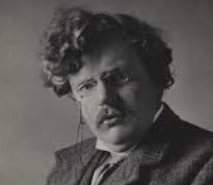
The whole difference between construction and creation is exactly this: that a thing constructed can only be loved after it is constructed; but a thing created is loved before it exists, as the mother can love the unborn child.
▼
Source
Appreciations and Criticisms of the Works of Charles Dickens (1911) Ch. 2: "Pickwick Papers"
6 months 2 weeks ago
The scientific abstraction from concreteness, the quantification of qualities which yield exactness as well as universal validity, involve a specific concrete experience of the Lebenswelt—a specific mode of “seeing” the world. And this “seeing,” in spite of its “pure,” disinterested character, is seeing within a purposive, practical context. It is anticipating (Voraussehen) and projecting (Vorhaben). Galilean science is the science of methodical, systematic anticipation and projection. But—and this is decisive—of a specific anticipation and projection—namely, that which experiences, comprehends, and shapes the world) in terms of calculable, predictable relationships among exactly identifiable units. In this project, universal quantifiability is a prerequisite for the domination of nature. Individual, non-quantifiable qualities stand in the way of an organization of men and things in accordance with the measurable power to be extracted from them. But this is a specific, socio-historical project, and the consciousness which undertakes this project is the hidden subject of Galilean science.
▼
Source
[describing the view of Husserl] p. 164
6 months 2 weeks ago
In man (as the only rational creature on earth) those natural capacities which are directed to the use of his reason are to be fully developed only in the race, not in the individual.
▼
Source
Second Thesis
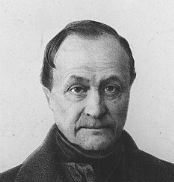
6 months 2 weeks ago
The object of all true Philosophy is to frame a system which shall comprehend human life under every aspect, social as well as individual. It embraces, therefore, the three kinds of phenomena of which our life consists, Thoughts, Feelings, and Actions.
▼
Source
p. 9
6 months 2 weeks ago
You have surely noticed among schoolboys, that the one that is regarded by all as the boldest is the one who has no fear of his father, who dares to say to the others, "Do you think I am afraid of him?" On the other hand, if they sense that one of their number is actually and literally afraid of his father, they will readily ridicule him a little. Alas, in men's fear-ridden rushing together into a crowd (for why indeed does a man rush into a crowd except because he is afraid!) there, too, it is a mark of boldness not to be afraid, not even of God. And if someone notes that there is an individual outside the crowd who is really and truly afraid – not of the crowd, but of God, he is sure to be the target of some ridicule. The ridicule is usually glossed over somewhat and it is said: a man should love God.Yes, to be sure, God knows that man's highest consolation is that God is love and that man is permitted to love Him. But let us not become too forward, and foolishly, yes, blasphemously, dismiss the tradition of our fathers, established by God Himself: that really and truly a man should fear God. This fear is known to the man who is himself conscious of being an individual, and thereby is conscious of his eternal responsibility before God.
▼
Source
Søren Kierkegaard, Purity of Heart, 1847 Steere translation p. 196-197
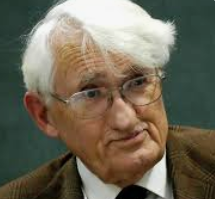
6 months 2 weeks ago
The 'state' on the modern conception is a legally defined term which refers, at the level of substance, to a state power that possesses both internal and external sovereignty, at the spatial level over a clearly delimited terrain (the state territory) and at the social level over the totality of members (the body of citizens or the people). State power constitutes itself in the forms of positive law, and the people is the bearer of the legal order whose jurisdiction is restricted to the state territory. In political usage, the concepts 'nation' and 'people' have the same extension. But in addition to its legal definition, the term 'nation' has the connotation of a political community shaped by common descent, or at least by a common language, culture, and history. A people becomes a 'nation' in this historical sense only in the concrete form of a particular form of life.
▼
Source
Habermas (1998) The Inclusion of the Other: Studies in Political Theory. Ciaran Cronin and Pablo De Greiff, eds. Cambridge, MA: The MIT Press.
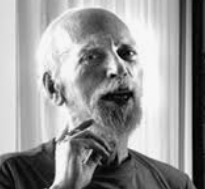
6 months 2 weeks ago
The Western World has been brainwashed by Aristotle for the last 2,500 years. The unconscious, not quite articulate, belief of most Occidentals is that there is one map which adequately represents reality. By sheer good luck, every Occidental thinks he or she has the map that fits. Guerrilla ontology, to me, involves shaking up that certainty. I use what in modern physics is called the "multi-model" approach, which is the idea that there is more than one model to cover a given set of facts. As I've said, novel writing involves learning to think like other people. My novels are written so as to force the reader to see things through different reality grids rather than through a single grid. It's important to abolish the unconscious dogmatism that makes people think their way of looking at reality is the only sane way of viewing the world. My goal is to try to get people into a state of generalized agnosticism, not agnosticism about God alone, but agnosticism about everything. If one can only see things according to one's own belief system, one is destined to become virtually deaf, dumb, and blind. It's only possible to see people when one is able to see the world as others see it. That's what guerrilla ontology is — breaking down this one-model view and giving people a multi-model perspective.
▼
Source
[http://www.rawilsonfans.com/articles/Starship.htm "Robert Anton Wilson: Searching For Cosmic Intelligence" - interview with Jeffrey Elliot (1980)]

6 months 2 weeks ago
The propagandist's purpose is to make one set of people forget that certain other sets of people are human.
▼
Source
"Words and Behaviour", The Olive Tree (1936)
6 months 2 weeks ago
Half the trouble about the modern man is that he is educated to understand foreign languages and misunderstand foreigners.
▼
Source
[http://books.google.com/books?id=9_m6AAAAIAAJ&q=%22Half+the+trouble+about+the+modern+man+is+that+he+is+educated+to+understand+foreign+languages+and+misunderstand+foreigners%22&pg=PA322#v=onepage The Autobiography of G. K. Chesterton] (1936)
CivilSimian.com created by AxiomaticPanic, CivilSimian, Kalokagathia