

6 months 2 weeks ago
You can do everything with bayonets except sit on them. If you want to preserve your power indefinitely you have to get the consent of the ruled. And this they will do partly by drugs as I foresaw in "Brave new World", and partly by these new techniques of propaganda. They will do it by bypassing the sort of rational side of man and appealing to his subconscious, and his deeper emotions, and his physiology, even, and so making him actually love his slavery. I mean I think this is the danger that actually people may be, in some ways, happy under the new regime. But they will be happy in situations when they oughtn't be happy.
▼
Source
6 months 2 weeks ago
Cervantes on his galley sets the sword back in the sheath, (Don John of Austria rides homeward with a wreath.)
▼
Source
Lepanto
6 months 2 weeks ago
Every man has his dignity. I'm willing to forget mine, but at my own discretion and not when someone else tells me to.
▼
Source

6 months 2 weeks ago
In the tragedies of the early seventeenth century, madness too provided the dénouement, but it did so in liberating the truth. It still opened onto language, to a renewed form of speech, that of explanation and of the real regained. The most it could ever be was the penultimate moment of tragedy. Not the closing moment, as in Andromaque, where no truth appears, other than, in Delirium, the truth of a passion that finds its fullest, most perfect expression in madness.
▼
Source
Part Two: 2. The Transcendence of Delirium

6 months 2 weeks ago
When an individual (or a group of individuals) is kept in a situation of inferiority, the fact is that he is inferior. But the significance of the verb to be must be rightly understood here; it is in bad faith to give it a static value when it really has the dynamic Hegelian sense of "to have become." Yes, women on the whole are today inferior to men; that is, their situation affords them fewer possibilities. The question is: should that state of affairs continue? Many men hope that it will continue; not all have given up the battle.
▼
Source
Introduction : Woman as Other
6 months 2 weeks ago
Somebody ought to make a historical study of the relations between theology and corporal punishment in childhood. I have a theory that, wherever little boys and girls are systematically flagellated, the victims grow up to think of God as - 'Wholly Other'... A people's theology reflects the state of its children's bottoms. Look at the Hebrews - enthusiastic child-beaters. And so were all good Christians in the Age of Faith. Hence Jehovah, hence Original Sin and the infinitely offended Father of Roman and Protestant orthodoxy. Whereas among Buddhists and Hindus education has always been nonviolent. No laceration of little buttocks - therefore Tat tvam asi, thou art That, mind from Mind is not divided.... Major premise: God is Wholly Other. Minor premise: man is totally depraved. Conclusion: Do to your children's bottoms what was done to yours, what your Heavenly Father has been doing to the collective bottom of humanity ever since the Fall: whip, whip, whip!
▼
Source
6 months 2 weeks ago
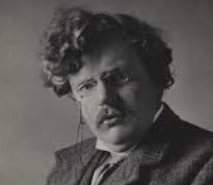
'I'm afraid I'm a practical man,' said the doctor with gruff humour, 'and I don't bother much about religion and philosophy.' 'You'll never be a practical man till you do,' said Father Brown. 'Look here, doctor; you know me pretty well; I think you know I'm not a bigot. You know I know there are all sorts in all religions; good men in bad ones and bad men in good ones.
▼
Source
6 months 2 weeks ago
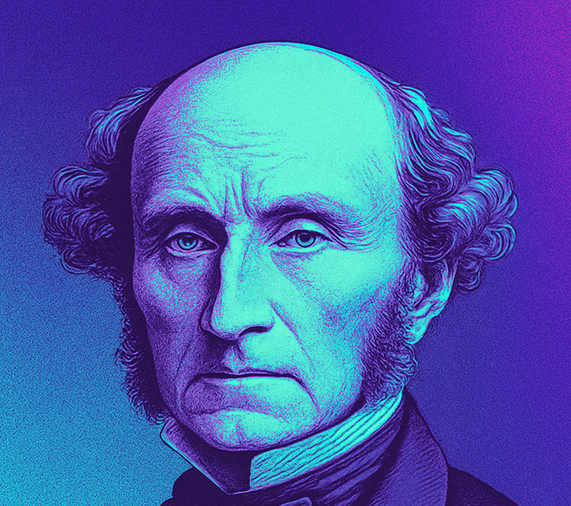
There are but few points in which the English, as a people, are entitled to the moral pre-eminence with which they are accustomed to compliment themselves at the expense of other nations: but, of these points, perhaps the one of greatest importance is, that the higher classes do not lie, and the lower, though mostly habitual liars, are ashamed of lying. To run any risk of weakening this feeling, a difficult one to create, or, when once gone, to restore, would be a permanent evil too great to be incurred for so very temporary a benefit as the ballot would confer, even on the most exaggerated estimate necessity.
▼
Source
[https://en.wikisource.org/wiki/Thoughts_on_Parliamentary_Reform Thoughts on Parliamentary Reform] (1859), pp. 48–49
6 months 2 weeks ago
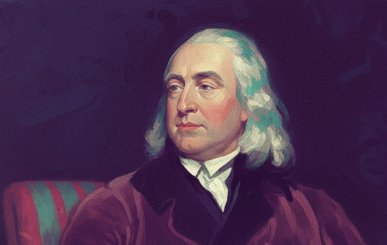
Create all the happiness you are able to create: remove all the misery you are able to remove. Every day will allow you to add something to the pleasure of others, or to diminish something of their pains. And for every grain of enjoyment you sow in the bosom of another, you shall find a harvest in your own bosom; while every sorrow which you pluck out from the thoughts and feelings of a fellow creature shall be replaced by beautiful peace and joy in the sanctuary of your soul.
▼
Source
Advice to a young girl (22 June 1830)
6 months 2 weeks ago
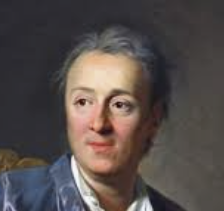
If ever anybody dedicated his whole life to the "enthusiasm for truth and justice" — using this phrase in the good sense — it was Diderot.
▼
Source
Friedrich Engels in Diderot: Interpreter of Nature (London: 1937)
6 months 2 weeks ago
Above the punitive city hangs this iron spider; and the criminal who is to be thus crucified by the new law is parricide.
▼
Source
Chapter Three, The Gentle Way in Punishment
6 months 2 weeks ago
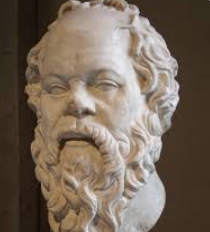
One should never do wrong in return, nor mistreat any man, no matter how one has been mistreated by him.
▼
Source
Plato, Crito 49c–d (translated by G.M.A. Grube)
6 months 2 weeks ago
the world we live in permits - and may even seem to counsel - absolute dispair, yet it is only such a world that can give rise to an unconquerable hope.
▼
Source
6 months 2 weeks ago
For my own part, not believing in universal selfishness, I have no difficulty in admitting that Communism would even now be practicable among the elite of mankind, and may become so among the rest.
▼
Source
6 months 2 weeks ago
My intention was not to deal with the problem of truth, but with the problem of the truth-teller, or of truth telling... Who is able to tell the truth, about what, with what consequences, and with what relations to power. ...With the question of the importance of telling the truth, knowing who is able to tell the truth, and knowing why we should tell the truth, we have the roots of what we could call the 'critical' tradition in the West.
▼
Source
6 months 2 weeks ago
The soul is in the very likeness of the divine, and immortal, and intelligible, and uniform, and indissoluble, and unchangeable; and the body is in the very likeness of the human, and mortal, and unintelligible, and multiform, and dissoluble, and changeable.
▼
Source

6 months 2 weeks ago
Behind the word is silence, behind that silence is forgetfulness.
▼
Source
6 months 2 weeks ago
There is room in the world, no doubt, and even in old countries, for a great increase of population, supposing the arts of life to go on improving, and capital to increase. But even if innocuous, I confess I see very little reason for desiring it. The density of population necessary to enable mankind to obtain, in the greatest degree, all the advantages both of co-operation and of social intercourse, has, in all the most populous countries, been attained. If the earth must lose that great portion of its pleasantness which it owes to things that the unlimited increase of wealth and population would extirpate from it, for the mere purpose of enabling it to support a larger but not a better or a happier population, I sincerely hope, for the sake of posterity, that they will be content to be stationary, long before necessity compels them to it..
▼
Source
Book IV, Chapter VI, §3, p. 516
6 months 2 weeks ago
When shall we open our minds to the conviction that the ultimate reality of the world is neither matter nor spirit, is no definite thing, but a perspective?
▼
Source

6 months 2 weeks ago
Of my grandfather Verus I have learned to be gentle and meek, and to refrain from all anger and passion... I have learned both shamefastness and manlike behaviour. Of my mother I have learned to be religious, and bountiful; and to forbear, not only to do, but to intend any evil; to content myself with a spare diet, and to fly all such excess as is incidental to great wealth.
▼
Source
I, 1
6 months 2 weeks ago
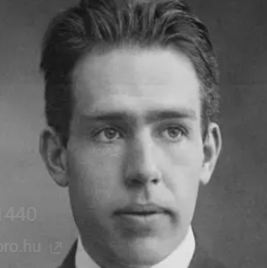
We must be clear that when it comes to atoms, language can be used only as in poetry. The poet, too, is not nearly so concerned with describing facts as with creating images and establishing mental connections.
▼
Source
In his first meeting with Werner Heisenberg in early summer 1920, in response to questions on the nature of language, as reported in Discussions about Language (1933); quoted in Defense Implications of International Indeterminacy (1972) by Robert J. Prang
6 months 2 weeks ago
Foucault has a very good discussion of what the theory of crime—modern economic theory of crime and punishment—has to say. I didn't have much to disagree with him. I think he was accurate on what it has to say. He goes also into a theory of formation of laws, which I had a lot of sympathy with as well.
▼
Source
Gary Becker, in “Becker on Ewald on Foucault on Becker” (May 9, 2012)
6 months 2 weeks ago
Upon the earth are animals and men, some in a middle region, others dwelling about the air as we dwell about the sea; others in islands which the air flows round, near the continent; and in a word, the air is used by them as the water and the sea are by us, and the ether is to them as the air is to us. Moreover, the temperament of their seasons is such that they have no disease, and live much longer than we do, and have sight and hearing and smell, and all the other senses, in far greater perfection, in the same degree that air is purer than water or the ether than air. Also they have temples and sacred places in which the gods really dwell, and they hear their voices and receive their answers and are conscious of them and hold converse with them, and they see the sun, moon, and stars as they really are, and their other blessedness is of a piece with this.
▼
Source
6 months 2 weeks ago
Ease names perfectly that "free use of the proper" that, according to an expression of Friedrich Hölderlin's, is "the most difficult task."
▼
Source
page 25.
6 months 2 weeks ago
My father's moral inculcations were at all times mainly those of the "Socratici viri;" justice, temperance (to which he gave a very extended application), veracity, perseverance, readiness to encounter pain and especially labour; regard for the public good; estimation of persons according to their merits, and of things according to their intrinsic usefulness; a life of exertion in contradiction to one of self-indulgent sloth. These and other moralities he conveyed in brief sentences, uttered as occasion arose, of grave exhortation, or stern reprobation and contempt.But though direct moral teaching does much, indirect does more; and the effect my father produced on my character, did not depend solely on what he said or did with that direct object, but also, and still more, on what manner of man he was.
▼
Source
([https://archive.org/details/autobiography01mill/page/47/mode/1up p. 47])
6 months 2 weeks ago
Diogenes, in his mud-covered sandals, tramps over the carpets of Aristippus. The cynic pullulated at every corner, and in the highest places. This cynic did nothing but saboter the civilisation of the time. He was the nihilist of Hellenism. He created nothing, he made nothing. His role was to undo — or rather to attempt to undo, for he did not succeed in his purpose. The cynic, a parasite of civilisation, lives by denying it, for the very reason that he is convinced that it will not fail. What would become of the cynic among a savage people where everyone, naturally and quite seriously, fulfils what the cynic farcically considers to be his personal role?
▼
Source
Chapter XI: The Self-Satisfied Age
6 months 2 weeks ago
Choose what's best.—Best is what benefits me. (Hays translation)
▼
Source
III, 6
6 months 2 weeks ago
Everything we call real is made of things that cannot be regarded as real.
▼
Source
Often attributed to Bohr online, and in some books like Our Mathematical Universe by Max Tegmark ([https://books.google.com/books?id=k96ODQAAQBAJ&pg=PA157 p. 157]) and The Great Unknown: Seven Journeys to the Frontiers of Science by Marcus du Sautoy ([htt
6 months 2 weeks ago
The secret of change is to focus all of your energy, not on fighting the old, but on building the new.
▼
Source
This is actually a [http://books.google.com/books?id=FUIHmRHf8SUC&lpg=PA130&dq=%22not%20on%20fighting%20the%20old%20but%20on%20building%20the%20new%22&pg=PA130#v=onepage&q=%22not%20on%20fighting%20the%20old%20but%20on%20building%20the%20new%22&f=false quo
6 months 2 weeks ago
One of the principal motifs of Nietzsche’s work is that Kant had not carried out a true critique because he was not able to pose the problem of critique in terms of values.
▼
Source
p. 1
6 months 2 weeks ago
After a violent convulsion Europe fears fresh disasters, and feel the end for a long repose; the sovereigns of all the European nations are assembled to give her peace. All of them seem to desire peace, all are famed for their wisdom, yet they will not reach their goal. I have asked myself why all the efforts of the statesmen are powerless against the evils which afflict Europe, and I have perceived that there is no salvation for Europe except through a general reorganization. I have thought out a plan of reorganization: the explanation of this plan is the subject of this work.
▼
Source
Opening, Ch. I
6 months 2 weeks ago
I never turned recreant to intellectual culture, or ceased to consider the power and practice of analysis as an essential condition both of individual and of social improvement. But I thought that it had consequences which required to be corrected, by joining other kinds of cultivation with it. The maintenance of a due balance among the faculties, now seemed to me of primary importance. The cultivation of the feelings became one of the cardinal points in my ethical and philosophical creed.
▼
Source
([https://archive.org/details/autobiography01mill/page/143/mode/1up pp. 143-144])
6 months 2 weeks ago
History tells us of innumerable retrogressions, of decadences and degenerations. But nothing tells us that there is no possibility of much more basic retrogressions than any so far known, including the most radical of all: the total disappearance of man as man and his silent return to the animal scale, to complete and definitive alteration. The fate of culture, the destiny of man, depends upon our maintaining this dramatic consciousness ever alive in our inmost being, and upon our being well aware, as of a murmuring counterpoint in our entrails, that we can only be sure of insecurity.
▼
Source
p. 26
6 months 2 weeks ago
Doth perfect beauty stand in need of praise at all? Nay; no more than law, no more than truth, no more than loving kindness, nor than modesty.
▼
Source
IV, 20

6 months 2 weeks ago
I am a utilitarian. I am also a vegetarian. I am a vegetarian because I am a utilitarian.
▼
Source
Utilitarianism and Vegetarianism, Philosophy & Public Affairs, 9(4): 325 (1980).

6 months 2 weeks ago
Opportunities multiply as they are seized.
▼
Source
Sun Tzu among many other military thinkers and leaders believed in fate and determination from the correct application of theory, the state of the opponent's and one's own power, and a code for the general and a code for the soldier to follow, rather than
6 months 2 weeks ago
Without passion, man is a mere latent force and possibility, like the flint which awaits the shock of the iron before it can give forth its spark.
▼
Source
27 October 1856
6 months 2 weeks ago
A society that will trade a little liberty for a little order will lose both, and deserve neither.
▼
Source
Also attributed to Thomas Jefferson, this is a modern paraphrase of a statement of Benjamin Franklin: "Those who would give up Essential Liberty to purchase a little Temporary Safety, deserve neither Liberty nor Safety."
6 months 2 weeks ago
The other reason is that what happens to the individual is a cause of well-being in what directs the world--of its well-being, its fulfillment, or its very existence, even. Because the whole is damaged if you cut away anything--anything at all--from its continuity and its coherence. Not only its parts, but its purposes. And that's what you're doing when you complain: hacking and destroying.
▼
Source
V, 7 (Hays translation)
6 months 2 weeks ago
Ethics seems a morass which we have to cross, but get hopelessly bogged in when we make the attempt.
▼
Source
Chapter 6, A New Understanding Of Ethics, p. 167

6 months 2 weeks ago
More tears are shed over answered prayers than unanswered ones.
▼
Source
First attributed to St. Teresa by Truman Capote in "Go Ahead and Ask Me Anything.' (And So She Did): An Interview with Truman Capote" by Gloria Steinem, in McCall's magazine (November 1967), as the source of the title of a novel he was working on called A

6 months 2 weeks ago
To what higher station, to what greater glory can any mortal aspire, than to be, during the whole course of his life, the support of good, the controul of bad government, and the guardian of public liberty?
▼
Source
p. 29
6 months 2 weeks ago
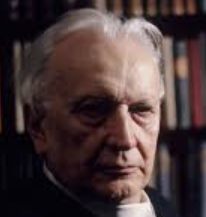
Rohde became more and more firmly bound to the bourgeois world, its institutions and accepted opinions. … The contrast between the two natures makes Rohde and Nietzsche exemplary representatives of two distinctive worlds. In their youth they both live in the realm of boundless possibilities and feel an affinity through the exuberance of their noble aspirations. Subsequently they go in opposite directions. Nietzsche remains young, leaving concrete reality as his task assumes existential import. Rohde grows old, bourgeois, stable, and skeptical. Hence courage is a fundamental trait in Nietzsche, plaintive self-irony in Rohde. … Rohde retained the interests but not the attitudes of his youth; he looked to the world of the Greeks for the object of his contemplation rather than the norm of obligation.
▼
Source
pp. 61-62
6 months 2 weeks ago
Never let the future disturb you. You will meet it, if you have to, with the same weapons of reason which today arm you against the present.
▼
Source
VII, 8 (Penguin Classics edition of Meditations, translated by Maxwell Staniforth)

6 months 2 weeks ago
Do we believe it lawful for a human oath to be superadded to one divine, for a man to come under promise to another master after Christ, and to abjure father, mother, and all nearest kinsfolk, whom even the law has commanded us to honour and love next to God Himself, to whom the gospel, too, holding them only of less account than Christ, has in like manner rendered honour? Shall it be held lawful to make an occupation of the sword, when the Lord proclaims that he who uses the sword shall perish by the sword? And shall the son of peace take part in the battle when it does not become him even to sue at law? And shall he apply the chain, and the prison, and the torture, and the punishment, who is not the avenger even of his own wrongs? Shall he, forsooth, either keep watch-service for others more than for Christ, or shall he do it on the Lord’s day, when he does not even do it for Christ Himself? And shall he keep guard before the temples which he has renounced? And shall he take a meal where the apostle has forbidden him? And shall he diligently protect by night those whom in the day-time he has put to flight by his exorcisms, leaning and resting on the spear the while with which Christ’s side was pierced? Shall he carry a flag, too, hostile to Christ? And shall he ask a watchword from the emperor who has already received one from God? Shall he be disturbed in death by the trumpet of the trumpeter, who expects to be aroused by the angel’s trump? And shall the Christian be burned according to camp rule, when he was not permitted to burn incense to an idol, when to him Christ remitted the punishment of fire?
▼
Source
Chapter XI
6 months 2 weeks ago
Awake, my St. John, leave all meaner thingsTo low ambition, and the pride of kings.Laugh when we must, be candid when you can,And vindicate the ways of God to man.
▼
Source
Alexander Pope, quoted in Ancient and Modern Celebrated Freethinkers (Half-Hours with the Freethinkers) by Charles Bradlaugh, A. Collins, and J. Watts (1877)
6 months 2 weeks ago
Love that only which happens to thee and is spun with the thread of thy destiny. For what is more suitable?
▼
Source
VII, 57

6 months 2 weeks ago
Originality is a thing we constantly clamour for, and constantly quarrel with; as if, observes our author himself, any originality but our own could be expected to content us! In fact all strange thing are apt, without fault of theirs, to estrange us at first view, and unhappily scarcely anything is perfectly plain, but what is also perfectly common.
▼
Source
Richter.
6 months 2 weeks ago
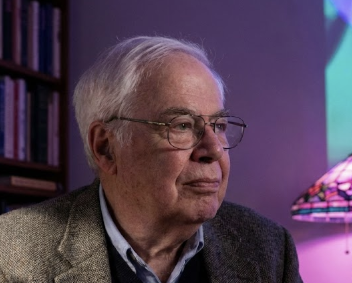
Galileo claimed to have discovered, by astronomical observation through a telescope, that Copernicus was right that the earth revolved around the sun. [Cardinal] Bellarmine claimed that he could not be right because his view ran counter to the Bible. Rorty says, astoundingly, that Bellarmine's argument was just as good as Galileo's. It is just that the rhetoric of "science" had not at that time been formed as part of the culture of Europe. We have now accepted the rhetoric of "science," he writes, but it is not more objective or rational than Cardinal Bellarmine's explicitly dogmatic Catholic views. According to Rorty, there is no fact of the matter about who was right because there are no absolute facts about what justifies what. Bellarmine and Galileo, in his view, just had different epistemic systems.
▼
Source
John Searle, "Why Should You Believe It?", The New York Review of Books, 24 September 2009

6 months 2 weeks ago
I must say, extreme justice is an extreme injury: For we ought not to approve of those terrible laws that make the smallest offences capital, nor of that opinion of the Stoics that makes all crimes equal; as if there were no difference to be made between the killing a man and the taking his purse, between which, if we examine things impartially, there is no likeness nor proportion. God has commanded us not to kill, and shall we kill so easily for a little money?
▼
Source
Ch. 1 : Discourses of Raphael Hythloday, of the Best State of a Commonwealth
CivilSimian.com created by AxiomaticPanic, CivilSimian, Kalokagathia