
6 months 2 weeks ago
Everything we call real is made of things that cannot be regarded as real.
▼
Source
Often attributed to Bohr online, and in some books like Our Mathematical Universe by Max Tegmark ([https://books.google.com/books?id=k96ODQAAQBAJ&pg=PA157 p. 157]) and The Great Unknown: Seven Journeys to the Frontiers of Science by Marcus du Sautoy ([htt
6 months 2 weeks ago
The secret of change is to focus all of your energy, not on fighting the old, but on building the new.
▼
Source
This is actually a [http://books.google.com/books?id=FUIHmRHf8SUC&lpg=PA130&dq=%22not%20on%20fighting%20the%20old%20but%20on%20building%20the%20new%22&pg=PA130#v=onepage&q=%22not%20on%20fighting%20the%20old%20but%20on%20building%20the%20new%22&f=false quo
6 months 2 weeks ago
One of the principal motifs of Nietzsche’s work is that Kant had not carried out a true critique because he was not able to pose the problem of critique in terms of values.
▼
Source
p. 1
6 months 2 weeks ago
After a violent convulsion Europe fears fresh disasters, and feel the end for a long repose; the sovereigns of all the European nations are assembled to give her peace. All of them seem to desire peace, all are famed for their wisdom, yet they will not reach their goal. I have asked myself why all the efforts of the statesmen are powerless against the evils which afflict Europe, and I have perceived that there is no salvation for Europe except through a general reorganization. I have thought out a plan of reorganization: the explanation of this plan is the subject of this work.
▼
Source
Opening, Ch. I

6 months 2 weeks ago
I never turned recreant to intellectual culture, or ceased to consider the power and practice of analysis as an essential condition both of individual and of social improvement. But I thought that it had consequences which required to be corrected, by joining other kinds of cultivation with it. The maintenance of a due balance among the faculties, now seemed to me of primary importance. The cultivation of the feelings became one of the cardinal points in my ethical and philosophical creed.
▼
Source
([https://archive.org/details/autobiography01mill/page/143/mode/1up pp. 143-144])
6 months 2 weeks ago
History tells us of innumerable retrogressions, of decadences and degenerations. But nothing tells us that there is no possibility of much more basic retrogressions than any so far known, including the most radical of all: the total disappearance of man as man and his silent return to the animal scale, to complete and definitive alteration. The fate of culture, the destiny of man, depends upon our maintaining this dramatic consciousness ever alive in our inmost being, and upon our being well aware, as of a murmuring counterpoint in our entrails, that we can only be sure of insecurity.
▼
Source
p. 26

6 months 2 weeks ago
Doth perfect beauty stand in need of praise at all? Nay; no more than law, no more than truth, no more than loving kindness, nor than modesty.
▼
Source
IV, 20

6 months 2 weeks ago
I am a utilitarian. I am also a vegetarian. I am a vegetarian because I am a utilitarian.
▼
Source
Utilitarianism and Vegetarianism, Philosophy & Public Affairs, 9(4): 325 (1980).

6 months 2 weeks ago
Opportunities multiply as they are seized.
▼
Source
Sun Tzu among many other military thinkers and leaders believed in fate and determination from the correct application of theory, the state of the opponent's and one's own power, and a code for the general and a code for the soldier to follow, rather than
6 months 2 weeks ago
Without passion, man is a mere latent force and possibility, like the flint which awaits the shock of the iron before it can give forth its spark.
▼
Source
27 October 1856
6 months 2 weeks ago
A society that will trade a little liberty for a little order will lose both, and deserve neither.
▼
Source
Also attributed to Thomas Jefferson, this is a modern paraphrase of a statement of Benjamin Franklin: "Those who would give up Essential Liberty to purchase a little Temporary Safety, deserve neither Liberty nor Safety."
6 months 2 weeks ago
The other reason is that what happens to the individual is a cause of well-being in what directs the world--of its well-being, its fulfillment, or its very existence, even. Because the whole is damaged if you cut away anything--anything at all--from its continuity and its coherence. Not only its parts, but its purposes. And that's what you're doing when you complain: hacking and destroying.
▼
Source
V, 7 (Hays translation)
6 months 2 weeks ago
Ethics seems a morass which we have to cross, but get hopelessly bogged in when we make the attempt.
▼
Source
Chapter 6, A New Understanding Of Ethics, p. 167

6 months 2 weeks ago
More tears are shed over answered prayers than unanswered ones.
▼
Source
First attributed to St. Teresa by Truman Capote in "Go Ahead and Ask Me Anything.' (And So She Did): An Interview with Truman Capote" by Gloria Steinem, in McCall's magazine (November 1967), as the source of the title of a novel he was working on called A

6 months 2 weeks ago
To what higher station, to what greater glory can any mortal aspire, than to be, during the whole course of his life, the support of good, the controul of bad government, and the guardian of public liberty?
▼
Source
p. 29
6 months 2 weeks ago
Rohde became more and more firmly bound to the bourgeois world, its institutions and accepted opinions. … The contrast between the two natures makes Rohde and Nietzsche exemplary representatives of two distinctive worlds. In their youth they both live in the realm of boundless possibilities and feel an affinity through the exuberance of their noble aspirations. Subsequently they go in opposite directions. Nietzsche remains young, leaving concrete reality as his task assumes existential import. Rohde grows old, bourgeois, stable, and skeptical. Hence courage is a fundamental trait in Nietzsche, plaintive self-irony in Rohde. … Rohde retained the interests but not the attitudes of his youth; he looked to the world of the Greeks for the object of his contemplation rather than the norm of obligation.
▼
Source
pp. 61-62
6 months 2 weeks ago
Never let the future disturb you. You will meet it, if you have to, with the same weapons of reason which today arm you against the present.
▼
Source
VII, 8 (Penguin Classics edition of Meditations, translated by Maxwell Staniforth)

6 months 2 weeks ago
Do we believe it lawful for a human oath to be superadded to one divine, for a man to come under promise to another master after Christ, and to abjure father, mother, and all nearest kinsfolk, whom even the law has commanded us to honour and love next to God Himself, to whom the gospel, too, holding them only of less account than Christ, has in like manner rendered honour? Shall it be held lawful to make an occupation of the sword, when the Lord proclaims that he who uses the sword shall perish by the sword? And shall the son of peace take part in the battle when it does not become him even to sue at law? And shall he apply the chain, and the prison, and the torture, and the punishment, who is not the avenger even of his own wrongs? Shall he, forsooth, either keep watch-service for others more than for Christ, or shall he do it on the Lord’s day, when he does not even do it for Christ Himself? And shall he keep guard before the temples which he has renounced? And shall he take a meal where the apostle has forbidden him? And shall he diligently protect by night those whom in the day-time he has put to flight by his exorcisms, leaning and resting on the spear the while with which Christ’s side was pierced? Shall he carry a flag, too, hostile to Christ? And shall he ask a watchword from the emperor who has already received one from God? Shall he be disturbed in death by the trumpet of the trumpeter, who expects to be aroused by the angel’s trump? And shall the Christian be burned according to camp rule, when he was not permitted to burn incense to an idol, when to him Christ remitted the punishment of fire?
▼
Source
Chapter XI
6 months 2 weeks ago
Awake, my St. John, leave all meaner thingsTo low ambition, and the pride of kings.Laugh when we must, be candid when you can,And vindicate the ways of God to man.
▼
Source
Alexander Pope, quoted in Ancient and Modern Celebrated Freethinkers (Half-Hours with the Freethinkers) by Charles Bradlaugh, A. Collins, and J. Watts (1877)
6 months 2 weeks ago
Love that only which happens to thee and is spun with the thread of thy destiny. For what is more suitable?
▼
Source
VII, 57

6 months 2 weeks ago
Originality is a thing we constantly clamour for, and constantly quarrel with; as if, observes our author himself, any originality but our own could be expected to content us! In fact all strange thing are apt, without fault of theirs, to estrange us at first view, and unhappily scarcely anything is perfectly plain, but what is also perfectly common.
▼
Source
Richter.
6 months 2 weeks ago
Galileo claimed to have discovered, by astronomical observation through a telescope, that Copernicus was right that the earth revolved around the sun. [Cardinal] Bellarmine claimed that he could not be right because his view ran counter to the Bible. Rorty says, astoundingly, that Bellarmine's argument was just as good as Galileo's. It is just that the rhetoric of "science" had not at that time been formed as part of the culture of Europe. We have now accepted the rhetoric of "science," he writes, but it is not more objective or rational than Cardinal Bellarmine's explicitly dogmatic Catholic views. According to Rorty, there is no fact of the matter about who was right because there are no absolute facts about what justifies what. Bellarmine and Galileo, in his view, just had different epistemic systems.
▼
Source
John Searle, "Why Should You Believe It?", The New York Review of Books, 24 September 2009

6 months 2 weeks ago
I must say, extreme justice is an extreme injury: For we ought not to approve of those terrible laws that make the smallest offences capital, nor of that opinion of the Stoics that makes all crimes equal; as if there were no difference to be made between the killing a man and the taking his purse, between which, if we examine things impartially, there is no likeness nor proportion. God has commanded us not to kill, and shall we kill so easily for a little money?
▼
Source
Ch. 1 : Discourses of Raphael Hythloday, of the Best State of a Commonwealth
6 months 2 weeks ago
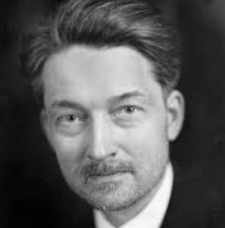
There is room neither for the poet nor for the contemplator in an egalitarian world.
▼
Source
p. 14.
6 months 2 weeks ago
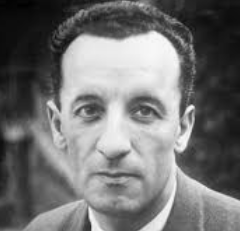
The accidents of our bodily constitution can always play this revealing role on the condition that they become a means of extending our knowledge by the consciousness which we have of them, instead of being submitted to as pure facts which dominate us. Ultimately, El Greco's supposed visual disorder was conquered by him and so profoundly integrated into his manner of thinking and being that it appears finally as the necessary expression of his being much more than as a peculiarity imposed from the outside. It is no longer a paradox to say that "El Greco was astigmatic because he produced elongated bodies." Everything which was accidental in the individual, that is, everything which revealed partial and independent dialectics without relationship to the total signification of his life, has been assimilated and centered in his deeper life. Bodily events have ceased to constitute autonomous cycles, to follow the abstract patterns of biology and psychology, and have received a new meaning.
▼
Source
p. 203
6 months 2 weeks ago
The mind which is free from passions is a citadel, for man has nothing more secure to which he can fly for refuge and for the future be inexpugnable. He then who has not seen this is an ignorant man: but he who has seen it and does not fly to this refuge is unhappy.
▼
Source
VIII, 48
6 months 2 weeks ago
The science of the age, in short, is physical, chemical, physiological; in all shapes mechanical. Our favourite Mathematics, the highly prized exponent of all these other sciences, has also become more and more mechanical. Excellence in what is called its higher departments depends less on natural genius than on acquired expertness in wielding its machinery. Without undervaluing the wonderful results which a Lagrange or Laplace educes by means of it, we may remark, that their calculus, differential and integral, is little else than a more cunningly-constructed arithmetical mill; where the factors, being put in, are, as it were, ground into the true product, under cover, and without other effort on our part than steady turning of the handle. We have more Mathematics than ever; but less Mathesis.
▼
Source
6 months 2 weeks ago
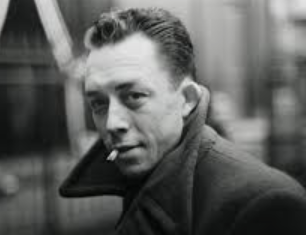
Nous nous trompons toujours deux fois sur ceux que nous aimons: d'abord à leur avantage, puis à leur désavantage.
▼
Source
We always deceive ourselves twice about the people we love — first to their advantage, then to their disadvantage. | A Happy Death (written 1938), first published as La mort heureuse (1971), as translated by Richard Howard (1972)

6 months 2 weeks ago
Great is their number who perhaps had attained to perfection, had they not already thought themselves perfect.
▼
Source

6 months 2 weeks ago
Whereas in Arithmetick Questions are only resolv'd by proceeding from given Quantities to the Quantities sought, Algebra proceeds in a retrograde Order, from the Quantities sought as if they were given, to the Quantities given as if they were sought, to the End that we may some Way or other come to a Conclusion or Æquation, from which one may bring out the Quantity sought. And after this Way the most difficult problems are resolv'd, the Resolutions whereof would be sought in vain from only common Arithmetick. Yet Arithmetick in all its Operations is so subservient to Algebra, as that they seem both but to make one perfect Science of Computing; and therefore I will explain them both together.
▼
Source
6 months 2 weeks ago
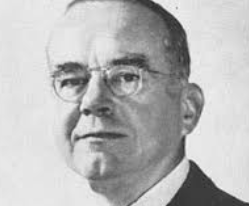
The managers - these administrators, experts, directing engineers, production executives, propaganda specialists, technocrats - are the only social group among almost all of whose members we find an attitude of self-confidence. Bankers, capitalist owners, liberal politicians, workers, farmers, shopkeepers-all these display, in public and private, doubts and fears and worries and gloom. But no one who comes into contact with managers will fail to have noticed a very considerable assurance in their whole bearing. They know that they are indispensable in modern society.
▼
Source
p. 281, as cited in: Albert Lepawsky (1949), Administration, p. 13-4
6 months 2 weeks ago
Either all things proceed from one intelligent source and come together as in one body, and the part ought not to find fault with what is done for the benefit of the whole; or there are only atoms, and nothing else than a mixture and dispersion. Why, then, art thou disturbed? Say to this ruling faculty, Art thou dead, art thou corrupted, art thou playing the hypocrite, art thou become a beast, dost thou herd and feed with the rest?
▼
Source
IX, 39

6 months 2 weeks ago
If there was a God of sorrow, he would grow black heavy wings, to soar not for the skies, but for inferno.
▼
Source
6 months 2 weeks ago
Man's unhappiness, as I construe, comes of his greatness; it is because there is an Infinite in him, which with all his cunning he cannot quite bury under the Finite.
▼
Source
Bk. I, ch. 9.
6 months 2 weeks ago
I hope the dogs don't bark tonight. I always think it's mine.
▼
Source
6 months 2 weeks ago
It was well that I quitted it at last and walked again into that clear light which I had foolishly forsaken.
▼
Source

6 months 2 weeks ago
There are a great many obscene minds, yet more railing and satirical, but very few fastidious ones. A man must have good manners, be very polite, and even have a great deal of originality to be able to jest gracefully and be felicitous in his remarks about trifles; to jest in such a manner and to make something out of nothing is to create.
▼
Source
4
6 months 2 weeks ago
It is not given to a cylinder to move everywhere by its own motion, nor yet to water nor to fire nor to anything else which is governed by nature or an irrational soul, for the things which check them and stand in the way are many. But intelligence and reason are able to go through everything that opposes them, and in such manner as they are formed by nature and as they choose. Place before thy eyes this facility with which the reason will be carried through all things, as fire upwards, as a stone downwards, as a cylinder down an inclined surface, and seek for nothing further. For all other obstacles either affect the body only, which is a dead thing; or, except for opinion and the yielding of reason itself, they do not crush nor do any harm of any kind; for if they did, he who felt it would immediately become bad.
▼
Source
X, 33
6 months 2 weeks ago
A regret understood by no one: the regret to be a pessimist. It's not easy to be on the wrong foot with life
▼
Source
6 months 2 weeks ago
The All of Things is an infinite conjugation of the verb To do.
▼
Source
Pt. II, Bk. III, ch. 1.
6 months 2 weeks ago
There can be no question of holding forth on ethics. I have seen people behave badly with great morality and I note every day that integrity has no need of rules. There is but one moral code that the absurd man can accept, the one that is not separated from God: the one that is dictated. But it so happens that he lives outside that God. As for the others (I mean also immoralism), the absurd man sees nothing in them but justifications and he has nothing to justify. I start out here from the principle of his innocence. That innocence is to be feared. "Everything is permitted," exclaims Ivan Karamazov. That, too, smacks of the absurd. But on condition that it not be taken in a vulgar sense. I don't know whether or not it has been sufficiently pointed out that it is not an outburst of relief or of joy, but rather a bitter acknowledgment of a fact.
▼
Source

6 months 2 weeks ago
Now the only sure basis of an alliance is for each party to be equally afraid of the other...
▼
Source
Book III, 3.11-[2]
6 months 2 weeks ago
The claim that suffering is bad for those who experience it and thus ought in general to be prevented when possible cannot be seriously doubted.
▼
Source
"[http://opinionator.blogs.nytimes.com/2010/09/19/the-meat-eaters/ The Meat Eaters]", The New York Times, 19 Sept. 2010
6 months 2 weeks ago
Men have been released from [concentration] camps who have taken over the jargon of their jailers and with cold reason and mad consent (the price, as it were, of their survival) tell their story as if it could not have been otherwise than it was, contending that they have not been treated so badly after all.
▼
Source
p. 45.
6 months 2 weeks ago
A cucumber is bitter. Throw it away. There are briars in the road. Turn aside from them. This is enough. Do not add, "And why were such things made in the world?"
▼
Source
VIII. 50, trans. George Long
6 months 2 weeks ago
"A false science makes atheists, a true science prostrates men before the Deity"
▼
Source
[http://books.google.es/books?id=aItKAAAAcAAJ&printsec=frontcover&hl=es#v=onepage&q&f=false The critical review, or annals of literature, Volume XXVI], by A Society of Gentlemen (1768) p. 450
6 months 2 weeks ago
The more one is obsessed with God, the less one is innocent. Nobody bothered about him in paradise. The fall brought about this divine torture. It's not possible to be conscious of divinity without guilt. Thus God is rarely to be found in an innocent soul.
▼
Source

6 months 2 weeks ago
As in Mathematicks, so in Natural Philosophy, the Investigation of difficult Things by the Method of Analysis, ought ever to precede the Method of Composition.
▼
Source
Isaac Newton, Opticks (1704)
6 months 2 weeks ago
In that strange island Iceland,—burst up, the geologists say, by fire from the bottom of the sea; a wild land of barrenness and lava; swallowed many months of every year in black tempests, yet with a wild gleaming beauty in summertime; towering up there, stern and grim, in the North Ocean with its snow jokuls, roaring geysers, sulphur-pools and horrid volcanic chasms, like the waste chaotic battle-field of Frost and Fire;—where of all places we least looked for Literature or written memorials, the record of these things was written down.
▼
Source
6 months 2 weeks ago
I said that the world is absurd, but I was too hasty. This world in itself is not reasonable, that is all that can be said. But what is absurd is the confrontation of this irrational and the wild longing for clarity whose call echoes in the human heart.
▼
Source
p. 16
CivilSimian.com created by AxiomaticPanic, CivilSimian, Kalokagathia