

4 months 2 weeks ago
By... confounding the properties of matter with those of space he arrives at the logical conclusion, that if the matter within a vessel could be entirely removed the space within the vessel would no longer exist. In fact he assumes that all space must be always full of matter.
▼
Source
James Clerk Maxwell, Matter and Motion (1876)

4 months 2 weeks ago
We call that fire of the black thunder-cloud "electricity," and lecture learnedly about it, and grind the like of it out of glass and silk: but what is it? What made it? Whence comes it? Whither goes it? Science has done much for us; but it is a poor science that would hide from us the great deep sacred infinitude of Nescience, whither we can never penetrate, on which all science swims as a mere superficial film. This world, after all our science and sciences, is still a miracle; wonderful, inscrutable, magical and more, to whosoever will think of it.
4 months 2 weeks ago
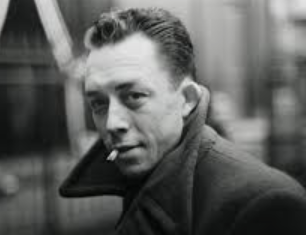
The absurd man says yes and his effort will henceforth be unceasing.

4 months 2 weeks ago
self-control contains honour as a chief constituent, and honour bravery.
▼
Source
Book I, 1.84; "self-control is the chief element in self-respect, and respect of self, in turn, is the chief element in courage" ([https://archive.org/stream/thucydideswithen01thucuoft/thucydideswithen01thucuoft#page/142/mode/2up trans. Charles Forster Sm
4 months 2 weeks ago
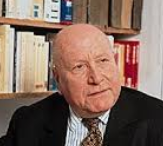
America is the object of their loathing because, for a half-century or more, she has been the most prosperous and creative capitalist society on earth. Ultimately it is liberal democracy - or quite simply liberty itself - that they are eager to destroy, even though they are among its foremost beneficiaries, being free to travel anywhere, anytime in order to hatch their plots. If their diktats were carried out, if frontier barriers were reestablished everywhere, with passports and visas even for tourists, there could have been no Seattle and no Goteborg.
▼
Source
p. 35
4 months 2 weeks ago
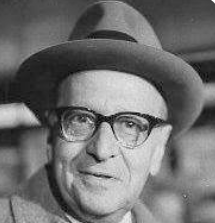
We cannot credit our enjoyment of a flower or of the atmosphere of a room to an autonomous esthetic instinct. Man’s esthetic responsiveness relates in its prehistory to various forms of idolatry; his belief in the goodness or sacredness of a thing precedes his enjoyment of its beauty. The applies no less to such concepts as freedom and humanity.
▼
Source
p. 36.

4 months 2 weeks ago
How much more damage anger and grief do than the things that cause them.
▼
Source
XI, 18 (Hays translation)
4 months 2 weeks ago
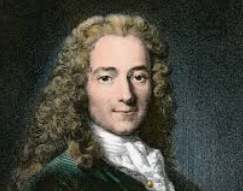
Pleasure has its time; so, too, has wisdom. Make love in thy youth, and in old age, attend to thy salvation.
▼
Source
p. 50

4 months 2 weeks ago
Ideas should be neutral. But man animates them with his passions and folly. Impure and turned into beliefs, they take on the appearance of reality. The passage from logic is consummated. Thus are born ideologies, doctrines, and bloody farce.
4 months 2 weeks ago
It was a rude gross error, that of counting the Great Man a god. Yet let us say that it is at all times difficult to know what he is, or how to account of him and receive him!
4 months 2 weeks ago
Every ideology is contrary to human psychology.
4 months 2 weeks ago
When night came on, the Macedonians and the barbarian crowd suddenly took fright in one of those mysterious panics to which great armies are liable...
▼
Source
Book IV, 4.125-[1]
4 months 2 weeks ago
Let us assume that we invited an unknown person to a game of cards. If this person answered us, “I don’t play,” we would either interpret this to mean that he did not understand the game, or that he had an aversion to it which arose from economic, ethical, or other reasons. Let us imagine, however, that an honorable man, who was known to possess every possible skill in the game, and who was well versed in its rules and its forbidden tricks, but who could like a game and participate in it only when it was an innocent pastime, were invited into a company of clever swindlers, who were known as good players and to whom he was equal on both scores, to join them in a game. If he said, “I do not play,” we would have to join him in looking the people with whom he was talking straight in the face, and would be able to supplement his words as follows: “I don’t play, that is, with people such as you, who break the rules of the game, and rob it of its pleasure. If you offer to play a game, our mutual agreement, then, is that we recognize the capriciousness of chance as our master; and you call the science of your nimble fingers chance, and I must accept it as such, it I will, or run the risk of insulting you or choose the shame of imitating you.” … The opinion of Socrates can be summarized in these blunt words, when he said to the Sophists, the leaned men of his time, “I know nothing.” Therefore these words were a thorn in their eyes and a scourge on their backs.
▼
Source
Socratic Memorabilia, J. Flaherty, trans. (Baltimore: 1967), pp. 165-167.
4 months 2 weeks ago
Of the life of man the duration is but a point.
▼
Source
II. 17, trans. C.R. Haines
4 months 2 weeks ago
Why do we dream in our sleep if we have no soul? and, if we have one, how is it that dreams are so incoherent and extravagant?
▼
Source
p. 162
4 months 2 weeks ago
Anyone who speaks in the name of others is always an impostor.
4 months 2 weeks ago
Or indeed we may say again, it is in what I called Portrait-painting, delineating of men and things, especially of men, that Shakspeare is great. All the greatness of the man comes out decisively here. It is unexampled, I think, that calm creative perspicacity of Shakspeare. The thing he looks at reveals not this or that face of it, but its inmost heart and generic secret: it dissolves itself as in light before him, so that he discerns the perfect structure of it. Creative, we said: poetic creation, what is this too but seeing the thing sufficiently? The word that will describe the thing, follows of itself from such clear intense sight of the thing. And is not Shakspeare's morality, his valour, candour, tolerance, truthfulness; his whole victorious strength and greatness, which can triumph over such obstructions, visible there too? Great as the world!
4 months 2 weeks ago
Martyrs must choose between being forgotten, mocked, or made use of. As for being understood—never!
4 months 2 weeks ago
We should always speak what would please the man of whom we expect a favour, like the hunter who sings sweetly when he desires to shoot a deer.

4 months 2 weeks ago
Men shut their doors against a setting sun.
▼
Source
Apemantus, scene ii
4 months 2 weeks ago
The sense in which an automatic door "understands instructions" from its photoelectric cell is not at all the sense in which I understand English.
4 months 2 weeks ago
Neatness begets order; but from order to taste there is the same difference as from taste to genius, or from love to friendship.
▼
Source
No. 594
4 months 2 weeks ago
Marcus Aurelius was the perfect man, says Renan. Yes; the great emperor was a perfect man. But how intolerable were the endless claims upon him! He staggered under the burden of the empire. He was conscious how inadequate one man was to bear the weight of that Titan and too vast orb.
▼
Source
Oscar Wilde, in The Soul of Man under Socialism, 1891
4 months 2 weeks ago
One hundred years from my day there will not be a Bible in the earth except one that is looked upon by an antiquarian curiosity seeker.
▼
Source
As quoted in Hefley What's so great about the Bible (1969), p. 30 | Variant: "Another century and there will not be a Bible on earth!" | George Sweeting Living in a Dying World (1972), p. 59 | Related: "...only 50 years after his death the Geneva Bible So
4 months 2 weeks ago
Incredible that the prospect of having a biographer has made no one renounce having a life.

4 months 2 weeks ago
It is not easy to fall into any absurdity, unless it be by the length of an account; wherein he may perhaps forget what went before. For all men by nature reason alike, and well, when they have good principles. For who is so stupid as both to mistake in geometry, and also to persist in it, when another detects his error to him? By this it appears that reason is not, as sense and memory, born with us; nor gotten by experience only, as prudence is; but attained by industry: first in apt imposing of names; and secondly by getting a good and orderly method in proceeding from the elements, which are names, to assertions made by connexion of one of them to another; and so to syllogisms, which are the connexions of one assertion to another, till we come to a knowledge of all the consequences of names appertaining to the subject in hand; and that is it, men call science. And whereas sense and memory are but knowledge of fact, which is a thing past and irrevocable, science is the knowledge of consequences, and dependence of one fact upon another; by which, out of that we can presently do, we know how to do something else when we will, or the like, another time: because when we see how anything comes about, upon what causes, and by what manner; when the like causes come into our power, we see how to make it produce the like effects. Children therefore are not endued with reason at all, till they have attained the use of speech, but are called reasonable creatures for the possibility apparent of having the use of reason in time to come.
▼
Source
The First Part, Chapter 5, p. 21 (See also: John Rawls)
4 months 2 weeks ago
Burke said there were Three Estates in Parliament; but, in the Reporter's Gallery yonder, there sat a Fourth Estate more important far than they all.
4 months 2 weeks ago
No less a considerable writer, Camus is a wonderful stylist, certainly an exemplary novelist in many respects. He certainly talks about resistance. But what bothers me is that he is read out of his own context, his own history. Camus's history is that of a colon, a pied noir. He was born and grew up in a place very close to a city in Algeria on the coast, Annaba in Arabic, Bone by the French. It was made over into a French town in the 1880s and 1890s. His family came variously from Corsica and various parts of southern Europe and France. His novels, in my opinion, are really expressions of the colonial predicament. Meursault, in L'Etranger (The Stranger), kills the Arab, to whom Camus gives no name and no history. The whole idea at the end of the novel where Meursault is put on trial is an ideological fiction. No Frenchman was ever put on trial for killing an Arab in colonial Algeria. That's a lie. So he constructs something.Second of all, in his later novel La Peste (The Plague), the people who die in the city are Arabs, but they're not mentioned. The only people who mattered to Camus and to the European reader of the time, and even now, are Europeans. Arabs are there to die. The story, interestingly enough, is always interpreted as a parable or an allegory of the German occupation of France. My reading of Camus, and certainly of his later stories, starts with the fact that he, in the late 1950s, was very much opposed to independence for Algeria. He in fact compared the FLN to Abdel Nasser in Egypt, after Suez, after 1956.
▼
Source
Edward Said, in The Pen and the Sword: Conversations with David Barsamian (1994), pp.73-74

4 months 2 weeks ago
There are two forms of knowledge, one genuine, one obscure. To the obscure belong all of the following: sight, hearing, smell, taste, feeling. The other form is the genuine, and is quite distinct from this. [And then distinguishing the genuine from the obscure, he continues:] Whenever the obscure [way of knowing] has reached the minimum sensibile of hearing, smell, taste, and touch, and when the investigation must be carried farther into that which is still finer, then arises the genuine way of knowing, which has a finer organ of thought.

4 months 2 weeks ago
Because he never raises his eyes to the great and the meaningful, the philistine has taken experience as his gospel. It has become for him a message about life's commonness. But he has never grasped that there exists something other than experience, that there are values—inexperienceable—which we serve.
▼
Source
"Experience" (1913) as translated by L. Spencer and S. Jost, in Walter Benjamin: Selected Writings, Vol. 1 (1996), p. 4
4 months 2 weeks ago
Not the wretchedest man or woman but has a deep secretive mythology with which to wrestle with the material world and to overcome it and pass beyond it. Not the wretchedest human being but has his share in the creative energy that builds the world. We are all creators. We all create a mythological world of our own out of certain shapeless materials.
▼
Source
p. 222
4 months 2 weeks ago
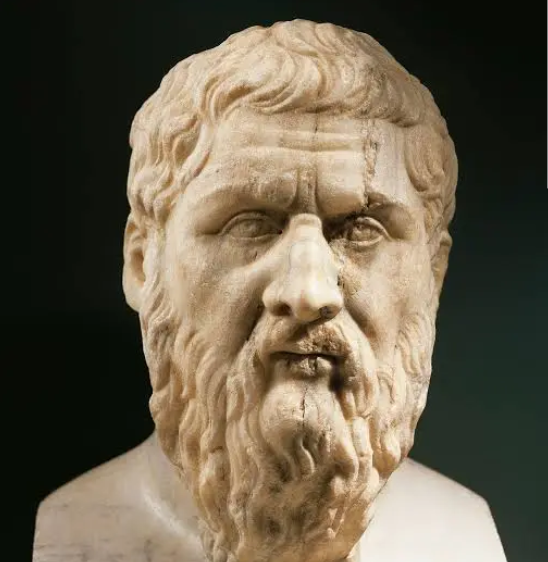
The tyrant has arisen, and the king and oligarchy and aristocracy and democracy, because men are not contented with that one perfect ruler, and do not believe that there could ever be any one worthy of such power or willing and able by ruling with virtue and knowledge to dispense justice and equity rightly to all, but that he will harm and kill and injure any one of us whom he chooses on any occasion, since they admit that if such a man as we describe should really arise, he would be welcomed and would continue to dwell among them, directing to their weal as sole ruler a perfectly right form of government. But, as the case now stands, since, as we claim, no king is produced in our states who is, like the ruler of the bees in their hives, by birth pre-eminently fitted from the beginning in body and mind, we are obliged, as it seems, to follow in the track of the perfect and true form of government by coming together and making written laws.
▼
Source
301c-e
4 months 2 weeks ago
For two thousand years, Jesus has revenged himself on us for not having died on a sofa.
4 months 2 weeks ago
A Covenant not to defend my selfe from force, by force, is always voyd.
▼
Source
The First Part, Chapter 14, p. 69
4 months 2 weeks ago
The Soldier is perhaps one of the most difficult things to realise; but Governments, had they not realised him, could not have existed: accordingly he is here.
4 months 2 weeks ago
Fortune is lavish with her favors, but not to be depended on. Nature on the other hand is self-sufficing, and therefore with her feebler but trustworthy [resources] she wins the greater [meed] of hope.
4 months 2 weeks ago
Only a thoughtless observer can deny that correspondences come into play between the world of modern technology and the archaic symbol-world of mythology.
4 months 2 weeks ago
Religious feeling is as much a verity as any other part of human consciousness; and against it, on the subjective side, the waves of science beat in vain.
▼
Source
Professor Virchow and Evolution.
4 months 2 weeks ago
The vicious lover is the follower of earthly Love who desires the body rather than the soul; his heart is set on what is mutable and must therefore be inconstant. And as soon as the body he loves begins to pass the first flower of its beauty, he "spreads his wings and flies away," giving the lie to all his pretty speeches and dishonoring his vows, whereas the lover whose heart is touched by moral beauties is constant all his life, for he has become one with what will never fade.
▼
Source
183e, M. Joyce, trans, Collected Dialogues of Plato (1961), p. 537
4 months 2 weeks ago
As for silver, I never could see any degree of fire make it part with any of its three principles. ...But admitting, that some parts of the silver were driven away by the violence of the fire, what proof is there, that it was either the salt, the sulphur, or the mercury of the metal, and not rather a part of it homogeneous to what remained? for besides that the silver, that was left, seemed not sensibly altered, which probably would have appeared, had so much of any one of its principles been separated from it.
4 months 2 weeks ago
I seem to myself, among civilised men, an intruder, a troglodyte enamored of decrepitude, plunged into subversive prayers.
4 months 2 weeks ago
But if it bee well considered, The praise of Ancient Authors, proceeds not from the reverence of the Dead, but from the competition and mutual envy of the Living.
▼
Source
Review and Conclusion, p. 395
4 months 2 weeks ago
[M]en's hearts ought not to be set against one another; but set with one another, and all against the Evil Thing only.
4 months 2 weeks ago
Some days will be sublime. Others will be merely wonderful. But critically, there will be one particular texture ("what it feels like") of consciousness that will be missing from our lives; and that will be the texture of nastiness.
▼
Source
"[https://ieet.org/index.php/IEET2/more/sirius20120314 Feeling Groovy, Forever]", Institute for Ethics and Emerging Technologies, 14 Mar. 2012

4 months 2 weeks ago
Thus, the Jewish empowerment entailed in creating a Jewish state was not merely a matter of guaranteeing external, physical security of the Jews. Ultimately, its aim is to provide an internal security of the soul, which is the indispensable precondition for the emergence of a noble, uniquely Jewish character and civilization.
4 months 2 weeks ago
How much emphasis should we place on the size of the brain, when each individual neuron can serve multiple purposes and even a tiny brain has millions of potential states?
4 months 2 weeks ago
Only the dead have seen the end of war.
▼
Source
Attributed to Plato by General Douglas MacArthur, earliest source found is work of George Santayana who doesn't attribute it to anyone. | [http://plato-dialogues.org/faq/faq008.htm Plato and his dialogues by Bernard SUZANNE, "Frequently Asked Questions ab
4 months 2 weeks ago
He... discovered the dependence of the of a liquid upon , explained the action of the , the effect of the air on the vibration of a pendulum and on the propagation of sound, and made experiments on the nature of , and on the relation of air to and .
4 months 2 weeks ago
What pride to discover that nothing belongs to you — what a revelation.
4 months 2 weeks ago
For the Able Man, meet him where you may, is definable as the born enemy of Falsity and Anarchy, and the born soldier of Truth and Order: into what absurdest element soever you put him, he is there to make it a little less absurd, to fight continually with it till it become a little sane and human again. Peace on other terms he, for his part, cannot make with it; not he, while he continues able, or possessed of real intellect and not imaginary. There is but one man fraught with blessings for this world, fated to diminish and successively abolish the curses of the world; and it is he. For him make search, him reverence and follow; know that to find him or miss him, means victory or defeat for you, in all Downing Streets, and establishments and enterprises here below.
CivilSimian.com created by AxiomaticPanic, CivilSimian, Kalokagathia