
4 months 2 weeks ago
Neatness begets order; but from order to taste there is the same difference as from taste to genius, or from love to friendship.
▼
Source
No. 594

4 months 2 weeks ago
Marcus Aurelius was the perfect man, says Renan. Yes; the great emperor was a perfect man. But how intolerable were the endless claims upon him! He staggered under the burden of the empire. He was conscious how inadequate one man was to bear the weight of that Titan and too vast orb.
▼
Source
Oscar Wilde, in The Soul of Man under Socialism, 1891
4 months 2 weeks ago
One hundred years from my day there will not be a Bible in the earth except one that is looked upon by an antiquarian curiosity seeker.
▼
Source
As quoted in Hefley What's so great about the Bible (1969), p. 30 | Variant: "Another century and there will not be a Bible on earth!" | George Sweeting Living in a Dying World (1972), p. 59 | Related: "...only 50 years after his death the Geneva Bible So

4 months 2 weeks ago
Incredible that the prospect of having a biographer has made no one renounce having a life.

4 months 2 weeks ago
It is not easy to fall into any absurdity, unless it be by the length of an account; wherein he may perhaps forget what went before. For all men by nature reason alike, and well, when they have good principles. For who is so stupid as both to mistake in geometry, and also to persist in it, when another detects his error to him? By this it appears that reason is not, as sense and memory, born with us; nor gotten by experience only, as prudence is; but attained by industry: first in apt imposing of names; and secondly by getting a good and orderly method in proceeding from the elements, which are names, to assertions made by connexion of one of them to another; and so to syllogisms, which are the connexions of one assertion to another, till we come to a knowledge of all the consequences of names appertaining to the subject in hand; and that is it, men call science. And whereas sense and memory are but knowledge of fact, which is a thing past and irrevocable, science is the knowledge of consequences, and dependence of one fact upon another; by which, out of that we can presently do, we know how to do something else when we will, or the like, another time: because when we see how anything comes about, upon what causes, and by what manner; when the like causes come into our power, we see how to make it produce the like effects. Children therefore are not endued with reason at all, till they have attained the use of speech, but are called reasonable creatures for the possibility apparent of having the use of reason in time to come.
▼
Source
The First Part, Chapter 5, p. 21 (See also: John Rawls)

4 months 2 weeks ago
Burke said there were Three Estates in Parliament; but, in the Reporter's Gallery yonder, there sat a Fourth Estate more important far than they all.
4 months 2 weeks ago
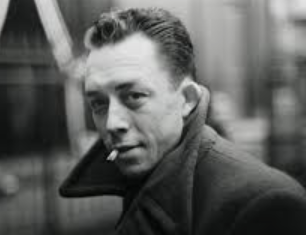
No less a considerable writer, Camus is a wonderful stylist, certainly an exemplary novelist in many respects. He certainly talks about resistance. But what bothers me is that he is read out of his own context, his own history. Camus's history is that of a colon, a pied noir. He was born and grew up in a place very close to a city in Algeria on the coast, Annaba in Arabic, Bone by the French. It was made over into a French town in the 1880s and 1890s. His family came variously from Corsica and various parts of southern Europe and France. His novels, in my opinion, are really expressions of the colonial predicament. Meursault, in L'Etranger (The Stranger), kills the Arab, to whom Camus gives no name and no history. The whole idea at the end of the novel where Meursault is put on trial is an ideological fiction. No Frenchman was ever put on trial for killing an Arab in colonial Algeria. That's a lie. So he constructs something.Second of all, in his later novel La Peste (The Plague), the people who die in the city are Arabs, but they're not mentioned. The only people who mattered to Camus and to the European reader of the time, and even now, are Europeans. Arabs are there to die. The story, interestingly enough, is always interpreted as a parable or an allegory of the German occupation of France. My reading of Camus, and certainly of his later stories, starts with the fact that he, in the late 1950s, was very much opposed to independence for Algeria. He in fact compared the FLN to Abdel Nasser in Egypt, after Suez, after 1956.
▼
Source
Edward Said, in The Pen and the Sword: Conversations with David Barsamian (1994), pp.73-74

4 months 2 weeks ago
There are two forms of knowledge, one genuine, one obscure. To the obscure belong all of the following: sight, hearing, smell, taste, feeling. The other form is the genuine, and is quite distinct from this. [And then distinguishing the genuine from the obscure, he continues:] Whenever the obscure [way of knowing] has reached the minimum sensibile of hearing, smell, taste, and touch, and when the investigation must be carried farther into that which is still finer, then arises the genuine way of knowing, which has a finer organ of thought.

4 months 2 weeks ago
Because he never raises his eyes to the great and the meaningful, the philistine has taken experience as his gospel. It has become for him a message about life's commonness. But he has never grasped that there exists something other than experience, that there are values—inexperienceable—which we serve.
▼
Source
"Experience" (1913) as translated by L. Spencer and S. Jost, in Walter Benjamin: Selected Writings, Vol. 1 (1996), p. 4
4 months 2 weeks ago
Not the wretchedest man or woman but has a deep secretive mythology with which to wrestle with the material world and to overcome it and pass beyond it. Not the wretchedest human being but has his share in the creative energy that builds the world. We are all creators. We all create a mythological world of our own out of certain shapeless materials.
▼
Source
p. 222
4 months 2 weeks ago
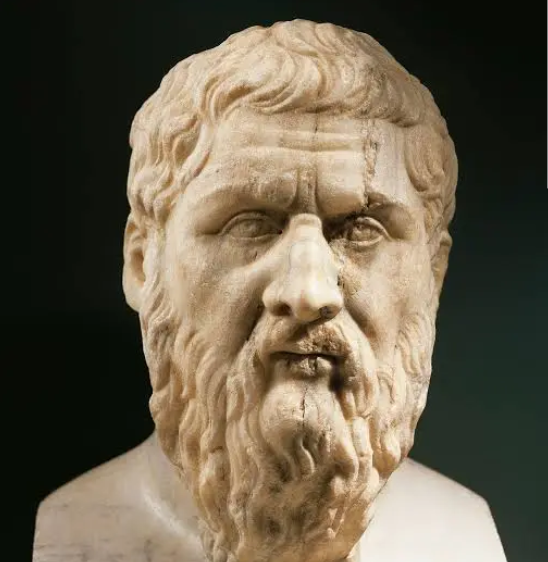
The tyrant has arisen, and the king and oligarchy and aristocracy and democracy, because men are not contented with that one perfect ruler, and do not believe that there could ever be any one worthy of such power or willing and able by ruling with virtue and knowledge to dispense justice and equity rightly to all, but that he will harm and kill and injure any one of us whom he chooses on any occasion, since they admit that if such a man as we describe should really arise, he would be welcomed and would continue to dwell among them, directing to their weal as sole ruler a perfectly right form of government. But, as the case now stands, since, as we claim, no king is produced in our states who is, like the ruler of the bees in their hives, by birth pre-eminently fitted from the beginning in body and mind, we are obliged, as it seems, to follow in the track of the perfect and true form of government by coming together and making written laws.
▼
Source
301c-e
4 months 2 weeks ago
For two thousand years, Jesus has revenged himself on us for not having died on a sofa.
4 months 2 weeks ago
A Covenant not to defend my selfe from force, by force, is always voyd.
▼
Source
The First Part, Chapter 14, p. 69
4 months 2 weeks ago
The Soldier is perhaps one of the most difficult things to realise; but Governments, had they not realised him, could not have existed: accordingly he is here.
4 months 2 weeks ago
Fortune is lavish with her favors, but not to be depended on. Nature on the other hand is self-sufficing, and therefore with her feebler but trustworthy [resources] she wins the greater [meed] of hope.
4 months 2 weeks ago
Only a thoughtless observer can deny that correspondences come into play between the world of modern technology and the archaic symbol-world of mythology.
4 months 2 weeks ago
Religious feeling is as much a verity as any other part of human consciousness; and against it, on the subjective side, the waves of science beat in vain.
▼
Source
Professor Virchow and Evolution.
4 months 2 weeks ago
The vicious lover is the follower of earthly Love who desires the body rather than the soul; his heart is set on what is mutable and must therefore be inconstant. And as soon as the body he loves begins to pass the first flower of its beauty, he "spreads his wings and flies away," giving the lie to all his pretty speeches and dishonoring his vows, whereas the lover whose heart is touched by moral beauties is constant all his life, for he has become one with what will never fade.
▼
Source
183e, M. Joyce, trans, Collected Dialogues of Plato (1961), p. 537
4 months 2 weeks ago
As for silver, I never could see any degree of fire make it part with any of its three principles. ...But admitting, that some parts of the silver were driven away by the violence of the fire, what proof is there, that it was either the salt, the sulphur, or the mercury of the metal, and not rather a part of it homogeneous to what remained? for besides that the silver, that was left, seemed not sensibly altered, which probably would have appeared, had so much of any one of its principles been separated from it.
4 months 2 weeks ago
I seem to myself, among civilised men, an intruder, a troglodyte enamored of decrepitude, plunged into subversive prayers.
4 months 2 weeks ago
But if it bee well considered, The praise of Ancient Authors, proceeds not from the reverence of the Dead, but from the competition and mutual envy of the Living.
▼
Source
Review and Conclusion, p. 395
4 months 2 weeks ago
[M]en's hearts ought not to be set against one another; but set with one another, and all against the Evil Thing only.
4 months 2 weeks ago
Some days will be sublime. Others will be merely wonderful. But critically, there will be one particular texture ("what it feels like") of consciousness that will be missing from our lives; and that will be the texture of nastiness.
▼
Source
"[https://ieet.org/index.php/IEET2/more/sirius20120314 Feeling Groovy, Forever]", Institute for Ethics and Emerging Technologies, 14 Mar. 2012

4 months 2 weeks ago
Thus, the Jewish empowerment entailed in creating a Jewish state was not merely a matter of guaranteeing external, physical security of the Jews. Ultimately, its aim is to provide an internal security of the soul, which is the indispensable precondition for the emergence of a noble, uniquely Jewish character and civilization.
4 months 2 weeks ago
How much emphasis should we place on the size of the brain, when each individual neuron can serve multiple purposes and even a tiny brain has millions of potential states?
4 months 2 weeks ago
Only the dead have seen the end of war.
▼
Source
Attributed to Plato by General Douglas MacArthur, earliest source found is work of George Santayana who doesn't attribute it to anyone. | [http://plato-dialogues.org/faq/faq008.htm Plato and his dialogues by Bernard SUZANNE, "Frequently Asked Questions ab
4 months 2 weeks ago
He... discovered the dependence of the of a liquid upon , explained the action of the , the effect of the air on the vibration of a pendulum and on the propagation of sound, and made experiments on the nature of , and on the relation of air to and .
4 months 2 weeks ago
What pride to discover that nothing belongs to you — what a revelation.
4 months 2 weeks ago
For the Able Man, meet him where you may, is definable as the born enemy of Falsity and Anarchy, and the born soldier of Truth and Order: into what absurdest element soever you put him, he is there to make it a little less absurd, to fight continually with it till it become a little sane and human again. Peace on other terms he, for his part, cannot make with it; not he, while he continues able, or possessed of real intellect and not imaginary. There is but one man fraught with blessings for this world, fated to diminish and successively abolish the curses of the world; and it is he. For him make search, him reverence and follow; know that to find him or miss him, means victory or defeat for you, in all Downing Streets, and establishments and enterprises here below.
4 months 2 weeks ago
As well as seriously – indeed exhaustively – researching everything that could conceivably go wrong, I think we should also investigate what could go right. The world is racked by suffering. The hedonic treadmill might more aptly be called a dolorous treadmill. Hundreds of millions of people are currently depressed, pain-ridden or both. Hundreds of billions of non-human animals are suffering too. If we weren't so inured to a world of pain and misery, then the biosphere would be reckoned in the throes of a global medical emergency. Thanks to breakthroughs in biotechnology, pain-thresholds, default anxiety levels, hedonic range and hedonic set-points are all now adjustable parameters in human and non-human animals alike. We are living in the final century of life on Earth in which suffering is biologically inevitable. As a society, we need an ethical debate about how much pain and misery we want to preserve and create.
▼
Source
[https://qr.ae/pyLLo8 How do you break the hedonic treadmill?]", Quora, 6 Apr. 2019

4 months 2 weeks ago
Man is in his short sojourn on earth equal to God in His eternity.
▼
Source
[paraphrasing the view of Seneca], p. 34.
4 months 2 weeks ago
If someone needs the "unusual" to be moved to astonishment, that person has lost the ability to respond rightly to the wondrous, the mirandum, of being. The hunger for the sensational, posing, as it may, in "bohemian garb," is an unmistakable sign of the loss of the true power of wonder, for a bourgeois-ized humanity.
▼
Source
p. 102
4 months 2 weeks ago
To conceive a thought — just one, but one that would tear the universe to pieces.
4 months 2 weeks ago
Flimsy, desultory readers, who fly from foolish book to foolish book, and get good of none, and mischief of all—are not these as foolish, unhealthy eaters, who mistake their superficial false desire after spiceries and confectioneries for their real appetite, of which even they are not destitute, though it lies far deeper, far quieter, after solid nutritive food?
4 months 2 weeks ago
Like literature, philosophy is not distinguished from other subjects by a specific approach to a subject-matter independent of it. Chemistry deals with chemicals, biology with life and astronomy with very large, very distant objects. Philosophy can boast no such definite subject-matter.
▼
Source
Chapter 4, Philosophy As Writing: The Case Of Hegel, p. 69
4 months 2 weeks ago
Greater intelligence, wealth and opportunity, for example, allow a person to achieve ends he could not rationally contemplate otherwise.
▼
Source
Chapter II, Section 15, pg. 93
4 months 2 weeks ago
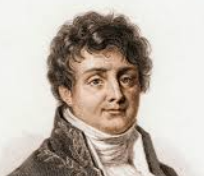
This temperature of space is not the same in different regions of the universe; but it does not vary in the regions... of planetary bodies... The planets of our system... equally participate in the common temperature... augmented for each... by the rays of the sun, according to the distance of the planet from... it. ...The intensity and distribution of heat on the surface of these bodies results from the distance from the sun, the inclination of the axes of rotation to the orbit, and the state of the surface...
4 months 2 weeks ago
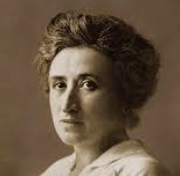
The production relations of capitalist society approach more and more the production relations of socialist society. But on the other hand, its political and juridical relations established between capitalist society and socialist society a steadily rising wall. This wall is not overthrown, but is on the contrary strengthened and consolidated by the development of social reforms and the course of democracy. Only the hammer blow of revolution, that is to day, the conquest of political power by the proletariat can break down this wall.
▼
Source
Ch. 7

4 months 2 weeks ago
When the Church says that, in the dogmas of religion, reason is totally incompetent and blind, and its use to be reprehended, this really attests the fact that these dogmas are allegorical in their nature, and are not to be judged by the standard which reason, taking all things sensu proprio, can alone apply. Now the absurdities of a dogma are just the mark and sign of what is allegorical and mythical in it. In the case under consideration, however, the absurdities spring from the fact that two such heterogeneous doctrines as those of the Old and New Testaments had to be combined. The great allegory was of gradual growth. Suggested by external and adventitious circumstances, it was developed by the interpretation put upon them, an interpretation in quiet touch with certain deep-lying truths only half realised. The allegory was finally completed by Augustine, who penetrated deepest into its meaning, and so was able to conceive it as a systematic whole and supply its defects.
▼
Source
"The Christian System" in Religion: A Dialogue, and Other Essays (1910) as translated by Thomas Bailey Saunders, p. 105
4 months 2 weeks ago
I have never taken myself for a being. A non-citizen, a marginal type, a nothing who exists only by the excess, by the superabundance of his nothingness.
4 months 2 weeks ago
War is a quarrel between two thieves too cowardly to fight their own battle; therefore they take boys from one village and another village, stick them into uniforms, equip them with guns, and let them loose like wild beasts against each other.
▼
Source
Quoted by Emma Goldman in her essay, "Patriotism: A Menace to Liberty", chapter five of Anarchism and Other Essays (2nd revised edition, 1911).
4 months 2 weeks ago
Many conservative writers have contended that the tendency to equality in modern social movements is the expression of envy. In this way they seek to discredit this trend, attributing it to collectively harmful impulses.
▼
Source
Chapter IX, Section 82, p. 538
4 months 2 weeks ago
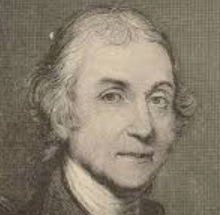
When we say there is a GOD, we mean that there is an intelligent designing cause of what we see in the world around us, and a being who was himself uncaused.
▼
Source
Vol. I : Part I : The Being and Attributes of God, § 1 : Of the existence of God, and those attributes which art deduced from his being considered as uncaused himself, and the cause of every thing else (1772)
4 months 2 weeks ago
In the present situation, such an experiment would be doubly dangerous to the Russian Social Democracy. It stands on the eve of decisive battles against tsarism. It is about to enter, or has already entered, on a period of intensified creative activity, during which it will broaden (as is usual in a revolutionary period) its sphere of influence and will advance spontaneously by leaps and bounds. To attempt to bind the initiative of the party at this moment, to surround it with a network of barbed wire, is to render it incapable of accomplishing the tremendous task of the hour.
4 months 2 weeks ago
In every page of David Hume, there is more to be learned than from Hegel's, Herbart's and Schleiermacher's complete philosophical works. - vol. II, p. 582 (as cited on p. 177 of Schopenhauer: A Biography)
4 months 2 weeks ago
It is a great force, and a great fortune, to be able to live without any ambition whatever. I aspire to it, but the very fact of so aspiring still participates in ambition.
4 months 2 weeks ago
This is not so much a history, as an epic poem; and notwithstanding, or even in consequence of this, the truest of histories. It is the history of the French Revolution, and the poetry of it, both in one; and on the whole no work of greater genius, either historical or poetical, has been produced in this country for many years.
▼
Source
John Stuart Mill, review of Carlyle's French Revolution in The London and Westminster Review (July 1837), p. 17
4 months 2 weeks ago
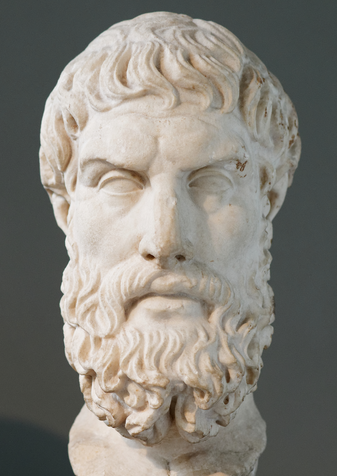
Those who were best able to provide themselves with the means of security against their neighbors, being thus in possession of the surest guarantee, passed the most agreeable life in each other's society; and their enjoyment of the fullest intimacy was such that, if one of them died before his time, the survivors did not mourn his death as if it called for sympathy.
4 months 2 weeks ago
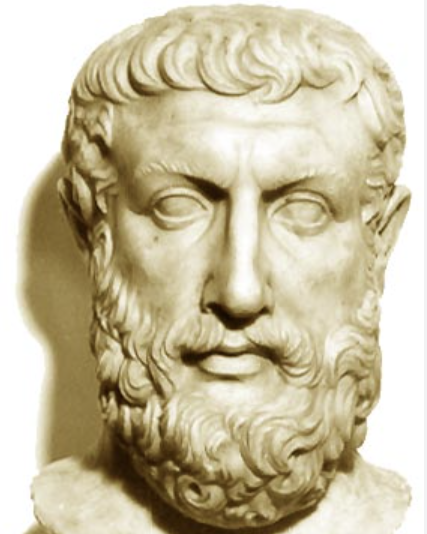
[P]ossibly... Parmenides believed in a "philosophic life" (§ 35), and... got the idea from the Pythagoreans; but there is very little trace... of his having been... affected by the religious side of Pythagoreanism. ...[T]here are traces of Orphic ideas in the poem ...Parmenides was a western Hellene, and he had probably been a Pythagorean, so it is not a little remarkable that he should be so free from the common tendency of his age and country. ...[L]ike most of the older philosophers, he took part in politics; and recorded that he legislated for his native city. Others add that the magistrates of Elea made the citizens swear every year to abide by the laws which Parmenides had given them.
4 months 2 weeks ago
Others go to bed with their mistresses; I with my ideas.
▼
Source
Letter (1890)
CivilSimian.com created by AxiomaticPanic, CivilSimian, Kalokagathia