

4 months 2 weeks ago
How shall we define a god? Expressed in psychological terms (which are primary-there is no getting behind them) a god is something that gives us the peculiar kind of feeling which Professor Otto has called "numinous". Numinous feelings are the original god-stuff from which the theory-making mind extracts the individualised gods of the pantheon.
▼
Source
"Meditation on the Moon"
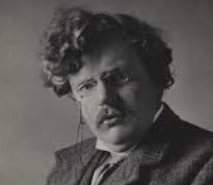
4 months 2 weeks ago
There is a road from the eye to the heart that does not go through the intellect. Men do not quarrel about the meaning of sunsets; they never dispute that the hawthorn says the best and wittiest thing about the spring.
▼
Source
"A Defence of Heraldry"
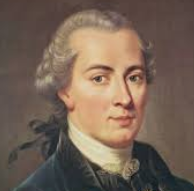
4 months 2 weeks ago
The evil effect of science upon men is principally this, that by far the greatest number of those who wish to display a knowledge of it accomplish no improvement at all of the understanding, but only a perversity of it, not to mention that it serves most of them as a tool of vanity.
▼
Source
Part III : Selection on Education from Kant's other Writings, Ch. I Pedagogical Fragments, # 52
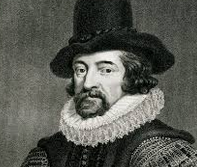
4 months 2 weeks ago
Since my logic aims to teach and instruct the understanding, not that it may with the slender tendrils of the mind snatch at and lay hold of abstract notions (as the common logic does), but that it may in very truth dissect nature, and discover the virtues and actions of bodies, with their laws as determined in matter; so that this science flows not merely from the nature of the mind, but also from the nature of things.
▼
Source
Aphorism 52
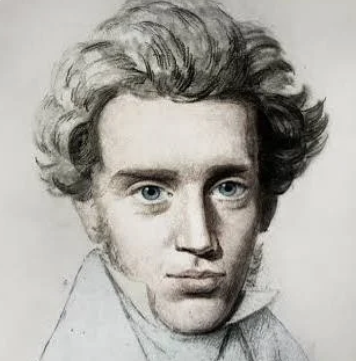
4 months 2 weeks ago
A master and way out of the league that the rest of us play in.
▼
Source
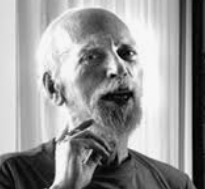
Jerry Fodor in the [http://www.lrb.co.uk/v26/n20/fodo01_.html London Review of Books (21 October 2004)]
4 months 2 weeks ago
Many tribal peoples have both all-male and all-female secret societies, which help maintain the cultural values or reality tunnel. Freemasonry is certainly the largest, and probably the oldest, and still the most controversial of the all-male secret societies surviving in our world. No two scholars can even agree on how old it is, much less on how "good" or "evil" it is. … Although Masonry is often denounced as either a political or religious "conspiracy", Freemasons are forbidden to discuss either politics or religion within the lodge. Gary Dryfoos of the Massachusetts Institute of technology, who maintains, always stresses these points and also offers personal testimony that after many years as a Mason, including high ranks, he has not yet been asked to engage in pagan or Satanic rituals or plot for any reason for or against any political party. The more rabid anti-Masons, of course, dismiss such testimony as flat lies. The enemies of Masonry, who are usually Roman Catholics or Fundamentalist Protestants, insist that the rites of the order contain "pagan" elements, e.g., the Yule festival, the Spring Solstice festival, the dead-and-resurrected martyr (Jesus, allegedly historical, to Christians; Hiram, admittedly allegorical, to Masons). All these and many other elements in Christianity and Masonry have a long prehistory in paganism, as documented in the 12 volumes of Sir James George Frazer's Golden Bough. The major offense of Masonry to orthodox churches is that it, like our First Amendment, encourages equal tolerance for all religions, and this tends, somewhat, to lessen dogmatic allegiance to any one religion. Those who insist you must accept their dogma fervently and renounce all others as devilish errors, correctly see this Masonic tendency as inimitable to their faith.
▼
Source
Freemasonry, p. 187; in the final sentence here, inimitable perhaps should be "inimicable"
4 months 2 weeks ago
The Bhagavad-Gita is perhaps the most systematic scriptural statement of the Perennial Philosophy. To a world at war, a world that, because it lacks the intellectual and spiritual prerequisites to peace, can only hope to patch up some kind of precarious armed truce, it stands pointing, clearly and unmistakably, to the only road of escape from the self-imposed necessity of self-destruction.
4 months 2 weeks ago
Round the birth of "Pickwick" broke one of those literary quarrels that were too common in the life of Dickens.... He turned people into mortal enemies whom he might have turned very easily into immortal jokes.
▼
Source
Ch 4: "The Pickwick Papers"
4 months 2 weeks ago
The man Butler, whose works were perhaps known to the man Kant, wished to save the belief in the immortality of the soul, and with this object he made it independent of belief in God. The first chapter of his Analogy treats, as I have said, of the future life, and the second of the government of God by rewards and punishments. And the fact is that, fundamentally, the good Anglican bishop deduces the existence of God from the immortality of the soul. And as this deduction was the good Anglican bishop's starting-point, he had not to make that somersault which at the close of the same century the good Lutheran philosopher had to make. Butler, the bishop, was one man and Kant, the professor, another man.
▼
Source
Miguel de Unamuno Tragic Sense Of Life 1921 Chapter 1 The Man of Flesh and Bone
4 months 2 weeks ago
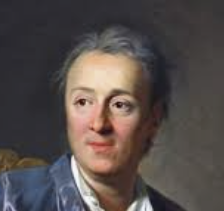
We are far more liable to catch the vices than the virtues of our associates.
▼
Source
As quoted in Thesaurus of Epigrams: A New Classified Collection of Witty Remarks, Bon Mots and Toasts (1942) by Edmund Fuller

4 months 2 weeks ago
We should admit rather that power produces knowledge (and not simply by encouraging it because it serves power or by applying it because it is useful); that power and knowledge directly imply one another.
▼
Source
Michel Foucault, quoted in Subrata Chattopadhyay Banerjee - The Development of Aryan Invasion Theory in India, A Critique of Nineteenth-Century Social Constructionism-Springer (2020)

4 months 2 weeks ago
After the new forms are introduced into the language, it is possible to formulate with their help internal questions and possible answers to them. A question of this kind may be either empirical or logical; accordingly a true answer is either factually true or analytic.
▼
Source
Ch. 3. What does acceptance of a kind of entities mean?
4 months 2 weeks ago
I was sitting on the seashore, half listening to a friend arguing violently about something which merely bored me. Unconsciously to myself, I looked at a film, of sand I had picked up on my hand, when I suddenly saw the exquisite beauty of every little grain of it; instead of being dull, I saw that each particle was made up on a perfect geometrical pattern, with sharp angles, from each of which a brilliant shaft of light was reflected, while each tiny crystal shone like a rainbow. . . . The rays crossed and recrossed, making exquisite patterns of such beauty that they left me breathless. ... Then, suddenly, my consciousness was lighted up from within and I saw in a vivid way how the whole universe was made up of particles of material which, no matter how dull and lifeless they might seem, were nevertheless filled with this intense and vital beauty. For a second or two the whole world appeared as a blaze of glory. When it died down, it left me with something I have never forgotten and which constantly reminds me of the beauty locked up in every minute speck of material around us.
▼
Source
(p. 77-78)
4 months 2 weeks ago
"I swear to you, then," said MacIan, after a pause. "I swear to you that nothing shall come between us. I swear to you that nothing shall be in my heart or in my head till our swords clash together. I swear it by the God you have denied, by the Blessed Lady you have blasphemed; I swear it by the seven swords in her heart. I swear it by the Holy Island where my fathers are, by the honour of my mother, by the secret of my people, and by the chalice of the Blood of God." The atheist drew up his head. "And I," he said, "give my word."
▼
Source
Part II: "The Religion of the Stipendiary Magistrate", last paragraphs
4 months 2 weeks ago
When shall we see poets born? After a time of disasters and great misfortunes, when harrowed nations begin to breathe again. And then, shaken by the terror of such spectacles, imaginations will paint things entirely strange to those who have not witnessed them.
4 months 2 weeks ago
It is understandable then that tragic heroes, unlike the baroque characters who had preceded them, could never be mad, and that inversely madness could never take on the tragic value we have known since Nietzsche and Artaud. In the classical epoch, tragic characters and the mad face each other without any possible dialogue or common language, for the one can only pronounce the decisive language of being, where the truth of light and the depths of night meet in a flash, and the other repeats endlessly an indifferent murmur where the empty chatter of the day is cancelled out by the deceptive lies of the shadows.
▼
Source
Part Two: 2. The Transcendence of Delirium

4 months 2 weeks ago
Asked to prove a questioner's existence, Morgenbesser shot back, "Who's asking?"
▼
Source
[https://web.archive.org/web/20040821091507/http://daily.nysun.com/Repository/getmailfiles.asp?Style=OliveXLib:ArticleToMail&Type=text/html&Path=NYS/2004/08/03&ID=Ar01400 Remembering Sidney Morgenbesser,] by Gary Shapiro in 'The New York Sun' 3 August 200
4 months 2 weeks ago
Never give children a chance of imagining that anything exists in isolation. Make it plain from the very beginning that all living is relationship. Show them relationships in the woods, in the fields, in the ponds and streams, in the village and in the country around it. Rub it in.
4 months 2 weeks ago
Talk about the pews and steeples And the cash that goes therewith!But the souls of Christian peoples... Chuck it, Smith!
▼
Source
Antichrist, or the Reunion of Christendom
4 months 2 weeks ago
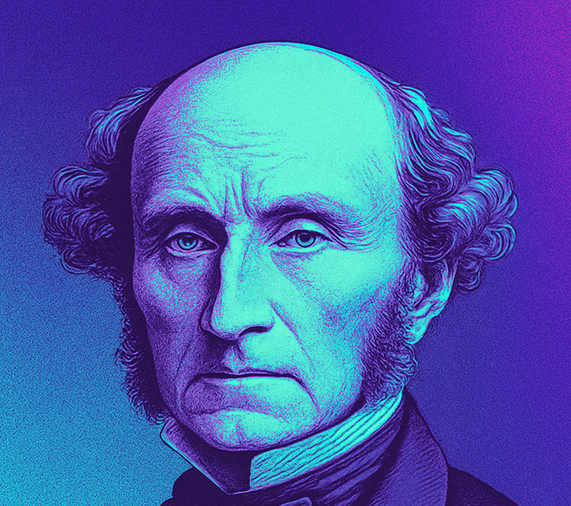
The possession and the exercise of political, and among others of electoral, rights, is one of the chief instruments both of moral and of intellectual training for the popular mind; and all governments must be regarded as extremely imperfect, until every one who is required to obey the laws, has a voice, or the prospect of a voice, in their enactment and administration.
▼
Source
[https://en.wikisource.org/wiki/Thoughts_on_Parliamentary_Reform Thoughts on Parliamentary Reform] (1859), p. 22
4 months 2 weeks ago
Although a man may wear fine clothing, if he lives peacefully; and is good, self-possessed, has faith and is pure; and if he does not hurt any living being, he is a holy man.
▼
Source
Gautama Buddha, as quoted in the Dhammapada.
4 months 2 weeks ago
This legible lesson, this ritual recording, must be repeated as often as possible; the punishments must be a school rather than a festival; an ever-open book rather than a ceremony. The duration that makes the punishment effective for the guilty is also useful for the spectators. They must be able to consult at each moment the permanent lexicon of crime and punishment. A secret punishment is a punishment half wasted. Children should be allowed to come to the places where the penalty is being carried out; there they will attend their classes in civics. And grown men will periodically relearn the laws. Let us conceive of places of punishment as a Garden of the Laws that families would visit on Sundays.
▼
Source
Chapter Three, The Gentle Way in Punishment

4 months 2 weeks ago
He had not applauded, he had remained seated, but he had looked at her steadily. From the depths of eternity he had looked at her and Rosalind became immortal. If I could believe him, she thought, if only I could believe him!
▼
Source
P. 30
4 months 2 weeks ago
Say that a thing is so, according to the Pope or the Bible, and it will be dismissed as a superstition without examination. But preface your remark merely with "they say" or "don't you know that?" or try (and fail) to remember the name of some professor mentioned in some newspaper; and the keen rationalism of the modern mind will accept every word you say.
4 months 2 weeks ago
Whenever the general disposition of the people is such, that each individual regards those only of his interests which are selfish, and does not dwell on, or concern himself for, his share of the general interest, in such a state of things, good government is impossible.
▼
Source
Ch. II: The Criterion of a Good Form of Government (p. 167)
4 months 2 weeks ago
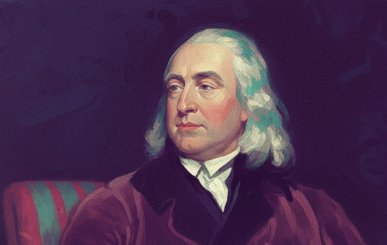
It is perhaps fortunate that Mr. Bentham devoted a much greater share of his time and labour to the subject of legislation, than that of morals; for the mode in which he understood and applied the principle of Utility, appears to me far more conducive to true and valuable results in the former, than in the latter of these two branches of inquiry.
▼
Source
John Stuart Mill, "Remarks on Bentham's Philosophy" in [https://archive.org/details/englandenglish0000lytt/page/407/mode/1up Appendix B] of Edward Bulwer-Lytton, England and the English (1833)
4 months 2 weeks ago
The political, ethical, social, philosophical problem of our day is not to try to liberate the individual from the state and from the state's institutions but to liberate us both from the state and from the type of individualization which is linked to the state. We have to promote new forms of subjectivity through the refusal of this kind of individuality which has been imposed on us for several centuries.
▼
Source
p. 785
4 months 2 weeks ago
The humanity of tomorrow will be living in its flesh and in its conscious liberty; that time will be its present and it will in turn prefer it. New relations of flesh and sentiment of which we have no conception will arise between the sexes; already, indeed, there have appeared between men and women friendships, rivalries, complicities, comradeships — chaste or sensual — which past centuries could not have conceived.
4 months 2 weeks ago
When people stop believing in God, they don't believe in nothing — they believe in anything.
▼
Source
This quotation actually comes from page 211 of Émile Cammaerts' book The Laughing Prophet: The Seven Virtues and G. K. Chesterton (1937) in which he quotes Chesterton as having Father Brown say, in "The Oracle of the Dog" (1923): "It's the first effect of
4 months 2 weeks ago
Under the rule of individual property, the division of the produce is the result of... Competition and Custom. ...Political economists generally... lay almost exclusive stress upon the first... to exaggerate the effect of competition, and to take little account of the other... conflicting principle. ...Only through the principle of competition has political economy any pretension to the character of a science. So far as rents, profits, wages, prices, are determined by competition, laws may be assigned to them. ...But it would be a great misconception of the actual course of human affairs, to suppose that competition exercises in fact this unlimited sway. I am not speaking of monopolies, either natural or artificial, or of any interferences of authority with the liberty of production or exchange. Such disturbing causes have always been allowed for by political economists. ...Competition ...has only become in any considerable degree the governing principle of contracts, at a comparatively modern period. The farther back we look back into history, the more we see all transactions and engagements under the influence of fixed customs. ...To the industrious population, in a turbulent military community, freedom of competition is a vain phrase... there is always a master who throws his sword into the scale, and the terms are such as he imposes. But though the law of strongest decides... every relaxation of it has a tendency to become a custom, and every custom to become a right. Rights... and not competition... determine, in a rude state of society, the share of the produce enjoyed by those who produce it.
▼
Source
Book II Distribution, Ch. IV Of Competition and Custom, [https://archive.org/details/principlesofpol00mill/page/242/mode/1up pp. 242-243] (1909)
4 months 2 weeks ago
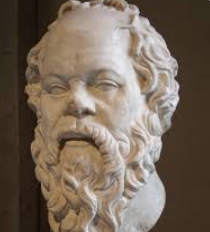
The harmony between word and deed in Socrates' life is Dorian... manifested in the courage he showed at Delium. This harmonic accord... distinguishes Socrates from a sophist... who can give... fine and beautiful discourses on courage, but is not courageous... Unlike the sophist, he can use parrhesia and speak freely because what he says accords... with what he thinks... which accords... with what he does.
4 months 2 weeks ago
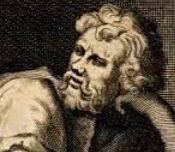
Whence come wars, and fighting, and factions? whence but from the body and the lusts of the body? For wars are occasioned by the love of money, and money has to be acquired for the sake and in service of the body; and in consequence of all these things, the time which ought to be given to philosophy is lost.
4 months 2 weeks ago
Being good is the same as being a philosopher. If you obey your father, you will follow the will of a man; if you choose the philosopher's life, the will of God. It is plain, therefore, that your duty lies in the pursuit of philosophy.
▼
Source
Fragment 16 "What is the best provision for old age," in Moral Exhortation (1986), p. 32
4 months 2 weeks ago
Unbelievers (so called) as well as of believers, there are many species, including almost every variety of moral type. But the best among them, as no one who has had opportunities of really knowing them will hesitate to affirm (believers rarely have that opportunity), are more genuinely religious, in the best sense of the word religion, than those who exclusively arrogate to themselves the title.
▼
Source
([https://archive.org/details/autobiography01mill/page/45/mode/1up pp. 45–46])
4 months 2 weeks ago
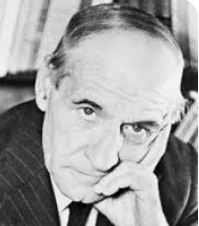
Life, individual or collective, personal or historic, is the one entity in the universe whose substance is compact of danger, of adventure. It is, in the strict sense of the word, drama. … The primary, radical meaning of life appears when it is employed in the sense not of biology, but of biography. For the very strong reason that the whole of biology is quite definitely only a chapter in certain biographies, it is what biologists do in the portion of their lives open to biography.
▼
Source
Chap.IX: The Primitive and the Technical
4 months 2 weeks ago
Then I heard someone who had a book of Anaxagoras, as he said, out of which he read that the mind was the disposer and cause of all... and I said to myself: If mind is the disposer, mind will dispose all for the best, and put each particular in the best place; and I argued that if anyone desired to find out the cause of the generation or destruction of anything, he must find out what state of being or suffering or doing was best for that thing, and therefore a man had only consider the best for himself and others, and then he would also know the worse, for that the same science comprised both.
4 months 2 weeks ago
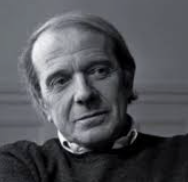
A leftist government doesn't exist because being on the left has nothing to do with governments.
▼
Source
from L'Abécédaire de Gilles Deleuze: G comme Gauche (“Gilles Deleuze's Alphabet Book: Left-wing Politics”), 1988–1989.

4 months 2 weeks ago
Freedom is a demagogue.
4 months 2 weeks ago
Those only are happy (I thought) who have their minds fixed on some object other than their own happiness; on the happiness of others, on the improvement of mankind, even on some art or pursuit, followed not as a means, but as itself an ideal end. Aiming thus at something else, they find happiness by the way.
▼
Source
([https://archive.org/details/autobiography01mill/page/141/mode/1up p. 142])
4 months 2 weeks ago
Man’s being is made of such strange stuff as to be partly akin to nature and partly not, at once natural and extranatural, a kind of ontological centaur, half immersed in nature, half transcending it.
▼
Source
“Man has no nature”

4 months 2 weeks ago
This thou must always bear in mind, what is the nature of the whole...
▼
Source
Τούτων ἀεὶ μεμνῆσθαι, τίς ἡ τῶν ὅλων φύσις | II, 9
4 months 2 weeks ago
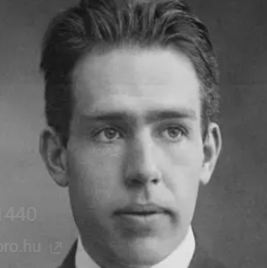
Never express yourself more clearly than you are able to think.
▼
Source
As quoted in Values of the Wise : Humanity's Highest Aspirations (2004) by Jason Merchey, p. 63
4 months 2 weeks ago
Order and discipline are the most important things in an army, and without them it is impossible to have any other service of the troops than of a confused heap of stones, bricks, timber, and tiles; but when everything is in its due place, as in a building, when the foundations and the covering are made of materials that will not grow rotten, and which no wet can damage, such as are stones and tiles, and when the bricks and timber are employed in their due places in the body of the edifice, they altogether make a house, which we value among our most considerable enjoyments.
▼
Source
Memorabilia III.1
4 months 2 weeks ago
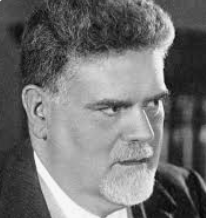
Gentlemen: Fascism is a party, a political doctrine. But Fascism, while being a party, a political doctrine is above all a total conception of life. So the fascist, whether his is writing in newspapers or reading them, going about his private life or talking to others, looking to the future or remembering the past and the past of his people, must always remember he is a Fascist. Thus he fulfills what can really be said to be the main characteristic of Fascism, to take life seriously. Life is toil, is effort, is sacrifice, is hard work.
▼
Source
Che cosa è il fascismo: Discorsi e polemiche (“What is Fascism?”), Florence: Vallecchi, (1925) pp. 38-39
4 months 2 weeks ago
If it be said, that an Omnipotent Creator, though under no necessity of employing contrivances such as man must use, thought fit to use them in order to leave traces that would enable man to recognize his creative hand, the answer is that this equally implies a limit to his omnipotence. For if he wanted men to know that they themselves and the world are his work, he, being omnipotent, had only to will that they should be aware of it.
▼
Source
pages 177-178;Early Modern Texts page 16
4 months 2 weeks ago
The universe is flux, life is opinion.
▼
Source
The universe is (constant) change, life is (mere) presumption. (Analogous translation) | The universe is transformation: life is opinion. (Translation by George Long) | The world is a moving shift; life is a succession of views. (Translation Gerald H. Ren

4 months 2 weeks ago
The principles of ethics come from our own nature as social, reasoning beings.
▼
Source
Chapter 6, A New Understanding Of Ethics, p. 149
4 months 2 weeks ago
Agnosticism, in fact, is not a creed, but a method, the essence of which lies in the rigorous application of a single principle. That principle is of great antiquity; it is as old as Socrates; as old as the writer who said, 'Try all things, hold fast by that which is good'; it is the foundation of the Reformation, which simply illustrated the axiom that every man should be able to give a reason for the faith that is in him, it is the great principle of Descartes; it is the fundamental axiom of modern science.
▼
Source
Thomas Henry Huxley, "Agnosticism"
4 months 2 weeks ago
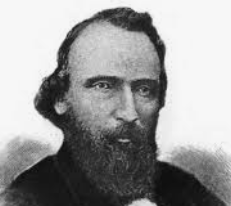
At bottom there is but one subject of study: the forms and metamorphoses of mind. All other subjects may be reduced to that; all other studies bring us back to this study.
▼
Source
20 July 1848
4 months 2 weeks ago
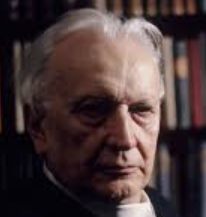
Man, if he is to remain man, must advance by way of consciousness. There is no road leading backward. ... We can no longer veil reality from ourselves by renouncing self-consciousness without simultaneously excluding ourselves from the historical course of human existence.
CivilSimian.com created by AxiomaticPanic, CivilSimian, Kalokagathia