
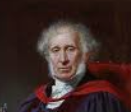
David Brewster
Member for
3 months 4 weeksDavid Brewster — Polarization of Light, Natural Magic, and the Demystification of the Supernatural (1781–1868)
Sir David Brewster was a Scottish natural philosopher, scientist, inventor, editor, and author — born in Jedburgh in 1781, the son of a schoolteacher, a child prodigy who built a telescope at ten, sent to the University of Edinburgh at twelve, licensed as a minister of the Church of Scotland, who mounted the pulpit once and never again — reportedly overcome by nervousness at hearing his own voice — turning instead to optics and natural philosophy in what his friend James Hogg described as a good day for science if a bad day for the Kirk. He became Principal of the University of St Andrews (1838–1859) and then of the University of Edinburgh (1859–1868), was knighted in 1831, communicated 315 papers to scientific societies between 1806 and 1868, and died at eighty-six still writing, still corresponding, still investigating.
William Whewell called him "the father of modern experimental optics" and "the Johannes Kepler of optics." He is principally remembered by scientists for his experimental work on the polarization of light, Brewster's angle, optical mineralogy, and photoelasticity. He is remembered by everyone else for inventing the kaleidoscope — which sold 200,000 units in London and Paris in three months in 1817 and which Brewster, through a defect in his patent registration, never profited from at all.
His central concern — beyond the experimental work that occupied his scientific career — was the demystification of the supernatural: the demonstration, through natural philosophy, that what appeared miraculous or magical had natural causes, and that science and sincere Christian faith were not only compatible but mutually reinforcing.
The Optics — Brewster's Angle and the Polarization of Light
Brewster's scientific reputation rested primarily on his extensive experimental work in physical optics — the study of how light behaved when it interacted with different materials, surfaces, and structures. His method was characteristically empirical rather than mathematical: he designed experiments, made precise measurements, and extracted laws from the data, where his French contemporaries Malus and Fresnel were more often working from mathematical theory toward experiment.
His most celebrated discovery — Brewster's law — established that the angle at which light reflected from a surface is completely polarized (the "Brewster angle") is related to the refractive index of the material: the tangent of the polarizing angle equals the refractive index. This was a simple, precise, and experimentally verifiable law that organized a wide range of optical phenomena under a single principle. His work on biaxial crystals — showing that some crystals had two axes of double refraction rather than one — was the foundation of optical mineralogy: the identification of minerals by their optical properties. His discovery that compressed glass became doubly refracting created the field of photoelasticity, with applications in structural engineering that persist to the present day.
"He regarded all the various phenomena of polarisation of light by reflexion and refraction as brought under the dominion of laws as well determined as those which regulate the motions of the planets."
The Kaleidoscope — Invention and Lost Fortune
The kaleidoscope — invented in 1816 as a direct result of Brewster's investigations of polarization by multiple reflections — was an immediate cultural sensation of a kind that few scientific inventions achieve. Dr. Peter Roget (of the Thesaurus) wrote that "in the memory of man, no invention, and no work, whether addressed to the imagination or to the understanding, ever produced such an effect." A universal mania seized every class of society. 200,000 sold in London and Paris in three months.
Brewster patented it, but a copy of the prototype was shown to London opticians before the patent was registered — they copied it immediately — and he never received a penny. The kaleidoscope was one of the clearest demonstrations in Victorian history of the gap between invention and commercial benefit, and it became a standing grievance of Brewster's career. He returned to it forty years later with a revised treatise, still not reconciled to the loss. Edwin Land, the inventor of Polaroid film, later credited Brewster's treatise on the kaleidoscope — which he read as an undergraduate at Harvard in 1926 — as the inspiration for his work on the optical properties of herapathite.
"In the memory of man, no invention, and no work, whether addressed to the imagination or to the understanding, ever produced such an effect — a universal mania for the instrument seized all classes, from the lowest to the highest."
— Dr. Peter Roget on the kaleidoscope, 1818
Letters on Natural Magic — Science Against Superstition
Brewster's 1832 "Letters on Natural Magic, Addressed to Sir Walter Scott" was his most philosophically significant popular work — intended as a companion piece to Scott's own "Letters on Demonology and Witchcraft," and written explicitly to provide scientific explanations for phenomena that had been attributed to magic or the supernatural. Brewster's project was Enlightenment demystification applied systematically to the whole range of apparent miracles and magical operations: optical illusions, spectral apparitions, automata, spontaneous combustion, fire-breathing, magic lanterns, alchemy, and the mechanical Turk.
His argument was philosophical as well as empirical: ancient governments and religious orders had deliberately cultivated the appearance of supernatural power by exploiting natural phenomena that their subjects could not explain — and that this exploitation was a form of political and spiritual tyranny. Understanding the natural causes of apparently miraculous events was therefore not merely intellectually satisfying but morally and politically important: it liberated people from the credulity through which they had been dominated. Science was a tool of human emancipation as much as of knowledge.
"Brewster illustrated the use of scientific principles by ancient governments and religious orders to frighten and delude the populace for their own advantage — providing logical reasoning to counter superstition, while recognizing the hand of the Creator."
The Martyrs of Science — History of Scientific Persecution
Brewster's 1841 "Martyrs of Science, or the Lives of Galileo, Tycho Brahe, and Kepler" was one of the most influential popular science history texts of the Victorian era — a work that shaped the "conflict thesis" between science and religion even though Brewster himself was a devout Presbyterian who believed the two were ultimately compatible. The stories he told — Galileo persecuted by the Church, Brahe navigating political hostility, Kepler persecuted for his mother's witchcraft trial — were presented as illustrations of the obstacles that scientific truth had to overcome in human history.
The irony was not lost on Brewster's contemporaries: a devout Christian writing the canonical account of Christianity's persecution of science. His resolution was that persecution had been the work of corrupt institutions, not of genuine faith — that authentic Christianity and authentic natural philosophy were allies, not enemies. "Science and religion must be one since each dealt with Truth, which had only one and the same Author."
"Science and religion must be one since each dealt with Truth, which had only one and the same Author."
— Brewster's foundational conviction
Newton — The Life's Biographical Work
Brewster's most sustained scholarly commitment was his biography of Isaac Newton — a project that occupied more than twenty years of his life. His 1831 popular "Life of Sir Isaac Newton" established Newton as the supreme hero of British natural philosophy. His 1855 "Memoirs of the Life, Writings and Discoveries of Sir Isaac Newton" was the first biography to draw on the full Newton manuscript archive — Brewster was the first scholar to examine many of Newton's unpublished papers — and remained the standard Newton biography for decades.
What Brewster found in those papers was sometimes uncomfortable: Newton's extensive engagement with alchemy, with heretical theology, and with biblical prophecy — aspects of Newton's work that Brewster tended to minimize in his presentation. His Newton was an idealized figure of Christian natural philosophy, the supreme demonstration that deep science and deep faith were compatible, rather than the complex, privately heretical, alchemically obsessed Newton that twentieth-century scholarship would eventually reconstruct. But even with these limitations, the documentary work Brewster did was of lasting value, and his engagement with the Newton manuscripts shaped Newton scholarship for generations.
"In 1855 Brewster proved the correspondence between Newton and Pascal produced by M. Chasles to be a forgery — one of many contributions to scholarly accuracy in his twenty-year engagement with Newton's papers."
More Worlds Than One — The Plurality of Worlds
Brewster's 1854 "More Worlds Than One: The Creed of the Philosopher and the Hope of the Christian" entered one of the most vigorous popular scientific debates of the Victorian era: whether other planets were inhabited, and what the theological implications would be. Brewster's opponent was William Whewell, who had argued that the Earth was likely the only inhabited world. Brewster argued the opposite: that the vast scale of the universe made it implausible that only one planet bore life, and that a Christianity confident in its truths had nothing to fear from the discovery of other intelligent beings.
The debate illuminated the broader intellectual concerns that animated Brewster's career: the relationship between scientific discovery and religious faith, the proper response of Christianity to expanding cosmological knowledge, and the philosophical implications of the scale of the universe that Victorian science was beginning to reveal. Brewster's position — that expansive science and expansive faith were mutually reinforcing rather than contradictory — was his consistent answer to the apparent conflict that the era seemed to be forcing upon educated Christians.
"Brewster's views on the possibility of intelligence on other planets, contrasted with the opinion of William Whewell, are cited in Trollope's Barchester Towers — the debate was sufficiently prominent in Victorian culture to become a recognized cultural reference."
Legacy — The Natural Philosopher and the Public Understanding of Science
Brewster died in 1868, having spent sixty-nine years — from his first paper in 1799 to his death — in active scientific and literary production. He had been a founding force in the British Association for the Advancement of Science, had edited the Edinburgh Encyclopaedia and contributed to the Encyclopaedia Britannica, had trained two generations of scientists through his teaching and editorial work, and had done more than almost anyone of his era to bring the results of natural philosophy to a general public.
His scientific legacy was partly obscured by the fact that his genius was empirical rather than mathematical: he established laws without explaining them theoretically, leaving the theoretical explanations to others. He never fully embraced the wave theory of light even after it had largely supplanted the corpuscular theory, a stubbornness that limited his ultimate standing in the history of physics. But the experimental discoveries were real and lasting, and the philosophical and popular work — the "Letters on Natural Magic," the "Martyrs of Science," the Newton biography — shaped Victorian understanding of the relationship between science and religion, between knowledge and power, and between the natural and the supernatural, in ways that persisted long after his optical discoveries had been absorbed into the standard corpus.
On CivSim he belongs alongside John Herschel, William Whewell, and the generation of Victorian natural philosophers who were simultaneously expanding the boundaries of scientific knowledge and negotiating its relationship with religious faith and popular culture. His challenge to Universal Humanism is the demystification challenge: that the apparent authority of supernatural claims — whether religious, political, or magical — must be subject to rational examination, and that the tool of rational examination is itself a moral and political weapon against those who would exploit credulity for power.
"His scientific glory is different in kind from that of Young and Fresnel; but the discoverer of the law of polarization of biaxial crystals, of optical mineralogy, and of double refraction by compression, will always occupy a foremost rank in the intellectual history of the age."
— James David Forbes, Encyclopaedia Britannica, 8th edition
CivilSimian.com created by AxiomaticPanic, CivilSimian, Kalokagathia