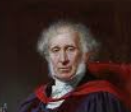
The immense number and variety of the beautiful optical discoveries which we owe to Sir David Brewster makes the comparison in his case a very imperfect representation of his triumphs over nature; and that, besides his place in the history of the Theory of Optics, he must hold a most eminent position in the history of Optical Crystallography, whenever the discovery of a True Optical Theory of Crystals supplies us with the Epoch to which his labors in this field form so rich.
0
⚖0
▼Source
source
William Whewell (1859). History of the Inductive Sciences, D. Appleto. p. 133
Had Mr. Darwin written a work on the change of species, as determined by observation and experiment, without any other object but that of advancing natural science, he would have obtained a high place among philosophical naturalists. But after reading his work in which the name of the Creator is never distinctly mentioned, we can hardly believe that scientific truth was the only object the author had in view. Researches, conducted under the influence of other motives, are not likely to stand the test of a rigorous scrutiny; and some of Mr. Darwin's not unfriendly critics have produced ample evidence that the idol of speculation has been occasionally worshipped at the expense of truth.
Though the large runt pigeon, with its massive beak and its huge feet, differs from its blue and barred progenitor the rock, it is a pigeon still. Though the slender Italian greyhound has a strange contrast with the short-legged bull-dog, they are both dogs in their teeth and in their skull. The mouse, even, has not been transmuted into the cat, nor the hen into the turkey, nor the duck into the goose, nor the hawk into the eagle, and still less the monkey into the man.
Trained in a less severe school than that of geometry and physics, his reasonings are almost always loose and inconclusive. His generalizations seem to have been reached before he had obtained the materials upon which he rests them: His facts, though frequently new and interesting, are often little more than conjectures; and the grand phenomena of the world of life, and instinct, and reason, which other minds have woven into noble and elevating truths, have thus become in Mr. Darwin's hands the basis of a dangerous and degrading speculation.
It is a more rational belief that man may become a brute than that a brute may become a man; and it is an easier faith that plants and animals may dwindle down into an elemental atom, than that this atom should embrace in its organization, and evolve, all the noble forms of vegetable, animal, and intellectual life.
It is not within our province to inquire by what process, and in what condition the Almighty brought matter into existence-what the space was which it occupied, or what the forms were which it assumed. Of such things we know nothing. In the depths of primeval time, the globe we inhabit may have a planetary existence, wheeling along its ethereal railway without a breathing passenger to count its periods, and without a living plant to measure the day by its opening and closing blossoms, or to mark the rolling seasons by the yearly increments of its stem. Or it may have been the theatre on which vast cycles of animal and vegetable life have been run- now its birthplace, and now its grave: But we have no data to guide us in our conjectures, and even imagination fails us if we call it to our aid. Whatever may have been, had ceased to be at the commencement of our history, when the primary rocks, forming the moten nucleus of the globe, were first exposed to the action of the elements.
The only sure mode of acquiring sound ideas of our relation to the Creator is to begin with the study of ourselves, and to view God as a Father and Friend, dealing with us in precisely the same way as we would deal with others over whom we exercise authority. Conscience, that infallible Mentor "that sticketh closer than a brother," tells us that we are responsible beings; and in the domestic, as well as the social circle, we speedily feel the discipline and learn the lesson of rewards and punishments. The law written in man's heart points to the past as pregnant with events which may affect the future; and in the earnestness of his aspirations, and the activity of his search, he is gradually led to the mysterious history of his race. He learns that on tables of stone have been engraven the same law to which his heart responded; -that when all were dead, one died for all; and in the contemplation of the great sacrifice, he obtains a solution of the interesting problem of his individual destiny. The Sacred record which is now his guide, speaks to him of fore-knowledge and predestination, while, in perfect consistency, it records the ministration of descending spirits, and the holier communings of God with man. The Divine decrees no longer perplex him. They transcend, indeed, his Reason - but that Reason, the faithful interpreter of Conscience, does not falter in proclaiming the Freedom of his Will, and the Responsibility of his Actions.
It is God alone that can pronounce upon the real condition of the heart and soul, out of which are the issues of life. A true phrenological fact, therefore, which we can force a sound mind to believe must involve, in one of its aspects, a species of knowledge which ist is not in the power of man, and still less within his province, to attain; and in the other, a physical fact, which can be seen only in the brain itself, and which cannot be interfered from any external sign.
If it has been revealed to man that the Almighty made him out of the dust of the earth, and breathed into his nostrils the breath of life, it is in vain to tell a Christian that man was originally a speck of albumen, and passed through the stages of monads and monkeys, before he attained his present intellectual preeminence. If it be a received truth that the Creator has repeatedly interposed in the government of the universe and displayed his immediate agency in miraculous interpositions, it is an insult to any reader to tell him that the being slumbers on his throne and rules under a "primal arrangement in his counsels," and "by a code of laws of unbending operation."
Jesus will take me safe trough... I shall see Jesus, who created all things, Jesus, who made the worlds; I shall see Him as He is;... Yes; I have had the Light for many years, and Oh! how bright it is! I feel SO SAFE, SO SATISFIED.
0
⚖0
▼Source
source
His last words, as quoted in The Home Life of Sir David Brewster (2010), by his daughter, Margaret Maria Gordon. Cambridge University Press. Chapter XXI.