
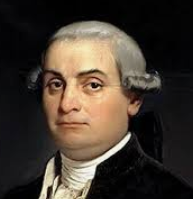
Cesare Beccaria
Member for
4 months 2 weeksCesare Beccaria — On Crimes and Punishments, the Death Penalty, and the Birth of Rational Criminal Justice (1738–1794)
Cesare Bonesana di Beccaria, Marchese of Gualdrasco and Villareggio, was an Italian philosopher, criminologist, and economist — born in Milan in 1738, educated at a Jesuit school in Parma which he later described as stifling and "fanatical," awarded a law degree from the University of Pavia in 1758, drawn into the intellectual circle of Pietro and Alessandro Verri and their "Academy of Fists" in Milan — which discussed criminal justice reform with the urgency and irreverence of young men who had actually seen the inside of the system they proposed to reform — and who, at twenty-six, in 1764, published a slim treatise that became one of the most consequential books in the history of law and political philosophy.
He was received in Paris by the philosophes as a hero. Diderot annotated his tract. Voltaire wrote a review. Catherine II of Russia invited him to lead reform of the Russian penal code. Thomas Jefferson copied passages into his commonplace book and sent notes to the American founding fathers. The Grand Duchy of Tuscany became the first state in the world to abolish the death penalty, following his arguments. Jeremy Bentham acknowledged him as a primary influence on utilitarianism itself. Dostoyevsky borrowed his title for a novel. He died in Milan in 1794, having spent most of his life there, too shy to leave and too celebrated to be ignored.
His central concern: that the criminal justice system of his day — arbitrary, cruel, opaque, and self-serving — violated both reason and humanity, and that the principles needed to reform it could be derived systematically from the social contract and the principle that punishment should serve the greatest public good.
The Academy of Fists and the Milan Enlightenment
Beccaria's intellectual formation was social before it was bookish. Pietro Verri — older, politically experienced, with direct knowledge of the Milanese prison system — and his brother Alessandro gathered a circle of young Milanese aristocrats who read French and British philosophy together: Montesquieu, Helvétius, Hume, Diderot. Pietro was writing a history of torture. Alessandro worked in the prisons. They gave Beccaria not only the ideas but the evidence — the direct observation of what the criminal justice system actually did to actual human beings.
The treatise that resulted was not a work of detached scholarship but of passionate advocacy grounded in philosophical argument. Beccaria wrote in Italian rather than Latin — a deliberate political choice: he wanted criminal law to be public knowledge accessible to citizens, not arcane expertise accessible only to lawyers and judges. He was nicknamed "Newtoncino" — Little Newton — for his attempt to theorize punishment more geometrico, with the precision and systematicity of mathematical reasoning applied to what had previously been decided by custom, corruption, and caprice.
"Beccaria believed that enlightened consent to laws was a precondition of true liberty. Accordingly, he rejected the use of Latin, conveyed his thoughts clearly and concisely, and turned criminal law into a public form of knowledge rather than the impenetrable expertise of a few individuals."
The Social Contract and Utility — The Philosophical Foundations
Beccaria grounded his argument on two philosophical foundations. The first was the social contract: individuals surrendered the minimum of their natural liberty necessary to make civil society possible, and the state was authorized to punish only to defend the social contract and ensure that everyone was motivated to abide by it. This meant that punishments exceeding what was necessary to maintain the social order were not merely inefficient but illegitimate — they were tyranny, the exercise of power beyond what the social contract justified.
The second was utility: the method of punishment chosen should be that which served the greatest public good. This was not a separate principle from the social contract but its concrete application — asking, for each proposed punishment, whether it actually achieved the social purposes for which punishment was authorized. The combination was powerful: it established both the limits on punishment (no more than the contract authorized) and the criteria for choosing among possible punishments (the greatest benefit with the least harm).
"Every punishment which does not arise from absolute necessity is tyrannical."
— Montesquieu, cited by Beccaria as the foundation of his argument
Certainty Over Severity — The Logic of Deterrence
Beccaria's most famous and most practically influential claim was his argument about the relationship between certainty and severity of punishment. The common assumption of his day — and a persistent assumption in criminal justice policy since — was that more severe punishments deterred more crime. Beccaria argued this was wrong.
Human beings adapted to increases in severity: the cruelty that shocked one generation became routine for the next. And crucially, severe punishments that were applied inconsistently — as they inevitably were in systems governed by judicial discretion and personal connections — were less deterrent than milder punishments applied with certainty. The association between crime and punishment in the potential criminal's mind depended on the swiftness and certainty of the connection, not on its magnitude. Mild, certain, swift punishment deterred more effectively than sporadic severity. The cruelty of existing penal systems was not only inhumane — it was counterproductive.
"Crimes are more effectually prevented by the certainty than the severity of punishment."
— Beccaria's most frequently cited claim
Against the Death Penalty — The First Systematic Argument
Beccaria's argument against the death penalty was the first systematic philosophical case for its abolition in Western thought, and it operated on two levels. The first was contractarian: the social contract involved each person surrendering the minimum necessary liberty — not the right to life itself. No one could have authorized the state to take their life as part of the social compact, since the whole point of entering society was to make life safer, not to risk it. The state therefore lacked the authority to execute its citizens.
The second was utilitarian: even if the state had such authority, execution was unnecessary and counterproductive. A criminal sentence of perpetual servitude — a life of continuous reminder of what crime had cost — deterred more effectively than a swift death, which was over before its deterrent effect could register. And the spectacle of state killing, far from instilling respect for life, modeled the violence it was supposed to prevent: it was, as he wrote, "the war of a nation against a citizen."
"The punishment of death is the war of a nation against a citizen whose destruction it judges to be necessary or useful. It appears absurd to me that the laws, which are the expression of the public will and which detest and punish homicide, commit murder themselves, and in order to dissuade citizens from assassination, commit public assassination."
— Beccaria, On Crimes and Punishments (1764)
Against Torture — The Logic of Unreliable Evidence
Beccaria's attack on judicial torture was equally systematic. Torture was used to extract confessions — on the assumption that the innocent would withstand it and only the guilty would confess. Beccaria demonstrated that this assumption was false: a person of strong constitution would deny a true accusation; a person of weaker constitution would confess to a false one. Torture therefore selected not for guilt but for physical endurance — it was a terrible mechanism for discovering truth and an excellent one for confirming whatever the torturer already believed.
Beyond the epistemological failure, there was a logical one: the accused was presumed innocent until proven guilty. But torture was applied before guilt was established — which meant the state was inflicting punishment on someone who might be innocent. This was not merely unjust; it was self-contradictory. The criminal justice system that tortured the accused to establish guilt was punishing people for crimes they had not yet been found to commit.
"In order that punishment should not be an act of violence perpetrated by one or many upon a private citizen, it is essential that it should be public, speedy, necessary, the minimum possible in the given circumstances, and determined by the law."
— Beccaria's concluding theorem
Social Justice and Crime — The Structural Dimension
Beccaria went beyond the mechanics of punishment to the social conditions that produced crime. He argued that disproportionate inequality was itself criminogenic — that poverty and injustice increased crime rates, that a society organized around inequality could not solve its crime problem by increasing penalties, and that education and the reduction of inequality were more effective crime prevention than any punishment. The state that ignored social justice while escalating penal severity was treating symptoms while worsening the disease.
This argument was less frequently cited than his arguments about deterrence — it was less immediately actionable for legislators — but it was philosophically prior. A criminal justice system that functioned justly was embedded in a society organized justly. Criminal law reform without social reform was incomplete reform at best.
"Disproportionate inequality is bound to increase the crime rate because of poverty and injustice. In our societies, which are deeply polarized and unequal, Beccaria's thought still rings true: we need more social justice and less criminal punishment."
Legacy — A Book That Changed the Law
The immediate impact of "On Crimes and Punishments" was remarkable by any standard. Within a year of publication it was translated into French and reviewed by Voltaire. Within two decades it had influenced criminal law reform in France, Austria, Russia, Sweden, and several Italian states. The Grand Duchy of Tuscany abolished the death penalty in 1786 — the first state in world history to do so. The American founding fathers, including Jefferson and Madison, engaged directly with its arguments. Bentham acknowledged it as foundational to utilitarianism. The Eighth Amendment's prohibition of cruel and unusual punishment echoed Beccaria's principles.
Beccaria himself did little after the treatise. A brilliant administrator in Lombardy in his later years — he served on economic reform commissions and was respected as a public official — he never completed another major work. His shyness, his depression, his rootedness in Milan — he left Paris after only two weeks — combined with the weight of his own fame to produce a long career that never again reached the intensity of 1764. He is one of the clearest examples in intellectual history of a thinker whose single book contained everything he had to say and who spent the rest of his life living in its shadow.
"Jefferson had satisfied the reasonable world of the unrightfulness and inefficacy of the punishment of crimes by death."
— Thomas Jefferson, autobiographical sketch, 1820s, on Beccaria
CivilSimian.com created by AxiomaticPanic, CivilSimian, Kalokagathia