


4 months 2 weeks ago
Preference of vice to virtue, a manifest wrong judgment.
▼
Source
source
Book II, Ch. 21, sec. 70

5 months 2 weeks ago
Zeno: The many do not know that except by this devious passage through all things the mind cannot attain to the truth. Zeno: Most people are not aware that this roundabout progress through all things is the only way in which the mind can attain truth and wisdom.
1 month 1 week ago
British rule in India is the most sordid and criminal exploitation of one nation by another in all recorded history. I propose to show that England has year by year been bleeding India to the point of death, and that self-government of India by the Hindus could not within any reasonable probability, have worse results than the present form of alien domination.
1 month 4 days ago
From a correct Marxian point of view ... all measures designed to restrain, to regulate and to improve capitalism were simply "petty-bourgeois" nonsense ... True socialists should not place any obstacles in the way of capitalist evolution. For only the full maturity of capitalism could bring about socialism. It is not only vain, but harmful to the interests of the proletarians to resort to such measures.

5 months 3 days ago
When you do anything from a clear judgment that it ought to be done, never shun the being seen to do it, even though the world should make a wrong supposition about it; for, if you don't act right, shun the action itself; but, if you do, why are you afraid of those who censure you wrongly?
▼
Source
source
(35).
1 week 1 day ago
How can this cosmic religious experience be communicated from man to man, if it cannot lead to a definite conception of God or to a theology? It seems to me that the most important function of art and of science is to arouse and keep alive this feeling in those who are receptive.
3 months 2 weeks ago
I write in a hurry, because the little one, who has been sleeping a long time, begins to call for me. Poor thing! when I am sad, I lament that all my affections grow on me, till they become too strong for my peace, though they all afford me snatches of exquisite enjoyment.
▼
Source
source
Letter to Gilbert Imlay

4 months 1 week ago
To resist him that is set in authority is evil. .
▼
Source
source
Maxim no. 31

3 months 2 weeks ago
We cannot hope to give here a final clarification of the essence of fact, judgement, object, property; this task leads into metaphysical abysses; about these one has to seek advice from men whose name cannot be stated without earning a compassionate smile-e.g.
▼
Source
source
Fichte. Hermann Weyl, Das Kontinuum. Kritische Untersuchungen uber die Grundlagen der Analysis (1918)

1 month 3 weeks ago
The whole world is in some ways better than it's ever been in the past. And, indeed, I think for many people the meaning of their lives really depends on that belief. If you strip out that belief in progress, if you start thinking of the world in the way in which the ancient pre-Christian Europeans did, or the Buddhists and the Hindus or the Taoists of China do, many people think that's a kind of despair. I don't know how many times I've been told "If I thought that, John, I wouldn't get up in the morning" and "If I agreed with you, John, that history had no pattern of that kind, I wouldn't get up in the morning." I said, "Well, stay in bed a bit longer, you might find a better reason for getting up."
▼
Source
source
Quoted in John Gray at the Writers' Festival, part 1," The Philosopher's Zone, a discussion with Alan Saunders on ABC Radio National

4 months 2 weeks ago
As to [General Douglas] Macarthur, I don't feel in a position to have clear opinions about anyone I know only from newspapers. You see, whenever they deal with anyone (or anything) I know myself, I find they're always a mass of lies & misunderstandings: so I conclude they're no better in the places where I don't know.
▼
Source
source
Letter to Mrs. Mary Van Deusen, April 30, 1951. Collected Letters of C. S. Lewis, vol. 3, "Narnia, Cambridge, and Joy", 1950-1963. p. 114.

3 months 1 week ago
The man old in days will not hesitate to ask a small child seven days old about the place of life, and he will live. For many who are first will become last, and they will become one and the same.
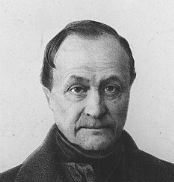
3 months 3 weeks ago
The dead govern the living.
▼
Source
source
Le Catéchisme positiviste
2 weeks 4 days ago
The Catastrophist constructs theories, the Uniformitarian Demolishes them.

2 weeks 4 days ago
Laugh. Laughter is immeasurable. Be joyful though you have considered all the facts.
▼
Source
source
Manifesto: The Mad Farmer Liberation Front in Farming: A Hand Book

3 months 1 week ago
One must always maintain one's connection to the past and yet ceaselessly pull away from it. To remain in touch with the past requires a love of memory. To remain in touch with the past requires a constant imaginative effort.
▼
Source
source
A Retrospective Glance at the Lifework of a Master of Books

3 months 2 weeks ago
You have dreamed of setting the world ablaze, and you have not even managed to communicate your fire to words, to light up a single one!

4 months 2 weeks ago
Facts are ventriloquists' dummies. Sitting on a wise man's knee they may be made to utter words of wisdom; elsewhere, they say nothing, or talk nonsense, or indulge in sheer diabolism.
▼
Source
source
"Bruno Rontini"

2 weeks 1 day ago
And finally remember that nothing harms him who is really a citizen, which does not harm the state; nor yet does anything harm the state which does not harm law [order]; and of these things which are called misfortunes not one harms law. What then does not harm law does not harm either state or citizen.
▼
Source
source
X, 33
4 months 2 weeks ago
Speed, it seems to me, provides the one genuinely modern pleasure.
▼
Source
source
Wanted, A New Pleasure
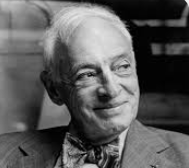
2 months 1 week ago
I never yet touched a fig leaf that didn't turn into a price tag.
▼
Source
source
Humboldt's Gift (1975), p. 159

3 months 1 day ago
And this in turn makes it plain that the Right Man problem is a problem of highly dominant people. Dominance is a subject of enormous importance to biologists and zoologists because the percentage of dominant animals - or human beings - seems to be amazingly constant. Bernard Shaw once asked the explorer H. M. Stanley how many other men could take over leadership of the expedition if Stanley himself fell ill; Stanley replied promptly: "One in twenty." "Is that exact or approximate?" asked Shaw. "Exact." And biological studies have confirmed this as a fact. For some odd reason, precisely five per cent - one in twenty - of any animal group are dominant - have leadership qualities. During the Korean War, the Chinese made the interesting discovery that if they separated out the dominant five per cent of American prisoners of war, and kept them in separate compound, the remaining ninety-five per cent made no attempt to escape.
▼
Source
source
p. 216

5 months 1 week ago
Earnest in practicing the ordinary virtues, and careful in speaking about them, if, in his practice, he has anything defective, the superior man dares not but exert himself; and if, in his words, he has any excess, he dares not allow himself such license. Thus his words have respect to his actions, and his actions have respect to his words; is it not just an entire sincerity which marks the superior man?

4 months 3 weeks ago
No matter that we may mount on stilts, we still must walk on our own legs. And on the highest throne in the world, we still sit only on our own bottom.
▼
Source
source
Ch. 13
4 months 2 weeks ago
Critics who treat adult as a term of approval, instead of as a merely descriptive term, cannot be adult themselves. To be concerned about being grown up, to admire the grown up because it is grown up, to blush at the suspicion of being childish; these things are the marks of childhood and adolescence. And in childhood and adolescence they are, in moderation, healthy symptoms. Young things ought to want to grow. But to carry on into middle life or even into early manhood this concern about being adult is a mark of really arrested development. When I was ten, I read fairy tales in secret and would have been ashamed if I had been found doing so. Now that I am fifty I read them openly. When I became a man I put away childish things, including the fear of childishness and the desire to be very grown up.
▼
Source
source
"On Three Ways of Writing for Children" (1952) - in Of Other Worlds: Essays and Stories (1967), p. 25
3 months 2 weeks ago
Awareness of time: assault on time . . .
5 months 2 weeks ago
Your pride has been too much for the pride of your admirers; they were numerous and high-spirited, but they have all run away, overpowered by your superior force of character; not one of them remains. And I want you to understand the reason why you have been too much for them. You think that you have no need of them or of any other man, for you have great possessions and lack nothing, beginning with the body, and ending with the soul. Socrates speaking to Alcibiades
2 weeks 1 day ago
Stir up thy mind, and recall thy wits again from thy natural dreams, and visions, and when thou art perfectly awoken, and canst perceive that they were but dreams that troubled thee, as one newly awakened out of another kind of sleep look upon these worldly things with the same mind as thou didst upon those, that thou sawest in thy sleep.
▼
Source
source
VI, 29

4 months 3 weeks ago
The more exquisite any good is, of which a small specimen is afforded us, the sharper is the evil, allied to it; and few exceptions are found to this uniform law of nature. The most sprightly wit borders on madness; the highest effusions of joy produce the deepest melancholy; the most ravishing pleasures are attended with the most cruel lassitude and disgust; the most flattering hopes make way for the severest disappointments. And, in general, no course of life has such safety (for happiness is not to be dreamed of) as the temperate and moderate, which maintains, as far as possible, a mediocrity, and a kind of insensibility, in every thing. As the good, the great, the sublime, the ravishing are found eminently in the genuine principles of theism; it may be expected, from the analogy of nature, that the base, the absurd, the mean, the terrifying will be equally discovered in religious fictions and chimeras.
▼
Source
source
Part XV - General corollary
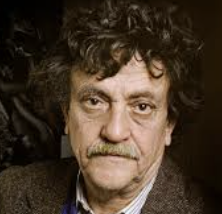
2 months 2 weeks ago
Nothing in this book is true.
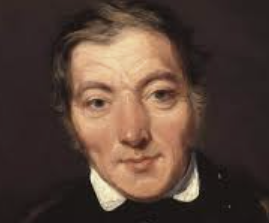
2 months 1 week ago
My life was not useless; I gave important truths to the world, and it was only for want of understanding that they were disregarded. I have been ahead of my time.
▼
Source
source
Deathbed statement (November 1858), in response to a church minister who asked if he regretted wasting his life on fruitless projects; as quoted in Harold Hill : A People's History
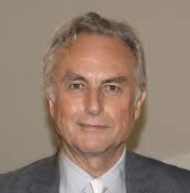
2 months 2 weeks ago
There are people in the world who desperately want not to have to believe in Darwinism.
▼
Source
source
Chapter 9 "Puncturing Punctuationism" (p. 250)

1 month 1 week ago
"The people may eat grass": hasty words, which fly abroad irrevocable-and will send back tidings.
▼
Source
source
Pt. I, Bk. III, ch. 9.

4 months 3 weeks ago
The mind intent upon resolving as well as compounding the concept of a composite demands and presumes boundaries in which it may acquiesce in the former as well as in the latter direction.
2 weeks 1 day ago
Waste not the remnant of thy life in those imaginations touching other folk, whereby thou contributest not to the common weal.
▼
Source
source
III, 4
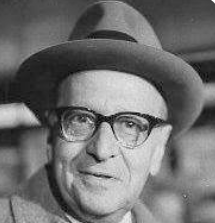
3 months 1 week ago
When even the dictators of today appeal to reason, they mean that they possess the most tanks. They were rational enough to build them; others should be rational enough to yield to them.
▼
Source
source
p. 28.
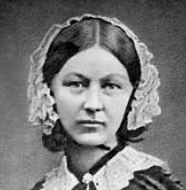
3 months ago
To have no food for our heads no food for our hearts, no food for our activity, is that nothing? If we have no food for the body, how do we cry out, how all the world hears of it, how all the newspapers talk of it, with a paragraph headed in great capital letters, DEATH FROM STARVATION! But suppose one were to put a paragraph in the Times, Death of Thought from Starvation, or Death of Moral Activity from Starvation, how people would stare, how they would laugh and wonder! One would think we had no heads nor hearts, by the total indifference of the public towards them. Our bodies are the only things of any consequence.
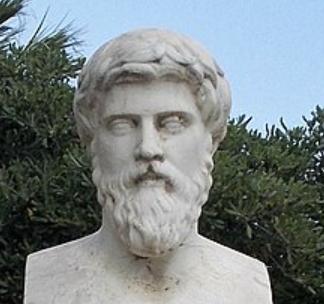
4 months 5 days ago
Lysander said, "Where the lion's skin will not reach, it must be pieced with the fox's."
▼
Source
source
60 Lysander

3 months 1 week ago
The judgment that human life is worth living, or rather can and ought to be made worth living, ... underlies all intellectual effort; it is the a priori of social theory, and its rejection (which is perfectly logical) rejects theory itself.
▼
Source
source
p. xliii

3 months 2 weeks ago
As there must be moderation in other things, so there must be moderation in self-criticism. Perpetual contemplation of our own actions produces a morbid consciousness, quite unlike that normal consciousness accompanying right actions spontaneously done; and from a state of unstable equilibrium long maintained by effort, there is apt to be a fall towards stable equilibrium, in which the primitive nature reasserts itself. Retrogression rather than progression may hence result.
▼
Source
source
Ch. 10, General Conclusions
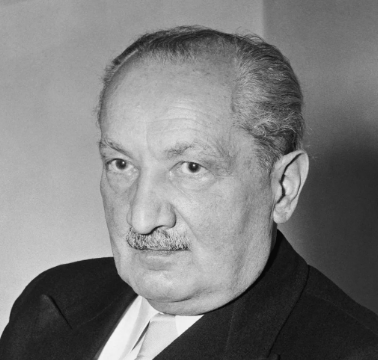
4 months 1 week ago
Everywhere we remain unfree and chained to technology, whether we passionately affirm or deny it. But we are delivered over to it in the worst possible way when we regard it as something neutral; for this conception of it, to which today we particularly like to do homage, makes us utterly blind to the essence of technology.
▼
Source
source
The Question Concerning Technology

3 months 2 weeks ago
They who bow to the enemy abroad will not be of power to subdue the conspirator at home.
▼
Source
source
p. 18
3 months 2 days ago
Nature gets credit which should in truth be reserved for ourselves: the rose for its scent: the nightingale for his song: and the sun for his radiance. The poets are entirely mistaken. They should address their lyrics to themselves, and should turn them into odes of self-congratulation on the excellency of the human mind.
▼
Source
source
Ch. 3: "The Century of Genius", p. 77

5 months 2 weeks ago
Just as it sometimes happens that deformed offspring are produced by deformed parents, and sometimes not, so the offspring produced by a female are sometimes female, sometimes not, but male, because the female is as it were a deformed male.
4 months 2 weeks ago
Wherever we turn we find that the real obstacles to peace are human will and feeling, human convictions, prejudices, opinions. If we want to get rid of war we must get rid first of all of its psychological causes. Only when this has been done will the rulers of the nations even desire to get rid of the economic and political causes.
▼
Source
source
Ch. 9, p. 138 [2012 reprint]

3 months 4 days ago
The essential characteristic of the first half of the twentieth century is the growing weakness, and almost the disappearance, of the idea of value.
▼
Source
source
"The responsibility of writers," p. 167
3 months 4 days ago
The petit-bourgeois is a man unable to imagine the Other. If he comes face to face with him, he blinds himself, ignores and denies him, or else transforms him into himself.
▼
Source
source
p. 151

5 months 2 weeks ago
The undramatic fact is that I just think and think and think until I have something [for a story], and there is nothing marvelous or artistic about the phenomenon.
3 weeks 5 days ago
This is a personal testimony, a testimony of my own experience of thought and life. It is not intended to be objective and makes no claim to establish eternal truths. In fact I rather despise claims to objectivity in philosophy; the point of view is the thing. I should have liked to call it "A Lyrical Philosophy," using the word "lyrical" in the sense of being a highly personal and individual outlook...
▼
Source
source
Preface
CivilSimian.com created by AxiomaticPanic, CivilSimian, Kalokagathia