


3 months ago
To wish to escape from solitude is cowardice. Friendship is not to be sought, not to be dreamed, not to be desired; it is to be exercised (it is a virtue).
▼
Source
source
p. 274

1 month 4 weeks ago
I believe Gandhi is the only person who knew about real democracy - not democracy as the right to go and buy what you want, but democracy as the responsibility to be accountable to everyone around you. Democracy begins with freedom from hunger, freedom from unemployment, freedom from fear, and freedom from hatred. To me, those are the real freedoms on the basis of which good human societies are based.
▼
Source
source
1998

4 months 3 weeks ago
There are and can be only two ways of searching into and discovering truth. The one flies from the senses and particulars to the most general axioms, and from these principles, the truth of which it takes for settled and immovable, proceeds to judgment and to the discovery of middle axioms. And this way is now in fashion. The other derives axioms from the senses and particulars, rising by a gradual and unbroken ascent, so that it arrives at the most general axioms last of all. This is the true way, but as yet untried.
▼
Source
source
Aphorism 19

2 months 2 weeks ago
Yet sometimes vegetables and animals are, by certain epithets or circumstances, extended to other significations; as a Tree, when called the tree of life or of knowledge; and a Beast, when called the old serpent, or worshiped. When a Beast or Man is put for a kingdom, his parts and qualities are put for the analogous parts and qualities of the kingdom; as the head of a Beast, for the great men who precede and govern; the tail for the inferior people, who follow and are governed; the heads, if more than one, for the number of capital parts, or dynasties, or dominions in the kingdom, whether collateral or successive, with respect to the civil government; the horns on any head, for the number of kingdoms in that head, with respect to military power...
▼
Source
source
Vol. I, Ch. 2: Of the Prophetic Language
3 months 1 week ago
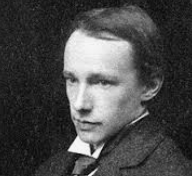
By far the most valuable things, which we know or can imagine, are certain states of consciousness, which may roughly be described as the pleasures of human intercourse and the enjoyment of beautiful objects. No one, probably, who has asked himself the question, has ever doubted that personal affection and the appreciation of what is beautiful in Art or Nature, are good in themselves; nor, if we consider strictly what things are worth having purely for their own sakes, does it appear probable that any one will think that anything else has nearly so much value as the things which are included under these two heads.
▼
Source
source
Principia Ethica (1903; revised edition, Cambridge University Press, 1993).

3 months 3 weeks ago
Cut not fire with a sword. Symbol 9 Variant translation: Poke not the fire with a sword.
▼
Source
source
As quoted in Short Sayings of Great Men: With Historical and Explanatory Notes (1882) by Samuel Arthur Bent, p. 455

2 months 3 weeks ago
What excited me was the recognition that this was simply another version of the problem that had obsessed me all of my life -- the problem of those moments when life seems entirely delightful, when we experience a sensation of what G.K. Chesterton called "absurd good news." Life normally strikes most of us as hard, dull and unsatisfying; but in these moments, consciousness seems to glow and expand, and all the contradictions seem to be resolved. Which of the two visions is true? My own reflections had led me to conclude that the vision of "absurd good news" is somehow broader and more comprehensive than the feeling that life is dull, boring and meaningless. Boredom is basically a feeling of narrowness, and surely a narrow vision is bound to be less true than a broad one?
▼
Source
source
p. 16

3 months 1 week ago
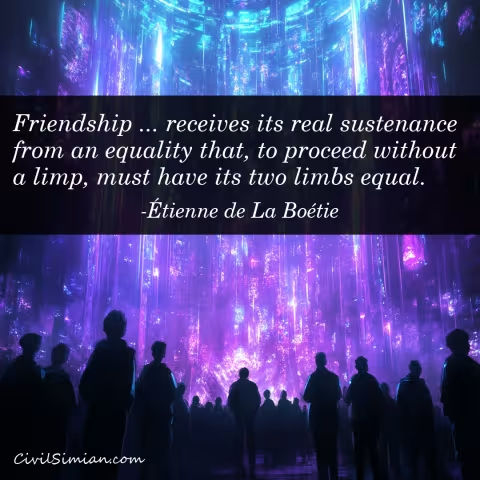
I must also have a dark side if I am to be whole.

4 months 2 weeks ago
While we are reading these sentences, this fair modern world seems only a reprint of the Laws of Menu with the gloss of Culluca. Tried by a New England eye, or the mere practical wisdom of modern times, they are the oracles of a race already in its dotage, but held up to the sky, which is the only impartial and incorruptible ordeal, they are of a piece with its depth and serenity, and I am assured that they will have a place and significance as long as there is a sky to test them by.

2 weeks ago
I have always said, and always will say, that the studious perusal of the sacred volume will make better citizens, better fathers, and better husbands.
▼
Source
source
Attributed to Jefferson by Daniel Webster in a letter of 15 June 1852 addressed to Professor Pease, recalling a Sunday spent with Jefferson more than a quarter of a century before.

3 months 1 week ago
If those who lead you say, 'See, the Kingdom is in the sky,' then the birds of the sky will precede you. If they say to you, 'It is in the sea,' then the fish will precede you. Rather, the Kingdom is inside of you, and it is outside of you. When you come to know yourselves, then you will become known, and you will realize that it is you who are the sons of the living Father. But if you will not know yourselves, you dwell in poverty and it is you who are that poverty. (3) And when he was demanded of the Pharisees, when the kingdom of God should come, he answered them and said, The kingdom of God cometh not with observation: Neither shall they say, Lo here! or, lo there! for, behold, the kingdom of God is within you.
▼
Source
source
(Luke 17:21)
3 months 5 days ago
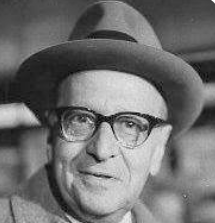
Men have been released from concentration camps who have taken over the jargon of their jailers and with cold reason and mad consent (the price, as it were, of their survival) tell their story as if it could not have been otherwise than it was, contending that they have not been treated so badly after all.
▼
Source
source
p. 45.
3 months 1 week ago
Go and shew John again those things which ye do hear and see: The blind receive their sight, and the lame walk, the lepers are cleansed, and the deaf hear, the dead are raised up, and the poor have the gospel preached to them. And blessed is he, whosoever shall not be offended in me.
▼
Source
source
11:4-6 (KJV)

5 months 2 weeks ago
If you have hitherto believed that life was one of the highest value and now see yourselves disappointed, do you at once have to reduce it to the lowest possible price?

4 months 2 weeks ago
When I was a child the atmosphere in the house was one of puritan piety and austerity. There were family prayers at eight o'clock every morning. Although there were eight servants, food was always of Spartan simplicity, and even what there was, if it was at all nice, was considered too good for children. For instance, if there was apple tart and rice pudding, I was only allowed the rice pudding. Cold baths all the year round were insisted upon, and I had to practice the piano from seven-thirty to eight every morning although the fires were not yet lit. My grandmother never allowed herself to sit in an armchair until the evening. Alcohol and tobacco were viewed with disfavor although stern convention compelled them to serve a little wine to guests. Only virtue was prized, virtue at the expense of intellect, health, happiness, and every mundane good.
▼
Source
source
p. 9
4 months 2 weeks ago
In the name of national security, the Commission's hearings were held in secret, thereby continuing the policy which has marked the entire course of the case. This prompts my second question: If, as we are told, Oswald was the lone assassin, where is the issue of national security? Indeed, precisely the same question must be put here as was posed in France during the Dreyfus case: If the Government is so certain of its case, why has it conducted all its inquiries in the strictest secrecy? "
▼
Source
source
16 Questions on the Assassination" in The Minority of One, ed. M.S. Arnoni (1964-09-06), pp. 6-8
4 months 2 weeks ago
There are other letters for the child to learn than those which Cadmus invented.

5 months 1 week ago
Then we may begin by assuming that there are three classes of men—lovers of wisdom, lovers of honor, lovers of gain?

3 months 2 weeks ago
Nor is there any embarrassment in the fact that we're ridiculous, isn't it true? For it's actually so, we are ridiculous, light-minded, with bad habits, we're bored, we don't know how to look, how to understand, we're all like that, all, you, and I, and they! Now, you're not offended when I tell you to your face that you're ridiculous? And if so, aren't you material? You know, in my opinion it's sometimes even good to be ridiculous, if not better: we can the sooner forgive each other, the sooner humble ourselves; we can't understand everything at once, we can't start right out with perfection! To achieve perfection, one must first begin by not understanding many things! And if we understand too quickly, we may not understand well. This I tell you, you, who have already been able to understand. .. and not understand ... so much. I'm not afraid for you now.
▼
Source
source
Part 4, Chapter ?

4 months 2 weeks ago
You shall have joy, or you shall have power, said God; you shall not have both.
▼
Source
source
October 1842
2 months 3 weeks ago
The chief impression left by a study of Crowley's life and works is that he wasted an immense amount of time and energy trying to shock everyone he came into contact with, and his dislike of orthodoxy turned him into an unconsciously comic figure, like Don Quixote.
▼
Source
source
pp. 153-154
4 months 1 week ago
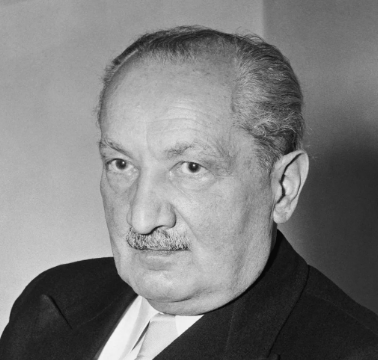
I see the situation of man in the world of planetary technicity not as an inexitricable and inescapable destiny, but I see the task of thought precisely in this, that within its own limits it helps man as such achieve a satisfactory relationship to the essence of technicity. National Socialism did indeed go in this direction. Those people, however, were far too poorly equipped for thought to arrive at a really explicit relationship to what is happening today and has been underway for the past 300 years.
▼
Source
source
As translated by William Richardson in Risk and Meaning, Nicolas Bouleau (translated by Dené Oglesby and Martin Crossley), ed. Springer, 2011

4 months 3 weeks ago
And I myself, in Rome, heard it said openly in the streets, "If there is a hell, then Rome is built on it." That is, "After the devil himself, there is no worse folk than the pope and his followers."
▼
Source
source
Against the Roman Papacy, An Institution of the Devil

4 months 1 week ago
And we feel that the hero has lived all the details of this night like annunciations, promises, or even that he lived only those that were promises, blind and deaf to all that did not herald adventure. We forget that the future was not yet there; the man was walking in the night without forethought, a night which offered him a choice of dull rich prizes, and he did not make his choice.
▼
Source
source
Diary entry of Saturday noon (10 February?)
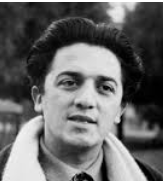
1 month 3 weeks ago
Cinema is an old whore, like circus and variety, who knows how to give many kinds of pleasure. Besides, you can't teach old fleas new dogs.
▼
Source
source
As quoted in in The Atlantic

2 months 1 week ago
Until writing was invented, man lived in acoustic space: boundless, directionless, horizonless, in the dark of the mind, in the world of emotion, by primordial intuition, terror. Speech is a social chart of this bog.
▼
Source
source
(p. 48)

4 months 1 week ago
When they have really learned to love their neighbours as themselves, they will be allowed to love themselves as their neighbours.
▼
Source
source
Letter XIV
4 months 2 weeks ago
In fact, contempt for happiness is usually contempt for other people's happiness, and is an elegant disguise for hatred of the human race.
▼
Source
source
p. 198

4 months 1 week ago
Ambition is the death of thought.
▼
Source
source
p. 77e
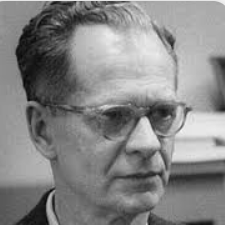
1 month 1 week ago
The strengthening of behavior which results from reinforcement is appropriately called "conditioning". In operant conditioning we "strengthen" an operant in the sense of making a response more probable or, in actual fact, more frequent.
▼
Source
source
Science and Human Behavior

2 months 2 weeks ago
There is one ethical principle, either you are preserving life generally, or you aren't. Preserving life in your ends and your means determines whether you are good or evil.
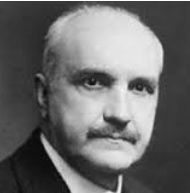
3 months 1 week ago
Never since the heroic days of Greece has the world had such a sweet, just, boyish master.
▼
Source
source
"The British Character"

1 week 4 days ago
How many together with whom I came into the world are already gone out of it.
▼
Source
source
VI, 56
5 months ago
Singing is of a lover.
▼
Source
source
Variant translation: To sing is characteristic of the lover. 336
2 months 1 week ago
The content or time-clothing of any medium or culture is the preceding medium or culture.
▼
Source
source
(p. 168)
3 months ago
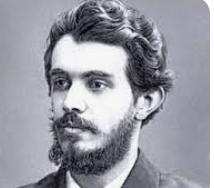
There is absolute truth in anarchism and it is to be seen in its attitude to the sovereignty of the state and to every form of state absolutism. ... The religious truth of anarchism consists in this, that power over man is bound up with sin and evil, that a state of perfection is a state where there is no power of man over man, that is to say, anarchy. The Kingdom of God is freedom and the absence of such power... the Kingdom of God is anarchy.
▼
Source
source
Slavery and Freedom (1939), p. 147

3 months 1 week ago
Religion comforts us for the defeat of our will to power. It adds new worlds to ours, and thus brings us hope of new conquests and new victories. We are converted to religion out of fear of suffocating within the narrow confines of this world.
3 months 1 week ago
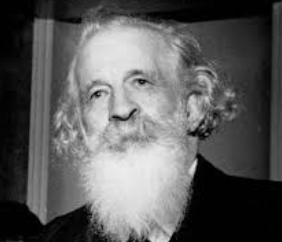
Even a minor event in the life of a child is an event of that child's world and thus a world event.
▼
Source
source
The Phoenix, a Linguistic Phenomenon, ch. 1
2 months 3 weeks ago
When I was in my teens, I invented a term to describe them. I call it 'holiday consciousness' . . . because I often experienced this sense of optimism and wide-awakeness when setting out on a journey or a holiday. It was always the feeling that the world is self-evidently complex and beautiful, and that life is so obviously good that man's boredom and defeat is an absurdity . . . And then I used to ask: Why do men forget this so easily? And the answer seemed obvious: because the human will is so flabby and weak. Instead of being self-controlled, self-driven creatures, most men are little more than leaves on a stream, they drift along hoping for the best. I once wrote that men are like grandfather clocks driven by watchsprings.
▼
Source
source
p. 75
2 months 1 week ago
The professional tends to classify and to specialize, to accept uncritically the ground rules of the environment. The ground rules provided by the mass response of his colleagues serves as a pervasive environment of which he is contentedly unaware.
▼
Source
source
(p. 93)

5 months 1 week ago
The same man who could not find it in his conscience to curb his curiosity into the nuclear studies that might someday kill half of Earth would risk his life to save that of an unimportant fellow man.
1 week 2 days ago
It's not about telling people how to be, outside of supporting ideals that teach us what to avoid.
1 month 1 week ago
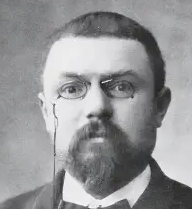
We have not a direct intuition of simultaneity, nor of the equality of two durations. If we think we have this intuition, this is an illusion. We replace it by the aid of certain rules which we apply almost always without taking count of them....We ...choose these rules, not because they are true, but because they are the most convenient, and we may recapitulate them as follows: "The simultaneity of two events, or the order of their succession, the equality of two durations, are to be so defined that the enunciation of the natural laws may be as simple as possible. In other words, all these rules, all these definitions, are only the fruit of an unconscious opportunism."
4 months 4 days ago
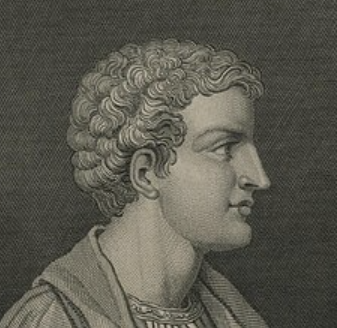
What odds does it make to the man who lives within Nature's bounds, whether he ploughs a hundred acres or a thousand?
▼
Source
source
Book I, satire i, line 48

4 days ago
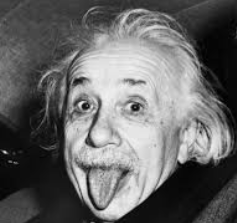
Jesus is too colossal for the pen of phrasemongers, however artful. No man can dispose of Christianity with a bon mot.
3 months 5 days ago
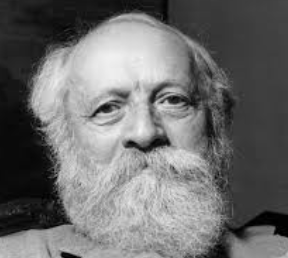
The basic word I-Thou can be spoken only with one's whole being. The concentration and fusion into a whole being can never be accomplished by me, can never be accomplished without me. I require a Thou to become; becoming I, I say Thou.
1 month 3 weeks ago
The irrationality of the "appeal to Nature" is illustrated by a simple thought-experiment. Imagine, fancifully, if starvation, disease, parasitism, disembowelling, asphyxiation and being eaten alive were not endemic to the living world - or such miseries have already been abolished and replaced by an earthly paradise. Would anyone propose there is ethical case for (re)introducing them? Even proposing such a thought-experiment can sound faintly ridiculous.
▼
Source
source
"A Welfare State For Elephants?: A Case Study of Compassionate Stewardship", Relations: Beyond Anthropocentrism, Vol. 3, Iss. 2 (Nov. 2015), p. 162
3 months 1 week ago
It is written again, Thou shalt not tempt the Lord thy God.
▼
Source
source
4:7 (KJV) Said to Satan. The reference is to Deuteronomy 6:16, "Ye shall not tempt the Lord your God, as ye tempted him in Massah." (KJV)
CivilSimian.com created by AxiomaticPanic, CivilSimian, Kalokagathia