

2 months 1 week ago
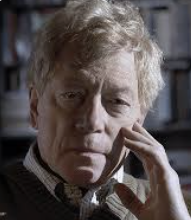
Conservatism starts from a sentiment that all mature people can readily share: the sentiment that good things are easily destroyed, but not easily created. This is especially true of the good things that come to us as collective assets: peace, freedom, law, civility, public spirit, the security of property and family life, in all of which we depend on the cooperation of others while having no means singlehandedly to obtain it. In respect of such things, the work of destruction is quick, easy, and exhilarating; the work of creation slow, laborious, and dull. That is one of the lessons of the twentieth century. It is also one reason why conservatives suffer such a disadvantage when it comes to public opinion. Their position is true but boring, that of their opponents exciting but false.
2 months 3 weeks ago
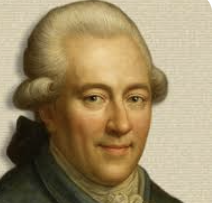
I am convinced we do not only love ourselves in others but hate ourselves in others too.
▼
Source
source
F 54
3 months 1 week ago
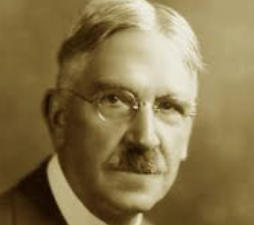
What happens in the movement of art is emergence of new materials of experience demanding expression, and therefore involving in their expression new forms and techniques.
▼
Source
source
p. 148
1 month 3 days ago
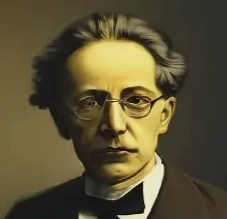
Yes, so it is that knowledge itself must die in order to blossom forth again in death as will; the freedom of thought, belief, and conscience, these wonderful flowers of three centuries will sink back into the lap of mother earth so that a new freedom, the freedom will, will be nourished with its most noble juices.
▼
Source
source
p. 19
2 weeks 2 days ago
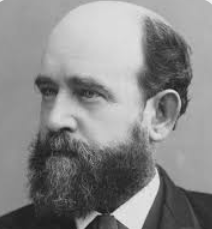
The intelligence required for the solving of social problems is not a thing of the mere intellect. It must be animated with the religious sentiment and warm with sympathy for human suffering. It must stretch out beyond self-interest, whether it be the self-interest of the few or of the many. It must seek justice. For at the bottom of every social problem we will find a social wrong.
▼
Source
source
Ch. 1 : The Increasing Importance of Social Questions
2 months 2 weeks ago
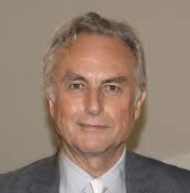
Scientific and technological progress themselves are value-neutral. They are just very good at doing what they do. If you want to do selfish, greedy, intolerant and violent things, scientific technology will provide you with by far the most efficient way of doing so. But if you want to do good, to solve the world's problems, to progress in the best value-laden sense, once again, there is no better means to those ends than the scientific way.

3 months 3 weeks ago
What song the Syrens sang, or what name Achilles assumed when he hid himself among women, though puzzling questions, are not beyond all conjecture.
▼
Source
source
Chapter V. Cf Suetonius, Lives of the Twelve Caesars: "Tiberius," Ch 70
4 months 3 weeks ago
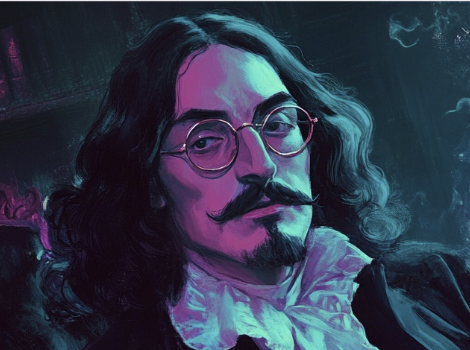
No more useful inquiry can be proposed than that which seeks to determine the nature and the scope of human knowledge. ... This investigation should be undertaken once at least in his life by anyone who has the slightest regard for truth, since in pursuing it the true instruments of knowledge and the whole method of inquiry come to light. But nothing seems to me more futile than the conduct of those who boldly dispute about the secrets of nature ... without yet having ever asked even whether human reason is adequate to the solution of these problems.
▼
Source
source
Rules for the Direction of the Mind in Key Philosophical Writings (1997), pp. 29-30

3 months 2 weeks ago
It was not only that I could not become spiteful, I did not know how to become anything; neither spiteful nor kind, neither a rascal nor an honest man, neither a hero nor an insect. Now, I am living out my life in my corner, taunting myself with the spiteful and useless consolation that an intelligent man cannot become anything seriously, and it is only the fool who becomes anything.
▼
Source
source
Part 1, Chapter 1

3 months 2 weeks ago
One of the greatest delusions of the average man is to forget that life is death's prisoner.

4 months 2 weeks ago
The unconsciousness of man is the consciousness of God.
2 months 3 weeks ago
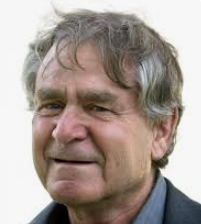
Probability fractions arise from our knowledge and from our ignorance.
▼
Source
source
Chapter 14, Equipossibility, p. 132.
2 weeks 3 days ago
The basis of all Natural Systems of Classification is the Idea of Natural Affinity. The Principle which this Idea involves is this:-Natural arrangements, obtained from 'different' sets of characters, must 'coincide' with each other.
2 months 4 weeks ago
The lack of objectivity, as far as foreign nations are concerned, is notorious. From one day to another, another nation is made out to be utterly depraved and fiendish, while one's own nation stands for everything that is good and noble. Every action of the enemy is judged by one standard - every action of oneself by another. Even good deeds by the enemy are considered a sign of particular devilishness, meant to deceive us and the world, while our bad deeds are necessary and justified by our noble goals which they serve.
2 weeks 3 days ago
'Form' or 'figure' is space limited by boundaries. Space has necessarily 'three' dimensions, length, breadth, depth; and no ethers which cannot be resolved into these.
3 months 1 day ago
Today, to live means merely to produce.
2 months 2 weeks ago
Whatever is referred to must exist. Let us call this the axiom of existence.
▼
Source
source
P. 77.



2 months 2 weeks ago
When the evolutionary process shifts from biology to software technology the body becomes the old hardware environment. The human body is now a probe, a laboratory for experiments.
▼
Source
source
(p. 180)

1 month 2 days ago
It is a rough road that leads to the heights of greatness.
▼
Source
source
Line 13
5 months 1 week ago
The superior man examines his heart, that there may be nothing wrong there, and that he may have no cause for dissatisfaction with himself. That wherein the superior man cannot be equaled is simply this, his work which other men cannot see.
2 months 3 weeks ago
Part of what makes moral philosophy an anachronistic field is that its practitioners continue to argue in this very traditional and aprioristic way even though they themselves do not claim that one can provide a systematic and indubitable 'foundation' for the subject. Most of them rely on what are supposed to be 'intuitions' without claiming that those intuitions deliver uncontroversial ethical premises, on the one hand, or that they have an ontological or epistemological explanation of the reliability of those intuitions, on the other.
▼
Source
source
How Not to Solve Ethical Problems

3 months 3 days ago
The bastard form of mass culture is humiliated repetition: content, ideological schema, the blurring of contradictions-these are repeated, but the superficial forms are varied: always new books, new programs, new films, news items, but always the same meaning.
▼
Source
source
Modern, in The Pleasure of the Text

4 months 3 weeks ago
There is no man so good that if he placed all his actions and thoughts under the scrutiny of the laws, he would not deserve hanging ten times in his life.
▼
Source
source
Ch. 9
2 months 3 weeks ago
When land and its tillage are the basis of taxation, one need not care exactly how many people there are.
▼
Source
source
Chapter 12, Political Arithmetic, p. 103.
4 months 3 weeks ago
For where God built a church, there the Devil would also build a chapel...Thus is the Devil ever God's ape.
▼
Source
source
67. Compare "Where God hath a temple, the Devil will have a chapel", Robert Burton, Anatomy of Melancholy, part III, section 4, member 1, subsection 1

2 weeks 4 days ago
A little patience, and we shall see the reign of witches pass over, their spells dissolve, and the people, recovering their true sight, restore their government to its true principles. It is true that in the meantime we are suffering deeply in spirit, and incurring the horrors of a war and long oppressions of enormous public debt. If the game runs sometimes against us at home we must have patience till luck turns, and then we shall have an opportunity of winning back the principles we have lost, for this is a game where principles are at stake.
▼
Source
source
From a letter to John Taylor (June 1798), after the passage of the Alien and Sedition Acts
1 month 1 week ago
There is no greater drama in human record than the sight of a few Christians, scorned or oppressed by a succession of emperors, bearing all trials with a fierce tenacity, multiplying quietly, building order while their enemies generated chaos, fighting the sword with the word, brutality with hope, and at last defeating the strongest state that history has known. Caesar and Christ had met in the arena, and Christ had won.
▼
Source
source
Chapter 30, part 1, p. 652

3 months 2 weeks ago
We have a priori reasons for believing that in every sentence there is some one order of words more effective than any other; and that this order is the one which presents the elements of the proposition in the succession in which they may be most readily put together.
▼
Source
source
Pt. I, sec. 3, "The Principle of Economy Applied to Sentences"

3 months 1 week ago
Who is my mother? and who are my brethren? And he stretched forth his hand toward his disciples, and said, Behold my mother and my brethren! For whosoever shall do the will of my Father which is in heaven, the same is my brother, and sister, and mother.
▼
Source
source
12:48-50 (KJV)


2 weeks 1 day ago
How many mistakes power has committed! And how often has it ignored the means to conserve itself! Man is insatiable for power; he is infinite in his desires, and, always discontented with what he has, he loves only what he has not. People complain about the despotism of princes; they should complain about that of man. We are all born despots, from the most absolute monarch of Asia to the child who smothers a bird with his hand for the pleasure of seeing something in the world weaker than himself. There is no man who does not abuse power, and experience proves that the most abominable despots, if they come to seize the sceptre, will be precisely those who rant against despotism.

1 month 1 week ago
Not a May-game is this man's life; but a battle and a march, a warfare with principalities and powers. No idle promenade through fragrant orange-groves and green flowery spaces, waited on by the choral Muses and the rosy Hours: it is a stern pilgrimage through burning sandy solitudes, through regions of thick-ribbed ice. He walks among men; loves men, with inexpressible soft pity,-as they cannot love him: but his soul dwells in solitude, in the uttermost parts of Creation. In green oases by the palm-tree wells, he rests a space; but anon he has to journey forward, escorted by the Terrors and the Splendours, the Archdemons and Archangels. All Heaven, all Pandemonium are his escort. The stars keen-glancing, from the Immensities, send tidings to him; the graves, silent with their dead, from the Eternities. Deep calls for him unto Deep.

3 months 4 weeks ago
Number is the ruler of forms and ideas, and the cause of gods and daemons.
▼
Source
source
As quoted in Life of Pythagoras (c. 300) by Iamblichus of Chalcis, as translated by Thomas Taylor (1818)

2 months 2 weeks ago
A noble spirit finds a cure for injustice in forgetting it.
▼
Source
source
Maxim 441
1 month 1 week ago
The pious soul,-which, if you reflect, will mean the ingenuous and ingenious, the gifted, intelligent and nobly-aspiring soul,-such a soul, in whatever rank of life it were born, had one path inviting it; a generous career, whereon, by human worth and valor, all earthly heights and Heaven itself were attainable. In the lowest stratum of social thraldom, nowhere was the noble soul doomed quite to choke, and die ignobly.

4 months 1 week ago
No one deserves to live who has not at least one good-man-and-true for a friend.
2 months 2 weeks ago
If we want to postulate a deity capable of engineering all the organized complexity in the world, either instantaneously or by guiding evolution, that deity must have been vastly complex in the first place. The creationist, whether a naive Bible-thumper or an educated bishop, simply postulates an already existing being of prodigious intelligence and complexity. If we are going to allow ourselves the luxury of postulating organized complexity without offering an explanation, we might as well make a job of it and simply postulate the existence of life as we know it!
▼
Source
source
Chapter 11 "Doomed Rivals" (p. 316)
2 weeks ago
The world is nothing but change. Our life is only perception.
▼
Source
source
(Hays translation) IV, 4
4 weeks 1 day ago
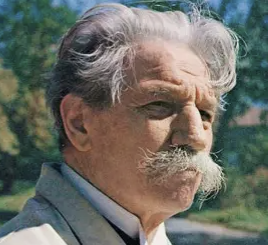
As a rule there are in everyone all sorts of good ideas, ready like tinder. But much of this tinder catches fire, or catches it successfully, only when it meets some flame or spark from outside, i.e. from some other person. Often, too, our own light goes out, and is rekindled by some experience we go through with a fellow-man. Thus we have each of us cause to think with deep gratitude of those who have lighted the flames within us.

4 months 2 weeks ago
There as here, passions are the motive of all action, but they are livelier, more ardent, or merely simpler and purer, thereby assuming a totally different character. All the first movements of nature are good and right.
▼
Source
source
First Dialogue; translated by Judith R. Bush, Christopher Kelly, Roger D. Masters
4 months 2 weeks ago
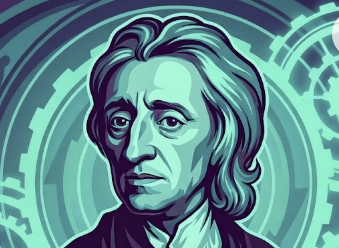
Let them have what instructions you will, and ever so learned lectures of breeding daily inculcated into them, that which will most influence their carriage will be the company they converse with, and the fashion of those about them.
▼
Source
source
Sec. 67

4 months 2 weeks ago
It is one of the superstitions of the human mind to have imagined that virginity could be a virtue.
▼
Source
source
Notebooks (c.1735-c.1750) Note: This quotation and the three that follow directly below are from the so-called Leningrad Notebook, also known as Le Sottisier; it is one of several posthumously published notebooks of Voltaire.

4 months 2 weeks ago
We may define "faith" as a firm belief in something for which there is no evidence. Where there is evidence, no one speaks of "faith". We do not speak of faith that two and two are four or that the earth is round. We only speak of faith when we wish to substitute emotion for evidence. The substitution of emotion for evidence is apt to lead to strife, since different groups substitute different emotions.
▼
Source
source
p. 215
1 month 2 days ago
That man lives badly who does not know how to die well.
▼
Source
source
Chapter 11, Section 4

4 months 2 weeks ago
I have lived an honest and useful life to mankind; my time has been spend in doing good and I die in perfect composure and resignation to the will of my Creator, God.
▼
Source
source
Last will (1809), as quoted in The Fortnightly Review, vol. 31, pp. 398-399
3 months 4 weeks ago
Reason is immortal, all else mortal.
▼
Source
source
As quoted in Lives and Opinions of Eminent Philosophers, Sect. 30, as translated by Robert Drew Hicks (1925)
CivilSimian.com created by AxiomaticPanic, CivilSimian, Kalokagathia