


4 months 3 weeks ago
Clothe yourself with a hero's courage, and withdraw for a little space from the opinions of the common man. Form a proper conception of the image of virtue, a thing of exceeding beauty and grandeur; this image is not to be worshipped by us with incense or garlands, but with sweat and blood.

9 months 1 week ago
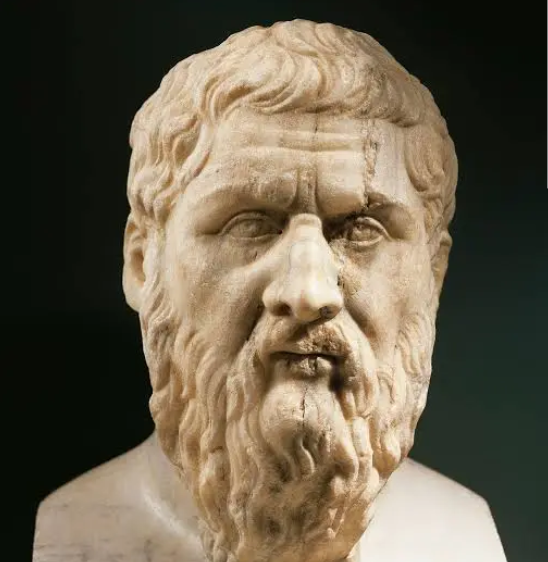
Then the case is the same in all the other arts for the orator and his rhetoric; there is no need to know the truth of the actual matters, but one merely needs to have discovered some device of persuasion which will make one appear to those who do not know to know better than those who know.
7 months 3 weeks ago
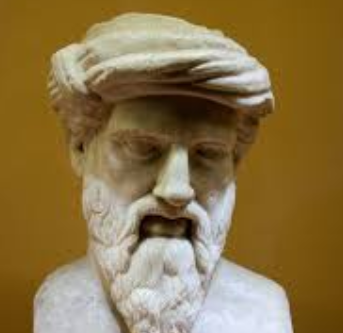
Having departed from your house, turn not back; for the furies will be your attendants.
▼
Source
source
Symbol 15

5 months 3 days ago
I am fast becoming a patriot of the most decided stamp. Scornfully as I used to speak and think of Scotland in my hours of bitterness and irritation, I never fail to stand up manfully in defence of it thro' thick and thin, whenever a renegade Scot takes upon him to abuse it.
▼
Source
source
Letter to Thomas Murray (24 August 1824), quoted in Fred Kaplan, Thomas Carlyle: A Biography (1983), p. 100

5 months 2 weeks ago
In ancient Europe, Stoics asserted that a slave could be freer than a master who suffers from self-division. In China, Daoists imagined a type of sage who responded to the flow of events without weighing alternatives. Disciples of monotheistic faiths have believed something similar: freedom, they say, is obeying God's will. What those who follow these traditions want most is not any kind of freedom of choice. Instead, what they long for is freedom from choice.
▼
Source
source
The Faith of Puppets: The Freedom of the Marionette (p. 6-7)

6 months 3 weeks ago
Intolerance is the besetting sin of moral fervour.
▼
Source
source
p. 63, Ch. 4
8 months 2 weeks ago
Thus our duties to animals are indirectly duties to humanity.
▼
Source
source
Part II, p. 213

6 months 3 weeks ago
Delight at having understood a very abstract and obscure system leads most people to believe in the truth of what it demonstrates.
▼
Source
source
J 77
8 months 3 weeks ago
It is the act of an ill-instructed man to blame others for his own bad condition; it is the act of one who has begun to be instructed, to lay the blame on himself; and of one whose instruction is completed, neither to blame another, nor himself.
▼
Source
source
(5) [tr. George Long (1888)].

6 months 3 weeks ago
Jung fiercely resented the implication that he was a hypocritical, self-seeking Judas, a 'rat'. Yet there was just enough truth in it to strike home. He was undoubtedly a man who liked his own way, no matter what the cost to others.
▼
Source
source
p. 72

6 months 1 week ago
The slaves of our times are not all those factory and workshop hands only who must sell themselves completely into the power of the factory and foundry-owners in order to exist, but nearly all the agricultural laborers are slaves, working, as they do, unceasingly to grow another's corn on another's field, and gathering it into another's barn; or tilling their own fields only in order to pay to bankers the interest on debts they cannot get rid of. And slaves also are all the innumerable footmen, cooks, porters, housemaids, coachmen, bathmen, waiters, etc., who all their life long perform duties most unnatural to a human being, and which they themselves dislike.
▼
Source
source
Chapter 8: Slavery Exists Among Us
4 months 1 week ago
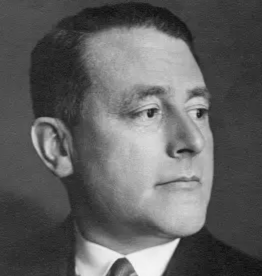
The essence of liberalism is negotiation, a cautious half measure, in the hope that the definitive dispute, the decisive bloody battle, can be transformed into a parliamentary debate and permit the decision to be suspended forever in an everlasting discussion.

5 months 1 week ago
In morals, truth is but little prized when it is a mere sentiment, and only attains its full value when realized in the world as fact.
▼
Source
source
Ch. 5.
7 months 4 days ago
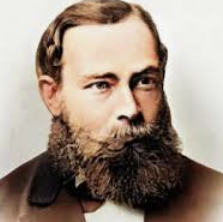
The ideal of strictly scientific method in mathematics which I have tried to realise here, and which perhaps might be named after Euclid I should like to describe in the following way... The novelty of this book does not lie in the content of the theorems but in the development of the proofs and the foundations on which they are based... With this book I accomplish an object which I had in view in my Begriffsschrift of 1879 and which I announced in my Grundlagen der Arithmetik. I am here trying to prove the opinion on the concept of number that I expressed in the book last mentioned.
▼
Source
source
Vol. 1. pp. 137-140, as cited in: Ralph H. Johnson (2012), Manifest Rationality: A Pragmatic Theory of Argument, p. 87

7 months 4 days ago
Men looke not at the greatnesse of the evill past, but the greatnesse of the good to follow.
▼
Source
source
The First Part, Chapter 15, p. 76 (Italics as per text)

6 months 4 weeks ago
Don Quixote made himself ridiculous; but did he know the most tragic ridicule of all, the inward ridicule, the ridiculousness of a man's self to himself, in the eyes of his own soul? Imagine Don Quixote's battlefield to be his own soul; imagine him to be fighting in his soul to save the Middle Ages from the Renaissance, to preserve the treasure of his infancy; imagine him an inward Don Quixote, with a Sancho at his side, inward and heroic too - and tell me if you find anything comic in the tragedy.
5 months 3 days ago
This great maxim of philosophy he had gathered by the teaching of nature alone - that man was created to work, not to speculate or feel or dream. Accordingly, he set his whole heart thitherwards. He did work wisely and unweariedly, and perhaps performed more with the tools he had than any man I now know.
8 months 2 weeks ago
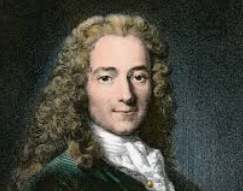
We should be considerate to the living; to the dead we owe only the truth.
▼
Source
source
Letter to M. de Grenonville, 1719

7 months 1 week ago
That fear which gives birth to thoughts, and the fear of thoughts...
7 months 4 days ago
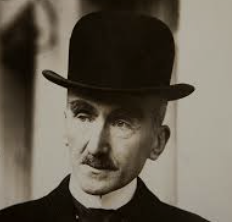
The spectacle of what religions have been in the past, of what certain religions still are to-day, is indeed humiliating for human intelligence. What a farrago of error and folly!'
▼
Source
source
Chapter II : Static Religion
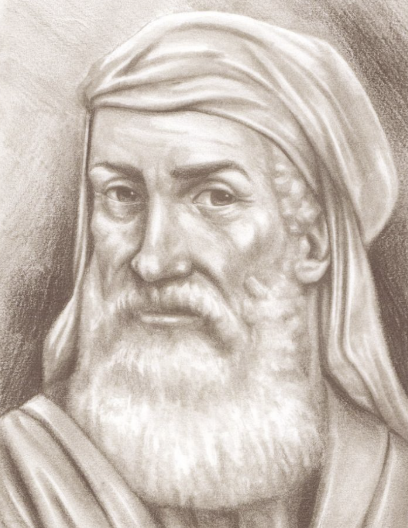
8 months 2 days ago
From such honor and such a height of fortune am I, thus fallen to earth, cast down amongst mortals.
▼
Source
source
fr. 119

6 months 1 week ago
Gravity is not a version of the truth. It is the truth. Anybody who doubts it is invited to jump out of a tenth-floor window.
▼
Source
source
The Genius of Charles Darwin

8 months 1 week ago
A book can never be anything more than the impression of its author's thoughts [Ein Buch kann nie mehr seyn, als der Abdruck der Gedanken des Verfassers]. The value of these thoughts lies either in the matter about which he has thought, or in the form in which he develops his matter - that is to say, what he has thought about it.
7 months 1 week ago
In order to deceive melancholy, you must keep moving. Once you stop, it wakens, if in fact it has ever dozed off.
6 months 4 weeks ago
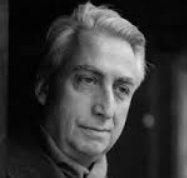
What the public wants is the image of passion, not passion itself.
▼
Source
source
"Le monde où l'on catche"

7 months 1 week ago
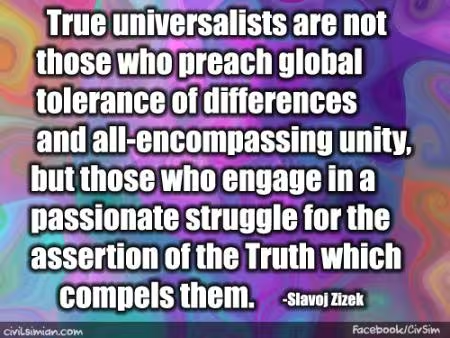
Nostalgia, more than anything, gives us the shudder of our own imperfection.

9 months 1 week ago
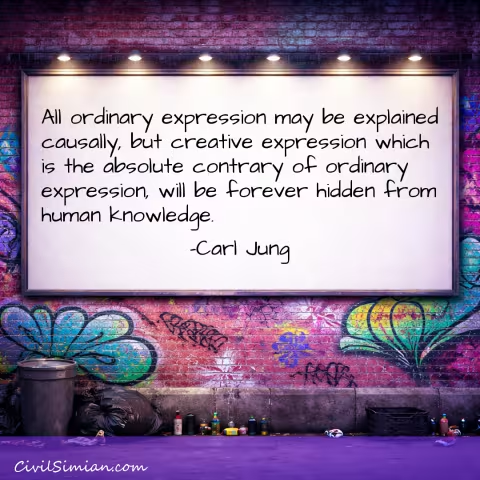
The words that reverberate for us at the confines of this long adventure of rebellion are not formulas for optimism, for which we have no possible use in the extremities of our unhappiness, but words of courage and intelligence which, on the shores of the eternal seas, even have the qualities of virtue.

7 months 4 days ago
Technical progress and more comfortable living permit the systematic inclusion of libidinal components into the realm of commodity production and exchange. But no matter how controlled the mobilization of instinctual energy may be (it sometimes amounts to a scientific management of libido), no matter how much it may serve as a prop for the status quo-it is also gratifying to the managed individuals, just as racing the outboard motor, pushing the power lawn mower, and speeding the automobile are fun.
▼
Source
source
p. 75

8 months 2 days ago
Of practical wisdom these are the three fruits: to deliberate well, to speak to the point, to do what is right.

5 months 4 weeks ago
Is Man so different from any of these Apes that he must form an order by himself? Or does he differ less from them than they differ from one another, and hence must take his place in the same order with them?
▼
Source
source
Ch.2, p. 86

8 months 3 weeks ago
These philosophers of the world place contrarieties in the same subject; for the one attributed greatness to nature and the other weakness to this same nature, which could not subsist; whilst faith teaches us to place them in different subjects: all that is infirm belonging to nature, all that is powerful belonging to grace. Such is the marvelous and novel union which God alone could teach, and which he alone could make, and which is only a type and an effect of the ineffable union of two natures in the single person of a Man-God.
7 months 1 week ago
The manufacturing worker almost always lives in the countryside and in a more or less patriarchal relation to his landlord or employer; the proletarian lives, for the most part, in the city and his relation to his employer is purely a cash relation. The manufacturing worker is torn out of his patriarchal relation by big industry, loses whatever property he still has, and in this way becomes a proletarian.

8 months 1 week ago
Religions, which condemn the pleasures of sense, drive men to seek the pleasures of power. Throughout history power has been the vice of the ascetic.
▼
Source
source
The New York Herald-Tribune Magazine, 3/6/1938

4 months 3 weeks ago
When you tell a girl how beautiful she is, she will say, "Now isn't that just like a man! All you men think about is bodies. OK, so I'm beautiful, but I got my body from my parents and it was just luck. I prefer to be admired for myself, not my chassis." Poor little chauffeur! All she is saying is that she has lost touch with her own astonishing wisdom and ingenuity, and wants to be admired for some trivial tricks that she can perform with her conscious attention. And we are all in the same situation, having dissociated ourselves from our bodies and from the whole network of forces in which bodies can come to birth and live.
▼
Source
source
p. 112

8 months 1 week ago
I call this Divine humility because it is a poor thing to strike our colours to God when the ship is going down under us; a poor thing to come to Him as a last resort, to offer up "our own" when it is no longer worth keeping. If God were proud He would hardly have us on such terms: but He is not proud, He stoops to conquer, He will have us even though we have shown that we prefer everything else to Him, and come to Him because there is "nothing better" now to be had.

6 months 2 weeks ago
Well, what does "good" mean anyway...? As Wittgenstein suggested, "good," like "game," has a family of meanings. Prominent among them is this one: "meets the criteria or standards of assessment or evaluation."
▼
Source
source
P. 152.
7 months 1 week ago
The terrifying experience and obsession of death, when preserved in consciousness, becomes ruinous. If you talk about death, you save part of yourself. But at the same time, something of your real self dies, because objectified meanings lose the actuality they have in consciousness.

8 months 1 week ago
The truth can be spoken only by someone who is already at home in it; not by someone who still lives in untruthfulness, and does no more than reach out towards it from within untruthfulness.
▼
Source
source
p. 41e
6 months 6 days ago
To preserve permanent good health, the state of mind must be taken into consideration.
▼
Source
source
3rd Part

7 months 4 days ago
They that be whole need not a physician, but they that are sick. But go ye and learn what that meaneth, I will have mercy, and not sacrifice: for I am not come to call the righteous, but sinners to repentance.
▼
Source
source
9:12-13 (KJV)
8 months 3 weeks ago
Everything has two handles, the one by which it may be carried, the other by which it cannot. If your brother acts unjustly, don't lay hold on the action by the handle of his injustice, for by that it cannot be carried; but by the opposite, that he is your brother, that he was brought up with you; and thus you will lay hold on it, as it is to be carried.
▼
Source
source
(43).

5 months 3 weeks ago
True hedonic engineering, as distinct from mindless hedonism or reckless personal experimentation, can be profoundly good for our character. Character-building technologies can benefit utilitarians and non-utilitarians alike. Potentially, we can use a convergence of biotech, nanorobotics and information technology to gain control over our emotions and become better (post-)human beings, to cultivate the virtues, strength of character, decency, to become kinder, friendlier, more compassionate: to become the type of (post)human beings that we might aspire to be, but aren't, and biologically couldn't be, with the neural machinery of unenriched minds. Given our Darwinian biology, too many forms of admirable behaviour simply aren't rewarding enough for us to practise them consistently: our second-order desires to live better lives as better people are often feeble echoes of our baser passions.
▼
Source
source
Utopian Neuroscience, BLTC Research, 2019


8 months 1 week ago
Capitalist production, therefore, develops technology, and the combining together of various processes into a social whole, only by sapping the original sources of all wealth - the soil and the labourer.
▼
Source
source
Vol. I, Ch. 15 (last sentence), pg. 556.
6 months 3 weeks ago
Not all women, in fact, very few, have had the good fortune to live and work among women and men actively involved in the feminist movement. Many of us live in circumstances and environments where we must engage in feminist struggle alone, with only occasional support and affirmation.
▼
Source
source
Acknowledgments.
CivilSimian.com created by AxiomaticPanic, CivilSimian, Kalokagathia