


3 months 1 week ago
Existence would be a quite impracticable enterprise if we stopped granting importance to what has none.

3 months ago
To believe in God is to yearn for His existence and, furthermore, it is to act as if He did exist.

3 months 2 weeks ago
To the Deity must be left the task of infinite perfection, while to us poor, weak, incapable mortals, there was no rule of conduct so safe as experience.
▼
Source
source
Speech in the House of Commons (6 May 1791), quoted in The Parliamentary History of England, From the Earliest Period to the Year 1803, Vol. XXIX (1817), column 388

4 months 2 weeks ago
[E]xperience has taught me that those who give their time to the absorbing claims of what is called society, not having leisure to keep up a large acquaintance with the organs of opinion, remain much more ignorant of the general state either of the public mind, or of the active and instructed part of it, than a recluse who reads the newspapers need be.
▼
Source
source
(p. 262)

2 months 1 week ago
Having acknowledged the measure of the good to be pleasure, i.e., beauty, the European upper classes went back in their comprehension of art to the gross conception of the primitive Greeks which Plato had already condemned. And with this understanding of life, a theory of art was formulated.
3 weeks 4 days ago
To be free from convention is not to spurn it but not to be deceived by it. It is to be able to use it as an instrument instead of being used by it.
▼
Source
source
p. 11
2 weeks ago
A person needs a little madness, or else they never dare cut the rope and be free.
▼
Source
source
As quoted in Wisdom for the Soul : Five Millennia of Prescriptions for Spiritual Healing (2006) by Larry Chang, p. 412
2 months 3 weeks ago
Asceticism is the trifling of an enthusiast with his power, a puerile coquetting with his selfishness or his vanity, in the absence of any sufficiently great object to employ the first or overcome the last.
▼
Source
source
Letter (5 September 1857), quoted in The Life of Florence Nightingale (1913) by Edward Tyas Cook, p. 369
4 months 2 weeks ago
The only fence against the world is a thorough knowledge of it, into which a young gentleman should be enter'd by degrees, as he can bear it; and the earlier the better, so he be in safe and skillful hands to guide him.
▼
Source
source
Sec. 94
3 months 1 week ago
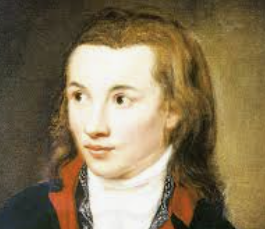
Fate and temperament are two words for one and the same concept.
▼
Source
source
As quoted in Demian (1965) by Hermann Hesse, trans. Michael Roloff and Michael Lebeck

1 month 5 days ago
What the Universities have mainly done-what I have found the University did for me, was that it taught me to read in various languages and various sciences, so that I could go into the books that treated of these things, and try anything I wanted to make myself master of gradually, as I found it suit me. Whatever you may think of all that, the clearest and most imperative duty lies on every one of you to be assiduous in your reading; and learn to be good readers, which is, perhaps, a more difficult thing than you imagine. Learn to be discriminative in your reading-to read all kinds of things that you have an interest in, and that you find to be really fit for what you are engaged in.

2 months 1 week ago
The stock market was created by the telegraph and the telephone, and its panics are engineered by carefully orchestrated stories in the press.
▼
Source
source
(p. 106)



4 months 4 days ago
Strength of body is nobility in beasts of burden, strength of character is nobility in men.
4 months 2 weeks ago
And O! how the mind is here washed clean of all its early ingrafted Jewish superstition ! It is the most profitable and elevating reading which is possible in the world. It has been the solace of my life, and will be the solace of my death.
▼
Source
source
About the Upanishads. Arthur Schopenhauer, quoted in Europe Looks At India by Mukherhi, D.P.

5 months 3 days ago
The happiness which belongs to man, is that state in which he enjoys as many of the good things, and suffers as few of the evils incident to human nature as possible; passing his days in a smooth course of permanent tranquility. A wise man, though deprived of sight or hearing, may experience happiness in the enjoyment of the good things which yet remain; and when suffering torture, or laboring under some painful disease, can mitigate the anguish by patience, and can enjoy, in his afflictions, the consciousness of his own constancy.
1 month 1 week ago
News and truth are not the same thing and must be clearly distinguished. The function of news is to signalize an event, the function of truth is to bring to light the hidden facts, to set them into relation with each other, and make a picture of reality on which men can act. Only at those points, where social conditions take recognizable and measurable shape, do the body of truth and the body of news coincide.
▼
Source
source
Ch. XXIV: "News, Truth, and a Conclusion", p. 358 The clause in bold is sometimes quoted on its own in the form, "The news and the truth are not the same thing."
3 months 1 week ago
I cannot contribute anything to this world because I only have one method: agony.

4 weeks ago
Our feeling about every obligation depends in each case upon the spirit in which the benefit is conferred; we weigh not the bulk of the gift, but the quality of the good-will which prompted it.
▼
Source
source
Line 6

1 month 2 weeks ago
From a Darwinian point of view, human beliefs are adaptations to our part of the world. No doubt much of what we believe must be roughly accurate, or else we would not have survived. But the beliefs we have evolved might latch on to the world only enough to help us stumble our way through it, and then only for the time being. Human belief-systems could be useful illusions, appearing and disappearing as they prove to be more or less advantageous in the random walk of natural selection. Might not evolution be one of these illusions? Scientific naturalism is the theory that human beliefs are evolutionary adaptations whose survival has nothing to do with their truth. But in that case scientific naturalism is self-defeating, since on its own premises scientific theories cannot be known to be true.
▼
Source
source
Cross-correspondences (p. 69)
2 months 3 weeks ago
Today, tattoos lack symbolic power. All they do is point toward the uniqueness of the bearer. The body is neither a ritual stage nor a surface of projection; rather, it is an advertising space.

2 months 3 weeks ago
Faculty X is simply that latent power in human beings possess to reach beyond the present. After all, we know perfectly well that the past is as real as the present, and that New York and Singapore and Lhasa and Stepney Green are all as real as the place I happen to be in at the moment. Yet my senses do not agree. They assure me that this place, here and now, is far more real than any other place or any other time. Only in certain moments of great inner intensity do I know this to be a lie. Faculty X is a sense of reality, the reality of other places and other times, and it is the possession of it - fragmentary and uncertain though it is - that distinguishes man from all other animals.
▼
Source
source
p. 59

1 week 6 days ago
The poem is important, but not more than the people whose survival it serves...
▼
Source
source
In A Motel Parking Lot, Thinking Of Dr. Williams

4 months 2 weeks ago
Nature paints the best part of a picture, carves the best parts of the statue, builds the best part of the house, and speaks the best part of the oration.
▼
Source
source
Art
3 months 5 days ago
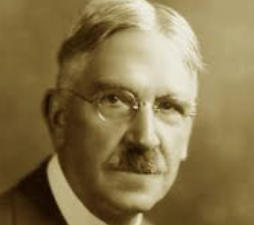
The other conclusion is that art is the complement of science. Science as I have said is concerned wholly with relations, not with individuals. Art, on the other hand, is not only the disclosure of the individuality of the artist but also a manifestation of individuality as creative of the future, in an unprecedented response to conditions as they were in the past. Some artists in their vision of what might be, but is not, have been conscious rebels. But conscious protest and revolt is not the form which the labor of the artist in creation of the future must necessarily take. Discontent with things as they are is normally the expression of the vision of what may be and is not, art in being the manifestation of individuality is this prophetic vision.

1 month 1 week ago
Empire is a very stimulating account of globalisation, but it is hopelessly wrong on two central issues. The state has not withered away. Strong states still exist-USA, China, Germany, etc-but the difference with the past is that there is now only one Empire and this is not the nebulous entity imagined by Cultural Studies, but a real, living organism and it has a name; the United States of America.
▼
Source
source
Tariq Ali, How Bush Used 9/11 to Remap the World. CounterPunch, 8 July 2002.

3 months 6 days ago
Man is a thinking being. His reason enables him to recognize his own potentialities and those of his world. He is thus not at the mercy of the facts that surround him, but is capable of subjecting them to a higher standard, that of reason.
▼
Source
source
P. 6

4 months 2 weeks ago
Tis from the resemblance of the external actions of animals to those we ourselves perform, that we judge their internal likewise to resemble ours; and the same principle of reasoning, carry'd one step farther, will make us conclude that since our internal actions resemble each other, the causes, from which they are deriv'd, must also be resembling.
▼
Source
source
Part 3, Section 16
2 months 1 week ago
Man works when he is partially involved. When he is totally involved he is at play or leisure.
3 months 1 week ago
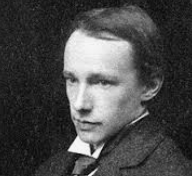
By far the most valuable things, which we know or can imagine, are certain states of consciousness, which may roughly be described as the pleasures of human intercourse and the enjoyment of beautiful objects. No one, probably, who has asked himself the question, has ever doubted that personal affection and the appreciation of what is beautiful in Art or Nature, are good in themselves; nor, if we consider strictly what things are worth having purely for their own sakes, does it appear probable that any one will think that anything else has nearly so much value as the things which are included under these two heads.
▼
Source
source
Principia Ethica (1903; revised edition, Cambridge University Press, 1993).

1 month 4 weeks ago
The method of scientific investigation is nothing but the expression of the necessary mode of working of the human mind.
▼
Source
source
Our Knowledge of the Causes of the Phenomena of Organic Nature
2 months 1 week ago
If the slave-owner of our times has no slave, John, whom he can send to the cesspool, he has five shillings, of which hundreds of such Johns are in such need that the slave-owner of our times may choose any one out of hundreds of Johns and be a benefactor to him by giving him the preference, and allowing him, rather than another, to climb down into the cesspool.
▼
Source
source
Chapter 8: Slavery Exists Among Us

1 week 3 days ago
The happiness and unhappiness of the rational, social animal depends not on what he feels but on what he does; just as his virtue and vice consist not in feeling but in doing.
▼
Source
source
IX, 16
2 months 1 week ago
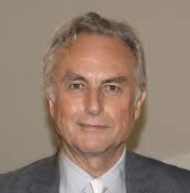
Evolution is a fact. Beyond reasonable doubt, beyond serious doubt, beyond sane, informed, intelligent doubt, beyond doubt evolution is a fact. The evidence for evolution is at least as strong as the evidence for the Holocaust, even allowing for eye witnesses to the Holocaust. It is the plain truth that we are cousins of chimpanzees, somewhat more distant cousins of monkeys, more distant cousins still of aardvarks and manatees, yet more distant cousins of bananas and turnips... continue the list as long as desired.
▼
Source
source
The Greatest Show on Earth: The Evidence for Evolution (2009) (p. 8)
2 months 3 weeks ago
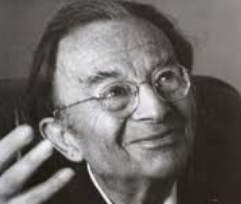
The narcissistic, the domineering, the possessive woman can succeed in being a "loving" mother as long as the child is small. Only the really loving woman, the woman who is happier in giving than in taking, who is firmly rooted in her own existence, can be a loving mother when the child is in the process of separation.
▼
Source
source
Ch. 2
1 week 6 days ago
The ecological teaching of the Bible is simply inescapable: God made the world because He wanted it made. He thinks the world is good, and He loves it. It is His world; He has never relinquished title to it. And He has never revoked the conditions, bearing on His gift to us of the use of it, that oblige us to take excellent care of it.
▼
Source
source
God and Country

1 week 3 days ago
Historically, the errors committed by a truly revolutionary movement are infinitely more fruitful than the infallibility of the cleverest Central Committee.

2 weeks ago
I advance with obedience to the work, ready to retire from it whenever you become sensible how much better choice it is in your power to make.

2 months 3 weeks ago
Today's fashion magazines may carry an article about the dangers of anorexia while bombarding its readers with images of emaciated young bodies representing the height of beauty and desirability.
▼
Source
source
As quoted in Feminism is for Everybody: Passionate Politics (2014), p.34

4 months 3 weeks ago
The things that we can see with our physical eyes are mere shadows of reality. If they appear ugly and ill formed, then what must be the ugliness of the soul in sin, deprived of all light? The soul, like the body, can undergo transformation in appearance. In sin it appears as completely ugly to the beholder. In virtue it shines resplendently before God.

5 months 1 week ago
Victories over ingrained patterns of thought are not won in a day or a year.

4 months 1 week ago
The gesture that divides madness is the constitutive one, not the science that grows up in the calm that returns after the division has been made.
▼
Source
source
Preface to 1961 edition

4 months 3 weeks ago
Silence is the virtue of a fool.
▼
Source
source
Book VI, xxxi
1 month 6 days ago
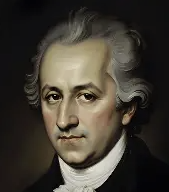
Who is the happiest of men? He who values the merits of others, And in their pleasure takes joy, even as though 'twere his own. Not in the morning alone, not only at mid-day he charmeth; Even at setting, the sun is still the same glorious planet.
▼
Source
source
Distichs in The Poems of Goethe (1853) as translated in the original metres by Edgar Alfred Bowring

5 months 1 week ago
Every ideology is contrary to human psychology.
2 months 1 week ago
The automated presidential surrogate is the superlative nobody.
▼
Source
source
(p. 157)
4 weeks ago
Is it for this purpose that we are strong-that we may have light burdens to bear?

4 months 4 weeks ago
Incomprehensible and immutable is the love wherewith God loves. He did not begin to love us only on the day we were reconciled to Him by the blood of His Son; He loved us before the world was made, that we too might become His sons together with His Only-begotten Son, long before we had any existence.
▼
Source
source
p.435
1 week 6 days ago
We need to confront honestly the issue of scale. Bigness has a charm and a drama that are seductive, especially to politicians and financiers; but bigness promotes greed, indifference, and damage, and often bigness is not necessary. You may need a large corporation to run an airline or to manufacture cars, but you don't need a large corporation to raise a chicken or a hog. You don't need a large corporation to process local food or local timber and market it locally.
▼
Source
source
"Compromise, Hell!"
2 months 3 weeks ago
Why have women passion, intellect, moral activity - these three - and a place in society where no one of the three can be exercised? Men say that God punishes for complaining. No, but men are angry with misery. They are irritated with women for not being happy. They take it as a personal offence. To God alone may women complain without insulting Him!
CivilSimian.com created by AxiomaticPanic, CivilSimian, Kalokagathia