


4 months 2 weeks ago
To expect, indeed, that the freedom of trade should ever be entirely restored in Great Britain, is as absurd as to expect that an Oceana or Utopia should never be established in it.
▼
Source
source
Chapter II, p. 505.
1 month 6 days ago
If the gist of the controversy were to be expressed in a single sentence, one might say that the mechanists represented the opposition of the natural sciences to philosophic interference, while the dialecticians stood for the supremacy of philosophy over the sciences and thus reflected the characteristic tendency of Soviet ideological development. The mechanists' outlook might be called negative, while the dialecticians ascribed immense importance to philosophy and regarded themselves as specialists. The mechanists, however, had a much better idea of what science was about. The dialecticians were ignoramuses in this sphere and confined themselves to general formulas about the philosophical need to "generalize" and unify the sciences; on the other hand, they knew more than the mechanists about the history of philosophy. (Eventually the party condemned both camps, and created a dialectical synthesis of both forms of ignorance.)
▼
Source
source
(pg. 64)

2 months 3 weeks ago
He was a man born into a world dominated by scientific materialism. His objection to this materialism was not merely intellectual, or even egotistical (the feeling 'If the world is wholly material, then I can't be very important'). It was the feeling that man is cut off from his inner powers by this superficial attitude.
▼
Source
source
p. 166

2 months 1 week ago
When new technologies impose themselves on societies long habituated to older technologies, anxieties of all kinds result.
▼
Source
source
Location, Volume 1 Issues 1-2, 1963, p. 44

3 months 1 week ago
Psychoanalysis will be entirely discredited one of these days, no doubt about it. Which will not keep it from destroying our last vestiges of naivete. After psychoanalysis, we can never again be innocent.
3 months 1 week ago
Just as Marx used to say about the French Marxists of the late 'seventies: All I know is that I am not a Marxist.
▼
Source
source
Letter to Conrad Schmidt

4 months 3 weeks ago
A man must be a little mad if he does not want to be even more stupid.
▼
Source
source
Ch. 9
1 week 6 days ago
What one has to say to begin with is that, as humans, we are limited in intelligence and we really have no reliable foresight. So none of us will come up with answers to the whole great problem. What we can do is judge our behavior, our history, and our present situation by a better standard than "efficiency" or "profit," or those measures that we're still using to determine economic decisions.
2 months 1 week ago
The sculptural qualities of the image dim down the purely personal identity.
▼
Source
source
(p. 369)
1 month 3 weeks ago
Scarcity is not a result of uneven endowments-that is diversity. Scarcity is having a mismatch between a culture and nature's giving. Cultures have evolved cultural diversity to mimic the biological diversity of climates and ecosystems. It's when that relationship is disrupted that you get unsustainable population growth.

2 months 1 week ago
Even when there is no law, there is conscience.
▼
Source
source
Maxim 237
3 months 2 weeks ago
Gaiety - a quality of ordinary men. Genius always presupposes some disorder in the machine.
▼
Source
source
"Diseases"
4 months 1 week ago
In order to remain silent Da-sein must have something to say.
▼
Source
source
Stambaugh translation
4 months 3 weeks ago
God is surrounded with people full of love who demand of him the benefits of love which are in his power: thus he is properly the king of love.
4 months 3 weeks ago
Whilst in speaking of human things, we say that it is necessary to know them before we can love them...the saints on the contrary say in speaking of divine things that it is necessary to love them in order to know them, and that we only enter truth through charity.
3 months 2 weeks ago
There is no moral precept that does not have something inconvenient about it.
▼
Source
source
As quoted in Dictionary of Foreign Quotations (1980) by Mary Collison, Robert L. Collison, p. 235
2 months 1 week ago
No man is happy who does not think himself so.
▼
Source
source
Maxim 584
3 days ago
I do not believe in a God who maliciously or arbitrarily interferes in the personal affairs of mankind. My religion consists of a humble admiration for the vast power which manifests itself in that small part of the universe which our poor, weak minds can grasp!
2 months 3 weeks ago
Just as the performance of the vilest and most wicked deeds requires spirit and talent, so even the greatest demand a certain insensitivity which under other circumstances we would call stupidity.
▼
Source
source
F 87

4 months 1 week ago
A man is what he wills himself to be.
1 week 5 days ago
The inevitable lack of objectivity in political decisions, which is only the reflex to suppress the politically inherent friend-enemy antithesis, manifests itself in the regrettable forms and aspects of the scramble for office and the politics of patronage. The demand for depoliticalization which arises in this context means only the rejection of party politics, etc. The equation politics = party politics is possible whenever antagonisms among domestic political parties succeed in weakening the all-embracing political unit, the state.
1 week 6 days ago
The Logic of Induction is the 'Criterion of Truth' inferred from Facts, as the Logic of Deduction is the 'Criterion of Truth' deduced from necessary Principle. In Art, Truth is a means to an end; in Science, it is the only end.
2 months 3 weeks ago
We accumulate our opinions at an age when our understanding is at its weakest.
▼
Source
source
H 4

2 months 1 week ago
4 ways: Agnosticism, Relativism, Amorality, Morality.
1) I don't know. 2) Everybody is different. 3) Do whatever you can. 4) Do what you should.
1 month 1 week ago
There are no conventions, no tabus, no gods, no priests, princes, fathers, or revelations which they must accept. ... The prison door is wide open. They stagger out into trackless space under a blinding sun.
▼
Source
source
Preface
3 months 1 week ago
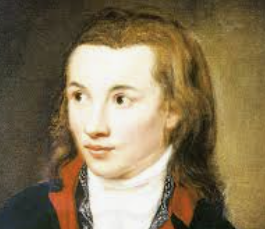
Where children are, there is a golden age.
▼
Source
source
Fragment No. 97
2 months 2 weeks ago
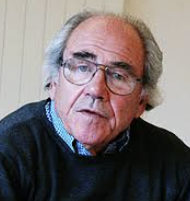
If every strategy today is that of mental terror and of deterrence tied to the suspension and the eternal simulation of catastrophe, then the only means of mitigating this scenario would be to make the catastrophe arrive, to produce or to reproduce a real catastrophe. To which Nature is at times given: in its inspired moments, it is God who through his cataclysms unknots the equilibrium of terror in which humans are imprisoned. Closer to us, this is what terrorism is occupied with as well: making real, palpable violence surface in opposition to the invisible violence of security. Besides, therein lies terrorism's ambiguity.
▼
Source
source
"The China Syndrome," p. 58

1 month 4 days ago
They have their belief, these poor Thibet people, that Providence sends down always an Incarnation of Himself into every generation. At bottom some belief in a kind of Pope! At bottom still better, belief that there is a Greatest Man; that he is discoverable; that, once discovered, we ought to treat him with an obedience which knows no bounds! This is the truth of Grand Lamaism; the "discoverability" is the only error here.
3 months ago
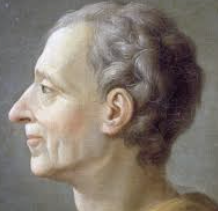
Useless laws weaken the necessary laws.
▼
Source
source
Book XXIX: Of the Manner of Composing Laws, Chapter 16: Things to be Observed in the Composing of Laws

3 months ago
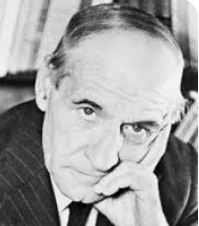
Don Quixote made himself ridiculous; but did he know the most tragic ridicule of all, the inward ridicule, the ridiculousness of a man's self to himself, in the eyes of his own soul? Imagine Don Quixote's battlefield to be his own soul; imagine him to be fighting in his soul to save the Middle Ages from the Renaissance, to preserve the treasure of his infancy; imagine him an inward Don Quixote, with a Sancho at his side, inward and heroic too - and tell me if you find anything comic in the tragedy.
3 months 4 days ago
Every intellectual effort sets us apart from the commonplace, and leads us by hidden and difficult paths to secluded spots where we find ourselves amid unaccustomed thoughts.
▼
Source
source
p. 15
3 months 2 weeks ago
What is Europe really but a sterile trunk which owes everything to oriental grafts?
▼
Source
source
Letter of 18 December 1806 to Windischmann, quoted by Rene Gerard, L'Orient et la pensée romantique allemande, Paris 1963,, p. 213. quoted in Poliakov, L. (1974).
3 months 1 week ago
Let us speak plainly: everything which keeps us from self-dissolution, every lie which protects us against our unbreathable certitudes is religious.
1 week 3 days ago
Better that the nation grow poor for a cause we can honor, than grow rich for an end that is unknown. Who can regard without deep misgiving the process of accumulating wealth unaccompanied by a corresponding growth of knowledge as to the uses to which wealth must be applied? This is what we see in normal times, and the spectacle is profoundly disturbing. Far less disturbing at all events is that process of spending the wealth which we have now to witness.
▼
Source
source
"The Peacefulness of Being at War." in The New Republic (11 September 1915), p. 152.

3 months 1 week ago
Logical analysis applied to mental phenomenon shows that there is but one law of mind, namely that ideas tend to spread continuously and to affect certain others which stand to them in a peculiar relation of affectibility. In this spreading they lose intensity, and especially the power of affecting others, but gain generality and become welded with other ideas.
2 weeks ago
If you are a man of learning, fight in the skull, kill ideas and create new ones. God hides in every idea as in every cell of flesh. Smash the idea, set him free! Give him another, a more spacious idea in which to dwell.
4 months 1 week ago
The usage of the words "public" and "public sphere" betrays a multiplicity of concurrent meanings. Their origins go back to various historical phases and, when applied synchronically to the conditions of a bourgeois society that is industrially advanced and constituted as a social-welfare state, they fuse into a clouded amalgam. Yet the very conditions that make the inherited language seem inappropriate appear to require these words, however confused their employment.
▼
Source
source
p. 1 as cited in: Gandy, M (1997) "Ecology, modernity and the intellectual legacy of the Frankfurt School". In: Light, A and Smith, JM, (eds.) Space, Place and Environmental Ethics. p. 240

4 months 1 week ago
In this distribution of functions, the scholar is the delegated intellect. In the right state, he is, Man Thinking. In the degenerate state, when the victim of society, he tends to become a mere thinker, or, still worse, the parrot of other men's thinking.
▼
Source
source
pars. 7-8
2 months 2 weeks ago
Simulation is no longer that of a territory, a referential being or substance. It is a generation by models of a real without origin or reality: a hyperreal.
▼
Source
source
"The Precession of Simulacra," p. 1

5 months 2 weeks ago
What is asked of a man that he may be able to pray for his enemies? To pray for one's enemies is the hardest thing of all. That is why it exasperates us so much in our present day situation.

1 week 4 days ago
There comes up another difficulty which more nearly concerns our vanity: namely, the impossibility of our conceiving this property [the faculty of feeling] as a dependence or attribute of matter.
▼
Source
source
Ch. VI Concerning the Sensitive Faculty of Matter
2 months 3 weeks ago
The Church is now more like the Scribes and Pharisees than like Christ... What are now called the "essential doctrines" of the Christian religion he does not even mention.
▼
Source
source
As quoted in The Life of Florence Nightingale (1913) by Edward Tyas Cook, p. 392

5 months 1 week ago
Every revolutionary ends as an oppressor or a heretic.

3 months 3 weeks ago
We ought so to behave to one another as to avoid making enemies of our friends, and at the same time to make friends of our enemies.
▼
Source
source
As quoted in Diogenes Laërtius, Lives and Opinions of Eminent Philosophers, "Pythagoras", Sect. 23, as translated in Dictionary of Quotations (1906) by Thomas Benfield Harbottle, p. 320
3 weeks 3 days ago
Every start upon an untrodden path is a venture which only in unusual circumstances looks sensible and likely to be successful.
▼
Source
source
Ch. 9 : I Resolve to Become a Jungle Doctor
4 months 4 weeks ago
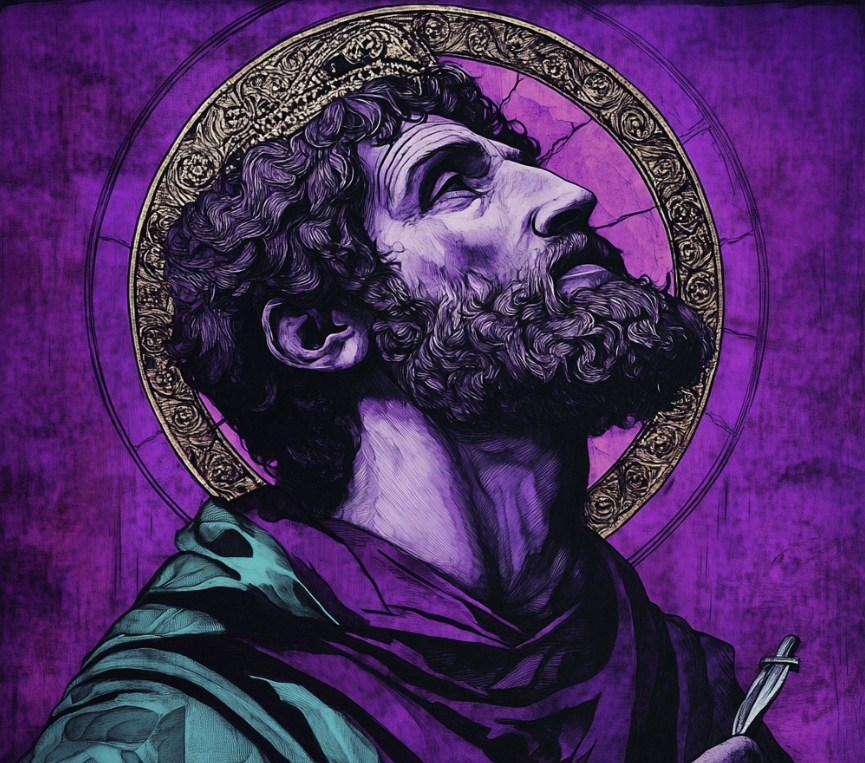
Certainly He says this for me, for thee, for this other man, since He bears His body, the Church. Unless you imagine, brethren, that when He said: My Father, if it be possible, let this cup pass away from (Matt. 26:39), it was the Lord that feared to die. . . . But Paul longed to die, that he might be with Christ. What? The Apostle desires to die, and Christ Himself should fear death? What can this mean, except that He bore our infirmity in Himself, and uttered these words for those who are in His body and still fear death? It is from these that the voice came; it was the voice of His members, not of the Head. When He said, My soul is sorrowful unto death (Matt. 26:38), He manifested Himself in thee, and thee in Himself. And when He said, My God, my God, why has Thou forsaken Me? (Matt. 27:46), the words He uttered on the cross were not His own, but ours.

3 months 1 week ago
The pessimist has to invent new reasons to exist every day: he is a victim of the "meaning" of life.
CivilSimian.com created by AxiomaticPanic, CivilSimian, Kalokagathia