

5 months 5 days ago
When you serve your mother and father it is okay to try to correct them once in a while. But if you see that they are not going to listen to you, keep your respect for them and don't distance yourself from them. Work without complaining.
3 months 1 week ago
People think they have taken quite an extraordinarily bold step forward when they have rid themselves of belief in hereditary monarchy and swear by the democratic republic. In reality, however, the state is nothing but a machine for the oppression of one class by another, and indeed in the democratic republic no less than in the monarchy.
▼
Source
source
Introduction to 1891 edition of Karl Marx's, The Civil War in France

5 months 1 week ago
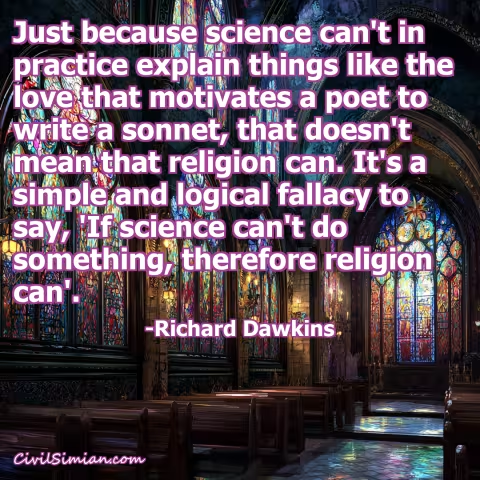
Creationists make it sound as though a "theory" is something you dreamt up after being drunk all night.

4 months 2 weeks ago
That which parents should take care of... is to distinguish between the wants of fancy, and those of nature.
▼
Source
source
Sec. 107

2 months 4 weeks ago
God functions like a stabilizer of time.

3 months 2 weeks ago
Kings will be tyrants from policy, when subjects are rebels from principle.
▼
Source
source
Volume iii, p. 334

2 weeks 1 day ago
To sum up: it is wrong always, everywhere, and for anyone, to believe anything upon insufficient evidence. If a man, holding a belief which he was taught in childhood or persuaded of afterwards, keeps down and pushes away any doubts which arise about it in his mind, purposely avoids the reading of books and the company of men that call into question or discuss it, and regards as impious those questions which cannot easily be asked without disturbing it--the life of that man is one long sin against mankind.
5 months 2 weeks ago
The bodies of which the world is composed are solids, and therefore have three dimensions. Now, three is the most perfect number, it is the first of numbers, for of one we do not speak as a number, of two we say both, but three is the first number of which we say all. Moreover, it has a beginning, a middle, and an end.
3 months 6 days ago
Philosophy is in history, and is never independent of historical discourse. But for the tacit symbolism of life it substitutes, in principle, a conscious symbolism; for a latent meaning, one that is manifest. It is never content to accept its historical situation. It changes this situation by revealing it to itself.
▼
Source
source
p. 57
3 weeks 5 days ago
Resignation as to knowledge of the world is for me not an irretrievable plunge into a scepticism which leaves us to drift about in life like a derelict vessel. I see in it that effort of honesty which we must venture to make in order to arrive at the serviceable world-view which hovers within sight. Every world-view which fails to start from resignation in regard to knowledge is artificial and a mere fabrication, for it rests upon an inadmissible interpretation of the universe.

4 months 3 weeks ago
Love to his soul gave eyes; he knew things are not as they seem. The dream is his real life; the world around him is the dream.
3 months 1 week ago
It depends only on the weakness of our organs and of our self-excitement (Selbstberuhrung), that we do not see ourselves in a Fairy-world. All Fabulous Tales (Mahrchen) are merely dreams of that home world, which is everywhere and nowhere. The higher powers in us, which one day as Genies, shall fulfil our will, are, for the present, Muses, which refresh us on our toilsome course with sweet remembrances.

3 months 1 day ago
Respectable scientists like de Broglie himself accept wave mechanics because it confers coherence and unity upon the experimental findings of contemporary science, and in spite of the astonishing changes it implies in connection with ideas of causality, time, and space, but it is because of these changes that it wins favor with the public. The great popular success of Einstein was the same thing. The public drinks in and swallows eagerly everything that tends to dispossess the intelligence in favor of some technique; it can hardly wait to abdicate from intelligence and reason and from everything that makes man responsible for his destiny.
▼
Source
source
"Wave Mechanics," p. 75
1 month 4 weeks ago
On this showing, the nature of the breakdowns of civilizations can be summed up in three points: a failure of creative power in the minority, an answering withdrawal of mimesis on the part of the majority, and a consequent loss of social unity in the society as a whole.
▼
Source
source
Vol. 4 (1955 ), part B, p. 6
3 months 2 weeks ago
Before either of us knew it, we belonged to each other.
5 days ago
I believe in intuitions and inspirations. I sometimes feel that I am right. I do not know that I am. When two expeditions of scientists, financed by the Royal Academy, went forth to test my theory of relativity, I was convinced that their conclusions would tally with my hypothesis. I was not surprised when the eclipse of May 29, 1919, confirmed my intuitions. I would have been surprised if I had been wrong.
3 months 1 week ago
Understanding finds nothing but itself when it seeks the essence behind the appearance of things. 'It is manifest that behind the so-called curtain, which is to hide the inner world, there is nothing to be seen unless we ourselves go behind there, as much in order that we may thereby see, as that there may be something behind there which can be seen.'
▼
Source
source
P. 111

1 month 1 week ago
The possibility of democracy on a global scale is emerging today for the very first time.
▼
Source
source
(xi)

4 months 2 weeks ago
He thought it happier to be dead, To die for Beauty, than live for bread.
▼
Source
source
Beauty

3 months 1 week ago
It may be confidently asserted that no man chooses evil because it is evil; he only mistakes it for happiness, the good he seeks. And the desire of rectifying these mistakes, is the noble ambition of an enlightened understanding, the impulse of feelings that Philosophy invigorates.
▼
Source
source
A Vindication of the Rights of Men
2 months 1 week ago
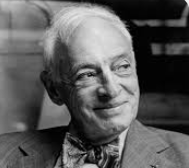
Tocqueville predicted that in democratic countries the public would demand larger and larger doses of excitement and increasingly stronger stimulants from its writers. He probably did not expect that public to dramatize itself so extensively, to make the world scene everybody's theatre, or, in the developed countries, to take to alcohol and drugs in order to get relief from the horrors of ceaseless intensity, the torment of thrills and distractions. A great many writers have done little more than meet the mounting demand for thrills. I think that this demand has, in the language of marketing, peaked.
▼
Source
source
The Distracted Public

4 months 2 weeks ago
Our inventions are wont to be pretty toys, which distract our attention from serious things. They are but improved means to an unimproved end, an end which it was already but too easy to arrive at.
▼
Source
source
pp. 60-61
4 months 5 days ago
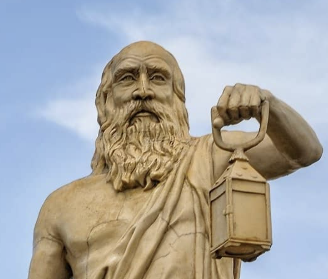
He was going into a theatre, meeting face to face those who were coming out, and being asked why, "This," he said, "is what I practise doing all my life."
▼
Source
source
Diogenes Laërtius, vi. 64
2 weeks ago
Evil does not approach us as pride any more, but on the contrary as slumber, lassitude, concealment of the "I." ... It may make us so quickly contented, that any definitive fire will die down. The venomous, breathtaking frigid mist seems able ... to harden hearts and fill them with envy, obduracy and resentment, with bloody scorn for the divine image and light, with all the causes of the only true original sin, which is not wanting to be like God.
▼
Source
source
p. 62

3 months 1 week ago
I came to set fire to the earth, and I wish it were already on fire!
▼
Source
source
12:49 (CEV)

3 months 1 week ago
How can you know if you are in the truth? The criterion is simple enough: if others make a vacuum around you, there is not a doubt in the world that you are closer to the essential than they are.

4 months 2 weeks ago
Wherever we turn we find that the real obstacles to peace are human will and feeling, human convictions, prejudices, opinions. If we want to get rid of war we must get rid first of all of its psychological causes. Only when this has been done will the rulers of the nations even desire to get rid of the economic and political causes.
▼
Source
source
Ch. 9, p. 138 [2012 reprint]
3 months 1 week ago
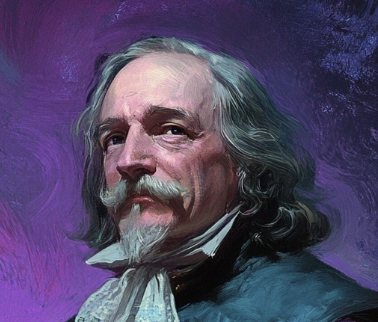
And this Feare of things invisible, is the naturall Seed of that, which every one in himself calleth Religion; and in them that worship, or feare that Power otherwise than they do, Superstition.
▼
Source
source
The First Part, Chapter 11, p. 51
3 months 1 week ago
In the Platonic dialectic, ... the terms "Being" "Non-being" "Movement," "the One and the Many" "Identity" and "Contradiction" are methodically kept open, ambiguous, not fully defined. They have an open horizon, an entire universe of meaning which is gradually structured in the process of communication itself, but which is never closed. The propositions are submitted, developed, and tested in a dialogue, in which the partner is led to question the normally unquestioned universe of experience and speech, and to enter a new dimension of discourse - otherwise he is free and the discourse is addressed to his freedom. He is supposed to go beyond that which is given to him - as the speaker, in his proposition, goes beyond the initial setting of the terms. These terms have many meanings because the conditions to which they refer have many sides, implications, and effects which cannot be insulated and stabilized.
▼
Source
source
p. 131
4 months 2 weeks ago
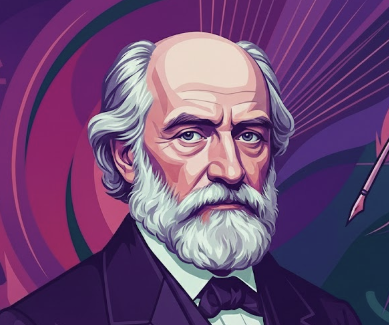
There are 80,000 prostitutes in London alone and what are they, if not bloody sacrifices on the altar of monogamy?
▼
Source
source
"Of Women"
1 week 5 days ago
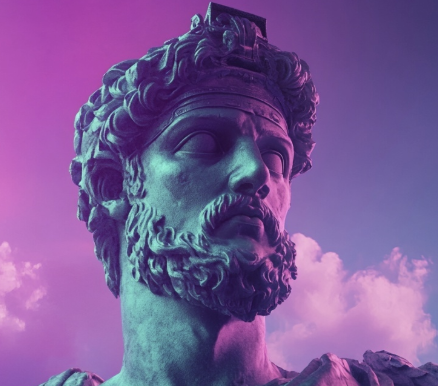
What is my ruling faculty now to me? and of what nature am I now making it? and for what purpose am I now using it? is it void of understanding? is it loosed and rent asunder from social life? is it melted and mixed with the poor flesh so as to move together with it?
▼
Source
source
X, 24
4 months 2 weeks ago
I find it wholesome to be alone the greater part of the time. To be in company, even with the best, is soon wearisome and dissipating. I love to be alone. I never found the companion that was so companionable as solitude. We are for the most part more lonely when we go abroad among men than when we stay in our chambers. A man thinking or working is always alone, let him be where he will... The really diligent student... is as solitary as a dervish in the desert. The farmer can work alone in the field or the woods all day, hoeing or chopping, and not feel lonesome.

2 months 2 weeks ago
A real mother, who knows the will of God by experience, will prepare her children also to fulfil it. Such a mother will suffer if she sees her child overfed, effeminate, and dressed-up, for she knows that these things will make it difficult for it to fulfil the will of God which she recognizes.

4 months 1 week ago
The chief function of the disciplinary power is to 'train', rather than to select and to levy; or, no doubt, to train in order to levy and select all the more. It does not link forces together in order to reduce them; it seeks to bind them together in such a way as to multiply and use them.
▼
Source
source
Part Three, The Means of Correct Training
3 months 2 weeks ago
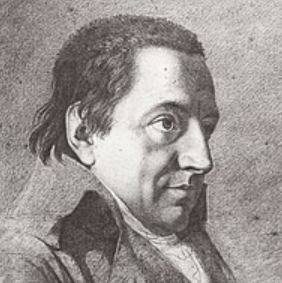
This education, therefore, results at the very outset in knowledge which transcends all experience, which is abstract, absolute, and strictly universal, and which includes within itself beforehand all subsequently possible experience. On the other hand, the old education was concerned, as a rule, only with the actual qualities of things as they are and as they should be believed and rioted, without anyone being able to assign a reason for them. It aimed, therefore, at purely passive reception by means of the power of memory, which was completely at the service of things. It was, therefore, impossible to have any idea of the mind as an independent original principle of things themselves.
▼
Source
source
General Nature of New Eduction p. 28
1 month 2 weeks ago
There is no social entity with a good that undergoes some sacrifice for its own good. There are only individual people, different individual people, with their own individual lives. Using one of these people for the benefit of others, uses him and benefits the others. Nothing more.
▼
Source
source
Ch. 3 : Moral Constraints and the State; Why Side Constraints?, p. 32

4 months 3 weeks ago
The things that we can see with our physical eyes are mere shadows of reality. If they appear ugly and ill formed, then what must be the ugliness of the soul in sin, deprived of all light? The soul, like the body, can undergo transformation in appearance. In sin it appears as completely ugly to the beholder. In virtue it shines resplendently before God.

4 months 1 week ago
Tell them I've had a wonderful life.
▼
Source
source
Last words, to his doctor's wife (28 April 1951)-as quoted in Ludwig Wittgenstein : A Memoir (1966) by Norman Malcolm, p. 100
8 months 3 weeks ago
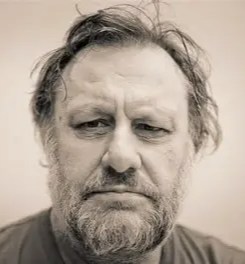
I believe in clear-cut positions. I think that the most arrogant position is this apparent, multidisciplinary modesty of "what I am saying now is not unconditional, it is just a hypothesis," and so on. It really is a most arrogant position. I think that the only way to be honest and expose yourself to criticism is to state clearly and dogmatically where you are. You must take the risk and have a position.

2 weeks 1 day ago
How much pain have cost us the evils which have never happened.

4 months 2 weeks ago
The old often envy the young; when they do, they are apt to treat them cruelly.

5 months 2 weeks ago
If it were so, as conceited sagacity, proud of not being deceived, thinks, that we should believe nothing that we cannot see with our physical eyes, then we first and foremost ought to give up believing in love. ... We can be deceived by believing what is untrue, but we certainly are also deceived by not believing what is true. ... Which deception is more dangerous?
4 months 2 weeks ago
It is the courage to make a clean breast of it in the face of every question that distinguishes the philosopher. He must be like Sophocles' Oedipus, who, seeking enlightenment concerning his terrible fate, pursues his indefatigable inquiry even though he divines that appalling horror awaits him in the answer. But most of us carry with us the Jocasta in our hearts, who begs Oedipus, for God's sake, not to inquire further.
▼
Source
source
Letter to Johann Wolfgang von Goethe (November 1815)
2 months 2 weeks ago
Division of labor is a justification for sloth.
▼
Source
source
p. 79
3 months 1 day ago
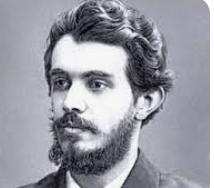
Surprisingly, Berdyaev was able to write, lecture and publish for five years after the October Revolution of 1917. He was once detained and interviewed by the fearsome head of the Cheka, Felix Dzerzhinsky. Although he was released, the Bolsheviks gradually realized that Berdyaev was unassimilable to their cause and gave him a choice, along with a group of other intellectuals, of exile or execution. Reluctantly, Berdyaev chose exile to Berlin. He was never again to return to Russia.
▼
Source
source
Richard Schain, in In Love with Eternity : Philosophical Essays and Fragments (2005), Ch. 7 : Nikolai Alexandrovich Berdyaev - A Champion of the Spirit, p. 44

4 months 2 weeks ago
There are two equal and opposite errors into which our race can fall about the devils. One is to disbelieve in their existence. The other is to believe, and to feel an excessive and unhealthy interest in them. They themselves are equally pleased by both errors and hail a materialist or a magician with the same delight.
▼
Source
source
Preface

3 months 1 week ago
"Education to personality" has become a pedagogical ideal that turns its back upon the standardized-the collective and normal-human being. It thus fittingly recognizes the historical fact that the great, liberating deeds of world history have come from leading personalities and never from the inert mass that is secondary at all times and needs a demagogue if it is to move at all. The paean of the Italian nation is addressed to the personality of the Duce, and dirges of other nations lament the absence of great leaders.
▼
Source
source
Lecture, The Inner Voice, Kulturbund, Vienna (1932); quoted in The Integration of Personality, Farrar & Rinehart, NY
4 months 2 weeks ago
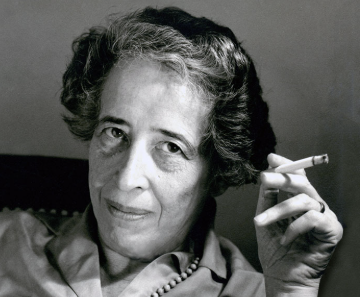
Hitler never intended to defend 'the West' against Bolshevism but always remained ready to join 'the Reds' for the destruction of the West, even in the middle of the struggle against Soviet Russia.
▼
Source
source
Part 3, Ch. 10
3 weeks 5 days ago
Not everything assumes a name. Some things lead beyond words. Art inflames even a frozen, darkened soul to a high spiritual experience. Through art we are sometimes visited - dimly, briefly - by revelations such as cannot be produced by rational thinking. Like that little looking-glass from the fairy-tales: look into it and you will see - not yourself - but for one second, the Inaccessible, whither no man can ride, no man fly. And only the soul gives a groan...
CivilSimian.com created by AxiomaticPanic, CivilSimian, Kalokagathia