


4 months 1 week ago
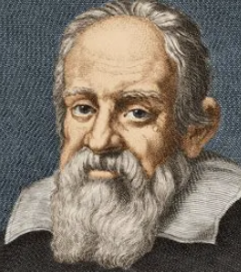
Instead of insanity eliminating the crime according to the original meaning of article 64,every crime and even every offense now carries within it, as a legitimate suspicion, but also as a right that may be claimed, the hypothesis of insanity, in any case of anomaly. And the sentence that condemns or acquits is not simply a judgement of guily, a legal decision that lays down punishment; it bears within it an assessment of normality and a technical prescription for a possible normalization Today the judge- magistrate or juror0 certainly does more than 'judge'.
▼
Source
source
pp. 20-21
1 month 1 week ago
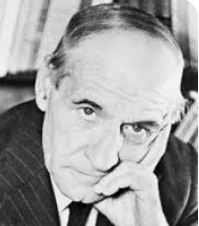
Indeed, I think we may concede to our Academician, without flattery, his claim that in the principle [principio, i. e., accelerated motion] laid down in this treatise he has established a new science dealing with a very old subject. Observing with what ease and clearness he deduces from a single principle the proofs of so many theorems, I wonder not a little how such a question escaped the attention of Archimedes, Apollonius, Euclid and so many other mathematicians and illustrious philosophers, especially since so many ponderous tomes have been devoted to the subject of motion.
▼
Source
source
(Galileo referred to himself as the/our Academician in his dialogue) Sagredo, Third Day P. 242
3 months 6 days ago
Nationalism is always an effort in a direction opposite to that of the principle which creates nations. The former is exclusive in tendency, the latter inclusive. In periods of consolidation, nationalism has a positive value, and is a lofty standard. But in Europe everything is more than consolidated, and nationalism is nothing but a mania, a pretext to escape from the necessity of inventing something new, some great enterprise.
▼
Source
source
Chapter XIV: Who Rules The World?
3 months 2 weeks ago
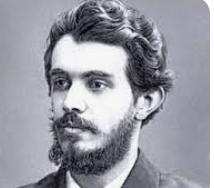
India is pre-eminently distinguished for the many traits of original grandeur of thought and of the wonderful remains of immediate knowledge.
▼
Source
source
quoted in Londhe, S. (2008). A tribute to Hinduism: Thoughts and wisdom spanning continents and time about India and her culture. New Delhi: Pragun Publication.

1 week 5 days ago
All that happens is as usual and familiar as the rose in spring and the crop in summer.
▼
Source
source
IV, 44

2 weeks 1 day ago
How much pain have cost us the evils which have never happened.

4 months 2 weeks ago
I wish to suggest that a man may be very industrious, and yet not spend his time well. There is no more fatal blunderer than he who consumes the greater part of his life getting his living. All great enterprises are self-supporting. The poet, for instance, must sustain his body by his poetry, as a steam planing-mill feeds its boilers with the shavings it makes. You must get your living by loving.
▼
Source
source
pp. 486-7

3 months 1 week ago
In the present state of society it appears necessary to go back to first principles in search of the most simple truths, and to dispute with some prevailing prejudice every inch of ground. To clear my way, I must be allowed to ask some plain questions, and the answers will probably appear as unequivocal as the axioms on which reasoning is built; though, when entangled with various motives of action, they are formally contradicted either by the words or conduct of men.
▼
Source
source
Ch. 1, opening

1 month 1 week ago
It is not easy for any of us to stop measuring the world against the standard of Europe, but the concept of the multitude requires it of us. It is a challenge. Embrace it.

4 months 4 weeks ago
Although life is a matter of indifference, the use which you make of it is not a matter of indifference.
▼
Source
source
Book II, ch. 6, 1.
3 months 1 day ago
I see myself immersed in the depths of human existence and standing in the face of the ineffable mystery of the world and of all that is. And in that situation, I am made poignantly and burningly aware that the world cannot be self-sufficient, that there is hidden in some still greater depth a mysterious, transcendent meaning. This meaning is called God. Men have not been able to find a loftier name, although they have abused it to the extent of making it almost unutterable. God can be denied only on the surface; but he cannot be denied where human experience reaches down beneath the surface of flat, vapid, commonplace existence.
▼
Source
source
As translated in In Love with Eternity : Philosophical Essays and Fragments (2005) by Richard Schain, p. 47

3 months 2 weeks ago
Nothing made a happy slave, but a degraded man. In proportion as the mind grew callous to its degradation, and all sense of manly pride was lost, the slave felt comfort. In fact, he was no longer a man. If he were to define a man, he would say with Shakspeare,"Man is a being, holding large discourse,Looking before and after."A slave was incapable of either looking before or after.
▼
Source
source
Speech in the House of Commons (12 May 1789), quoted in The Parliamentary History of England, From the Earliest Period to the Year 1803, Vol. XXVIII (1816), column 71

4 months 2 weeks ago
That which parents should take care of... is to distinguish between the wants of fancy, and those of nature.
▼
Source
source
Sec. 107
3 months 2 weeks ago
If any ask me what a free Government is, I answer, that, for any practical purpose, it is what the people think so, - and that they, and not I, are the natural, lawful, and competent judges of this matter.

3 months 1 day ago
In a general way, the literature of the twentieth century is essentially psychological; and psychology consists of describing states of the soul by displaying them all on the same plane, without any discrimination of value, as though good and evil were external to them, as though the effort toward the good could be absent at any moment from the thought of any man.
▼
Source
source
"The responsibility of writers," p. 168
4 months 5 days ago
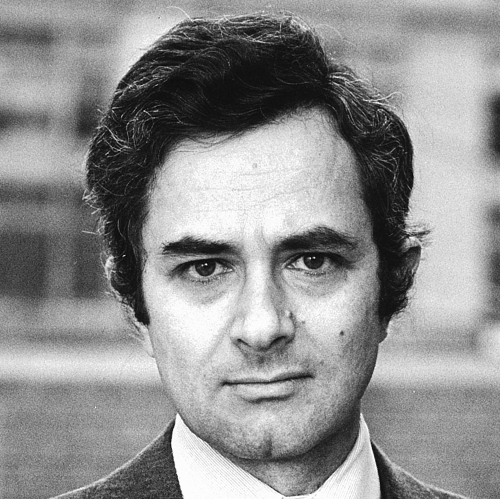
Common sense doesn't have the last word in ethics or anywhere else, but it has, as J. L. Austin said about language, the first word: it should be examined before it is discarded.
▼
Source
source
p. 166.

3 months 1 week ago
Doutbless, revenge is not always sweet, once it is consummated we feel inferior to our victim, or else we are tangled in the subtleties of remorse; so vengeance too has its venom, though it comes closer to what we are, to what we feel, to the very law of the self; it is also healthier than magnanimity. The Furies were held to antedate the gods, Zeus included. Vengeance before Divinity! This is the Major intuition of ancient mythology. p. 70.
3 months 5 days ago
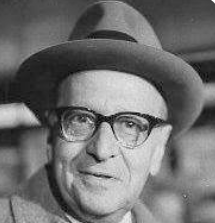
Having given up autonomy, reason has become an instrument.
▼
Source
source
p. 21.

4 months 5 days ago
Unto Thee, O Lord, the Soul of Creation cried: "For whom didst Thou create me, and who so fashioned me? Feuds and fury, violence and the insolence of might have oppressed me; None have I to protect me save Thee; Command for me then the blessings of a settled, peaceful life."
▼
Source
source
Ahunuvaiti Gatha; Yasna 29, 1.

2 months 4 weeks ago
The huge laugh is a most extreme expression of freedom.
4 months 1 week ago
The critical ontology of ourselves has to be considered not, certainly, as a theory, a doctrine, nor even as a permanent body of knowledge that is accumulating; it has to be conceived as an attitude, an ethos, a philosophical life in which the critique of what we are is at one and the same time the historical analysis of the limits that are imposed on us and an experiment with the possibility of going beyond them.

4 months 2 weeks ago
We are reformers in spring and summer; in autumn and winter we stand by the old - reformers in the morning, conservatives at night. Reform is affirmative, conservatism is negative; conservatism goes for comfort, reform for truth.
▼
Source
source
p. 223
4 months 2 weeks ago
Each the herald is who wrote His rank, and quartered his own coat. There is no king nor sovereign state That can fix a hero's rate.
▼
Source
source
Astræa
3 months 1 week ago
It would be an endless task to trace the variety of meannesses, cares, and sorrows, into which women are plunged by the prevailing opinion that they were created rather to feel than reason, and that all the power they obtain, must be obtained by their charms and weakness.
▼
Source
source
Ch. 4

2 months 2 weeks ago
Three days later the little princess was buried, and Prince Andrei went up the steps to where the coffin stood, to give her the farewell kiss. And there in the coffin was the same face, though with closed eyes. "Ah, what have you done to me?" it still seemed to say, and Prince Andrei felt that something gave way in his soul and that he was guilty of a sin he could neither remedy nor forget.
▼
Source
source
Bk. IV, Ch. 9
2 months 2 weeks ago
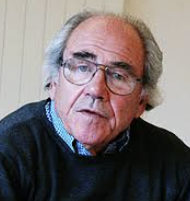
The real is not only what can be reproduced, but that which is already reproduced, the hyper-real.
▼
Source
source
Simulations (1983), New York: Semiotext, p. 146
4 months 5 days ago
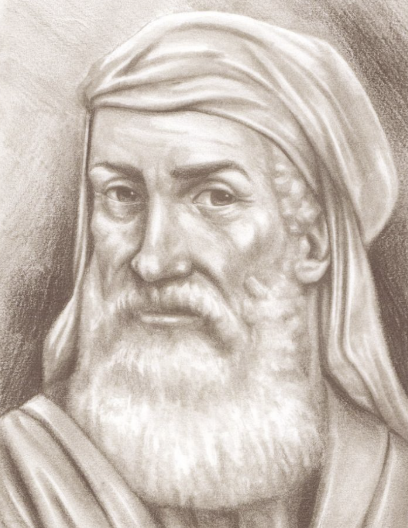
Fools -- for their thoughts are not well-considered who suppose that not-being exists or that anything dies and is wholly annihilated.
▼
Source
source
fr. 11
1 week 5 days ago
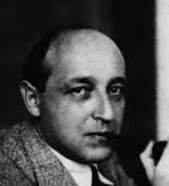
We are faced with the curiously appalling trend of modern thought, in which the absolute which was once a means of entering into communion with the divine, has now become an instrument used by those who profit from it, to distort, pervert, and conceal the meaning of the present.

4 months 2 weeks ago
The world is full of conflicts; and, overshadowing all minor conflicts, the titanic struggle between Communism and anti-Communism. Almost everybody who is politically conscious has strong feelings about one or more of these issues; but we want you, if you can, to set aside such feelings and consider yourselves only as members of a biological species which has had a remarkable history, and whose disappearance none of us can desire. We shall try to say no single word which should appeal to one group rather than to another. All, equally, are in peril, and, if the peril is understood, there is hope that they may collectively avert it.

4 months 3 weeks ago
Man is certainly stark mad; he cannot make a worm, and yet he will be making gods by dozens.
▼
Source
source
Book II, Ch. 12. Apology for Raimond Sebond
3 months 2 weeks ago
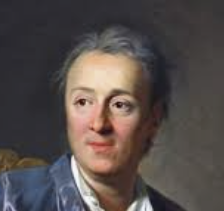
Power acquired by violence is only a usurpation, and lasts only as long as the force of him who commands prevails over that of those who obey.
▼
Source
source
Article on Political Authority, Vol. 1

2 months 2 weeks ago
The alteration of motion is ever proportional to the motive force impressed; and is made in the direction of the right line in which that force is impressed.
▼
Source
source
Laws of Motion, II

4 months 5 days ago
And yet it will be obvious that it is difficult to really know of what sort each thing is.

5 months 2 weeks ago
Arrogance on the part of the meritorious is even more offensive to us than the arrogance of those without merit: for merit itself is offensive.
4 months 3 weeks ago
It is the part of cowardice, not of courage, to go and crouch in a hole under a massive tomb, to avoid the blows of fortune.
▼
Source
source
Ch. 3. A Usage of the Island of Cea, tr. George B. Ives, 1925
2 weeks 2 days ago
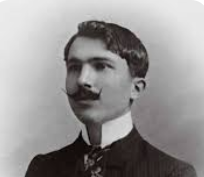
The bodies breathe, feed, store up strength, and then in an erotic moment are shattered, are spent and drained utterly, that they may bequeath their spirit to their sons. What spirit? The drive upward!
3 months 2 weeks ago
It is not human nature we should accuse but the despicable conventions that pervert it.
4 months 2 weeks ago
I have lived in the pursuit of a vision, both personal and social. Personal: to care for what is noble, for what is beautiful, for what is gentle; to allow moments of insight to give wisdom at more mundane times. Social: to see in imagination the society that is to be created, where individuals grow freely, and where hate and greed and envy die because there is nothing to nourish them. These things I believe, and the world, for all its horrors, has left me unshaken.

4 months 2 weeks ago
The true Enlightenment thinker, the true rationalist, never wants to talk anyone into anything. No, he does not even want to convince; all the time he is aware that he may be wrong. Above all, he values the intellectual independence of others too highly to want to convince them in important matters. He would much rather invite contradiction, preferably in the form of rational and disciplined criticism. He seeks not to convince but to arouse - to challenge others to form free opinions.

3 months 4 weeks ago
You, Socrates, began by saying that virtue can't be taught, and now you are insisting on the opposite, trying to show that all things are knowledge, justice, soundness of mind, even courage, from which it would follow that virtue most certainly can be taught.
▼
Source
source
As quoted in Protagoras by Plato
3 months 1 week ago
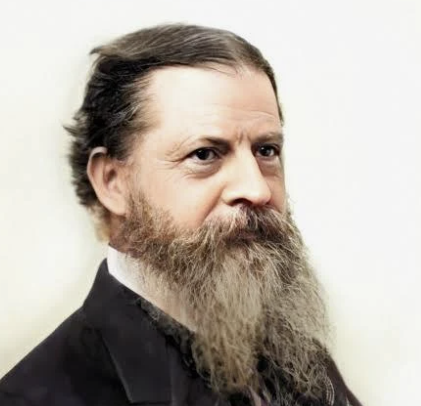
A pair of statements may be taken conjunctively or disjunctively; for example, "It lightens and it thunders," is conjunctive, "It lightens or it thunders" is disjunctive. Each such individual act of connecting a pair of statements is a new monad for the mathematician.
▼
Source
source
p. 268
3 months 1 week ago
The development of the human mind has practically extinguished all feelings, except a few sporadic kinds, like sound, colors, smells, warmth, etc., which now appear to be disconnected and separate.

5 months 1 week ago
Law could never, by determining exactly what is noblest and must just for one and all, enjoin upon them that which is best; for the differences of men and of actions and the fact that nothing, I may say, in human life is ever at rest, forbid any science whatsoever to promulgate any simple rule for everything and for all time. So, that which is persistently simple is inapplicable to things which are never simple.

5 months 2 weeks ago
To stand on one leg and prove God's existence is a very different thing from going on one's knees and thanking Him.
3 months 2 weeks ago
Only a very bad theologian would confuse the certainty that follows revelation with the truths that are revealed. They are entirely different things.
▼
Source
source
Apology for the Abbé de Prades
1 week 4 days ago
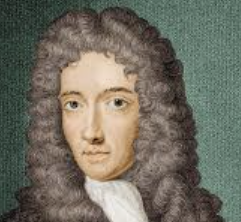
Now a man need not be very conversant in the writings of Chymists to observe, in how Laxe, Indefinite, and almost Arbitrary Senses they employ the Terms of Salt, Sulphur and Mercury; of which I could never find that they were agreed upon any certain Definitions or setled Notions; not onely differing Authors, but not unfrequently one and the same, and perhaps in the same Book, employing them in very differing senses.
4 months 2 weeks ago
It seems to me now that mathematics is capable of an artistic excellence as great as that of any music, perhaps greater; not because the pleasure it gives (although very pure) is comparable, either in intensity or in the number of people who feel it, to that of music, but because it gives in absolute perfection that combination, characteristic of great art, of godlike freedom, with the sense of inevitable destiny; because, in fact, it constructs an ideal world where everything is perfect and yet true.
▼
Source
source
Letter to Gilbert Murray, April 3, 1902
4 months 2 weeks ago
The perception of beauty is a moral test.
▼
Source
source
June 21, 1852
2 months 3 weeks ago
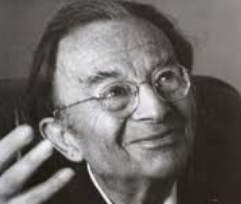
Chronic boredom - compensated or uncompensated - constitutes one of the major psychopathological phenomena in contemporary technotronic society, although it is only recently that it has found some recognition.
▼
Source
source
p. 273
3 months 1 week ago
One of the most marked features about the law of mind is that it makes time to have a definite direction of flow from past to future. ...This makes one of the great contrasts between the law of mind and the law of physical force, where there is no more distinction between the two opposite directions in time than between moving northward and moving southward.
CivilSimian.com created by AxiomaticPanic, CivilSimian, Kalokagathia