

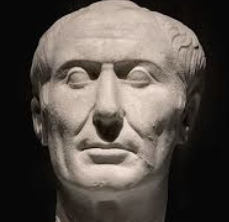
6 months 1 week ago
Many receive advice, few profit by it.
▼
Source
source
Maxim 149

4 months 1 week ago
Of the life of man the duration is but a point.
▼
Source
source
II. 17, trans. C.R. Haines

8 months 1 week ago
Who can exhaust a man? Who knows a man's resources?
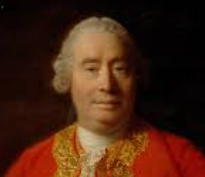
8 months 2 weeks ago
Look round this universe. What an immense profusion of beings, animated and organised, sensible and active! You admire this prodigious variety and fecundity. But inspect a little more narrowly these living existences, the only beings worth regarding. How hostile and destructive to each other! How insufficient all of them for their own happiness! How contemptible or odious to the spectator! The whole presents nothing but the idea of a blind Nature, impregnated by a great vivifying principle, and pouring forth from her lap, without discernment or parental care, her maimed and abortive children!
▼
Source
source
Philo to Cleanthes, Part XI

8 months 1 week ago
Boundless compassion for all living beings is the surest and most certain guarantee of pure moral conduct, and needs no casuistry. Whoever is filled with it will assuredly injure no one, do harm to no one, encroach on no man's rights; he will rather have regard for every one, forgive every one, help every one as far as he can, and all his actions will bear the stamp of justice and loving-kindness. ... In former times the English plays used to finish with a petition for the King. The old Indian dramas close with these words: "May all living beings be delivered from pain." Tastes differ; but in my opinion there is no more beautiful prayer than this.
▼
Source
source
Part III, Ch. VIII, 4, pp. 213-214 First line often paraphrased as: Compassion is the basis of all morality.
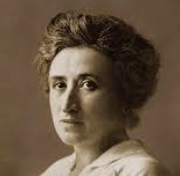
4 months 1 week ago
Shamed, dishonored, wading in blood and dripping with filth, thus capitalist society stands. Not as we usually see it, playing the roles of peace and righteousness, of order, of philosophy, of ethics - as a roaring beast, as an orgy of anarchy, as a pestilential breath, devastating culture and humanity - so it appears in all its hideous nakedness.
▼
Source
source
Ch. 1, Rosa Luxemburg Speaks (1970), trns: Mary-Alice Waters

6 months 3 weeks ago
The original Golden Dawn was not always as serious as it should have been. Mathers was a clown, and Yeats was just a romantic trying to deceive himself. Most of them were interested in personal power, and it ended up by destroying them. The aim of our group is the scientific exploration of the hidden powers of the human mind.
▼
Source
source
p. 113

1 year 3 weeks ago
We cannot stand by while the social contract is broken by those who chose conflict over equality. Those that want equal treatment for themselves have to treat others equally. They cannot lead with exclusion, then turn around and demand equal treatment. It is a double standard. If they are going to exclude first, then justice demands that we, the group that stands with universality, follow our duty to react and exclude those that exclude.

8 months 1 week ago
Four snakes gliding up and down a hollow for no purpose that I could see - not to eat, not for love, but only gliding.
▼
Source
source
April 11, 1834
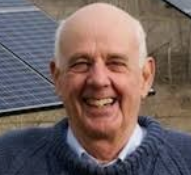
4 months 1 week ago
From the union of power and money, from the union of power and secrecy, from the union of government and science, from the union of government and art, from the union of science and money, from the union of ambition and ignorance, from the union of genius and war, from the union of outer space and inner vacuity, the Mad Farmer walks quietly away.
▼
Source
source
The Mad Farmer, Flying the Flag of Rough Branch, Secedes from the Union in Entries
8 months 2 weeks ago
Giving then to matter all the properties which philosophy knows it has, or all that atheism ascribes to it, and can prove, and even supposing matter to be eternal, it will not account for the system of the universe or of the solar system, because it will not account for motion, and it is motion that preserves it. When, therefore, we discover a circumstance of such immense importance, that without it the universe could not exist, and for which neither matter, nor any, nor all, the properties of matter can account, we are by necessity forced into the rational and comfortable belief of the existence of a cause superior to matter, and that cause man calls, God.
▼
Source
source
A Discourse, &c. &c.
9 months 1 week ago
The saddest aspect of life right now is that science gathers knowledge faster than society gathers wisdom.
9 months 1 week ago
It was the addition of status that brought the little things: a more comfortable seat here, a better cut of meat there, a shorter wait in line at the other place. To the philosophical mind, these items might seem scarcely worth any great trouble to acquire.Yet no one, however philosophical, could give up those privileges, once acquired, without a pang. That was the point.

8 months 1 week ago
I wish to write such rhymes as shall not suggest a restraint, but contrariwise the wildest freedom.
▼
Source
source
June 27, 1839
7 months 1 week ago
Philosophy can bake no bread; but she can procure for us God, Freedom, Immortality. Which, then, is more practical, Philosophy or Economy?
▼
Source
source
The first sentence of this was used by William Torrey Harris for the motto of the Journal of Speculative Philosophy
8 months 1 week ago
The profit of books is according to the sensibility of the reader. The profoundest thought or passion sleeps as in a mine until an equal mind and heart finds and publishes it.
▼
Source
source
Quotation and Originality
9 months 1 week ago
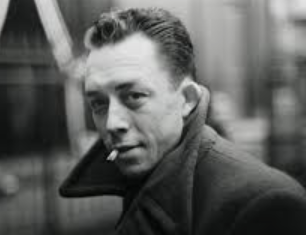
We all have a weakness for beauty.
7 months 1 week ago
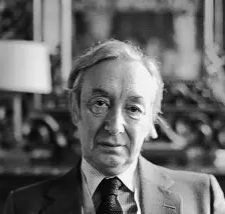
While moral rules may be propounded by authority the fact that these were so propounded would not validate them.
▼
Source
source
"The Meaning of Life".
8 months 2 weeks ago
Hypothetical liberty is allowed to everyone who is not a prisoner and in chains
▼
Source
source
§ 8.23

8 months 1 week ago
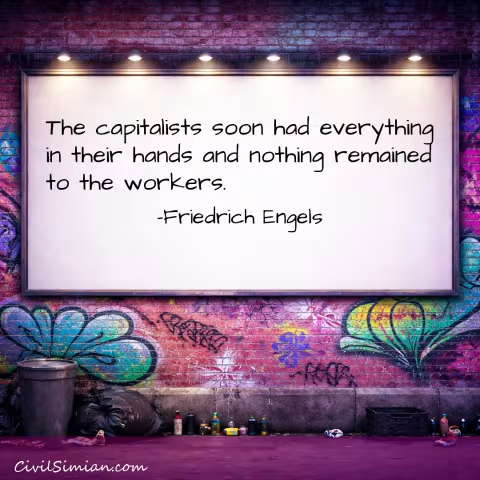
Political Economy regards the proletarian ... like a horse, he must receive enough to enable him to work. It does not consider him, during the time when he is not working, as a human being. It leaves this to criminal law, doctors, religion, statistical tables, politics, and the beadle. ... (1) What is the meaning, in the development of mankind, of this reduction of the greater part of mankind to abstract labor? (2) What mistakes are made by the piecemeal reformers, who either want to raise wages and thereby improve the situation of the working class, or - like Proudhon - see equality of wages as the goal of social revolution?.
▼
Source
source
First Manuscript - Wages of Labour, p. 6.
9 months 1 week ago
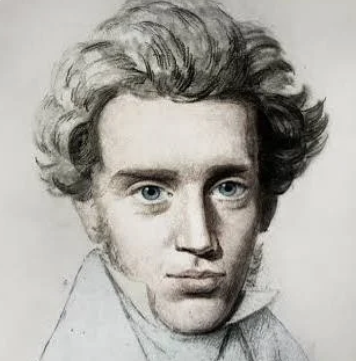
I may live for thirty years, or perhaps forty, or maybe just one day: therefore I have resolved to use this day, or whatever I have to say in these thirty years or whatever I have to say this one day I may have to live - I have resolved to use it in such a way that if not one day in my whole past life has been used well, this one by the help of God will be.

8 months 2 weeks ago
I would advise no one to send his child where the Holy Scriptures are not supreme. Every institution that does not unceasingly pursue the study of God's word becomes corrupt. Because of this we can see what kind of people they become in the universities and what they are like now. Nobody is to blame for this except the pope, the bishops, and the prelates, who are all charged with training young people. The universities only ought to turn out men who are experts in the Holy Scriptures, men who can become bishops and priests, and stand in the front line against heretics, the devil, and all the world. But where do you find that? I greatly fear that the universities, unless they teach the Holy Scriptures diligently and impress them on the young students, are wide gates to hell.
▼
Source
source
To the Christian Nobility of the German States (1520), translated by Charles M. Jacobs, reported in rev. James Atkinson, The Christian in Society, I (Luther's Works, ed. James Atkinson, vol. 44), p. 207
7 months 1 week ago
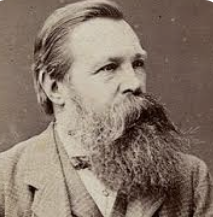
Labor is a commodity, like any other, and its price is therefore determined by exactly the same laws that apply to other commodities. In a regime of big industry or of free competition - as we shall see, the two come to the same thing - the price of a commodity is, on the average, always equal to its cost of production. Hence, the price of labor is also equal to the cost of production of labor. But, the costs of production of labor consist of precisely the quantity of means of subsistence necessary to enable the worker to continue working, and to prevent the working class from dying out. The worker will therefore get no more for his labor than is necessary for this purpose; the price of labor, or the wage, will, in other words, be the lowest, the minimum, required for the maintenance of life.

8 months 1 week ago
That man is the richest whose pleasures are the cheapest.
▼
Source
source
March 11, 1856
5 months 1 week ago
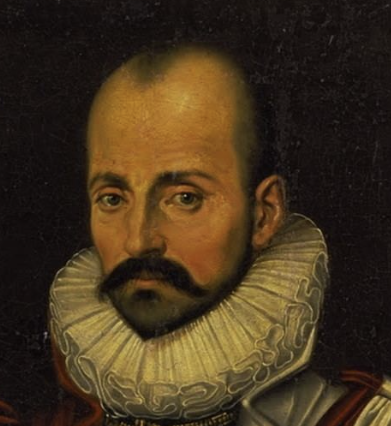
The fundamental political question is why do people obey a government. The answer is that they tend to enslave themselves, to let themselves be governed by tyrants. Freedom from servitude comes not from violent action, but from the refusal to serve. Tyrants fall when the people withdraw their support.
▼
Source
source
This quote is a paraphrase of the contents of the first chapter of Discourse on Voluntary Servitude. The quote appears in an edition titled Politics of Obedience: The Discourse of Voluntary Servitude edited by Murray Rothbard and Harry Kurz (1975), p. 39
7 months 2 days ago
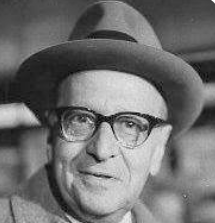
In the face of the idea that truth might afford the opposite of satisfaction and turn out to be completely shocking to humanity at any given historical moment, ... the fathers of pragmatism made the satisfaction of the subject the criterion of truth. For such a doctrine there is no possibility of rejecting or even criticizing any species of belief that is enjoyed by its adherents.
▼
Source
source
p. 52.

7 months 4 days ago
In that very hour he became overjoyed in the holy spirit and said: “I publicly praise you, Father, Lord of heaven and earth, because you have carefully hidden these things from wise and intellectual ones and have revealed them to young children. Yes, O Father, because this is the way you approved.
▼
Source
source
Luke 10:21, New World Translation of the Holy Scriptures
6 months 5 days ago
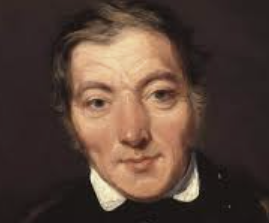
My friends, I tell you that hitherto you have been prevented from even knowing what happiness really is, solely in consequence of the errors - gross errors - that have been combined with the fundamental notions of every religion that has hitherto been taught to men. And, in consequence, they have made man the most inconsistent, and the most miserable being in existence. By the errors of these systems he has been made a weak, imbecile animal; a furious bigot and fanatic or a miserable hypocrite; and should these qualities be carried, not only into the projected villages, but into Paradise itself, a Paradise would no longer be found!
▼
Source
source
Statement (21 August 1817), as quoted by Jim Herrick, in "Bradlaugh and Secularism: 'The Province of the Real'"

7 months 1 week ago
Illusion begets and sustains the world; we do not destroy one without destroying the other. Which is what I do every day. An apparently ineffectual operation, since I must begin all over again the next day.
8 months 1 week ago
Private property has made us so stupid and one-sided that an object is only ours when we have it - when it exists for us as capital, or when it is directly possessed, eaten, drunk, worn, inhabited, etc., - in short, when it is used by us. Although private property itself again conceives all these direct realizations of possession as means of life, and the life which they serve as means is the life of private property - labour and conversion into capital. In place of all these physical and mental senses there has therefore come the sheer estrangement of all these senses - the sense of having. The human being had to be reduced to this absolute poverty in order that he might yield his inner wealth to the outer world.
▼
Source
source
p. 87, The Marx-Engels Reader
8 months 2 days ago
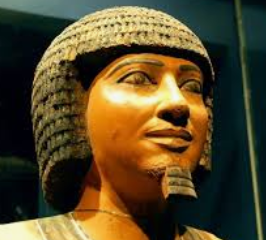
The pleasure is only for a little moment, and it [passes] like a dream, and a man at the end thereof finds death through knowing it.
▼
Source
source
Maxim no. 18. Translated by Sir E. A. Wallis Budge, Teaching Of Amenem Apt Son Of Kanekht (London: Martin Hopkinson and Company Ltd, 1924) p. 58
9 months 1 week ago
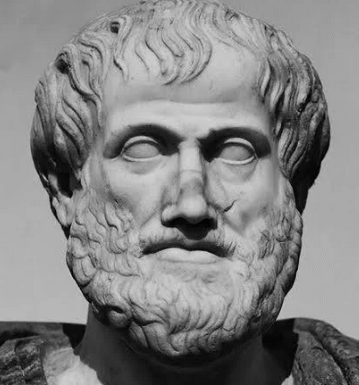
The bodies of which the world is composed are solids, and therefore have three dimensions. Now, three is the most perfect number, it is the first of numbers, for of one we do not speak as a number, of two we say both, but three is the first number of which we say all. Moreover, it has a beginning, a middle, and an end.
6 months 4 days ago
All human accomplishment has the same origin, identically. Imagination is a force of nature. Is this not enough to make a person full of ecstasy? Imagination, imagination, imagination. It converts to actual. It sustains, it alters, it redeems!
▼
Source
source
Henderson the Rain King (1959) [Viking/Penguin, 1984, ISBN 0-140-07269-1], ch. XVIII, p. 271

6 months 1 week ago
When the evolutionary process shifts from biology to software technology the body becomes the old hardware environment. The human body is now a probe, a laboratory for experiments.
▼
Source
source
(p. 180)

7 months 4 days ago
But this priviledge, is allayed by another; and that is, by the priviledge of Absurdity; to which no living creature is subject, but man only.
▼
Source
source
The First Part, Chapter 5, p. 20

8 months 3 weeks ago
In the country of the blind the one-eyed man is king.
▼
Source
source
Adagia (first published 1500, with numerous expanded editions through 1536), III, IV, 96
5 months 2 weeks ago
In a traditional reading eating the apple was the original sin; but, as Gnostics understood the story, the two primordial humans were right to eat the apple. The God that commanded them not to do so was not the true God but only a demiurge, a tyrannical underling exulting in its power, while the serpent came to free them from slavery. True, when they ate the apple Adam and Eve fell from grace. This was indeed the Fall of Man - a fall into the dim world of everyday consciousness. But the Fall need not be final. Having eaten its fill from the Tree of Knowledge, humankind can then rise into a state of conscious innocence. When this happens, Herr C. declares, it will be 'the final chapter in the history of the world'.
▼
Source
source
The Faith of Puppets: The Freedom of the Marionette (p. 8)
7 months 1 week ago
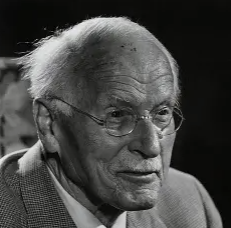
For lack of empirical data I have neither knowledge nor understanding of such forms of being, which are commonly called spiritual. ...Nevertheless, we have good reason to suppose that behind this veil there exists the uncomprehended absolute object which affects and influences us-and to suppose it even, or particularly, in the case of psychic phenomena about which no verifiable statements can be made.
▼
Source
source
p.351
7 months 4 days ago
Repent: for the kingdom of heaven is at hand.
▼
Source
source
4:17 (KJV)

7 months 1 week ago
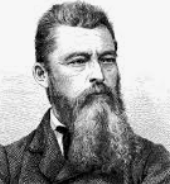
Every presentation of philosophy, whether oral or written, is to be taken and can only be taken in the sense of a means. Every system is only an expression or image of reason, and hence only an object of reason, an object which reason-a living power that procreates itself in new thinking beings-distinguishes from itself and posits as an object of criticism. Every system that is not recognized and appropriated as just a means, limits and warps the mind for it sets up the indirect and formal thought in the place of the direct, original and material thought.
▼
Source
source
Z. Hanfi, trans., in The Fiery Brook (1972), p. 67

8 months 1 week ago
It's a bit embarrassing to have been concerned with the human problem all one's life and find at the end that one has no more to offer by way of advice than 'Try to be a little kinder.'
▼
Source
source
As quoted in Huston Smith, "Aldous Huxley--A Tribute," The Psychedelic Review, (1964) Vol I, No.3, (Aldous Huxley Memorial Issue), p. 264-5
8 months 1 week ago
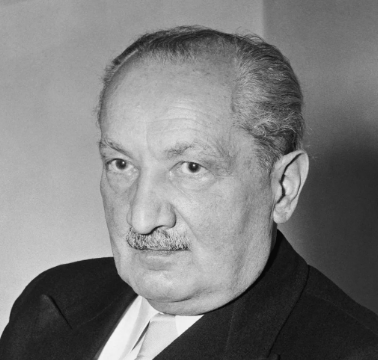
Philosophy will not be able to bring about a direct change of the present state of the world. This is true not only of philosophy but of all merely human meditations and endeavors. Only a god can still save us. I think the only possibility of salvation left to us is to prepare readiness, through thinking and poetry, for the appearance of the god or for the absence of the god during the decline; so that we do not, simply put, die meaningless deaths, but that when we decline, we decline in the face of the absent god.
8 months 1 week ago
The career a young man should choose should be one that is most consonant with our dignity, one that is based on ideas of whose truth we are wholly convinced, one that offers us largest scope in working for humanity and approaching that general goal towards which each profession offers only one of the means: the goal of perfection ... If he works only for himself he can become a famous scholar, a great sage, an excellent imaginative writer [Dichter], but never a perfected, a truly great man.
▼
Source
source
in Karl Marx and World Literature (1976) by S. S. Prawer, p. 2.
7 months 1 week ago
For the first time in the revolutionary movement of 1848, for the first time since 1793, a nation surrounded by superior counter-revolutionary forces dares to counter the cowardly counter-revolutionary fury by revolutionary passion, the terreur blanche by the terreur rouge. For the first time after a long period we meet with a truly revolutionary figure, a man who in the name of his people dares to accept the challenge of a desperate struggle, who for his nation is Danton and Carnot in one person - Lajos Kossuth.
▼
Source
source
The Magyar Struggle in Neue Rheinische Zeitung (13 January 1849).
8 months 3 weeks ago
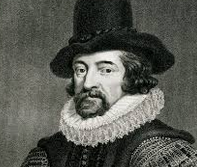
Nay, number (itself) in armies, importeth not much, where the people is of weak courage; for (as Virgil saith) it never troubles the wolf how many the sheep be.
▼
Source
source
Essays or Counsels Civil and Moral (1597), XXIX: "Of the True Greatness of Kingdoms and Estates."

6 months 3 weeks ago
Our whole civilization, our entire culture is concentrated in the mad demand for the most perfected weapons of slaughter. Ammunition! Ammunition! O, Lord, thou who rulest heaven and earth, thou God of love, of mercy and of justice, provide us with enough ammunition to destroy our enemy. Such is the prayer which is ascending daily to the Christian heaven.
CivilSimian.com created by AxiomaticPanic, CivilSimian, Kalokagathia