


5 months 2 weeks ago
...the relatively unconscious man driven by his natural impulses because, imprisoned in his familiar world, he clings to the commonplace, the obvious, the probable, the collectively valid, using for his motto: 'Thinking is difficult. Therefore, let the herd pronounce judgement.'
▼
Source
source
Frequently misquoted as "Thinking is difficult, that's why most people judge" and close variants. Flying Saucers: A Modern Myth of Things Seen in the Sky. (1959), C.G. Jung, R.F.C. Hull (translator) (Princeton Press, 1979, ISBN 9780691018225

5 months 2 weeks ago
A harmonious being cannot believe in God. Saints, criminals, and paupers have launched him, making him available to all unhappy people.

4 months 3 weeks ago
In the spiritual realm nothing is indifferent: what is not useful is harmful.
▼
Source
source
VII
2 months 2 weeks ago
Religious beauty is superior to ideal beauty, since it is the ideal of the ideal.
▼
Source
source
p. 287
7 months 3 weeks ago
I will not by suppression, or by performing tricks, try to produce the impression that the ordinary Christianity in the land and the Christianity of the New Testament are alike. "What Do I Want?"

5 months 4 weeks ago
It is proof of a base and low mind for one to wish to think with the masses or majority, merely because the majority is the majority. Truth does not change because it is, or is not, believed by a majority of the people.
▼
Source
source
Included as a quotation in The Great Quotations (1977) by George Seldes, p. 35

3 months 1 week ago
Burns's Brother Gilbert, a man of much sense and worth, has told me that Robert, in his young days, in spite of their hardship, was usually the gayest of speech; a fellow of infinite frolic, laughter, sense and heart; far pleasanter to hear there, stript cutting peats in the bog, or such like, than he ever afterwards knew him. I can well believe it. This basis of mirth, a primal element of sunshine and joyfulness, coupled with his other deep and earnest qualities, is one of the most attractive characteristics of Burns. A large fund of Hope dwells in him; spite of his tragical history, he is not a mourning man. He shakes his sorrows gallantly aside; bounds forth victorious over them.

5 months 1 week ago
Faith makes us live by showing us that life, although it is dependent upon reason, has its well spring and source of power elsewhere, in something supernatural and miraculous. Cournot the mathematician, a man of singularly well-balanced and scientifically equipped mind has said that it is this tendency towards the supernatural and miraculous that gives life, and that when it is lacking, all the speculations of reason lead to nothing but affliction of the spirit. ...And in truth we wish to live.

6 months 1 week ago
There are many who know many things, yet are lacking in wisdom.
5 months 4 days ago
Whatever is merely positive is lifeless. Negativity is essential to vitality.

6 months 3 weeks ago
Although usury is itself a form of credit in its bourgeoisified form, the form adapted to capital, in its pre-bourgeois form it is rather the expression of the lack of credit.
▼
Source
source
Notebook V, The Chapter on Capital, p. 455.

5 months 2 weeks ago
O woman, great is thy faith: be it unto thee even as thou wilt.
▼
Source
source
15:28 (KJV)
3 months 1 week ago
By awakening the Heroic that slumbers in every heart, can any Religion gain followers.
4 months 5 days ago
Being a planetary citizen does not need space travel. It means being conscious that we are part of the universe and of the earth. The most fundamental law is to recognise that we share the planet with other beings, and that we have a duty to care for our common home.

6 months 2 weeks ago
We will freedom for freedom's sake, in and through particular circumstances. And in thus willing freedom, we discover that it depends entirely upon the freedom of others and that the freedom of others depends upon our own. Obviously, freedom as the definition of a man does not depend upon others, but as soon as there is a commitment, I am obliged to will the liberty of others at the same time as my own. I cannot make liberty my aim unless I make that of others equally my aim.
▼
Source
source
p. 52
2 months 3 weeks ago
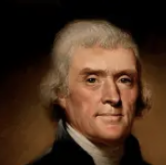
A lively and lasting sense of filial duty is more effectually impressed on the mind of a son or daughter by reading King Lear, than by all the dry volumes of ethics, and divinity, that ever were written.
▼
Source
source
Letter to Robert Skipwith (3 August 1771) ; also in The Writings of Thomas Jefferson (19 Vols., 1905) edited by Andrew A. Lipscomb and Albert Ellery Bergh, Vol. 4, p. 239
2 months 3 weeks ago
Compulsion in religion is distinguished peculiarly from compulsion in every other thing. I may grow rich by art I am compelled to follow, I may recover health by medicines I am compelled to take against my own judgment, but I cannot be saved by a worship I disbelieve & abhor.
▼
Source
source
Notes on Religion (October 1776), published in The Works of Thomas Jefferson in Twelve Volumes, Federal Edition, Paul Leicester Ford, ed., New York: G. P. Putnam's Sons, 1904, Vol. 2, p. 266
5 months 2 weeks ago
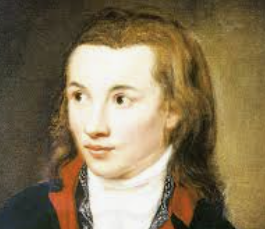
The spirit of Poesy is the morning light, which makes the Statue of Memnon sound.
5 months 1 week ago
To all this, someone is sure to object that life ought to subject itself to reason, to which we will reply that nobody ought to do what he is unable to do, and life cannot subject itself to reason. "Ought, therefore can," some Kantian will retort. To which we shall demur: "Cannot, therefore ought not." And life cannot submit itself to reason, because the end of life is living and not understanding.

5 months 6 days ago
Nature is a structure of evolving processes. The reality is the process.
▼
Source
source
Ch. 4: "The Eighteenth Century", p. 102
7 months 1 week ago
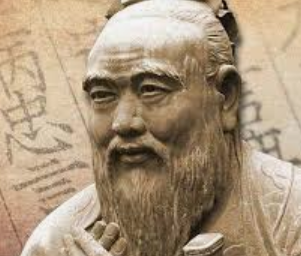
Chi Wan thought thrice, and then acted. When the Master was informed of it, he said, "Twice may do."

4 months 2 weeks ago
Language is a sense, like touch.
▼
Source
source
(p. 271)

6 months 3 weeks ago
When a man acts in ways that annoy us we wish to think him wicked, and we refuse to face the fact that his annoying behaviour is a result of antecedent causes which, if you follow them long enough, will take you beyond the moment of his birth and therefore to events for which he cannot be held responsible by any stretch of imagination.
▼
Source
source
"The Doctrine of Free Will"
7 months 3 weeks ago
After all, in the poets love has its priests, and sometimes one hears a voice which knows how to defend it; but of faith one hears never a word. Who speaks in honor of this passion? Philosophy goes further. Theology sits rouged at the window and courts its favor, offering to sell her charms to philosophy. it is supposed to be difficult to understand Hegel, but to understand Abraham is a trifle. To go beyond Hegel's is a miracle, but to get beyond Abraham is the easiest thing of all.
3 months 2 days ago
The introduction of numbers as coordinates by reference to the particular division scheme of the open one dimensional continuum is an act of violence whose only practical vindication is the special calculatory manageability of the ordinary number continuum with its four basic operations. The topological skeleton determines the connectivity of the manifold in the large.
▼
Source
source
Philosophy of Mathematics and Natural Science (1949), p. 90
2 months 3 weeks ago
Blessed are those eyes that have seen more water than any man! Blessed be that haughty mind that aimed at the greatest hope! May you be blessed who row the current your life longand now with dry unfreshened lips descend to Hadesto find the hidden deathless springs and slake your thirst! My son, it's death who keeps and pours the deathless waters.
▼
Source
source
Voice of the Nile, from Odysseus' story, Book VIII, line 1290 (the first line is taken from an Egyptian hieroglyph.)

6 months 3 weeks ago
Both of us victims of the same twentieth-century plague. Not the Black Death, this time; the Grey Life.
7 months 3 weeks ago
With all great deceivers there is a noteworthy occurrence to which they owe their power. In the actual act of deception... they are overcome by belief in themselves. It is this which then speaks so miraculously and compellingly to those who surround them.
5 months 2 weeks ago
Every civilized human being, whatever his conscious development, is still an archaic man at the deeper levels of his psyche. Just as the human body connects us with the mammals and displays numerous relics of earlier evolutionary stages going back to even the reptilian age, so the human psyche is likewise a product of evolution which, when followed up to its origins, show countless archaic traits.
▼
Source
source
p. 126
2 months 3 weeks ago
The spirit of resistance to government is so valuable on certain occasions, that I wish it to be always kept alive. It will often be exercised when wrong, but better so than not to be exercised at all. I like a little rebellion now and then. It is like a storm in the atmosphere.
▼
Source
source
Letter to Abigail Smith Adams from Paris while a Minister to France (22 February 1787), referring to Shay's Rebellion. "Jefferson's Service to the New Nation," Library of Congress
3 months 2 weeks ago
The newspaper is in all its literalness the bible of democracy, the book out of which a people determines its conduct.
▼
Source
source
What Modern Liberty Means, p. 47. Essay first published in The Atlantic (November 1919).
5 months 2 weeks ago
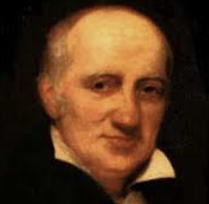
I am myself deeply convinced that imagination is the basis of a sound reason. It is by dint of feeling, and of putting ourselves in fancy into the place of other men, that we can learn how we ought to treat them, and be moved to treat them as we ought. Man, to express the thing in familiar language, is a complex being, made up of a head and a heart. So far as we are employed in heaping up facts and in reasoning upon them merely, we are a species of machine; it is our impulses and our sentiments, that are the glory of our nature.
▼
Source
source
Of Religion (1818), quoted in Political and Philosophical Writings of William Godwin, Volume 7: Religious Writings, ed. Mark Philp
6 months 3 weeks ago
Suppose atomic bombs had reduced the population of the world to one brother and one sister, should they let the human race die out? I do not know the answer, but I do not think it can be in the affirmative merely on the ground that incest is wicked.
▼
Source
source
p. 47

5 months 1 week ago
I have never said that human society ought to be aristocratic, but a great deal more than that. What I have said, and still believe with ever-increasing conviction, is that human society is always, whether it will or no, aristocratic by its very essence, to the extreme that it is a society in the measure that it is aristocratic, and ceases to be such when it ceases to be aristocratic. Of course I am speaking now of society and not of the State.
▼
Source
source
Chap.II: The Rise Of The Historic Level
5 months 3 weeks ago
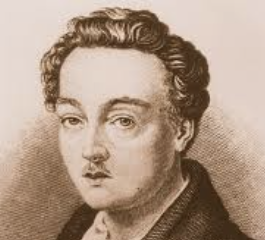
Whoever finishes a revolution only halfway, digs his own grave.
▼
Source
source
Act I.
7 months 1 week ago
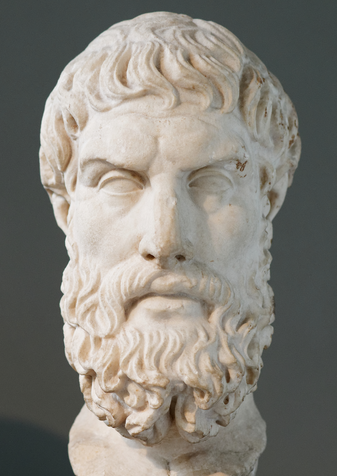
Is God willing to prevent evil, but not able? Then he is not omnipotent. Is he able, but not willing? Then he is malevolent. Is he both able and willing? Then whence cometh evil? Is he neither able nor willing? Then why call him God?
4 months 2 weeks ago
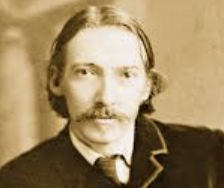
It is better to lose health like a spendthrift than to waste it like a miser. It is better to live and be done with it, than to die daily in the sick-room.
▼
Source
source
315

4 months 2 weeks ago
4 ways: Agnosticism, Relativism, Amorality, Morality.
1) I don't know. 2) Everybody is different. 3) Do whatever you can. 4) Do what you should.
6 months 3 weeks ago
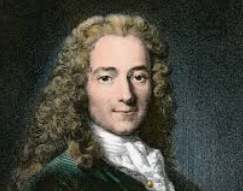
It requires twenty years for a man to rise from the vegetable state in which he is within his mother's womb, and from the pure animal state which is the lot of his early childhood, to the state when the maturity of reason begins to appear. It has required thirty centuries to learn a little about his structure. It would need eternity to learn something about his soul. It takes an instant to kill him.
▼
Source
source
"Man: General Reflection on Man", 1771

6 months 3 weeks ago
That the outer man is a picture of the inner, and the face an expression and revelation of the whole character, is a presumption likely enough in itself, and therefore a safe one to go on; borne out as it is by the fact that people are always anxious to see anyone who has made himself famous .... Photography ... offers the most complete satisfaction of our curiosity.
▼
Source
source
Vol. 2, Ch. 29, § 377
4 months 3 weeks ago
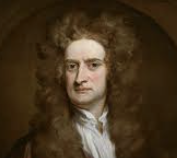
I can calculate the motions of erratic bodies, but not the madness of a multitude.
▼
Source
source
As quoted in "Mammon and the Money Market", in The Church of England Quarterly Review (1850), p. 142
3 months 1 week ago
Why, reader, truly, if they asked thee or me, Which way we meant to vote?-were it not our likeliest answer: Neither way! I, as a Tenpound Franchiser, will receive no bribe; but also I will not vote for either of these men. Neither Rigmarole nor Dolittle shall, by furtherance of mine, go and make laws for this country. I will have no hand in such a mission. How dare I! If other men cannot be got in England, a totally other sort of men, different as light is from dark, as star-fire is from street-mud, what is the use of votings, or of Parliaments in England?
7 months 6 days ago
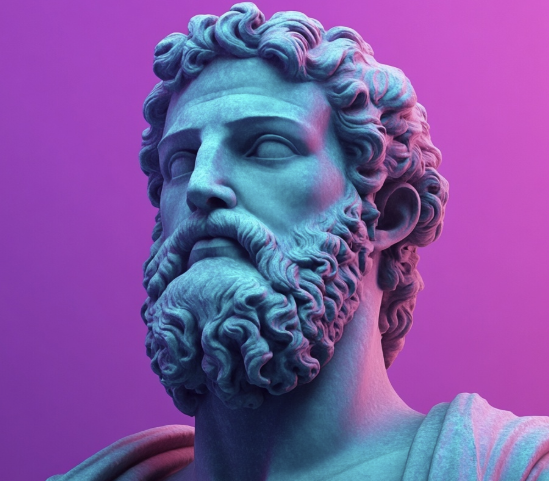
Show me someone who is ill and yet happy, in danger and yet happy, dying and yet happy, exiled and yet happy. Show me such a person; by the gods, how greatly I long to see a Stoic!
▼
Source
source
Book II, ch. 19, 24.
2 months 1 week ago
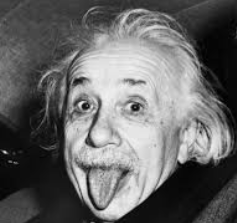
It is, therefore, quite natural that the churches have always fought against science and have persecuted its supporters. But, on the other hand, I assert that the cosmic religious experience is the strongest and noblest driving force behind scientific research. No one who does not appreciate the terrific exertions, and, above all, the devotion without which pioneer creations in scientific thought cannot come into being, can judge the strength of the feeling out of which alone such work, turned away as it is from immediate practical life, can grow. What a deep faith in the rationality of the structure of the world and what a longing to understand even a small glimpse of the reason revealed in the world there must have been in Kepler and Newton to enable them to unravel the mechanism of the heavens in long years of lonely work! Any one who only knows scientific research in its practical applications may easily come to a wrong interpretation of the state of mind of the men who, surrounded by skeptical contemporaries, have shown the way to kindred spirits scattered over all countries in all centuries. Only those who have dedicated their lives to similar ends can have a living conception of the inspiration which gave these men the power to remain loyal to their purpose in spite of countless failures. It is the cosmic religious sense which grants this power. A contemporary has rightly said that the only deeply religious people of our largely materialistic age are the earnest men of research.
7 months 6 days ago
What is the first business of one who practices philosophy? To get rid of self-conceit. For it is impossible for anyone to begin to learn that which he thinks he already knows.
▼
Source
source
Book II, ch. 17, 1.
5 months 3 days ago
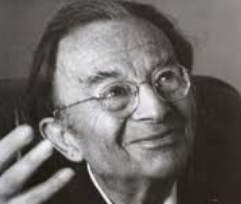
Man's main task in life is to give birth to himself, to become what he potentially is. The most important product of his effort is his own personality.
▼
Source
source
Ch. 4 "Problems of Humanistic Ethics"

5 months 2 weeks ago
Non-operational ideas are non-behavioral and subversive. The movement of thought is stopped at barriers which appear as the limits of Reason itself.
▼
Source
source
p. 14

6 months 3 weeks ago
The book written against fame and learning has the author's name on the title-page.
▼
Source
source
1857

2 months 2 weeks ago
Waste not the remnant of thy life in those imaginations touching other folk, whereby thou contributest not to the common weal.
▼
Source
source
III, 4
CivilSimian.com created by AxiomaticPanic, CivilSimian, Kalokagathia