

4 months 1 week ago
Science can only be comprehended epistemologically, which means as one category of possible knowledge, as long as knowledge is not equated either effusively with the absolute knowledge of a great philosophy or blindly with scientistic self-understanding of the actual business of research.
▼
Source
source
p. 4
2 months 3 days ago
I hold agitation to be essential, not only to the obtaining of good and just measures, but to the existence of a free Government itself. If you choose to adopt the principle of Bishop Horsley, that the people have nothing to do with the laws but to obey them, then, indeed, you may deprecate agitation; but, while we live in a free country, and under a free Government, your deprecation is vain and untenable... I say that the slave-trade would never have been abolished without agitation. I say that slavery would never have been abolished without agitation... What is agitation when it is examined, but the mode in which the people in the great outer assembly debate?
▼
Source
source
Speech in the House of Commons, 29 January 1840

4 months 1 week ago
The Christian is in a different position from other people who are trying to be good. They hope, by being good, to please God if there is one; or-if they think there is not-at least they hope to deserve approval from good men. But the Christian thinks any good he does comes from the Christ-life inside him. He does not think God will love us because we are good, but that God will make us good because He loves us; just as the roof of a greenhouse does not attract the sun because it is bright, but becomes bright because the sun shines on it.
▼
Source
source
Book II, Chapter 5, "The Practical Conclusion"
4 months 3 weeks ago
For all knowledge and wonder (which is the seed of knowledge) is an impression of pleasure in itself.
▼
Source
source
Book I, i, 3

3 months 2 weeks ago
In America a woman loses her independence for ever in the bonds of matrimony. While there is less constraint on girls there than anywhere else, a wife submits to stricter obligations. For the former, her father's house is a home of freedom and pleasure; for the latter, her husband's is almost a cloister.
▼
Source
source
Book Three, Chapter X.
4 months 1 week ago
"They would say," he answered, "that you do not fail in obedience through lack of love, but have lost love because you never attempted obedience."
▼
Source
source
Ch. 7 : The Pendragon, section 2

4 months 3 weeks ago
Let all the 'free-will' in the world do all it can with all its strength; it will never give rise to a single instance of ability to avoid being hardened if God does not give the Spirit, or of meriting mercy if it is left to its own strength.
▼
Source
source
p. 202
1 week 4 days ago
Love that only which happens to thee and is spun with the thread of thy destiny. For what is more suitable?
▼
Source
source
VII, 57

3 months 1 week ago
My Father is glorified in this, that you keep bearing much fruit and prove yourselves my disciples. Just as the Father has loved me, so I have loved you; remain in my love. If you observe my commandments, you will remain in my love, just as I have observed the commandments of the Father and remain in his love. “These things I have spoken to you, so that my joy may be in you and your joy may be made full. This is my commandment, that you love one another just as I have loved you. No one has love greater than this, that someone should surrender his life in behalf of his friends. You are my friends if you do what I am commanding you. I no longer call you slaves, because a slave does not know what his master does. But I have called you friends, because I have made known to you all the things I have heard from my Father.
▼
Source
source
15:8-15, New World Translation of the Holy Scriptures

4 months 2 weeks ago
The second doctrine of the Perennial Philosophy - that it is possible to know the Divine Ground by a direct intuition higher than discursive reasoning - is to be found in all the great religions of the world. A philosopher who is content merely to know about the ultimate Reality - theoretically and by hearsay - is compared by Buddha to a herdsman of other men's cows. Mohammed uses an even homelier barnyard metaphor. For him the philosopher who has not realized his metaphysics is just an ass bearing a load of books. Christian, Hindu, Taoist teachers wrote no less emphatically about the absurd pretensions of mere learning and analytic reasoning.
1 month 1 week ago
Agricultural association, which in all ages has been deemed impossible, would produce results of unbounded magnificence the rigorous demonstrations, the mathematical calculations by which these results will be verified, will not, however, prevent the picture of the future harmony and happiness which they present from repelling minds habituated to the miseries and wretchedness of our present civilization. The Theory of Social Organization.
▼
Source
source
Harmonian Man: Selected Writings of Charles Fourier, p. 5.
2 weeks ago
After World War II, we hoped the world might be united for the sake of peacemaking. Now the world is being "globalized" for the sake of trade and the so-called free market - for the sake, that is, of plundering the world for cheap labor, cheap energy, and cheap materials. How nations, let alone regions and communities, are to shape and protect themselves within this "global economy" is far from clear.

4 months 2 weeks ago
All the thoughts of a turtle are turtle.
▼
Source
source
1855

3 months 1 week ago
It is ...easy to be certain. One has only to be sufficiently vague.
▼
Source
source
Vol. IV, par. 237
3 weeks 4 days ago
When a man no longer confuses himself with the definition of himself that others have given him, he is at once universal and unique. He is universal by virtue of the inseparability of his organism from the cosmos. He is unique in that he is just this organism and not any stereotype of role, class, or identity assumed for the convenience of social communication.
▼
Source
source
p. 9
4 months 2 weeks ago
Our moral virtues benefit mainly other people; intellectual virtues, on the other hand, benefit primarily ourselves; therefore the former make us universally popular, the latter unpopular.
4 weeks 1 day ago
Destruction perfects that which is good; for the good cannot appear on account of that which conceals it. The good is least good whilst it is thus concealed. The concealment must be removed so that the good may be able freely to appear in its own brightness. For example, the mountain, the sand, the earth, or the stone in which a metal has grown is such a concealment. Each one of the visible metals is a concealment of the other six metals.
▼
Source
source
Hermetic and Alchemical Writings (1894), edited by Arthur Edward Waite; Coelum Philosophorum or Book of Vexations, originally 1543

4 months 2 weeks ago
Is there any knowledge in the world which is so certain that no reasonable man could doubt it?
2 months 3 weeks ago
If you are going to build something in the air it is always better to build castles than houses of cards.
▼
Source
source
F 39
1 month 3 weeks ago
I think television has betrayed the meaning of democratic speech, adding visual chaos to the confusion of voices. What role does silence have in all this noise?
▼
Source
source
"Television"
5 months ago
Though absent from our eyes, Christ our Head is bound to us by love. Since the whole Christ is Head and body, let us so listen to the voice of the Head that we may also hear the body speak.He no more wished to speak alone than He wished to exist alone, since He says: Behold, I am with you all days, unto the consummation of the world (Matt. 28:20). If He is with us, then He speaks in us, He speaks of us, and He speaks through us; and we too speak in Him.
▼
Source
source
pp. 420-421
3 weeks 4 days ago
Now I'm sure that most of you know the old story about the astronaut, who went far out into space, and was asked on his return whether he'd been to heaven and seen God. And he said: "Yes". And so they said to him: "Well, what about God?" And he said: "She's Black".
▼
Source
source
The Nature of God

3 months 2 weeks ago
...out of the tomb of the murdered Monarchy in France, has arisen a vast, tremendous, unformed spectre, in a far more terrific guise than any which ever yet have overpowered the imagination and subdued the fortitude of man.
▼
Source
source
p. 7
2 months 1 week ago
When Fortune is on our side, popular favor bears her company.
▼
Source
source
Maxim 275

4 months 2 weeks ago
The Hudson's Bay Company, before their misfortunes in the late war, had been much more fortunate than the Royal African Company.
▼
Source
source
Chapter I, Part III, p. 806.

4 months 2 weeks ago
That virtue we appreciate is as much ours as another's. We see so much only as we possess.
▼
Source
source
June 22, 1839

4 months 3 weeks ago
The most disadvantageous peace is better than the most just war.
▼
Source
source
Adagia, 1508
4 months 3 weeks ago
Rules necessary for definitions. Not to leave any terms at all obscure or ambiguous without definition; Not to employ in definitions any but terms perfectly known or already explained.
3 weeks 3 days ago
Everyone explains that discussions about Socialism are exceedingly obscure; this obscurity is due, to a large extent, to the fact that contemporary socialists use a terminology which no longer corresponds to their ideas.
▼
Source
source
p. 47
1 week 4 days ago
Look to the essence of a thing, whether it be a point of doctrine, of practice, or of interpretation.
▼
Source
source
VIII, 22
4 months 3 weeks ago
The entire method consists in the order and arrangement of the things to which the mind's eye must turn so that we can discover some truth.
▼
Source
source
Rules for the Direction of the Mind: X.379 As quoted in Clarke, Desmond M. (2006). Descartes : a Biography. Cambridge Press. p. 67. ISBN 978-0-521-82301-2.
4 months 2 weeks ago
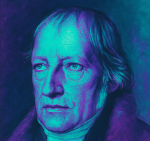
The great thing however is, in the show of the temporal and the transient to recognize the substance which is immanent and the eternal which is present. For the work of Reason (which is synonymous with the Idea) when considered in its own actuality, is to simultaneously enter external existence and emerge with an infinite wealth of forms, phenomena and phases - a multiplicity that envelops its essential rational kernel with a motley outer rind with which our ordinary consciousness is earliest at home. It is this rind that the Concept must penetrate before Reason can find its own inward pulse and feel it still beating even in the outward phases. But this infinite variety of circumstances which is formed in this element of externality by the light of the rational essence shining in it - all this infinite material, with its regulatory laws - is not the object of philosophy....To comprehend what is, is the task of philosophy: and what is is Reason.
▼
Source
source
Works, VII, 17.
3 months 3 weeks ago
That there is no such thing as what philosophers call material substance, I am seriously persuaded: but if I were made to see any thing absurd or skeptical in this, I should then have the same reason to renounce this, that I imagine I have now to reject the contrary opinion.
▼
Source
source
Philonous to Hylas
3 months 2 weeks ago
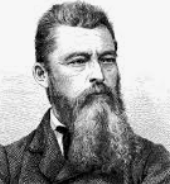
Christianity set itself the goal of fulfilling man's unattainable desires, but for that very reason ignored his attainable desires. By promising man eternal life, it deprived him of temporal life, by teaching him to trust in God's help it took away his trust in his own powers; by giving him faith in a better life in heaven, it destroyed his faith in a better life on earth and his striving to attain such a life. Christianity gave man what his imagination desires, but for that very reason failed to give him what he really and truly desires.
▼
Source
source
Lecture XXX, Atheism alone a Positive View
2 weeks 1 day ago
"Fire is the first and final mask of my God. We dance and weep between two enormous pyres." Our thoughts and our bodies flash and glitter with reflected light. Between the two pyres I stand serenely, my brain unshaken amid the vertigo, and I say: "Time is most short and space most narrow between these two pyres, the rhythm of this life is most sluggish, and I have no time, nor a place to dance in. I cannot wait." Then all at once the rhythm of the earth becomes a vertigo, time disappears, the moment whirls, becomes eternity, and every point in space - insect or star or idea - turns into dance.

4 weeks 1 day ago
Why does God afflict the best of men with ill-health, or sorrow, or other troubles? Because in the army the most hazardous services are assigned to the bravest soldiers: a general sends his choicest troops to attack the enemy in a midnight ambuscade, to reconnoitre his line of march, or to drive the hostile garrisons from their strong places. No one of these men says as he begins his march, " The general has dealt hardly with me," but "He has judged well of me."
▼
Source
source
De Providentia (On Providence), 4.8, translated by Aubrey Stewart
3 months 6 days ago
There is no substitute for the comfort supplied by the utterly taken-for-granted relationship.
▼
Source
source
A Severed Head (1961); 1976, p. 181.

4 months 2 weeks ago
[W]e hold, that the moral obligation of providing for old age, helpless infancy, and poverty, is far superior to that of supplying the invented wants of courtly extravagance, ambition and intrigue.
▼
Source
source
Address and Declaration at a Select Meeting of the Friends of Universal Peace and Liberty (August 20, 1791) p. 3
4 months 2 weeks ago
How we hate this solemn Ego that accompanies the learned, like a double, wherever he goes.
▼
Source
source
1839

1 month 1 week ago
To rule the imperial population, behold our vocation.
▼
Source
source
94

3 months ago
Action is the pointer which shows the balance. We must not touch the pointer but the weight.
▼
Source
source
p. 97

2 months 1 week ago
We begin again to structure the primordial feelings...from which 3000 years of literacy divorced us. We begin again to live a myth.
▼
Source
source
(p. 17)

3 months 1 week ago
The only interesting philosophers are the ones who have stopped thinking and have begun to search for happiness.
4 months 2 weeks ago
All true metaphysics is taken from the essential nature of the thinking faculty itself, and therefore in nowise invented, since it is not borrowed from experience, but contains the pure operations of thought, that is, conceptions and principles à priori, which the manifold of empirical presentations first of all brings into legitimate connection, by which it can become empirical knowledge, i.e. experience. ...mathematical physicists were thus quite unable to dispense with such metaphysical principles...
▼
Source
source
Preface, Tr. Bax, 1883

4 months 2 weeks ago
Define your terms, you will permit me again to say, or we shall never understand one another.
▼
Source
source
"Miracles", 1764

2 months 2 weeks ago
Love hinders death. Love is life. All, everything that I understand, I understand only because I love. Everything is, everything exists, only because I love. Everything is united by it alone. Love is God, and to die means that I, a particle of love, shall return to the general and eternal source.
▼
Source
source
Thoughts of Prince Andrew Bk XII, Ch. 16

3 months 2 weeks ago
We are far more liable to catch the vices than the virtues of our associates.
▼
Source
source
As quoted in Thesaurus of Epigrams: A New Classified Collection of Witty Remarks, Bon Mots and Toasts (1942) by Edmund Fuller

2 weeks ago
As you say of yourself, I too am an Epicurian. I consider the genuine (not the imputed) doctrines of Epicurus as containing everything rational in moral philosophy which Greece and Rome have left us.
▼
Source
source
Letter to William Short
4 months 4 weeks ago
If we are not stupid or insincere when we say that the good or ill of man lies within his own will, and that all beside is nothing to us, why are we still troubled?
▼
Source
source
Book I, ch. 25, § 1.

1 month 3 weeks ago
In a traditional reading eating the apple was the original sin; but, as Gnostics understood the story, the two primordial humans were right to eat the apple. The God that commanded them not to do so was not the true God but only a demiurge, a tyrannical underling exulting in its power, while the serpent came to free them from slavery. True, when they ate the apple Adam and Eve fell from grace. This was indeed the Fall of Man - a fall into the dim world of everyday consciousness. But the Fall need not be final. Having eaten its fill from the Tree of Knowledge, humankind can then rise into a state of conscious innocence. When this happens, Herr C. declares, it will be 'the final chapter in the history of the world'.
▼
Source
source
The Faith of Puppets: The Freedom of the Marionette (p. 8)
CivilSimian.com created by AxiomaticPanic, CivilSimian, Kalokagathia