

1 month 1 week ago
Where all think alike, no one thinks very much.
▼
Source
source
Ch. IV: "The Line of Least Resistance", p. 51

2 months 2 weeks ago
I wish we could derive the rest of the phenomena of nature by the same kind of reasoning from mechanical principles; for I am induced by many reasons to suspect that they may all depend upon certain forces by which the particles of bodies, by some causes hitherto unknown, are either mutually impelled towards each other, and cohere in regular figures, or are repelled and recede from each other; which forces being unknown, philosophers have hitherto attempted the search of nature in vain; but I hope the principles here laid down will afford some light either to that or some truer method of philosophy.
▼
Source
source
Preface
3 months ago
The respect inspired by the link between man and the reality alien to this world can make itself evident to that part of man which belongs to the reality of this world. The reality of this world is necessity. The part of man which is in this world is the part which is in bondage to necessity and subject to the misery of need. The one possibility of indirect expression of respect for the human being is offered by men's needs, the needs of the soul and of the body, in this world.
2 months 3 weeks ago
The philosophy of physics is continuous with physics itself. Just as certain issues in the Foundations of Mathematics have been discussed by both mathematicians and by philosophers of mathematics, so certain issues in the philosophy of physics have been discussed by both physicists and by philosophers of physics. And just as there are issues of a more epistemological kind that tend to concern philosophers of mathematics more than they do working mathematicians, so there are issues that concern philosophers of physics more than they do working physicists.
▼
Source
source
Philosophy of physics
4 days ago
I claim credit for nothing. Everything is determined, the beginning as well as the end, by forces over which we have no control. It is determined for the insect as well as for the star. Human beings, vegetables or cosmic dust, we all dance to a mysterious tune, intoned in the distance by an invisible player.
3 weeks 4 days ago
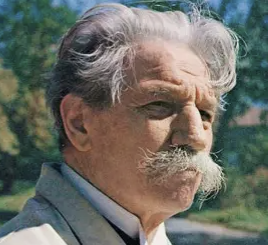
Profound love demands a deep conception and out of this develops reverence for the mystery of life. It brings us close to all beings, to the poorest and smallest as well as all others.
4 months 2 weeks ago
In early youth, as we contemplate our coming life, we are like children in a theatre before the curtain is raised, sitting there in high spirits and eagerly waiting for the play to begin. It is a blessing that we do not know what is really going to happen. Could we foresee it, there are times when children might seem like innocent prisoners, condemned, not to death, but to life, and as yet all unconscious of what their sentence means.
▼
Source
source
"On the Sufferings of the World"

1 month 5 days ago
Every candid eye, I think, will read the Koran far otherwise than so. It is the confused ferment of a great rude human soul; rude, untutored, that cannot even read; but fervent, earnest, struggling vehemently to utter itself in words. With a kind of breathless intensity he strives to utter himself; the thoughts crowd on him pell-mell: for very multitude of things to say, he can get nothing said. The meaning that is in him shapes itself into no form of composition, is stated in no sequence, method, or coherence;-they are not shaped at all, these thoughts of his; flung out unshaped, as they struggle and tumble there, in their chaotic inarticulate state.


4 months 1 week ago
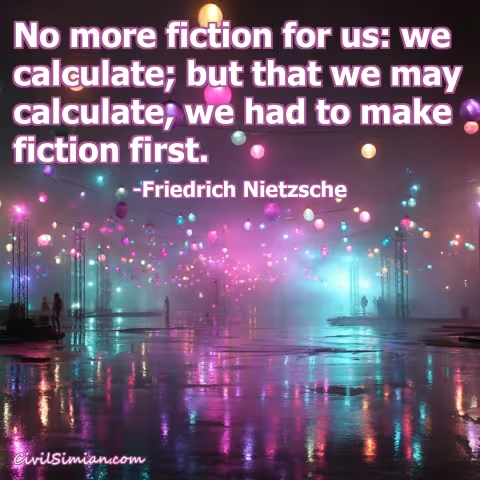
The world is all that is the case.
▼
Source
source
(1) Original German: Die Welt ist alles, was der Fall ist.


3 months 2 weeks ago
With a higher moral nature will come a restriction on the multiplication of the inferior.
▼
Source
source
The Principles of Biology, Vol. II (1867), Part VI: Laws of Multiplication, ch. 8: Human Population in the Future
4 months 3 weeks ago
I want to be seen here in my simple, natural, ordinary fashion, without straining or artifice; for it is myself that I portray...I am myself the matter of my book. To the Reader
▼
Source
source
tr. Donald M. Frame, 1957
2 months 3 days ago
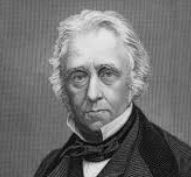
If...we look at the essential characteristics of the Whig and the Tory, we may consider each of them as the representative of a great principle, essential to the welfare of nations. One is, in an especial manner, the guardian of liberty, and the other, of order. One is the moving power, and the other the steadying power of the state. One is the sail, without which society would make no progress, the other the ballast, without which there would be small safety in a tempest.
▼
Source
source
The Earl of Chatham', The Edinburgh Review (October 1844), quoted in T. B. Macaulay, Critical and Historical Essays Contributed to The Edinburgh Review: A New Edition (1852), p. 725
4 months 1 week ago
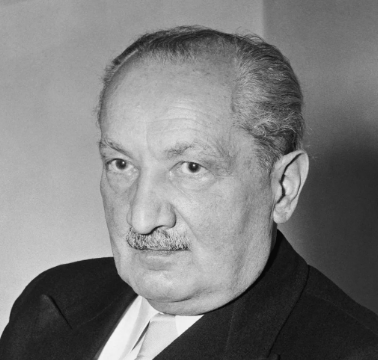
Kant speaks of the "thing-in-itself" (Ding an sich) in order to distinguish it from the "thing-for-us" (Ding fur uns), that is, as a "phenomenon." A thing-in-itself is that which is not approachable through experience as are the rocks, plants, and animals. Every thing-for-us is as a thing and also a thing-in-itself, which means that it is recognized absolutely withing the absolute knowledge of God. But not every thing-in-itself is also a thing-for-us: God, for instance, is a thing-in-itself, as Kant uses the word, according to the meaning of Christian theology.
▼
Source
source
p. 5

3 months 1 week ago
Go into the village over against you, and straightway ye shall find an ass tied, and a colt with her: loose them, and bring them unto me. And if any man say ought unto you, ye shall say, The Lord hath need of them; and straightway he will send them. All this was done, that it might be fulfilled which was spoken by the prophet, saying, Tell ye the daughter of Sion, Behold, thy King cometh unto thee, meek, and sitting upon an ass, and a colt the foal of an ass.
▼
Source
source
21:2-5 (KJV)
2 months 2 weeks ago
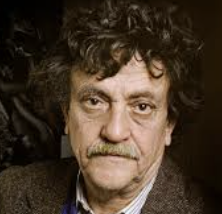
High school is closer to the core of the American experience than anything else I can think of.
▼
Source
source
Introduction to Our Time Is Now: Notes From the High School Underground, John Birmingham, ed.

4 months 1 week ago
We are not necessarily doubting that God will do the best for us; we are wondering how painful the best will turn out to be.
▼
Source
source
Letters of C. S. Lewis (29 April 1959), para. 1, p. 285 - as reported in The Quotable Lewis (1989), p. 469

3 months 2 weeks ago
Difficulty is a severe instructor, set over us by the supreme ordinance of a parental Guardian and Legislator, who knows us better than we know ourselves, as he loves us better too. Pater ipse colendi haud facilem esse viam voluit. He that wrestles with us strengthens our nerves, and sharpens our skill. Our antagonist is our helper.
▼
Source
source
Volume iii, p. 453
2 weeks ago
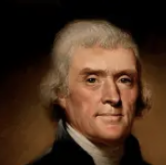
The naturalists, you know, distribute the history of nature into three kingdoms or departments: zoology, botany, mineralogy. Ideology, or mind, however, occupies so much space in the field of science, that we might perhaps erect it into a fourth kingdom or department. But inasmuch as it makes a part of the animal construction only, it would be more proper to subdivide zoology into physical and moral.
▼
Source
source
Thomas Jefferson, Letter (24 Mar 1824) to Mr. Woodward. Collected in The Writings of Thomas Jefferson: Correspondence (1854), 339.
2 months 1 week ago
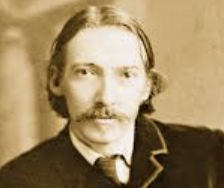
Our business in this world is not to succeed, but to continue to fail, in good spirits.
▼
Source
source
Complete Works, vol. 26, Reflections and Remarks on Human Life, section 4.

4 months 3 weeks ago
You must acquire the best knowledge first, and without delay; it is the height of madness to learn what you will later have to unlearn.
▼
Source
source
Letter to Christian Northoff (1497), as translated in Collected Works of Erasmus (1974), p. 114
1 week 4 days ago
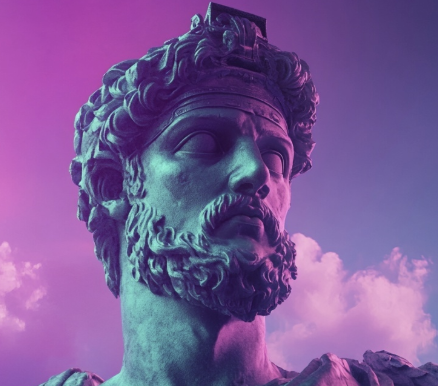
The cucumber is bitter? Then throw it out. There are brambles in the path? Then go around them. That's all you need to know.
▼
Source
source
(Hays translation) VIII, 50

4 months 2 weeks ago
I owed a magnificent day to the Bhagavad Gita. It was the first of books; it was as if an empire spoke to us, nothing small or unworthy, but large, serene, consistent, the voice of an old intelligence which in another age and climate had pondered and thus disposed of the same questions which exercise us.
▼
Source
source
October 1, 1848
4 months 2 weeks ago
Opinion considers the opposition of what is true and false quite rigid, and, confronted with a philosophical system, it expects agreement or contradiction. And in an explanation of such a system, opinion still expects to find one or the other.
▼
Source
source
Preface, § 2
3 months 1 week ago
Blessed are the poor in spirit, for theirs is the kingdom of heaven. Blessed are those who mourn, for they will be comforted. Blessed are the meek, for they will inherit the earth. Blessed are those who hunger and thirst for righteousness, for they will be filled. Blessed are the merciful, for they will be shown mercy. Blessed are the pure in heart, for they will see God. Blessed are the peacemakers, for they will be called sons of God. Blessed are those who are persecuted because of righteousness, for theirs is the kingdom of heaven. Blessed are you when people insult you, persecute you and falsely say all kinds of evil against you because of me. Rejoice and be glad, because great is your reward in heaven, for in the same way they persecuted the prophets who were before you.
▼
Source
source
5:1 12 (NIV) Often referred to as "The Beatitudes" this is the start of "The Sermon on the Mount".
2 weeks ago
A Natural Group is steadily fixed, though not precisely limited; it is given in position, though not circumscribed; it is determined, not by a boundary without, but by a central point within; -not by what it strictly excludes, but by what it eminently includes; - by a Type, not by a Definition.

4 weeks 1 day ago
Other vices can be concealed and cherished in secret; anger shows itself openly and appears in the countenance, and the greater it is, the more plainly it boils forth. Do you not see how in all animals certain signs appear before they proceed to mischief, and how their entire bodies put off their usual quiet appearance and stir up their ferocity? Boars foam at the mouth and sharpen their teeth by rubbing them against trees, bulls toss their horns in the air and scatter the sand with blows of their feet
2 months 1 week ago
For the first time in history, the human species as a whole has gone into politics. Everyone is in the act, and there is no telling what may come of it.
▼
Source
source
To Jerusalem and Back: A Personal Account (1976), p. 38

1 month 1 week ago
The invasion... exhibits in stark terms, the choice that is before us today between maintaining a liberal government that respects the rights of individuals, or moving over to a form of centralized illiberal dictatorship, even if that... illiberal government is somehow democratically legitimated. ...That's the central issue in global politics today. ...That's basically what the... Ukraine invasion is about, and that's why... all liberal societies that care about those individual freedoms... have a very powerful interest in the outcome of that war, because Putin and Russia are at the center of an international network of illiberal forces that are seeking to overturn liberal values in virtually every part of the world, and therefore... that's all part of a larger global struggle over our fundamental liberal values.
▼
Source
source
26:50 Question & Answer period follows
1 week 4 days ago
There are three relations [between thee and other things]: the one to the body which surrounds thee; the second to the divine cause from which all things come to all; and the third to those who live with thee.
▼
Source
source
VIII, 27
1 month 5 days ago
Consider, for example, the state of Science generally, in Europe, at this period. It is admitted, on all sides, that the Metaphysical and Moral Sciences are falling into decay, while the Physical are engrossing, every day, more respect and attention. In most of the European nations there is now no such thing as a Science of Mind; only more or less advancement in the general science, or the special sciences, of matter.
4 months 2 weeks ago
The imitator dooms himself to hopeless mediocrity. The inventor did it because it was natural to him, and so in him it has a charm. In the imitator something else is natural, and he bereaves himself of his own beauty, to come short of another man's.
▼
Source
source
p. 26
5 months 1 week ago
Neither family, nor privilege, nor wealth, nor anything but Love can light that beacon which a man must steer by when he sets out to live the better life.

4 months 2 weeks ago
He who knows only his own side of the case, knows little of that. His reasons may be good, and no one may have been able to refute them. But if he is equally unable to refute the reasons on the opposite side; if he does not so much as know what they are, he has no ground for preferring either opinion.
▼
Source
source
Ch. II: Of the Liberty of Thought and Discussion
2 months 1 week ago
Orwell's essay speaks to us today. It tells us that patriotism is the sine qua non of survival, and that it arises spontaneously in the ordinary human heart. It does not depend upon any grand narrative of triumph of the kind put about by the fascists and the communists, but grows from the habits of association that we British have been fortunate enough to inherit. We do not use grand and tainted honorifics like "la patrie" or "das Vaterland". We refer simply to this spot of earth, which belongs to us because we belong to it, have lived in it, loved it, defended it and established peace and prosperity within its borders.
▼
Source
source
'Brexit will give us back pride in our island roots', The Times (18 November 2017), p. 35
4 months 1 week ago
We do not "have" a body; rather, we "are" bodily.
▼
Source
source
p. 99
1 month 3 weeks ago
The reason for sketching what's technically feasible with the tools of synthetic biology is that only after human complicity in the persistence of suffering in the biosphere is acknowledged can we hope to have an informed socio-political debate on the morality of its perpetuation. No serious ethical discussion of free-living animal suffering can begin in the absence of recognition of human responsibility for nonhuman well-being.
▼
Source
source
Compassionate Biology: How CRISPR-based gene drives" could cheaply, rapidly and sustainably reduce suffering throughout the living world", BLTC Research, 2016

3 months 1 week ago
Man starts over again everyday, in spite of all he knows, against all he knows.
1 month 5 days ago
To the wild deep-hearted man all was yet new, not veiled under names or formulas; it stood naked, flashing in on him there, beautiful, awful, unspeakable. Nature was to this man, what to the Thinker and Prophet it forever is, preternatural. This green flowery rock-built earth, the trees, the mountains, rivers, many-sounding seas;-that great deep sea of azure that swims overhead; the winds sweeping through it; the black cloud fashioning itself together, now pouring out fire, now hail and rain.

5 months 4 days ago
A man's character is formed by the Odes, developed by the Rites and perfected by music.

1 month 4 weeks ago
Properties perceived in nature will depend on how one looks and how one looks depends on the economic interest one has in the resources of nature. The value of profit maximization is thus linked to reductionist systems, while the value of life and the maintenance of life is linked to holistic and ecological systems.
▼
Source
source
Staying Alive: Women, Ecology, and Development
4 days ago
Science is international but its success is based on institutions, which are owned by nations. If therefore, we wish to promote culture we have to combine and to organize institutions with our own power and means.
▼
Source
source
When asked the question, "Why a 'Jewish' University?" when Einstein was assisting Chaim Weizmann in fundraising for The Hebrew University of Jerusalem. | As quoted in [Albert Einstein, Letter "Einstein in Singapore." Manchester Guardian, October 12, 1929]
3 weeks 3 days ago
The rapid development of science... has, as it were, burst its old shell, now become too narrow.
▼
Source
source
Introduction
4 months 2 weeks ago
The young men were born with knives in their brain, a tendency to introversion, self-dissection, anatomizing of motives.
▼
Source
source
p. 530, col. 2
4 months 2 weeks ago
Between the Shaman of the Tungus, the European prelate who rules church and state, the Voguls, and the Puritans, on the one hand, and the man who listens to his own command of duty, on the other, the difference is not that the former make themselves slaves, while the latter is free, but that the former have their lord outside themselves, while the latter carries his lord in himself, yet at the same time is his own slave.
4 months 2 weeks ago
I deny that anyone knows, or can know, the nature of the two sexes, as long as they have only been seen in their present relation to one another. If men had ever been found in society without women, or women without men, or if there had been a society of men and women in which the women were not under the control of the men, something might have been positively known about the mental and moral differences which may be inherent in the nature of each. What is now called the nature of women is an eminently artificial thing - the result of forced repression in some directions, unnatural stimulation in others.
▼
Source
source
Ch. 1

4 months 2 weeks ago
The atheist who affects to reason, and the fanatic who rejects reason, plunge themselves alike into inextricable difficulties. The one perverts the sublime and enlightening study of natural philosophy into a deformity of absurdities by not reasoning to the end. The other loses himself in the obscurity of metaphysical theories, and dishonours the Creator, by treating the study of his works with contempt. The one is a half-rational of whom there is some hope, the other a visionary to whom we must be charitable.
▼
Source
source
A Discourse, &c. &c.
2 weeks ago
The rule, acknowledged or not, seems to be that if we have great power we must use it. We would use a steam shovel to pick up a dime. We have experts who can prove there is no other way to do it.
▼
Source
source
The Loss of the Future
4 months 1 week ago
It may be expedient but it is not just that some should have less in order that others may prosper.
▼
Source
source
Chapter I, Section 3, pg. 15
CivilSimian.com created by AxiomaticPanic, CivilSimian, Kalokagathia